Why The Picture of Dorian Gray Was So Controversial
The novel reached its first readers already shortened by a man Wilde never authorised to shorten it.


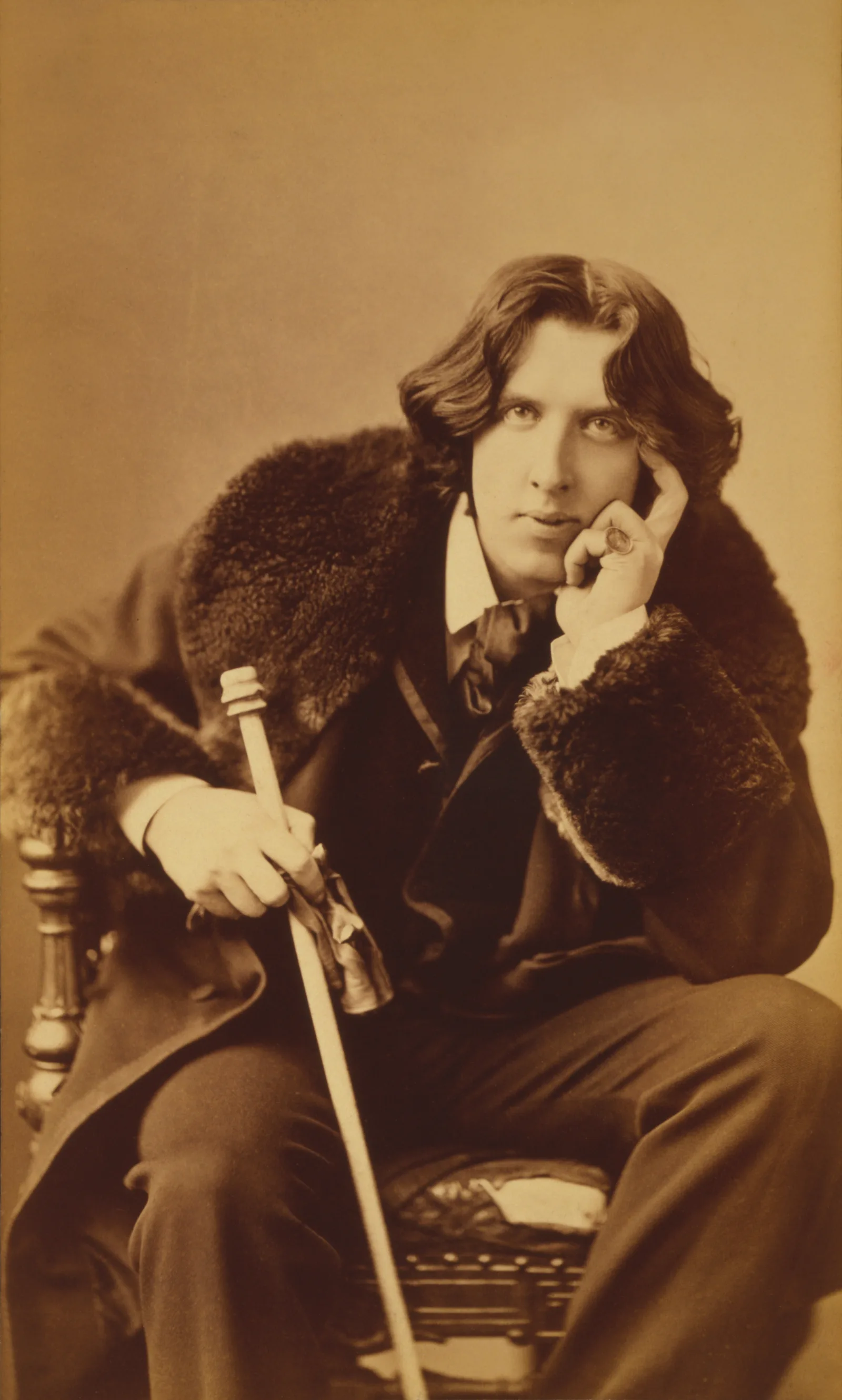
The short version people carry around is that this novel was banned for being scandalous. The documented version is stranger and more specific: the scandal happened to a text that had already been quietly shortened by someone other than its author, and the author then shortened it again himself before the version most readers know went on sale. If you want the story as Wilde finally published it, the playable Picture of Dorian Gray opens in the studio where the 1891 text opens.
✂️ The first cut was made by a man Wilde never consulted
The story first appeared in Lippincott’s Monthly Magazine in 1890, a year before the book everyone reads now, as the standard reference on Wilde records. What the magazine printed was not what Wilde had sent. Harvard University Press, publishing the restored typescript more than a century later, describes what happened to the manuscript on arrival in its own catalogue entry for the uncensored edition: the editor read it, was alarmed by material he expected readers to find offensive, and went through the pages with a pencil until the text was, in his phrase, acceptable to the most fastidious taste.
The detail that matters legally and biographically is the next one. Wilde did not see those changes before publication. VCU News, reporting the research behind the restored edition, quotes the scholar who did it saying the alterations are a clear case of censorship rather than ordinary editing, and notes that Wilde was never given the opportunity to vet that first round of cuts. So the first published Dorian Gray was already a version of the book, made by an editor protecting a magazine, and every argument that followed was conducted over a text its author had not fully approved.
📰 Even cut, it was attacked on publication
The reduced version still caused a public row. The Harvard catalogue entry cited above lists the words the British press used about it in 1890, which were vulgar, unclean, poisonous and discreditable, and the standard account of the novel’s reception records a Daily Chronicle reviewer writing that the book contained an element that would taint every young mind coming into contact with it, and a Scots Observer notice asking why Wilde had to go grubbing in muck-heaps.
Several reviewers went further than distaste and suggested that publishing it was itself an offence against the laws guarding public morality, which is worth registering because it establishes that the legal framing of this novel existed five years before any courtroom did. The reviews were about the book. The trial, when it came, was about a man, and the book was carried into it as evidence.
The Artist's Studio is the opening doorway of the playable Picture of Dorian Gray: the first scene of the 1891 text, the canvas coming off its cover, and a conversation about whether a painting that says too much about its painter should ever be shown in public. Role-play The Picture of Dorian Gray →
📜 The 1891 book is a rewrite with a defence attached
For the book edition Wilde kept the magazine editor’s cuts, made further changes of his own, and expanded the novel substantially. Britannica describes the 1891 volume as revised and expanded, with six newly written chapters; the standard summary of the novel names them, chapters 3, 5 and 15 through 18. The magazine version had run to thirteen chapters, so the book rearranged existing material as well as adding to it: counting the chapter headings in the 1891 text returns exactly twenty, which is a check any reader can run in a few seconds on the free edition.
The genuinely new thing in the book, though, is the page before Chapter I. The Preface did not exist in the magazine. Wilde wrote it afterwards, in the middle of the argument described above, and it reads less like an aesthetic manifesto composed in tranquillity than like a reply.
“There is no such thing as a moral or an immoral book. Books are well written, or badly written. That is all.”
The whole Preface runs under a page and ends on “All art is quite useless” (l.12) above his printed name. Read next to the reviews that prompted it, the famous doctrine of art’s uselessness stops being a lofty abstraction and becomes a specific legal and critical argument: a book cannot be indicted for its morals, because morals are not the category a book belongs to. It did not work, but it is the clearest statement of his position he ever printed, and it is quoted far more often than the two lines from inside the novel.
⚖️ 1895: the novel goes into a courtroom
Five years later Wilde sued the Marquess of Queensberry for criminal libel, and his own case collapsed within days when the evidence turned against him. Britannica’s account of the proceedings records that his writings were called into question during them, and names this novel and its homoerotic themes specifically; the standard summary adds that the book was described in court as a perverted novel and that passages from it, taken from the magazine version rather than the book, were read out during cross-examination.
- The text used against him was the cut one. The passages read in court came from the 1890 magazine, which is to say from a version an editor had already gone through removing exactly the sort of material the cross-examination was hunting for.
- The libel suit was Wilde’s own. He brought the action, and the collapse of it exposed him to prosecution rather than protecting him from it.
- He was convicted. Britannica records the failed first trial, the retrial, and the conviction for acts of gross indecency in 1895, after which he served a prison sentence.
📕 The book inside the book, which Wilde would not name
One thread of the controversy runs through an object in the novel itself. In Chapter X, Lord Henry sends Dorian a yellow-backed volume that the narrator describes at length and never titles (l.847). Readers have identified it with Joris-Karl Huysmans’s À rebours, the 1884 novel of the French Decadent movement, ever since, and Richard Ellmann’s biography of Wilde records that Wilde himself conceded at trial that it was, or almost was, that book.
The identification is the standard scholarly one rather than a settled fact stated by the text, and Ellmann notes that Wilde’s references to the imaginary volume’s specific chapters are deliberately inaccurate, which is exactly what a novelist does when he wants a real book present in a scene without being pinned to it. It is a small piece of evidence about how carefully this author managed what could be proved about his own text, several years before anyone tried to prove anything about it in a courtroom.
🔓 The version Wilde submitted finally got printed
The typescript the magazine editor worked on survived. It sat largely unread outside Wilde scholarship for more than a century, until Nicholas Frankel, a professor of English at Virginia Commonwealth University, edited it back into publishable form. VCU News reported in April 2011 that the resulting annotated, uncensored edition had been published the previous month by Harvard University Press, and the publisher’s own catalogue carries the paperback that followed it.
What that edition restores is, in Frankel’s framing, a more direct handling of the affection between the three central men than the printed versions allow. Anyone who wants to compare the texts can read the 1891 novel free at Project Gutenberg, where the Preface and all twenty chapters are available, and read the restored typescript in Frankel’s edition beside it. The gap between the two is the clearest measure available of what a magazine editor, a hostile press and a nervous author each removed from the same book in the space of two years.
Sources
- Oscar Wilde — Encyclopaedia Britannica
- The Uncensored Picture of Dorian Gray, edited by Nicholas Frankel — Harvard University Press
- VCU professor's research leads to an uncensored 'Dorian Gray' — VCU News
- The Picture of Dorian Gray — Wikipedia
- À rebours — Wikipedia
- The Picture of Dorian Gray (Project Gutenberg eBook #174, 1891 book text) — Project Gutenberg
Frequently asked questions
- Why is The Picture of Dorian Gray controversial?
- For three separate reasons that get compressed into one. It was censored before publication by J. M. Stoddart, the magazine editor who thought parts of it indecent. It was then attacked in the British press for what survived. Five years later it was produced in a courtroom against its author, at a time when sex between men was a criminal offence in Britain. The novel's reputation was built by all three events and by none of them on its own.
- Why was Oscar Wilde convicted of gross indecency?
- Because a libel action he brought himself collapsed and left the evidence gathered against him in the open. Britannica's account records that his own case failed within days, that he was then arrested and tried, that the first jury could not reach a verdict, and that he was convicted at a retrial. The novel was not what he was convicted of. It was used to establish the character of the man in the dock.
- Why was The Picture of Dorian Gray censored?
- Because the magazine's editor, J. M. Stoddart, read the typescript and expected his readers to object to it, particularly to its treatment of the feeling between the male characters. He cut it himself and did not consult the author. The typescript he worked from survived, which is why a restored edition is possible at all: the censorship left a paper trail that can be read against the printed text line by line.
- Why was The Picture of Dorian Gray banned?
- Strictly, it was not. No British court ever banned this novel, and Britannica's account of the controversy records censorship and public attack rather than prohibition. What happened is that it was cut before publication, condemned in the press, and later cited in court, and that history has attached the word “banned” to it ever since. The distinction matters, because a book cut by its own publisher is a different case from one a state suppressed.
- What is the historical context of The Picture of Dorian Gray?
- Late-Victorian Britain, where the Aesthetic movement was fashionable and sex between men was a criminal offence, and where a novel could be reviewed as a public danger rather than as a book. Wilde's own defence in the witness box, his answer about “the love that dare not speak its name,” is the clearest surviving statement of the pressure the period put on him. The novel was written in the years immediately before that pressure became a prosecution.
Enjoyed this one?