Is Lord Henry Wotton the Real Villain of The Picture of Dorian Gray?
The most destructive character in Wilde’s novel does nothing but talk, and the book never sends him a bill.


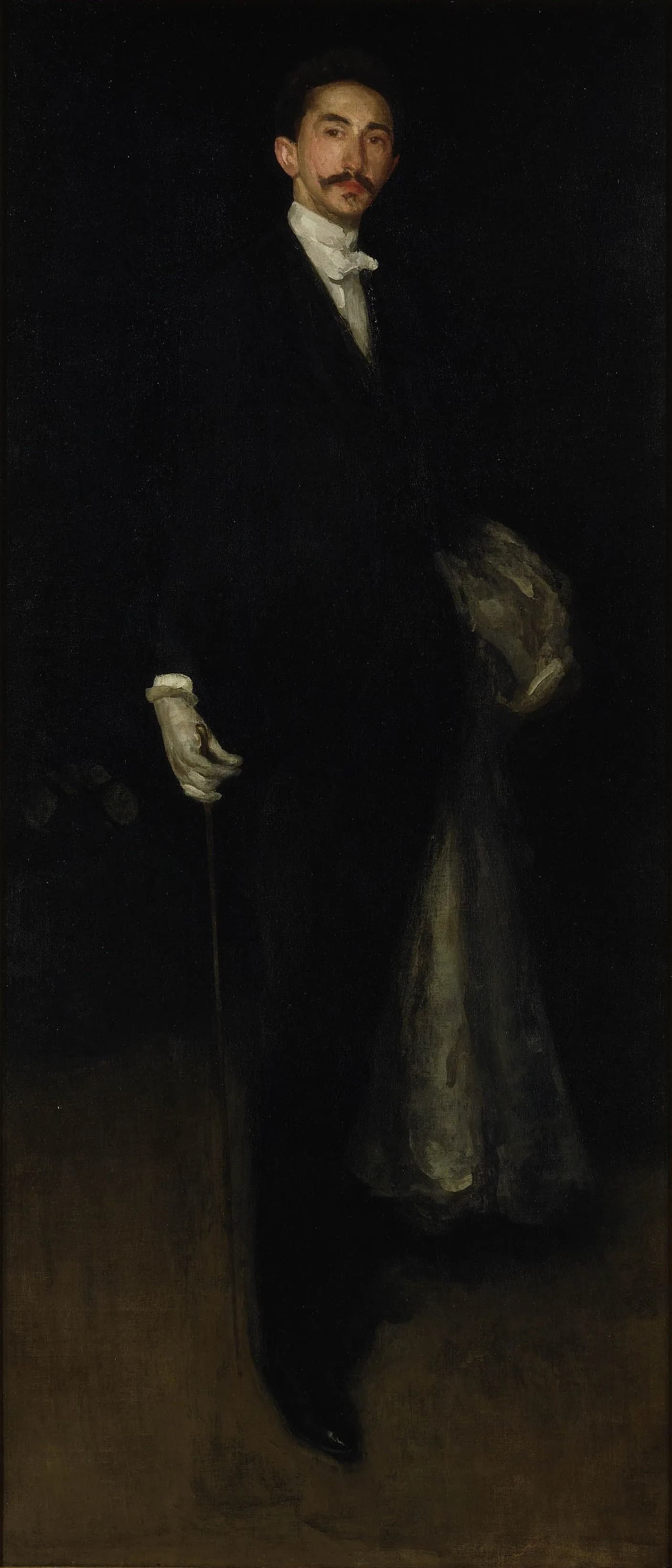
The case against him is unusual because it rests entirely on sentences. No weapon, no forgery, no theft, no scene in which he does anything a Victorian magistrate would recognise. What he does instead is arrive early, talk continuously, and leave with his reputation intact, and the playable Picture of Dorian Gray opens in the room where the talking starts.
🧪 He announces the method before he uses it
Within twenty lines of meeting Dorian, Lord Henry states his working theory of other people, and he states it as a scientific position rather than a confession. The sentence is easy to read as another polished paradox until you notice that he is describing, accurately, what he is about to spend the rest of the novel doing.
“There is no such thing as a good influence, Mr. Gray. All influence is immoral—immoral from the scientific point of view.”
Four lines later comes the New Hedonism speech, the one that contains the sentence everybody knows, and which a separate essay reads line by line. Twelve lines later, in the garden, he puts a hand on Dorian’s shoulder and tells him that “nothing can cure the soul but the senses”, which is the same argument with the volume lowered and the physical distance closed.
📋 The narrator confirms the programme worked
Readers often treat Lord Henry’s effect on Dorian as an interpretation the book leaves open. In Chapter XI the narrator steps in and settles it, reporting the result directly in the narrator’s own voice and crediting it to the man who proposed it nine chapters earlier.
“Yes: there was to be, as Lord Henry had prophesied, a new Hedonism that was to recreate life and to save it from that harsh uncomely puritanism that is having, in our own day, its curious revival.”
The Artist's Studio is the opening doorway of the playable Picture of Dorian Gray. You are in the room while the theory of influence is being delivered for the first time, and you can let it land or argue with the man delivering it. Role-play The Picture of Dorian Gray →
🙌 His stated policy is that none of it is his business
Chapter VI gives him the defence he would use if anyone ever put the question to him, and it is worth reading as a defence, because it is the exact position that lets a man supply an argument and then decline any interest in what is done with it.
“I never approve, or disapprove, of anything now. It is an absurd attitude to take towards life. We are not sent into the world to air our moral prejudices. I never take any notice of what common people say, and I never interfere with what charming people do.”
Set that beside the Chapter II position and the pair does something precise. He holds that all influence is immoral, exercises it constantly on one specific person, and simultaneously maintains that intervening in anybody’s conduct would be vulgar. The position is unfalsifiable by design, and it costs him nothing to hold, which is roughly the definition of a comfortable opinion.
⚖️ Two readings that push back, and what the text says to each
The villain reading is not the only one in circulation, and the two strongest alternatives both have real support on the page. Taking them seriously is more useful than winning the argument by ignoring them.
- He is a tempter figure, running a seduction. Supported by the language: influence as science, the soul as something to be cured, a theory announced before it is applied. It overstates the text, though, because nothing supernatural is ever attached to him and the novel gives him no powers beyond an income and a vocabulary.
- He is a coward living through somebody else. He is married, titled and careful, and he recommends a life he has never once been seen to live. This reading fits his Chapter VI defence exactly and shrinks him, which is probably why it annoys people who want a proper antagonist.
- He is a talker whose talk had consequences he never sees.The middle position, and the one the narrator’s Chapter XI intervention most directly supports, since the book itself states that the prophecy was fulfilled.
On what Lord Henry feels for Dorian, the honest answer is that the printed novel is ambiguous and was made more ambiguous on purpose. The 1890 magazine text was cut before publication and the 1891 book revised again, and the passages that went are the ones about how these men feel about each other, a publication history set out in full in a separate essay. Reading either certainty back into the surviving text is a guess dressed as a finding.
🚪 What the novel never gives him
By Chapter XIX, near the close of the book, Dorian tries to tell Lord Henry that he has begun to behave differently, and receives the same counsel he got in Chapter II, delivered with the same confidence and the same total absence of second thoughts.
“Don’t spoil it by renunciations. At present you are a perfect type. Don’t make yourself incomplete. You are quite flawless now.”
That is a textual observation about the story as Wilde tells it, not a prediction about anybody’s later life. Across the twenty chapters the novel contains, Lord Henry is never confronted by anyone who knows what he has done, never doubts the programme, and never pays a stated price for it. Whether the book intends that as an indictment of him or as an indictment of the society that keeps such men comfortable is the genuinely open question, and the standard reference on Wilde describes him simply as the older, amoral man who takes Dorian under his wing, which is neutral enough to leave the argument where it belongs.
Readers who want to test the case for themselves can do it cheaply: the full 1891 text is free at Project Gutenberg and every line number on this page points at a sentence you can read in its own paragraph. The one thing the argument cannot be settled by is summary, because the summaries all flatten a man whose entire method is that he never states a plan and never does anything anybody could name.
Sources
- The Picture of Dorian Gray (Project Gutenberg eBook #174, 1891 book text) — Project Gutenberg
- Oscar Wilde — Encyclopaedia Britannica
- Why was The Picture of Dorian Gray controversial? — Encyclopaedia Britannica
- The Picture of Dorian Gray — Wikipedia
Frequently asked questions
- What influence does Lord Henry have on Dorian?
- Decisive, and entirely verbal. He supplies the argument in Chapter II and keeps supplying it: in Chapter X he sends round a yellow-backed French novel the text never names, which Dorian then treats as a manual for years afterwards. The influence works because it never issues an instruction. It offers a flattering way of describing something the listener already half wants, which is much harder to refuse than an order.
- How do you describe Lord Henry in The Picture of Dorian Gray?
- Aristocratic, idle, married, extremely funny, and physically almost undescribed. Wilde gives him a low musical voice and a graceful hand and very little else. What he gets in detail is a manner: he generalises about women, about marriage and about the poor, and he is the guest his aunt Lady Agatha invites to lunch to be entertained by, which is the social role the novel keeps handing him instead of a face.
- What does Lord Henry say to influence Dorian in chapter 2?
- Three things inside twenty lines: that all influence is immoral, that the only cure for temptation is to yield to it, and, out in the garden afterwards, that nothing can cure the soul but the senses. The philosophy arrives wrapped in flattery. The same speech turns on Dorian directly and addresses him as a young man with “rose-red youth and rose-white boyhood,” which is what makes the argument land rather than the argument itself.
- Is Lord Henry in love with Dorian?
- The printed novel does not say, and its printing history is why. The book most readers own is a revision of the text Lippincott's Monthly Magazine printed in 1890, which its editor had already cut before publication, and the material removed at both stages is the material about how these men feel about one another. Six chapters were added for the book edition and none of them closes the question. What survives is an intense, one-sided fascination stated in the language of aesthetics.
- Is Lord Henry a hedonist himself, or does he only preach it?
- Mostly he preaches it. The novel shows him ordering the experiment and never running it: he is married, he keeps his appointments, and the wildest thing he is actually described doing is talking through a dinner. His wife, Lady Henry, appears once, introduces herself to Dorian because she recognises him from photographs, and is given almost nothing else to do. He is never shown alone, so the reader never once sees him when there is nobody to perform for. Readers who call him a coward rather than a devil are working from exactly that gap.
Enjoyed this one?