Dorian Gray Ending Explained: He Treats the Portrait as Evidence
Dorian goes upstairs hoping to see a better man in the painting. What he decides when he doesn't is the novel's real verdict on him, and Wilde frames that decision as a question of evidence.


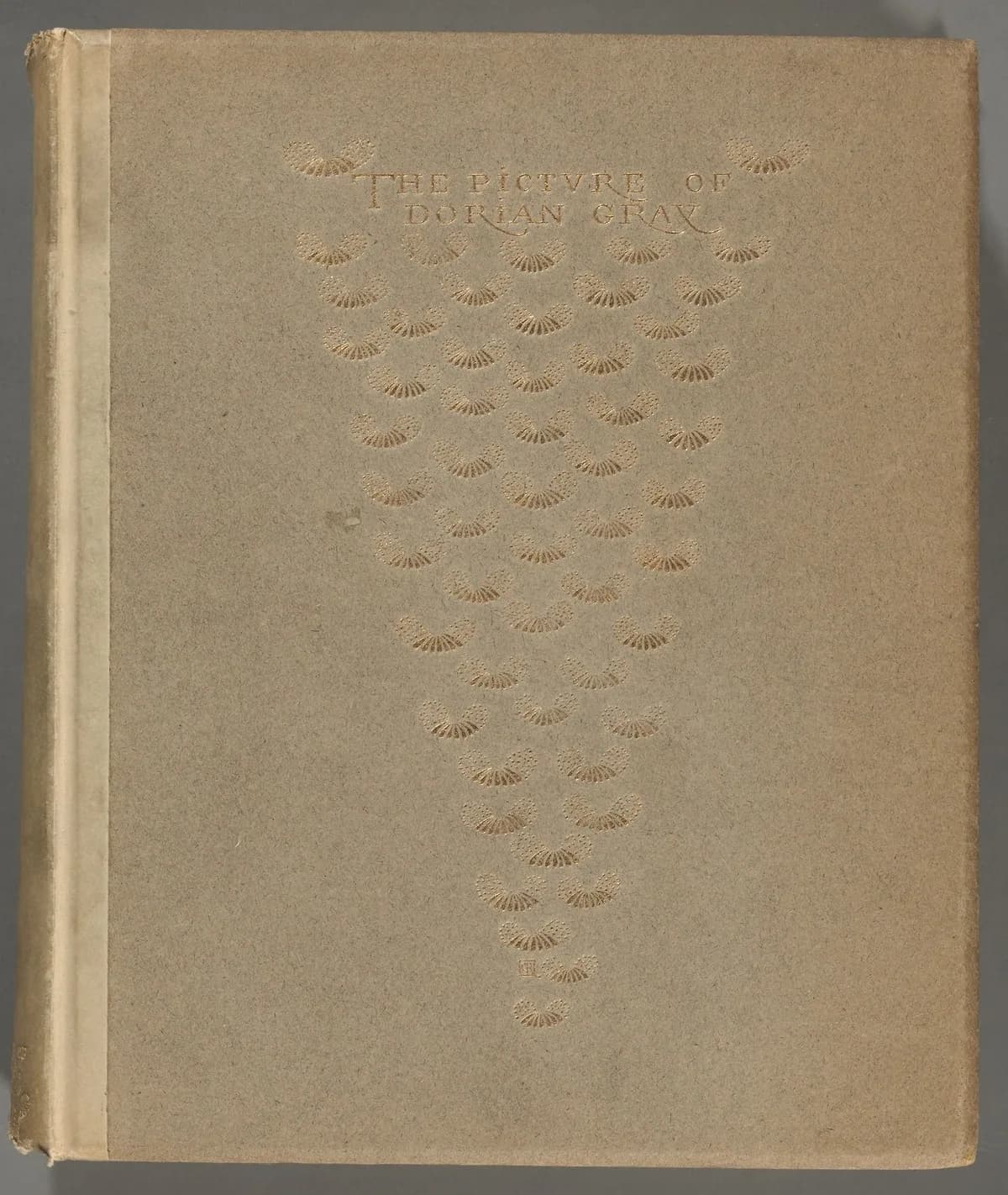
Spoilers for the whole of The Picture of Dorian Gray, including Basil’s death and the last chapter.
In the last chapter Wilde gives Dorian two words for the painting, evidence and then conscience, and the order is the point. He goes upstairs hoping to find a kinder face on the canvas. When he doesn’t, the first word he reaches for is evidence, the last thing left that could tie him to Basil’s murder, and conscience only arrives a few sentences later. The house that night is its own doorway in the playable Picture of Dorian Gray, where you are under the same roof when the master finally goes up to face what he has hidden there.
🌸 What does Dorian resolve before he goes upstairs?
He resolves to be good, and he thinks he has already started. He has just left a village girl named Hetty Merton untouched, a girl he says looked wonderfully like Sibyl Vane, and he calls it the first good action he has done for years. At Lord Henry’s that evening he says it outright: he is going to be good.
Henry laughs at all of it. When Dorian asks what he would say if Dorian confessed to murdering Basil, Henry tells him he would be posing for a character that doesn’t suit him, and that one should never do anything one cannot talk about after dinner. Dorian walks home, smashes the mirror Henry once gave him under his heel, and blames his beauty for everything.
🖼️ Why doesn’t the portrait improve?
Because the good deed was not good enough to show. Dorian unbars the door hoping the signs of evil have gone, and finds only two new marks: a look of cunning in the eyes and the curved wrinkle of the hypocrite at the mouth. The red stain on the painted hand has spread, and there is blood on the painted feet.
Through vanity he had spared her. In hypocrisy he had worn the mask of goodness. For curiosity’s sake he had tried the denial of self. He recognized that now.
The portrait is still honest, and the change it records is the hypocrisy in Dorian’s kindness to Hetty. He even weighs the one act that might clean it, a public confession, and laughs at the idea. Nobody would believe him, he reasons, since every trace of Basil is gone, and the death of the painter now seems very little to him.
On screen that ruined face became a real painting. Ivan Albright made it for the 1945 film, which cut to it in Technicolor inside an otherwise black-and-white picture, and the canvas is now in the Art Institute of Chicago. Our comparison of the 1945 and 2009 films weighs those two versions of the story against each other.
🔪 Why does he stab it?
Wilde gives his reason in his own words: the painting is the only evidence left against him. Every trace of Basil has been destroyed, and Alan Campbell, the chemist he forced to destroy Basil’s body, is dead, so the canvas is the last witness. He picks up the knife that killed Basil, cleaned many times since, and drives it into the picture so that he can be free of the past.
There was only one bit of evidence left against him. The picture itself—that was evidence. He would destroy it.
The same paragraph adds a second word. The picture had been like conscience to him, and then simply conscience, and he resolves to destroy that too. He reaches the idea of conscience only after the idea of evidence, and he answers both in the manner of a man getting rid of a witness.
That reasoning is the plainest answer to a question readers still argue about, whether Dorian means to kill himself. On the page he expects the opposite: once the picture is dead he will be free, and without its hideous warnings he will be at peace. The book narrates the stab and the cry, and the death itself reaches us through what the servants find when they break in.
🕯️ How is the body identified?
By its rings. The servants hear a cry and a crash, break in from the roof by way of the balcony, and find a dead man in evening dress on the floor with a knife in his heart. The face is withered, wrinkled and loathsome, so nobody knows who it is until they look at the hands.
On the wall the portrait shows their master as they last saw him, in all the wonder of his exquisite youth and beauty. Wilde narrates the stab in one sentence and then leaves the room. The scene cuts to two gentlemen passing in the square below, a policeman who rings and gets no answer, and a pale Francis, the servant who waits a quarter of an hour before he dares go up with the coachman and a footman.
🪦 What happened to everyone else by then?
Most of them are gone. James Vane, who came to avenge his sister, lies in a nameless grave in Selby churchyard after a shooting accident. Alan Campbell has shot himself in his laboratory without telling anyone the secret he was forced to keep. Basil’s disappearance is a fading story in the papers.
Lord Henry is the one who carries on, and he leaves the novel making a plan to ride in the park with Dorian at eleven the next morning. Why he is never punished for his part is argued in the essay on Lord Henry. How the portrait first began to change, years before this night, is traced in the essay on the portrait’s first change, and the full text is free at Project Gutenberg.
Sources
- The Picture of Dorian Gray (Project Gutenberg text) — Project Gutenberg
- The Picture of Dorian Gray — Wikipedia
- Charles Ricketts — Wikipedia
- The Picture of Dorian Gray, 1891 cover (Houghton Library) — Wikimedia Commons
- Ivan Albright, Picture of Dorian Gray (1943-44) — Art Institute of Chicago
Frequently asked questions
- Does Dorian regret killing Basil?
- Not in any lasting way. In the last chapter he files the killing away as simply the madness of a moment and blames Basil for having said unbearable things to him. What he does regret is the old prayer for eternal youth, and he decides that a just God should be asked to smite men for their iniquities rather than forgive them.
- How old is Dorian Gray when he dies?
- Thirty-eight, going by the novel's own dates. Basil's last visit falls on the ninth of November, the eve of Dorian's thirty-eighth birthday, and no later birthday is named. Wilde's calendar after that is loose: Dorian speaks of "this wonderful May" in the chapter before the last, while Lord Henry says Basil's disappearance has been talked about for only six weeks. James Vane, hunting him, guesses the man he wants must be nearly forty.
- Why did Dorian Gray turn evil?
- The novel offers two causes and keeps both alive. The portrait takes the marks of everything he does, so he never pays in his own face, and Lord Henry hands him a philosophy of living for sensation. In their last talk Dorian says, "you poisoned me with a book once," and Henry answers that art has no influence upon action.
- Who finds Dorian Gray's body?
- His own servants. After about a quarter of an hour Francis takes the coachman and a footman upstairs, and when knocking and forcing the door get them nowhere they climb onto the roof and drop to the balcony, where the old window bolts give way. Below, old Mrs. Leaf is crying and wringing her hands. They know the dead man only by his rings.
- Does Lord Henry ever learn what happened to Basil?
- Not on the page. Henry's own theory is that Basil fell into the Seine off an omnibus and the conductor hushed up the scandal, and he pictures him lying under the dull-green water with barges floating over him. The novel ends before anyone tells him what the servants found upstairs, so the guess stands as his whole account of it.
Enjoyed this one?