“Children of the Night, What Music They Make”: What the Dracula Line Means and Where It Appears
The cape, the sunlight and the wooden stake were all invented by films. The single most quoted line in the whole mythology is the exception: Dracula really does say it, on the first night, and the sentence he says immediately afterwards changes what it means.


Most of what everybody knows about Dracula was made up by a film. The cape, the sunlight, the wooden stake through the heart: none of them are Bram Stoker’s. So it is worth saying clearly that the single most quoted line in the whole mythology is the exception. He really does say it, on the first night, in chapter II.
- It is in the book. Chapter II, spoken by the Count to Jonathan Harker.
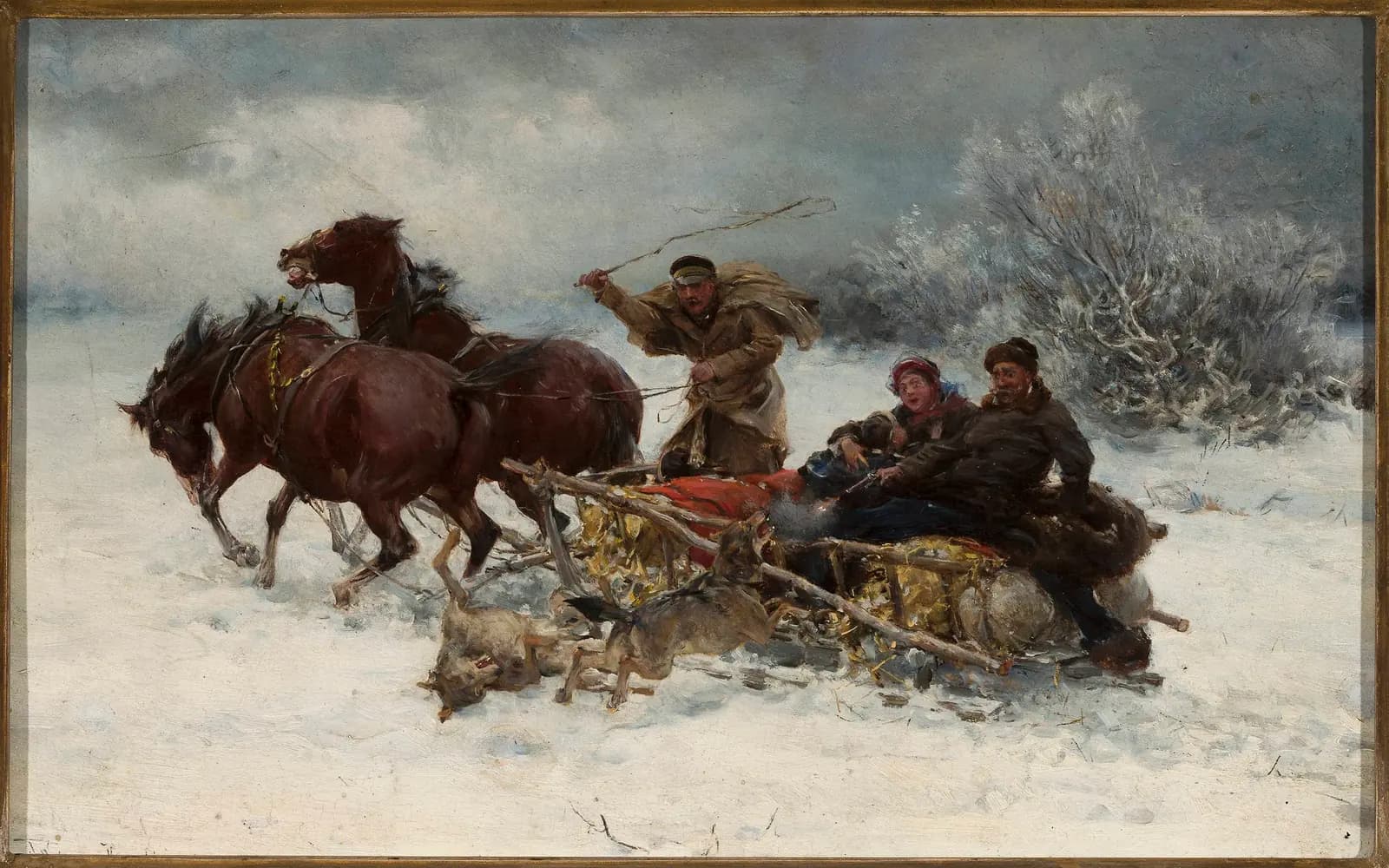
- Wolves, not bats. The children of the night are howling in the valley below the castle.
- There is a second line. He follows it immediately with a sentence almost nobody quotes.
- The wine line is not his. That one belongs to Bela Lugosi and 1931.
The three famous things the films did invent are corrected in a companion post, and nothing here repeats them. If you would rather be in the room for this conversation than read about it, the playable Dracula opens the first night at the castle as one of its doorways.
🐺 The short answer: chapter II, word for word
Harker has been in the castle for a few hours. He has eaten alone, because his host declines to join him. They have talked about English property law until nearly sunrise. Then the wolves start, down in the valley, and Stoker gives the Count one of only a handful of lines in the whole novel that sound like a person rather than a threat.
“Listen to them—the children of the night. What music they make!”
That is the whole line, and the em dash is Stoker’s. There is no ambiguity about who the children are. Two sentences earlier Harker has recorded hearing, from down below in the valley, the howling of many wolves. The Count is being literal and appreciative at the same time, which is the effect the sentence still has a hundred and twenty-nine years later.
The version most people are actually quoting is a little shorter than the one Stoker wrote. In Universal’s 1931 Dracula, Bela Lugosi says “Listen to them. Children of the night. What music they make!” The film drops Stoker’s “the” and replaces the dash with a full stop, which turns one flowing sentence into three short ones and hands the actor two pauses the page does not give him. That clipped rhythm is the one nearly every impression of the line copies, so the sentence people remember is not quite the sentence in chapter II.
🎯 The sentence right after it
Harker’s face does something. Stoker does not say what, only that the Count sees it. And Dracula, who has spent the evening being impeccable, explains himself.
“Ah, sir, you dwellers in the city cannot enter into the feelings of the hunter.”
This is the half that gets left in the book. It changes the register of the first line completely. On its own, “what music they make” is atmosphere, the sort of thing a gothic villain says because gothic villains say things. Followed by the second sentence it becomes a correction, delivered politely to a guest who has just flinched: you are a townsman, you would not understand, I hunt. He is not being poetic about wolves. He is telling Harker what he is, three weeks before Harker works it out.
Then he says goodnight, promises his guest can sleep as late as he likes, and mentions that he will be away until the afternoon. Every line in that exchange is true and none of it is honest.
🤝 What the line is covering
Read the page rather than the quotation and the wolves turn out to be the second thing that happens. The first is a handshake going wrong.
Harker has been looking at his host’s hands all evening from across the fire, and has decided they are white and fine. Close up they are not. They are coarse and broad with squat fingers, the nails long and cut to a sharp point, and there is hair growing in the centre of the palm. The Count leans over him, the hands touch him, and Harker cannot hold his face still.
“It may have been that his breath was rank, but a horrible feeling of nausea came over me, which, do what I would, I could not conceal.”
The Count notices. He draws back, smiles a grim sort of smile that shows his protuberant teeth for the first time, and sits down on his own side of the fireplace. Both men then say nothing at all, which in a novel made of people who write everything down is a loud silence.
The howling arrives into that silence, and the Count takes it. The famous line is a host changing the subject after an embarrassment, using the only thing outside the window, and it works: Harker writes down the sentence rather than the moment before it. Readers have been doing the same ever since.
🍷 The other famous line, which he never says
The quotation people pair this one with is the refusal at the supper table about what the Count never drinks. That is Bela Lugosi in Universal’s Dracula, which premiered on 12 February 1931 under Tod Browning, and it is one of the most recognisable lines in American film. It is not in the novel. The phrase “never drink” does not appear anywhere in Stoker’s text, and you can confirm that yourself with the search box on the Gutenberg edition.
Stoker’s Count does decline supper, on the same evening, and his actual sentence is stranger than the film’s.
“I pray you, be seated and sup how you please. You will, I trust, excuse me that I do not join you; but I have dined already, and I do not sup.”
The film’s version is a joke the audience is invited to get. The novel’s version is a man declining a meal in the flattest possible terms, and it only becomes frightening later, when you know what dining already meant. Which is the general pattern: the adaptations keep improving Stoker’s dialogue into something quotable, and the one time they left a line alone is the line that lasted.
🎞️ Why this one survived intact
A line that gets adapted faithfully usually earns it by being useful to the adaptation. This one is unusually portable. It needs no props, no effects budget and no explanation. It can be delivered to an audience that has not read the novel and it still lands, because the wolves are audible and the pleasure in the voice does all the characterisation the scene needs.
It also gives the Count something the plot otherwise denies him. For most of the novel Dracula is offstage, described by five people who are frightened of him and are writing to each other about it. He speaks at length twice. The long stretch is at the beginning, in his own house, to a young man he is deciding what to do with. The other is one furious speech in chapter XXIII, thrown back at the hunting party from a doorway as he escapes through a window. Almost every quotable thing he says comes from the first of those, and it has to carry the character for the next four hundred pages. A screenwriter looking for a Dracula line has almost nowhere else to look.
The full text is free at Project Gutenberg and chapter II is about twenty minutes of reading. If you want the rest of the cast he is polite to before he stops being polite, they are set out here.
Sources
- Dracula (1897 text) — Project Gutenberg
- Dracula (1931 English-language film) — Wikipedia
- Almanac: The rise of Dracula — CBS News
Frequently asked questions
- Is “children of the night, what music they make” actually in the Dracula book?
- Yes, word for word, in chapter II. Dracula says it to Jonathan Harker in the castle just before dawn, while wolves howl in the valley below. It is also a one-off. The phrase children of the night occurs exactly once in the whole 1897 text, so the most repeated line in the mythology is a sentence Stoker himself never repeated.
- Did Dracula say “I never drink wine” in the book?
- No. The phrase never drink does not occur anywhere in Stoker's 1897 text; the line belongs to Bela Lugosi in Universal's 1931 film. The Count's one recorded remark about wine is not a refusal at all. In chapter XXI he tells Mina she is now flesh of my flesh, blood of my blood, and my bountiful wine-press for a while.
- What does the “children of the night” line mean?
- Literally, wolves. The Count is admiring the howling from the valley below the castle. The novel has already shown the claim is not decorative. In chapter I, before Harker has met his host, the carriage is halted inside a ring of wolves with white teeth and lolling red tongues. The line is a claim of ownership, not a flourish.
- How is the children of the night line said in the 1931 Dracula movie?
- A little differently. Lugosi says: Listen to them. Children of the night. What music they make! Stoker wrote one sentence with a dash: Listen to them--the children of the night. What music they make! The film drops the article and the dash, which also turns Stoker's lower-case children into a capitalised sentence opening, so the phrase people quote is a title where the novel had a description.
- Who says the “children of the night” line in Dracula?
- Count Dracula, to Jonathan Harker, in chapter II, about the wolves howling below the castle. The novel treats his hold over them as a fact it never explains. In chapter XI a grey wolf called Bersicker vanishes from the London zoological gardens overnight; the keeper finds the rails broken and twisted about and the cage empty. The wolf comes back the next day, with its head cut.
Enjoyed this one?