How Dark Is Jane Eyre, Really?
The governess-falls-for-her-employer summary covers about a third of this book and none of the first ten chapters, which are the ones the romance later has to earn.


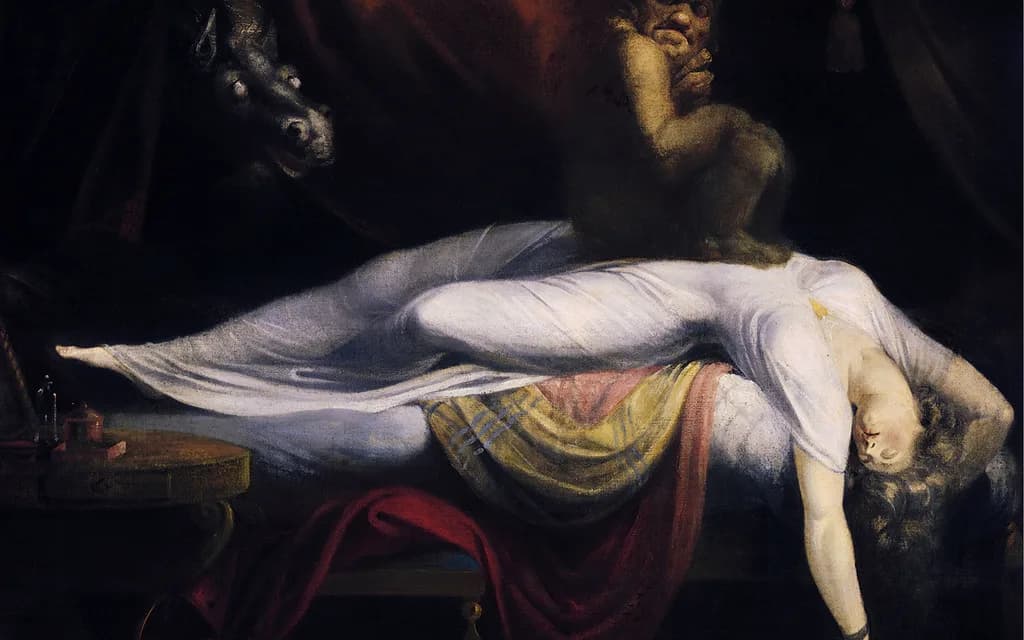
The one-line summary of Jane Eyre that everybody carries is that a governess falls for her employer. That describes about a third of the book and none of the first ten chapters, which are about a child being locked in a room where a man died, sent to a charity school that starves her, publicly named a liar in front of eighty pupils, and then made to watch an epidemic move through the dormitories.
Readers who abandon the novel usually abandon it here, in the belief that nothing is happening yet. What is happening is the part the romance later has to earn.
- Chapter one ends with the order to lock a child in the room where her uncle died, and by the next chapter she is still there at dusk.
- An epidemic puts forty-five of Lowood's eighty girls in bed at the same time.
- Helen Burns does not die of that epidemic. The book is careful to say so.
- The school is reformed only after the deaths become public, which is the grimmest joke in the novel.
Below, the four passages that account for most of it, with what the text actually says. The playable version opens on these chapters rather than skipping to the proposal, which turns out to be the more interesting half to be inside.
🕯️ The red room
A child of eight or nine is shut into the room where the head of the household died, as punishment for defending herself, and left there past dark. That is the whole event and the novel gives it a full chapter. Mrs Reed's instruction is the last thing said in chapter one: take her away to the red-room, and lock her in there.
What makes the chapter frightening is not a ghost. It is the interior decorating. Brontë spends a page on the room's cold grandeur, the white counterpane, the deep red curtains, the locked wardrobe, and then supplies the fact that turns it: Mr Reed had been dead nine years, and it was in this chamber that he breathed his last. The child has been shut in with that knowledge and no candle.
She screams; her aunt answers by adding an hour to the sentence and locking the door again; she loses consciousness. Jane says afterwards that no long illness followed, only a shock to her nerves whose reverberation she still feels while writing, which places her somewhere in adulthood, still counting. The book's own estimate of her age here is secondhand and vague: a servant guesses she must be eight or nine. Nobody in the house is certain.
🥣 Lowood, and what a charity school was for
Lowood is a working institution with eighty girls, and Brontë writes it as a system rather than a villain. Jane's first breakfast is burnt porridge, worse than rotten potatoes, and the school cannot eat it; Miss Temple quietly orders bread and cheese instead, and Brocklehurst later reprimands her for it, citing scripture about the blessedness of hunger.
The cold, the thin clothing and the walk to church are itemised flatly, like a memory, not a complaint. The set piece is chapter seven. Mr Brocklehurst, the school's treasurer, has Jane fetched onto a high stool in front of the assembled school and denounces her to it.
“Let her stand half-an-hour longer on that stool, and let no one speak to her during the remainder of the day.”
Jane calls the stool a pedestal of infamy, and she is left on it. The detail that lands hardest is the arithmetic of the sentence: half an hour is short enough to be survivable and long enough to be a very long time when you are a child and eighty people are looking at you. Brontë understood the difference and chose the number accordingly.
The same man preaches restraint and simplicity to girls he is underfeeding while his own family visits in velvet and curls. The novel does not editorialise about the hypocrisy. It simply puts the two scenes on the same page and lets a child narrator report both.
The correction, when it comes, is quiet and takes a chapter. Miss Temple, the superintendent, does not argue with Brocklehurst; she writes to the apothecary who knew Jane at Gateshead, waits for his reply, and then assembles the entire school to announce that the charges against Jane Eyre have been investigated and that she is happy to say they are disproved. It is one of the few moments in the first ten chapters where an adult with power uses it carefully, and Jane spends the rest of the novel measuring people against it.
🕊️ Helen Burns, and what actually kills her
Consumption, not the epidemic, and Brontë interrupts her own narration to make sure you know. This is the single most commonly muddled fact in the book, including in study guides, because the two things happen in the same chapter and one of them is much louder.
What arrives at Lowood that spring is typhus. Chapter nine calls the valley a cradle of fog and fog-bred pestilence and says the fever was breathed through the crowded schoolroom and dormitory; semi-starvation and neglected colds had prepared the ground, and forty-five of the eighty girls were ill at once. Classes broke up. Rules were relaxed. Jane, who stays well, describes a strange free month of wandering the woods while the sickrooms filled.
“She was not, I was told, in the hospital portion of the house with the fever patients; for her complaint was consumption, not typhus.”
Helen is dying of tuberculosis in a separate room, on a slower clock, while everyone's attention is on the fever. Jane finds her by candlelight, gets into the bed, and falls asleep talking to her. The line that closes it is five words long and Brontë breaks the sentence with a dash to get there: I was asleep, and Helen was dead.
Helen is worth reading closely rather than remembering fondly, because her position is a real one and Jane rejects it. Her doctrine, set out in chapter six, is that life is too short to be spent nursing animosity or registering wrongs, and she means it as practical advice rather than consolation. Jane, who has just been half-destroyed by an injustice she is not allowed to name, cannot use a word of it. The book stages an argument between endurance and anger at the age of ten, gives the better lines to endurance, and then quietly follows the other one for the next thirty chapters.
Then comes the detail that makes readers put the book down. Helen's grave lay under nothing but a grassy mound for fifteen years. Only later did a grey marble tablet appear, with her name and one Latin word, Resurgam: I shall rise again. The narrator does not say who paid for it, and the arithmetic of the novel makes it fairly clear.
⏳ Is the slow start worth pushing through?
Yes, and the payoff is structural rather than atmospheric. Everything readers admire about adult Jane, the refusals, the money argument, the flat unimpressed way she talks to a man who employs her, is manufactured in these chapters. A reader who skips to Thornfield gets a heroine whose backbone appears from nowhere.
Chapter ten also contains the quiet institutional sting that most summaries drop. Once the epidemic ends, the number of its victims draws public attention to the school; there is an inquiry, facts emerge, and the place is rebuilt on better rules. Brocklehurst keeps the treasurer's post, because his wealth and connections could not be overlooked, but he is put under a committee of men with more sympathy in them. Nothing changed because anyone listened to the children. It changed because enough of them died to make a story.
There is one more return on the early chapters, and it arrives two hundred pages later. In chapter twenty-one Jane is summoned back to Gateshead to a dying Mrs Reed, who confesses that three years earlier an uncle in Madeira had written asking to adopt Jane and make her his heir, and that she had replied that Jane Eyre was dead of typhus at Lowood. The lie cost Jane a fortune and a family, and it was told out of nothing more complicated than dislike. It also means the money that eventually frees her in the last third of the book had been within reach the entire time.
That is the register the whole novel is written in, and it is why the Gothic material at Thornfield lands as hard as it does later. Brontë establishes early that this is a world where institutions do real harm and are corrected late, so when the reader finds out who has been kept upstairs for fifteen years, it does not read as a plot twist. It reads as the same thing again, in a nicer house.
The 1847 text is free at Project Gutenberg; chapters one through ten are about a fifth of it and the fastest way to find out whether this book is for you. The book's harshest institutions get resolved by the end — whether that resolution reads as earned is its own argument.
Sources
- Jane Eyre: An Autobiography (1847), full text — Project Gutenberg
- Jane Eyre — Wikipedia
Frequently asked questions
- Why does Helen Burns die in Jane Eyre?
- Of consumption, which is tuberculosis, and not of the typhus running through the school in the same chapter. Brontë separates the two carefully: Helen is kept away from the fever patients because her illness is a different one. She is buried in Brocklebridge churchyard, and the novel names the place, which is more than it does for most of what happens at Lowood.
- What does the red room symbolise in Jane Eyre?
- Whatever else it does, the book treats it as the injury Jane never stops itemising. In chapter four she finally rounds on her aunt and lists it as evidence: that she was thrust back roughly and violently into the red-room and locked there, and that she will remember it to her dying day. It is the first time in the novel that anyone tells the truth out loud, and it costs her the house.
- Is Jane Eyre boring at the start?
- It is slow on purpose and it tells you when it is done. At the start of chapter ten Brontë stops to say that she has given the first ten years of Jane's life almost as many chapters, that this will not be a regular autobiography from here, and then skips eight years in a few lines. The pace changes because she changes it, roughly a quarter of the way in.
- How long is Jane at Lowood?
- Eight years, and the novel splits them for you: six as a pupil and two as a teacher. She arrives as a child of eight or nine and leaves at barely eighteen, having spent nearly half her life in one building. It is the longest continuous stretch of the book by a wide margin and it occupies fewer pages than the house party at Thornfield.
- What happens to Mr Brocklehurst?
- Less than he deserves. Before Jane even reaches Lowood he hands her a tract containing the story of the sudden death of a liar, pointed out to her as an appropriate warning. He keeps his post after the inquiry, but loses sole control of it: his role as inspector is split with men Jane describes as knowing how to combine strictness with compassion, and the school he ran alone becomes, in her own retrospective judgment, genuinely useful for the first time.
Enjoyed this one?