Jane Eyre vs Wuthering Heights: Which Brontë Sister Got It Right?
Every big swoony Brontë conversation right now is about Wuthering Heights, and the readers who have finished it keep interrupting to say it is not a love story. That is the other sister's lane.


Mild spoilers below for both novels, including how each of them ends.
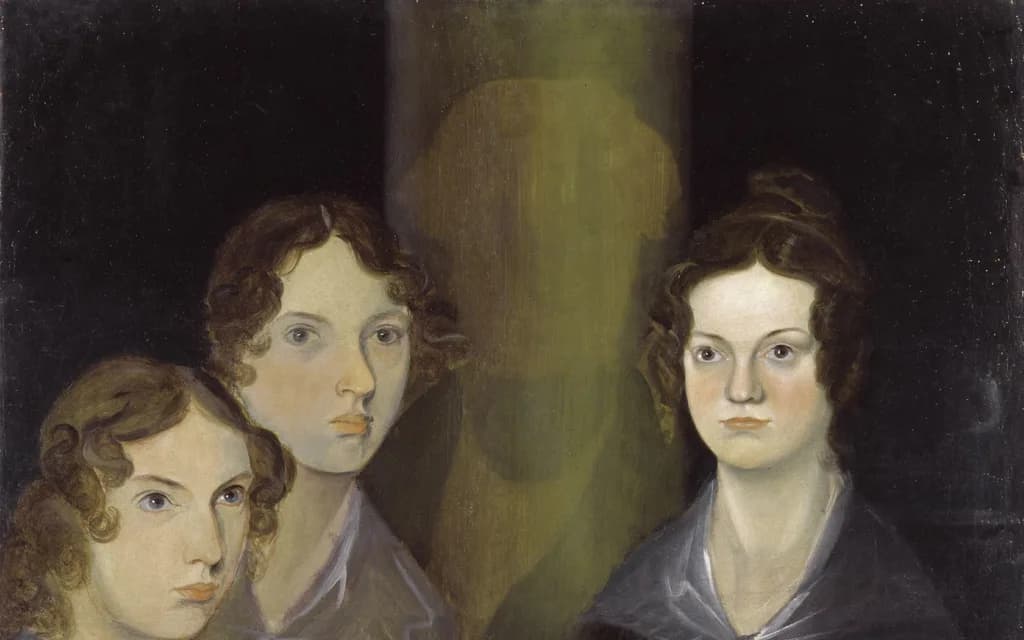
Two sisters, one house, one year. Jane Eyre appeared in October 1847 under the name Currer Bell. Wuthering Heights appeared that December under the name Ellis Bell, from a different publisher, with a surname deliberately shared. The Brontës were sharing a parsonage and a dining table while these two books were being drafted, and they came out of that room pointing in opposite directions.
The comparison has been live ever since, and it has recently gone loud again, because Wuthering Heights got a large, expensive, argued-about film in February 2026 and Jane Eyre did not.
- Jane Eyre came first, by about eight weeks, and was an immediate commercial success.
- Only one of them is a love story, and readers who finish both are usually very firm about which.
- Charlotte wrote a public preface about Heathcliff in 1850, and it is not a defence.
- The 2026 film opened to a split verdict, which is roughly what the novel has always got.
Below, the comparison on four axes readers actually argue about, with the chapter references for each claim. Only one of these two books is playable on Saylia, which will not surprise you once you see the fourth section.
💔 Are these even both love stories?
No. Jane Eyre is a love story and Wuthering Heights is a book about what people do to each other over forty years, of which love is one cause among several. This is the single most common correction that experienced readers make to people arriving from the marketing, and the text supports them without much effort.
Consider what Heathcliff volunteers about his own courtship. In chapter fourteen he tells Nelly Dean, the housekeeper who narrates most of the novel, unprompted and with some satisfaction, that the first thing Isabella saw him do after she left the Grange with him was hang up her little dog, and that when she pleaded for it he replied by wishing he had the hanging of every being belonging to her. Isabella's spaniel is found two chapters earlier, still alive, strung from a handkerchief. This is the romantic lead of the season's biggest literary film, describing his honeymoon to the housekeeper.
Isabella's own summary, in a letter in chapter thirteen, is the question the book keeps asking: is Mr Heathcliff a man, is he mad, and if not, is he a devil. Nothing in the remaining twenty-one chapters answers her.
The revealing difference is in how each sister lets a man account for himself. Rochester confesses at length and in shame, to Jane, and expects to be judged for it. Heathcliff reports his own cruelty to a housekeeper with something close to enjoyment, as an anecdote about a honeymoon, and expects nothing at all. Emily Brontë does not supply a moral frame around that speech. She simply puts it in the mouth of the man readers arrive wanting to love, and lets him talk.
Emily also declines the small mercy her sister would have taken. The dog survives, as it happens: Nelly cuts it down in time and it is still yelping in the garden two pages later. That is the closest thing to relief the chapter offers, and it is delivered as a passing detail on the way to something worse.
🌾 Whose ending is actually the healthy one?
Jane Eyre's, though the concession has to be made first: that ending is also cleared by a death, Bertha Mason's, not the heroine's own. Jane survives to marry; Catherine Earnshaw does not. She dies in chapter sixteen of thirty-four, giving birth, having never recovered consciousness — dead just short of the midpoint of her own novel, and the rest of it belongs to the children of the people who ruined her.
Emily Brontë does not let her rest afterwards either. In chapter twenty-nine Heathcliff tells Nelly, quite calmly, that he paid the sexton digging the neighbouring grave to uncover Catherine's coffin lid so that he could open it and look, and then bribed him to remove the side panel so their remains would eventually mingle. Whatever a reader wants to call that, the same chapter dates it eighteen years after her death.
The book does supply a settlement. The second Catherine and Hareton are to marry on New Year's Day, the estates are reunited, and Lockwood, the visiting tenant the whole story has been told to, closes on the graves in a state of calm he seems to have talked himself into. It is a real ending and a generous one, but it belongs to the next generation, and it is available only because the first one is buried.
The geography reflects the difference. Wuthering Heights takes place almost entirely between two houses four miles apart, which is part of its claustrophobia and part of its power. Jane Eyre moves its narrator through five separate places, each with its own economy and its own rules about what a woman without money may do, and the plot is largely the business of getting out of each one. One novel is about being unable to leave. The other is about leaving, repeatedly, at cost.
Jane Eyre ends with its narrator alive, solvent, married on terms she set out loud, and still the one holding the pen. She said in chapter twenty-three that she was no bird and no net ensnared her, and the plot subsequently costs her almost everything to prove it, but she is there at the end to report the result herself.
🎬 What the 2026 film is selling you
A romance, mostly, and the split reception is what happens when you sell that particular book as one. Emerald Fennell's Wuthering Heights opened on 13 February 2026, a day before Valentine's Day, from Warner Bros., with Margot Robbie as Catherine and Jacob Elordi as Heathcliff.
It currently sits at 57 per cent on Rotten Tomatoes from over three hundred and fifty reviews, and 55 out of 100 on Metacritic. The interesting part is that this argument is nearly two centuries old and Charlotte started it. In 1850, after Emily's death, Charlotte wrote a public preface for a new edition of her sister's novel. It is often described as protective. Read it and it is closer to a warning label.
“Heathcliff, indeed, stands unredeemed; never once swerving in his arrow-straight course to perdition.”
The woman who invented Rochester looked at Heathcliff and declined to find a route back for him. That is a useful measure of the distance between the two books. Whatever else Jane Eyre does with its difficult man, it spends its last quarter putting him through a reckoning; the author of the other one saw no reckoning available and said so in print.
📚 Which should you read first?
Jane Eyre, unless you already know you want the harder book. It is told by one person in one voice from beginning to end, it moves through five distinct places, and every chapter is legible on a first pass. Wuthering Heights is narrated by a tenant repeating what a housekeeper told him about events she partly heard from other people, across two generations who share about four first names between them.
Readers who bounce off it usually bounce off the frame, not the cruelty. There is also a practical reason for the order. Jane Eyre's slow opening at Lowood is the thing new readers most often stall on, and it rewards you later in a way that is easy to miss on a skim, which is worth knowing before you start. Wuthering Heights has no equivalent on-ramp. It begins in the middle of a bad situation and assumes you will keep up.
There is one more argument for the pairing, and it is about what each book is unusually good at. Jane Eyre is the better novel about work, money and the specific indignities of being employed by someone who can end your income at will; almost nothing in Wuthering Heights touches that. Wuthering Heights is the better novel about how damage propagates, how a childhood injury becomes an adult project and then somebody else's inheritance. Neither sister was writing the other's book badly. They were writing different books, and the parsonage was big enough to hold both.
Read together, though, they do something neither manages alone. Two women in the same house in the same year wrote one novel about a person who refuses to be owned and one novel about what ownership actually looks like when nobody refuses. Charlotte outlived both her sisters, Emily by seven years and Anne by six, and spent part of that time explaining Emily's book to a public that could not place it. The pairing is not a competition so much as an argument the family was already having.
Both novels are free at Project Gutenberg: Jane Eyre and Wuthering Heights. If the film sent you here, the screen history of the other sister's book is its own tangle.
Sources
- Jane Eyre: An Autobiography (1847), full text — Project Gutenberg
- Wuthering Heights (1847), full text — Project Gutenberg
- Wuthering Heights (2026 film) — Wikipedia
- Wuthering Heights (2026) — Tomatometer — Rotten Tomatoes
- Wuthering Heights (2026) — Metascore — Metacritic
- Charlotte Brontë's 1850 Editor's Preface to Wuthering Heights — Literary Ladies Guide
- Charlotte Brontë — Wikipedia
Frequently asked questions
- Is Wuthering Heights more romantic than Jane Eyre?
- Less, and it is not really trying to be. The novel opens with a single dated line, 1801, in the voice of a London tenant who has rented a house nearby and knows nothing about anyone; everything you learn arrives as gossip relayed to him after the fact. Jane Eyre is told to you directly by the woman it happened to, which is a very different reading experience before you get to any of the plot.
- Is the 2026 Wuthering Heights movie faithful to the book?
- Its reception suggests audiences and critics landed in roughly the same divided place. Alongside the mixed critic numbers, the film's Metacritic user score sits at 5.4 out of 10. That split is worth reading as information about the novel rather than only about the film: a book whose central figure is unredeemed is a genuinely hard sell as a Valentine's release.
- Which Brontë sister wrote the darker book?
- Emily, and the family timeline is grim enough on its own. Charlotte was born in 1816 and died in 1855. Emily died in 1848, the year after Wuthering Heights appeared, and Anne died in 1849. Charlotte outlived both and spent part of the intervening years editing and defending her sister's novel for a public that could not place it.
- Should I read Jane Eyre or Wuthering Heights first?
- Jane Eyre, and its own title tells you why. It was published as Jane Eyre: An Autobiography, and it reads like one: one narrator, one voice, one life in order, with the reader addressed directly throughout. Wuthering Heights is a story inside a story inside a diary, and readers who stall on it usually stall on the structure rather than on the cruelty.
- Did Charlotte Brontë like Wuthering Heights?
- She admired it and warned readers about it in the same breath. In her 1850 preface she calls the novel moorish, wild, and knotty as a root of heath, and compares it to a statue roughly hewn from a granite block on a solitary moor. That is praise for the workmanship and an advance notice that the thing will not be comfortable to live with.
Enjoyed this one?