Is Long John Silver a Villain or an Anti-Hero?
Long John Silver is the warmest presence in the novel and commits its ugliest act, and both are true in the same hundred pages. What he actually does on the page, why the narrator keeps changing his mind, and why most of the online argument is about a film.


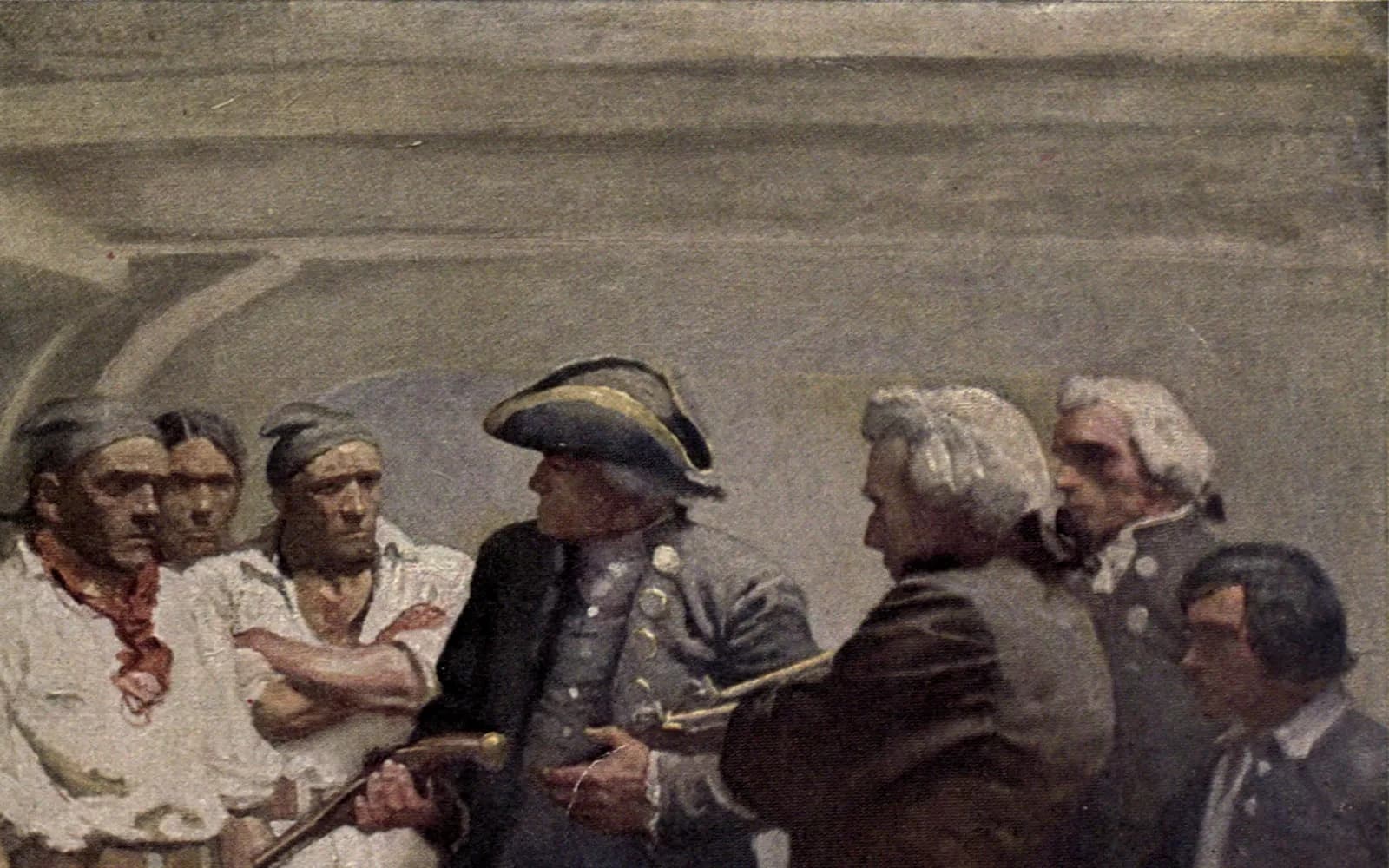
Spoilers: this post quotes a killing Silver commits on the page, and a marked closing section discusses how the novel finally leaves him.
Long John Silver is the reason people still argue about this book, and the argument almost never settles, because Stevenson built him so that it cannot. He is the warmest presence in the novel and he commits its ugliest act, and both of those are true in the same hundred pages, on the page, in front of the narrator.
What follows is the case from the text: what he actually does, how the boy telling the story keeps changing his mind about him, and why so much of the online debate is about a different Silver entirely. He is recruiting a crew in the playable Treasure Island, where you have to decide about him before the ship sails.
🤐 Why the game’s own copy never tells you
The playable version of this book withholds one thing on purpose. Its cast list gives every character a physical description and a manner of speaking, including Silver’s, and says nothing whatever about where any of them stands. Silver’s entry names a broad face, a crutch handled with unusual agility and a cheerful, persuasive way of talking. It does not say what he is.
That is a deliberate editorial line, and it is the right one for a product that puts a new player in a room with him. A reader who already knows the answer meets a different character in Chapter Eight than a reader who does not. The whole first third of the novel runs on a suspicion the reader is invited to form and then talk themselves out of, repeatedly, because the man keeps being so pleasant.
A blog post is allowed to resolve what a teaser cannot, which is what this one does below. The section that resolves it is marked and sits at the end, so a first-time reader can take the argument and leave the ending alone.
🔪 What he actually does on the page
Start with the introduction, because the book spends real effort making you like him. Jim arrives at a dockside tavern braced to meet a monster, having been warned for a hundred pages about a seafaring man with one leg, and finds instead a calm, clean, agreeable landlord who is obviously good at his job. The narrator says so outright: he stops being afraid on sight.
Then Chapter Fourteen, which the book titles “The First Blow.” Jim is hiding in a marsh. He hears a long, distant cry somewhere in the woods. Silver, standing feet away and talking to a loyal sailor named Tom, identifies the sound as a shipmate of theirs without missing a beat, because he knows exactly what it was. Tom does the arithmetic, refuses to go along, and walks away.
“If I die like a dog, I’ll die in my dooty. You’ve killed Alan, have you? Kill me too, if you can. But I defies you.”
What happens next is the least ambiguous thing in the novel. Silver takes the crutch from under his arm and throws it into Tom’s back hard enough that the narrator thinks he hears the spine go. Then, moving on his hands faster than a man with two legs, he crosses the ground and puts a knife into a body that cannot move, twice, to the hilt. Jim, watching from cover, can hear him breathing hard with the effort of the blows.
The narration’s own vocabulary shifts for exactly that half-page. The genial sea-cook becomes “the monster” and “the murderer,” and the last image of the scene is him wiping the blade clean on a handful of grass and putting his hat back on. Any reading that files Silver as a lovable rogue has to walk past a man cleaning a knife on the grass beside someone he stabbed in the back.
- It is premeditated. Alan is already dead offstage before Tom opens his mouth. The killing Jim watches is the second of two, not a panic.
- The victim is unarmed and leaving. Tom has declared himself and turned his back. There is no fight, no threat and no self-defence available as a reading.
- It is done in front of a child. Silver does not know Jim is there, which makes it worse rather than better: this is what he is when he believes nobody is watching.
📖 The boy telling the story keeps changing his mind
Because the novel is a first-person account written afterwards, every judgement of Silver in it is Jim’s, and Jim is not steady. He is charmed, then terrified, then charmed again, and the narration never apologises for the swing. He describes a man he watched commit murder as excellent company within a few chapters of watching it, and he means both.
This is the mechanism people are actually responding to when they reach for “anti-hero.” The category is doing a job that the word cannot quite do, which is to describe a villain the narrator cannot stop liking. Silver is never given a redemptive motive, a wronged past or a code. What he is given is manners, competence and an interest in the boy that reads, uncomfortably, as genuine.
He is also the only character in the book who explains himself. He tells Jim what men of his trade risk and what they get, coolly, as an apprenticeship lecture. It is the closest the novel has to a philosophy, and it belongs to the murderer.
🎭 Which Silver the internet is arguing about
Search the question and a large share of what comes back is not about this book at all. The two most-cited Silvers online are screen performances: Robert Newton’s in the 1950 Disney film, whose delivery History.com credits with inventing the modern pirate voice, and Tim Curry’s in the 1996 Muppet film, which SYFY WIRE argues is the truest version of the character. Disney’s 2002 science-fiction reimagining adds a third, built as a father figure, and a great deal of the “redeemed villain” discourse is about that one specifically.
Those readings hold up perfectly well for the films they describe. Where they fail is the novel, in one specific way: a screen adaptation has to decide what Silver is by the end of act three, and Stevenson does not. The fact-by-fact comparison lives in the book-versus-adaptations piece; the point here is only that if your Silver is warm, you may be remembering a performance rather than a page.
🚪 How the novel leaves him
This last section resolves what the game’s own copy withholds. Stop here if you are still reading the book.
Silver is the mutiny. He organised it before the ship sailed, chose the crew for it, and ran it. When it fails he changes sides with no visible difficulty, produces the loyal party’s own interests as if they had always been his, and is kept aboard for the voyage home under something between guard and guest status.
Then he simply leaves. He goes over the side at a port on the way home, having cut through a bulkhead and taken one sack of coin, and the novel never sees him again. The last page offers a vague, unconfirmed suggestion that he lived out a quiet life somewhere with a former companion, and declines to verify it.
That is the whole of his ending: no trial, no gallows, no reckoning, no apology, and no forgiveness either. The narrator’s parting shot is that his chances of comfort in the next world are very small, which is a judgement passed at a safe distance on a man who got away. A book genuinely written for children would have hanged him. This one lets him row off with the money and hopes he is unhappy, and how that lands is the argument you came here for.
Sources
- Treasure Island (Project Gutenberg #120) — Project Gutenberg
- The Origins of the Pirate Accent — History.com
- How is Muppet Treasure Island not-so-secretly the truest adaptation of Robert Louis Stevenson's classic? — SYFY WIRE
Frequently asked questions
- Is Long John Silver good or evil in the book?
- Evil by his actions and sympathetic by his manner, and Stevenson refuses to settle it. The narrator's vocabulary flips inside half a page: the man he has just called a "clean and pleasant-tempered landlord" becomes the monster and the murderer while a body is still on the ground, and is good company again within a few chapters.
- Does Long John Silver kill anyone in the book?
- Yes, at least two men, and one of them in full view. In Chapter XIV he throws his crutch into an unarmed sailor's back and then, in the narrator's words, "twice buried his knife up to the hilt in that defenceless body." A second killing happens out of sight moments earlier, and he names that victim without hesitating.
- Why doesn't the game ever say whether Silver is good or bad?
- Because it is the book's central withheld fact and the game's copy is written to protect it. All 27 cast entries give a physical description and a manner of speaking and stop there. Silver's own names a broad face, a crutch handled with unusual agility and a habit of nautical slang, and says nothing about which way he turns.
- Is the Muppet or Disney Silver the same character as the book's?
- No, and most argument online is really about one of those performances. Tim Curry's is warmer and funnier than the text supports, Robert Newton's invented the accent everyone hears, and Treasure Planet builds an explicit father-and-son bond the novel never offers. Stevenson's Silver is colder than all three.
- What happens to Silver at the end of the book?
- He escapes. On the voyage home he cuts through a bulkhead, takes one sack of coin worth three or four hundred guineas, and goes over the side at a port in Spanish America with the marooned castaway's help. The novel never sees him again: no trial, no gallows, no redemption, only a closing wish that he is not comfortable.
Enjoyed this one?