The Count of Monte Cristo Ending, Explained: Does Dantès End Up With Mercédès?
The most-searched question about this novel is not about the revenge plot. It is about who Edmond Dantès ends up with, and the answer surprises almost everyone who has only seen a film: Mercédès is not in the last chapter at all.


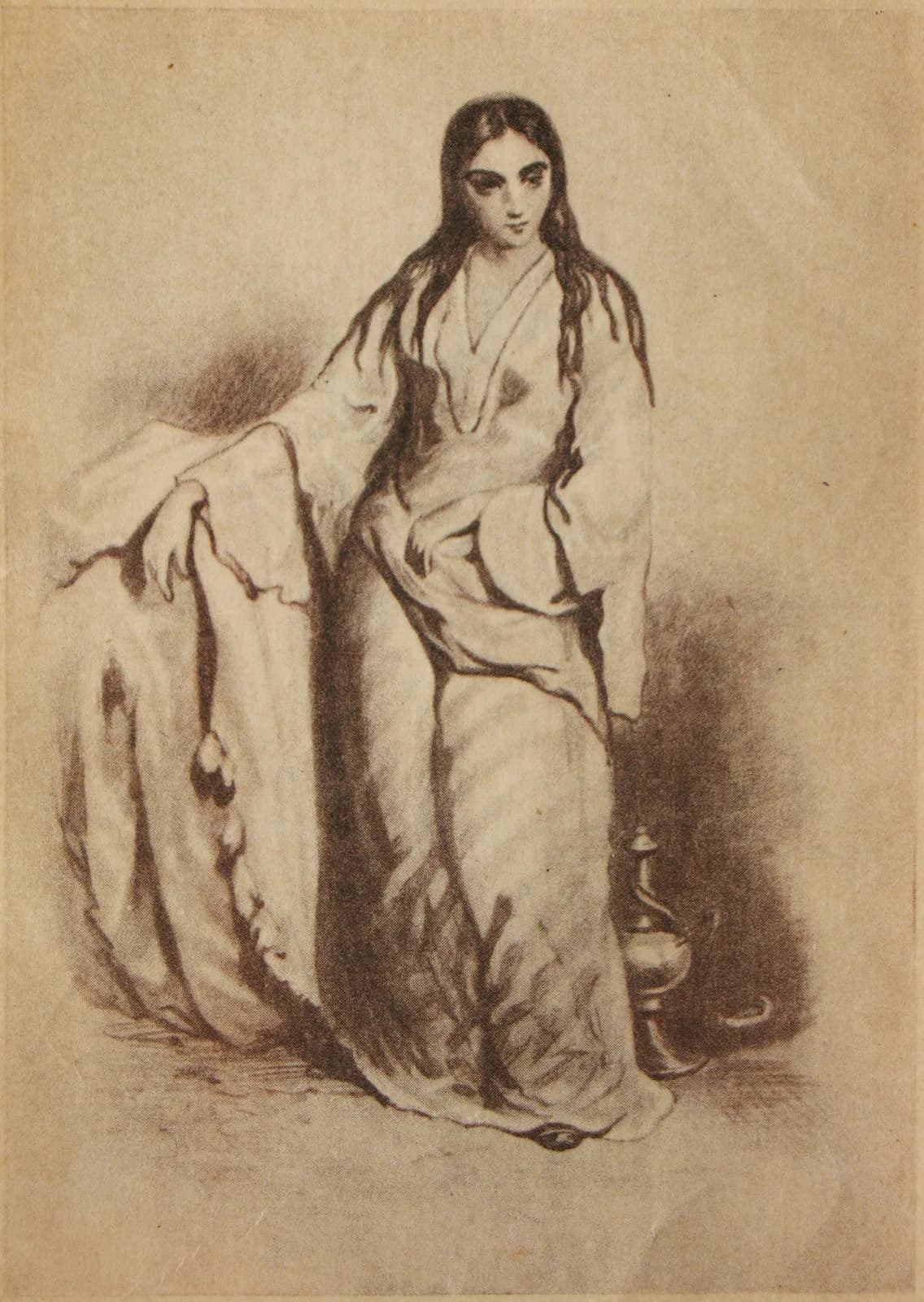
Spoilers for the whole of The Count of Monte Cristo, including the last chapter.
This is the most-searched question about the novel, well ahead of anything to do with the revenge plot, and the answer disappoints readers who have only seen a film. Edmond Dantès does not end up with Mercédès. He ends up with Haydée, and Mercédès is not in the last chapter at all.
Their final meeting is its own doorway in the playable Count of Monte Cristo, which is the right place to argue with the ending: you get the scene and the choice, and the house at Marseilles is still standing.
🚢 The last chapter belongs to Haydée
Chapter 117 is called The Fifth of October, and it stages the ending as a departure watched from a beach. Maximilian Morrel and Valentine de Villefort are handed a letter, read it, look up, and see a sail on the horizon. Valentine asks where the count is and where Haydée is, and the sailor Jacopo simply points.
“Gone,” murmured Valentine; “adieu, my sweet Haydée—adieu, my sister!”
Two things about that chapter settle the question by themselves. The first is that Haydée is on the ship and is named twice in the closing lines. The second is easy to miss and harder to argue with: Mercédès does not appear in Chapter 117 in any form. Her name does not occur once in the final chapter, and her last appearance anywhere in the novel is four chapters before the end. Dumas closes the book without her.
Nor does Haydée arrive late to fill the gap. She is the daughter of Ali Tepelini, the pasha of Yanina, and she has been in the novel for forty chapters by the time the ship sails, carried there by the same betrayal that put Dantès in a cell. The ending pairs the two people whose lives Fernand Mondego destroyed on the same afternoon of his career.
🕯️ Their last scene, five chapters earlier
The real ending of the Edmond-and-Mercédès story happens in Chapter 112, and it is quieter than any adaptation has been willing to make it. He brings her back to Marseilles, to the house his father died in, and offers her the life she lost. She refuses all of it, and the refusal is not bitter.
- She will not let him apologise.When he says she has every reason to hate him, she answers that he is the man who spared her son’s life, and asks him to look at her and find even the semblance of a reproach.
- She ends it herself.“But we must say farewell, Edmond, and let us part.” He asks if she has any request. She names one thing: the happiness of her son.
- She does not watch him go. The chapter closes with her at the window of the garret his father had lived in, straining after a different ship entirely, the one carrying Albert away, and saying his name three times to nobody.
Nothing in that scene is a misunderstanding, which is the part readers find hardest. There is no obstacle left. Fernand is dealt with, the money is irrelevant to both of them, and neither has stopped caring. They part because twenty-four years happened, and because the man who came back from the Château d’If is not the person she was engaged to. She says as much: an abyss lies between him and the rest of mankind, and she is on the other side of it with everyone else.
It is worth flagging here that the single most-quoted line from the best-known screen version, in which Edmond begs not to be robbed of his hate, is not in Dumas at all. It appears in the 2002 film, and a whole-file search of the Project Gutenberg text returns nothing. The adaptation essay on this hub takes that apart properly.
💍 Why Mercédès married Fernand
The novel answers this directly, through Caderousse, and the answer is more sympathetic than the folk version. Fernand Mondego is her first cousin, the son of her father’s brother, and she had already told him plainly, before the arrest, that she loved him as a brother and would marry Edmond Dantès or nobody.
Then Dantès vanished into a political prison with no trial, no sentence and no address. Old Dantès, refusing help, starved in his rooms and died, telling her repeatedly that his son must be dead because otherwise he would have come home. Fernand stayed away until the old man was buried, came back a lieutenant, and waited before saying anything.
What she then asked for is the detail that reframes the whole thing. She begged for six more months to wait and mourn. The abbé hearing the story does the arithmetic aloud: eighteen months in total, counting from the betrothal. She was married in the church of Accoules, the same church where she was to have married Edmond, and Caderousse remembers her nearly fainting as the wedding party passed the tavern where the betrothal had been held.
Chapter 89 gives her side of it in one exchange. He asks why she was alone. She says: because you had been arrested, Edmond, and were a prisoner. In the same conversation she tells him she recognised him instantly, before she saw him, by the sound of his voice, and has kept that to herself while he moved through her city under another name.
🕊️ Why the ending reads as peace
The letter Morrel reads on the beach is the closest thing the novel has to a thesis statement, and it explains why an ending that hands the hero neither his fiancée nor his old life is not a defeat.
“There is neither happiness nor misery in the world; there is only the comparison of one state with another, nothing more.”
A man who has been buried alive for fourteen years measures every later state against that one, which is the point of the sentence that follows it: he who has felt the deepest grief is best able to experience supreme happiness. By that arithmetic, sailing into the Mediterranean with someone who chose him is not a consolation prize. It is the largest possible distance from a stone floor under the sea.
It is also the ending readers argue about hardest, and the objection deserves the text rather than a shrug. Haydée was bought at Constantinople as a child, and she calls the Count her master in her own first scene. When Debray points out that a slave becomes free the moment she sets foot in France, the Count’s answer is a question: who will tell her? Dumas gives her the courtroom testimony that destroys Fernand and the declaration in the last chapter, so she is nobody’s ornament. He also wrote that exchange with Debray, and left it in.
The letter ends by compressing all of it into two words, and the novel ends by having Valentine repeat them back with the Latin attached, as the last line in the book: Wait and hope (Fac et spera). Whether the man who wrote that earned the calm he claims is a separate argument, and the hero-or-villain essay on this hub makes it with the other half of the same letter. The full text is at Project Gutenberg.
Sources
- The Count of Monte Cristo (Project Gutenberg text) — Project Gutenberg
- The Count of Monte Cristo (2002 film) — Wikiquote
Frequently asked questions
- Does Dantès end up with Mercédès?
- No. Searching the final chapter for her name returns nothing at all; her last appearance in the whole novel is four chapters earlier, in Chapter 113. Dumas does not stage a rejection at the end. He simply finishes the book in a place she is not.
- Who does Dantès end up with at the end of The Count of Monte Cristo?
- Haydée, the daughter of the pasha of Yanina. Fernand Mondego betrayed her father and sold her into slavery as a child, and she says so under oath in Chapter 86, at his trial, producing the bill of sale with his name on it. She and Dantès are owed by the same man.
- Why does Mercédès marry Fernand?
- Because eighteen months passed and Dantès never came back. Chapter 27 has the account: his father died insisting the boy must be dead, and she asked for six more months to mourn before agreeing. At the wedding she nearly fainted passing La Réserve, the tavern where the betrothal was held.
- Do Dantès and Mercédès ever meet again?
- Twice, and she starts both. She comes to him at night to beg for the life of her son, who has challenged him; the duel itself is the next chapter, Chapter 90, The Meeting. Their final meeting is in Marseilles, in the house where his own father died.
- What is the last line of The Count of Monte Cristo?
- Not the count's. The book's final words belong to Valentine, repeating his advice back with the Latin attached: wait and hope, Fac et spera. The letter that prompts it is also a will of sorts, handing Morrel the house in the Champs-Élysées and the château at Tréport.
Enjoyed this one?