Best Count of Monte Cristo Adaptation: the 2002 Film vs. Gankutsuou vs. the Rest
The version most people have seen and the version closest to the book are not the same object, and the gap is bigger here than in almost any other classic adaptation. One way in is a line everybody quotes and Dumas never wrote.


Spoilers for the novel and for the endings of the screen versions compared here.
Ranking these is harder than it looks, because the version most people have seen and the version closest to the book are not the same object, and the gap between them is bigger than in almost any other classic adaptation. One useful way in is a single line of dialogue that everybody quotes and Dumas never wrote.
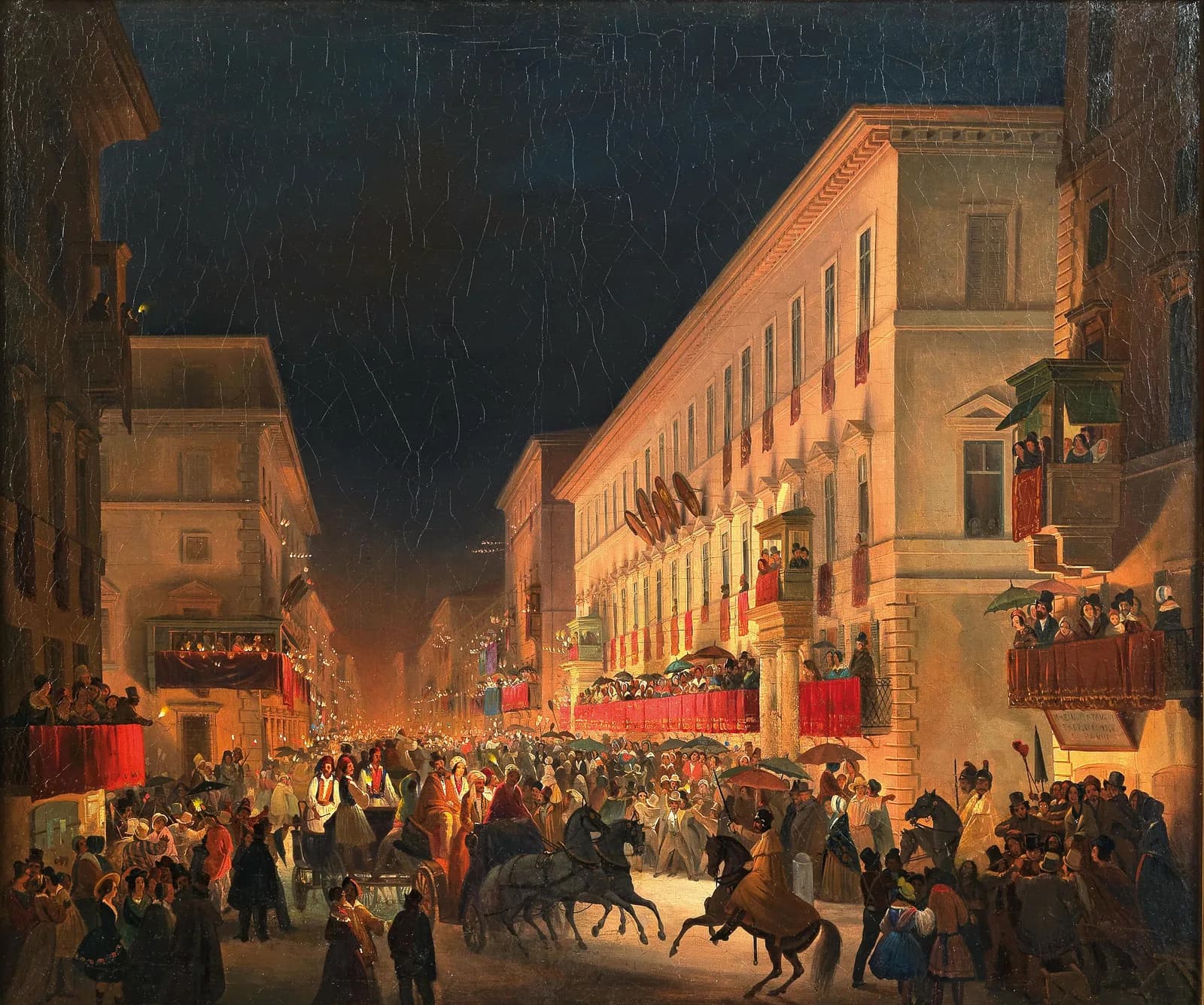
The scene every version stages differently is the Roman carnival, which is also a doorway in the playable Count of Monte Cristo, masks and bandits included.
🎬 The most-quoted line is not in the novel
In the Kevin Reynolds version, Edmond stops Mercedes from talking him out of the plan with a plea that has followed the story around ever since: if you ever loved me, do not rob me of my hate, it is all he has. Readers quote it back at each other as though it were Dumas.
“If you ever loved me, don’t… don’t rob me of my hate. It’s all I have.”
A whole-file search of the Project Gutenberg text returns nothing for that phrase, and nothing for the other line commonly attributed to the book alongside it, about doing your worst. The 2002 screenplay wrote both. Dumas gives his hero a different and less quotable position: he thinks he is an instrument of providence, and the novel spends nine hundred pages testing that claim rather than letting him make a speech about how hate sustains him.
That is the honest frame for the whole comparison. The screen versions are not failing to be the book by accident; they are solving a structural problem. The novel takes fourteen years to imprison its hero and another nine to spring the trap, and it does most of the work through inheritance law, banking and gossip. A two-hour film has to replace that machinery with feeling, and feeling needs lines like the one above.
⚔️ The 2002 film, and what it trades away
Reynolds’s 2002 film runs 131 minutes, casts Jim Caviezel as Edmond Dantès, Guy Pearce as Fernand Mondego, Dagmara Domińczyk as Mercédès and Richard Harris as Abbé Faria, and it is the reason most English-speaking readers pick up the novel at all.
What it trades away is the back half. The novel’s second movement is a slow campaign against three Paris households, and almost none of it survives: the prosecutor Villefort’s family and the poisonings inside it, the courtroom scene where the general Fernand is exposed for having sold out a Greek ruler he was paid to defend, and the patient financial strangulation of the banker Danglars are compressed or gone, and the ending is rebuilt entirely: the film keeps Mercédès in the frame and gives her a motive for her second marriage that the novel does not supply. Readers who love the film and then meet the book usually describe the same shock, which is that the book is a much colder story about money.
🛰️ The two that fans keep calling faithful
The recommendation that recurs most often among people who have read the novel is the strangest-sounding one on the list. Gankutsuou is a 24-episode anime from studio Gonzo, directed by Mahiro Maeda, broadcast in Japan across the 2004 to 2005 season, and it relocates the entire story to a space-age future with a city on the Moon.
The reason it works is a structural decision rather than a visual one. It tells the story from Albert de Morcerf’s point of view rather than Edmond’s, which is exactly how the novel handles the Paris half: the Count arrives as a rumour, is observed by young men who admire him, and is only slowly understood. Keeping the reader outside the Count is the thing screen versions usually give up first, and the one with mecha in it kept it.
The other regular recommendation is a French television miniseries from 1998, directed by Josée Dayan, with Gérard Depardieu as Dantès. It runs four parts and roughly six and a half hours, and the extra time goes exactly where a reader wants it: the Paris households, the trial, the slow work. Length is the single strongest predictor of fidelity in this novel’s adaptation history.
🆕 The two newest versions
The most recent film is French. Matthieu Delaporte and Alexandre de La Patellière’s Le Comte de Monte-Cristo stars Pierre Niney, runs 178 minutes, and premiered out of competition at Cannes on 22 May 2024. It made France’s four-film shortlist for the international Oscar; the country ultimately submitted a different picture. It invents a character with no counterpart in Dumas, Angèle, Villefort’s sister, and gives her the plot function the book assigns to Noirtier.
The other is a television series. Masterpiece’s eight-episode Count of Monte Cristo, directed by Bille August, casts Sam Claflin as Dantès and Jeremy Irons as Abbé Faria, and reached PBS in the United States in March 2026 after streaming earlier that month. Eight hours is the first English-language attempt at this book with enough room for the Paris machinery, which is the part every previous English version cut.
| Version | Room it has, and what that buys |
|---|---|
| Rowland V. Lee, 1934, 113 minutes, Robert Donat | The prison and the revenge only; the Paris households cannot fit. |
| David Greene, 1975, 119 minutes, Richard Chamberlain | Same constraint, made for television, faster on the escape. |
| Kevin Reynolds, 2002, 131 minutes, Jim Caviezel | Adds emotional connective tissue the book does not have, and cuts the financial plot. |
| Delaporte and de La Patelliere, 2024, 178 minutes, Pierre Niney | Restores some of the Paris half; invents a character to replace Noirtier. |
| Josee Dayan, 1998, four parts, about 6.5 hours | Enough room for the trial and the households; the fan favourite for fidelity. |
| Bille August, eight episodes, Sam Claflin | The most room any English-language version has ever had. |
🧭 Which one to watch, honestly
If you have not read the book, the Reynolds film is still the best recruiting sergeant, and the number of people who read a thousand-page novel because of it settles the argument about whether it is a good adaptation, whatever it does to the plot. If you have read the book and want to see it, length is your only reliable guide, so start with the longest thing available to you.
And if what you actually want is the part no adaptation keeps, which is the slow, patient, morally uncomfortable middle where the Count moves through Paris being admired by people he intends to ruin, no camera has managed it yet. The book is at Project Gutenberg, and the where-to-start essay on this hub covers which edition to pick.
Sources
- The Count of Monte Cristo (Project Gutenberg text) — Project Gutenberg
- The Count of Monte Cristo (2002 film) — Wikipedia
- Gankutsuou: The Count of Monte Cristo — Anime News Network
- Le Comte de Monte-Cristo (2024) — Festival de Cannes
- The Count of Monte Cristo on Masterpiece — PBS Masterpiece
Frequently asked questions
- Is "don't rob me of my hate" a real line from The Count of Monte Cristo?
- No. It was written for the 2002 screenplay. The same is true of the other line commonly credited to Dumas alongside it, "do your worst, for I will do mine": a case-insensitive search of the full Project Gutenberg text returns zero hits for either phrase.
- Which Count of Monte Cristo adaptation is the most faithful?
- The two long ones. The 1998 French miniseries is listed at between 396 and 400 minutes depending on the source, and the anime runs 24 episodes, so both have four to six times the running room of any feature film. Fidelity in this novel is almost purely a function of length.
- Is there an anime version of The Count of Monte Cristo?
- Yes: Gankutsuou, 24 episodes, broadcast across the 2004 to 2005 season. Its boldest choice is not the science fiction but the narrator. It follows Albert de Morcerf, whose father is the man who posted the denunciation, so the audience meets the Count as a stranger rather than as a hero.
- Is there a new Count of Monte Cristo movie?
- Two recent ones, in different formats. The 2024 French film was shortlisted for France's international Oscar entry but lost the slot to Jacques Audiard's Emilia Pérez. The 2026 television version is an Italian and French co-production, made by Palomar with DEMD Productions, and reached American viewers through PBS Masterpiece.
- How many film and TV versions of The Count of Monte Cristo are there?
- Dozens, across a century. The screen history runs at least from Rowland V. Lee's 1934 film with Robert Donat, through a 1975 television film with Richard Chamberlain, to the 2002, 2024 and 2026 versions discussed here. No count is definitive; the novel has been adapted in most film-producing countries.
Enjoyed this one?