Is The Count of Monte Cristo Worth Reading? Where to Start With All 1,200 Pages
Nobody asks whether The Count of Monte Cristo is good. They ask whether they have the months. The book is far less work than its spine suggests, and the reason is a publishing decision Dumas made before he wrote a word of it.


The question is almost never about quality. Nobody asks whether The Count of Monte Cristo is good; they ask whether they have the months. The honest answer is that the book is far less work than its spine suggests, and the reason is a publishing decision Dumas made before he wrote a word of it.
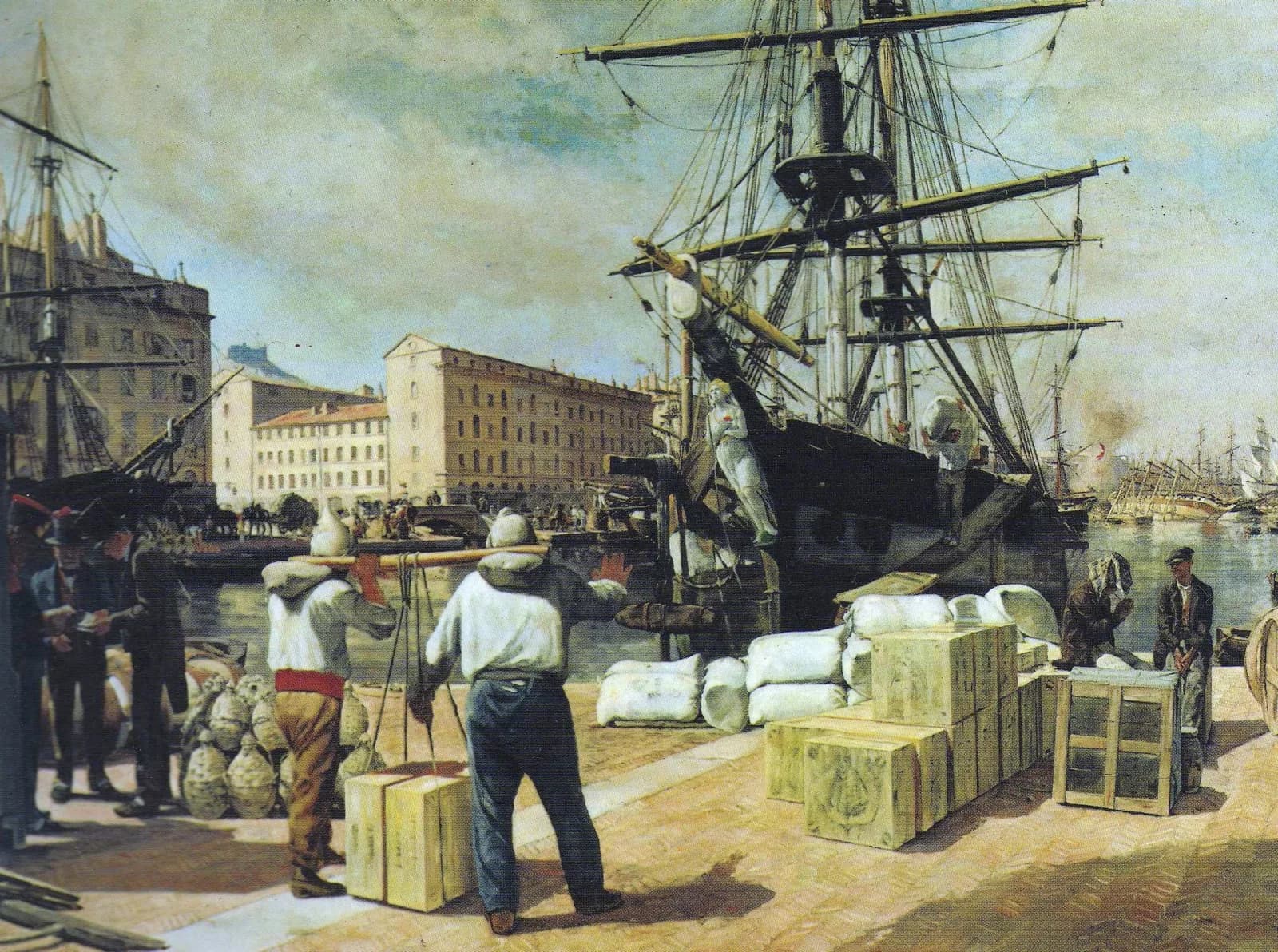
The opening is also the fastest way to find out whether you are in. A ship docks at Marseilles with its captain dead and a nineteen-year-old sailor named Edmond Dantès acting in his place, which is where the playable Count of Monte Cristo opens too.
📰 The length is the design
The book was not written as a book. It ran in the Paris paper Journal des Débats in instalments across 1844 to 1846, before it was ever a set of covers on a shelf. Everything a reader notices about the pacing follows from that.
- 117 chapters, not 40. The average chapter is a few pages. A reader who can only give a book twenty minutes finishes something every night, which is the single largest reason long classics get abandoned and this one does not.
- An engine at the end of most of them. A serialist who fails to make you buy the next paper is out of a job, so the chapter breaks fall where the answer is still missing.
- Recaps built in. Characters restate the situation aloud far more often than a modern novel would, because the original audience had waited days. Coming back after a week away costs you almost nothing.
This also explains the shape people complain about. The plot spends its first sixth in Marseilles and its prison, then vanishes for years and reassembles in Rome and Paris with a mostly new cast. Read as one object that is a strange structural choice. Read as eighteen months of weekly instalments it is simply what happens when a story is allowed to grow for as long as readers keep buying it.
🐌 The part where readers actually stall
It is worth naming the stall honestly, because pretending it is not there is how a recommendation loses trust. Almost nobody quits during the arrest or the prison. The place readers put the book down is the long Paris stretch after the treasure, where the novel introduces several new households at once and spends chapters on inheritances, engagements and dinner-party politics before any of it visibly connects to revenge.
The connection is real, and it is worth the wait; every one of those drawing-room threads is a wire running back to something that happened in 1815. But it is genuinely slower going, and a reader who expects the prison-break tempo to continue is going to feel cheated for about two hundred pages. Expect it, and it reads as setup rather than as drift.
The practical fix is a small one. Keep a note of who is married to whom during that stretch. Dumas is stacking a set of families that will be detonated later, and the only genuinely confusing thing about the middle of the book is the number of surnames arriving per chapter.
📚 Abridged, unabridged, and which translation
The single most consequential choice a new reader makes is not when to start but which copy to buy. Abridged editions of this novel are not lightly trimmed. Some historical abridgements cut the text roughly in half, and what goes first is exactly the connective drawing-room material described above, which is what makes the last two hundred pages land.
“he was nineteen when he entered the Château d’If; he was thirty-three when he” left it.
For the translation itself, the short version is Robin Buss’s for Penguin Classics if you are buying, and a free public-domain text such as the Project Gutenberg edition this essay quotes from if you are not. The editions, and a one-minute test for telling which one you own, are compared in the guide to Monte Cristo translations.
Page counts are the least useful number in this whole conversation. Penguin’s own listing for the Buss edition gives 1,312 pages; other editions in print run several hundred pages shorter or longer for the identical text, because typesetting is not a fact about the novel. Word count is the honest measure, and 463,000 words across 117 chapters works out at under four thousand words a chapter, which is a subway ride rather than an evening.
⚖️ If you want the other long French one
The comparison readers reach for is Victor Hugo’s Les Misérables, and the two books are genuinely similar in size and genuinely different in appetite. The useful split is what each one wants from you.
| Les Miserables | The Count of Monte Cristo |
|---|---|
| A man is forgiven early and spends the rest of the book trying to deserve it. | A man is destroyed early and spends the rest of the book collecting. |
| Stops for long essays on things outside the plot entirely. | Stops for almost nothing; the digressions are other people's schemes. |
| The moral question is whether a person can be remade. | The moral question is how far a wronged person is allowed to go. |
| Rewards patience with accumulated weight. | Rewards patience with payoffs roughly every fifteen pages. |
Neither is the better book, and readers who love one usually love the other. The split that matters is appetite. Hugo will make you sit through a great deal that has nothing to do with his hero before the chapter that breaks your heart. Dumas keeps a running account with the reader and settles it constantly, which is why his thousand pages feel shorter than Hugo’s do.
🧭 Where to actually start
Start at the first page. There is no recommended entry point, no famous chapter to sample and no reason to read a summary first; the opening forty pages are the strongest recruitment device the book has, and they cover a homecoming, a promotion, a betrothal, a conspiracy and an arrest.
The conspiracy itself is worth watching closely, because it takes about one page and it is entirely small. A rival wants a job, and asks aloud whether it matters how it is done “provided Dantès is not captain”. A neighbour is drunk. A jealous man picks up something that was thrown away. Nothing in that scene is grand, and everything in the next thousand pages comes out of it.
That is the honest case for the length. The revenge is only satisfying in proportion to how completely you have seen the life it was taken from, and 1,200 pages is what it costs to have seen it.
If that price is too high for a first go at Dumas, the shorter novel he finished a few months earlier is the usual on-ramp, and the essays on The Three Musketeers make the case for taking it first.
Sources
- The Count of Monte Cristo (Project Gutenberg text) — Project Gutenberg
- The Count of Monte Cristo, translated by Robin Buss — Penguin Classics
- 6 Fascinating Facts About The Count of Monte Cristo — PBS Masterpiece
Frequently asked questions
- How many pages is The Count of Monte Cristo?
- It depends entirely on the edition, which is why the number moves between 1,100 and 1,500 in different printings. Words are the honest measure: about 463,000 of them, divided across 117 chapters that average just under 4,000 words each. Most chapters take under fifteen minutes.
- Is the abridged version of The Count of Monte Cristo worth reading?
- Readers who have done both consistently say no. Abridgements cut the Paris half, which means Villefort's household, the poisonings and the Yanina trial that destroys Fernand Mondego all shrink or vanish. Those chapters are the fuse; without them the last two hundred pages are a series of unexplained collapses.
- Where can I read The Count of Monte Cristo for free?
- Project Gutenberg has the complete text as a free e-book, though its record names no translator and credits two authors, Alexandre Dumas and Auguste Maquet. Scans of the 1846 Chapman and Hall printing, from a copy at Oxford, are also free on the Internet Archive. The translation guide on this site shows how to tell which text you have.
- Is The Count of Monte Cristo just about revenge?
- Revenge is the engine, not the subject. The novel's final chapter, The Fifth of October, ends on a letter arguing that suffering is what makes happiness legible, and signs off with the phrase readers quote most: wait and hope. Dantès sails away from the revenge, with Haydée, rather than into it.
- How does The Count of Monte Cristo compare to Les Misérables?
- Similar length, opposite appetites: Hugo asks whether a person can be remade, Dumas asks how far a wronged person may go. Monte Cristo is also the faster start. Dantès has escaped and reached the treasure by Chapter 24, The Secret Cave, which is roughly a fifth of the way in.
Enjoyed this one?