Best Translation of The Count of Monte Cristo: Which One to Read
A Penguin paperback, a free download and a secondhand hardback may hold different English texts of one novel. Here is which to choose and how to check yours.


The free e-book, the paperback in the shop and the audiobook on your phone can be three different translations, and most covers do not say which. The opening scene they all translate is also the first doorway in the playable Count of Monte Cristo, a ship coming home to Marseilles in February 1815.
📚 Which translation should you read?
Two, realistically, and they suit different readers. The pick is ours, because no published ranking we found settles the question, and it rests on what each edition actually is.
- To buy: Robin Buss, Penguin Classics. A modern translation credited by name on the Penguin product page.
- For free: the anonymous 1846 translation, first published in London by Chapman and Hall. It reads older, with longer sentences and Victorian punctuation, and costs nothing.
The question of whether the length is worth it at all belongs to the essay on where to start, and the answer there is yes.
🗂️ How do the main options compare?
On four points: who translated it, whether it costs money, whether it is complete, and how you would recognise it.
| Edition | What you are getting |
|---|---|
| Robin Buss, Penguin Classics | Modern translation, translator named on the cover and the product page. Paid. |
| Anonymous, Chapman and Hall, London, 1846 | The Victorian translation. No translator credited. Public domain, and the version Wikipedia’s survey of the English translations calls the most common. |
| Project Gutenberg #1184 | Free e-book. Its catalogue record names no translator. 117 chapters in five volumes. |
| Any edition marked abridged | Same title on the spine, shorter text inside. Avoid for a first read. |
🔎 How do you tell which one you are holding?
Look for a translator’s name on the title page and the copyright page. A modern translation names its translator, because the translation is what is under copyright. A copy that names no one is usually reproducing an old public-domain text.
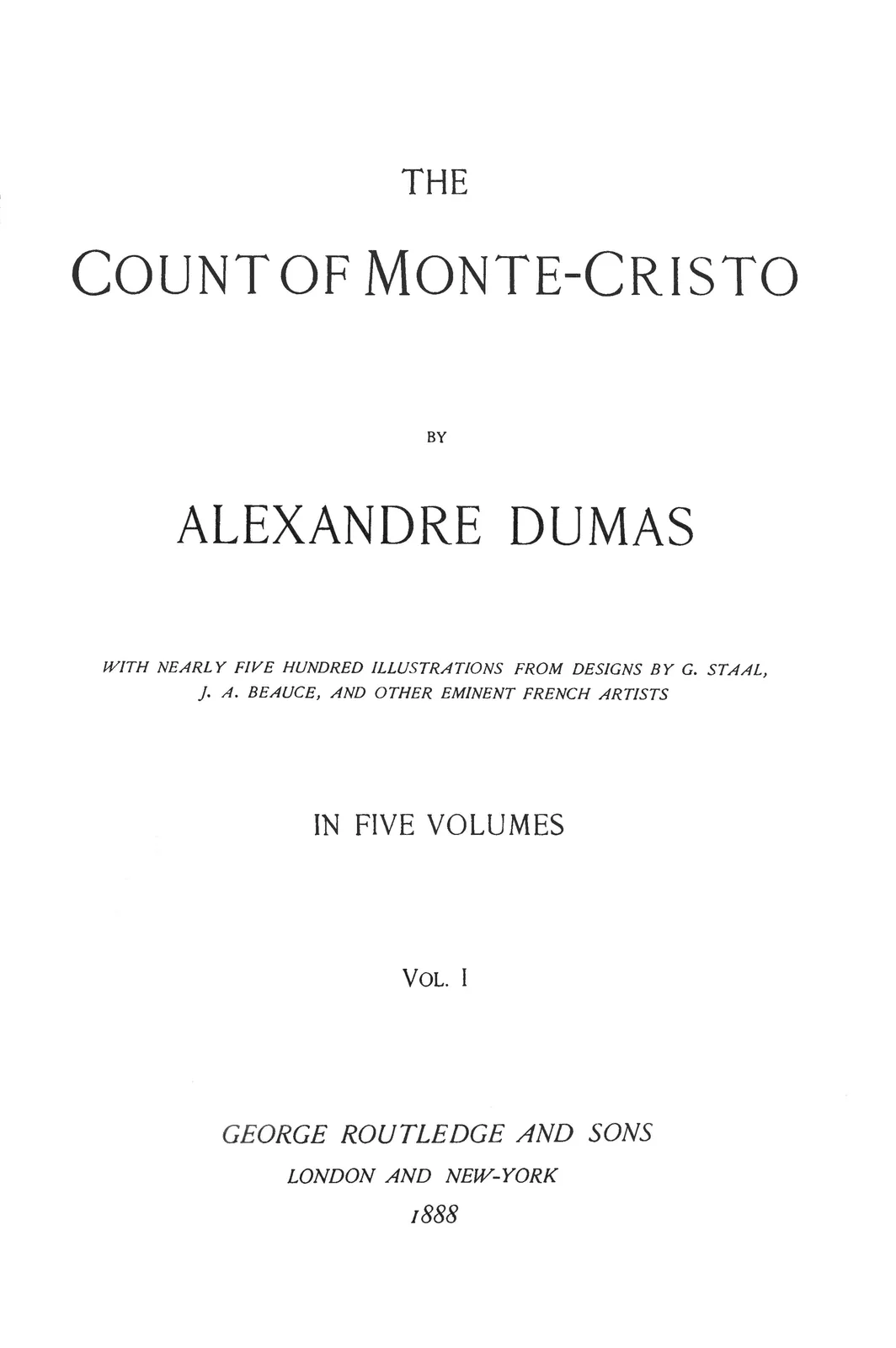
The picture at the top of this post is a worked example. It is the title page of George Routledge and Sons’ illustrated edition of 1888, which names the artists behind its illustrations and names no translator at all. The free Gutenberg file does the same. If your copy has no name, compare its first sentence with the free text.
On the 24th of February, 1815, the look-out at Notre-Dame de la Garde signalled the three-master, the Pharaon from Smyrna, Trieste, and Naples.
A match, word for word, means you have the same translation the Project Gutenberg edition carries. A different sentence about the same ship means a different translator, and the title page should tell you who.
✂️ What does an abridged edition cost you?
Length, and you cannot see it on the spine. Abridged editions are sold as The Count of Monte Cristo with the word abridged in small type. The full Victorian text has been a multi-volume book since the 1846 Chapman and Hall printing, and the free text divides 117 chapters into five volumes.
Check the page count against the full text before you buy, and check for the word on the cover. A shortened version is fine for a child or a reluctant reader. For anyone who wants the revenge to land, the full length is the point.
🧭 Which one fits you?
For a first read on paper, take the Buss. For an e-reader, a tight budget or a book club where everyone needs the same text tonight, take the free 1846 translation, which every reader can download at no cost. If a friend is reading a different edition, compare the first sentence before you compare notes.
Sources
- The Count of Monte Cristo, translated by Robin Buss (Penguin Classics) — Penguin Books UK
- The Count of Monte Cristo (English translations section) — Wikipedia
- The Count of Monte Cristo (Project Gutenberg #1184) — Project Gutenberg
- The Count of Monte Cristo, London: Chapman and Hall, 1846 — Internet Archive
Frequently asked questions
- What is the best version of the Count of Monte Cristo to read?
- For most readers, the Penguin Classics edition. Its Open Library record reads "translated and with an introduction and notes by Robin Buss", so you get a modern text with notes.
- What version of the Count of Monte Cristo should I read?
- An unabridged one, in whichever translation suits your budget. Note that the free Project Gutenberg record lists two authors, Alexandre Dumas and Auguste Maquet, his collaborator on the novel. A copy that credits only Dumas is the same book, catalogued the older way.
- Is it better to read the unabridged or abridged version of The Count of Monte Cristo?
- Unabridged, if you are reading for the revenge plot. Shortened editions exist under the same title: Barnes & Noble Classics published one in New York in 2004, catalogued simply as The Count of Monte Cristo, abridged. They suit younger readers, but they trim the long middle that makes the ending pay off.
- Is the Project Gutenberg Count of Monte Cristo a good translation?
- It is a readable Victorian text, and it has been free online since its release on January 1, 1998. The record credits its preparation to Anonymous Project Gutenberg Volunteers, Dan Muller and David Widger. Expect older phrasing, long sentences, and no notes on the history behind the plot.
- How long is The Count of Monte Cristo?
- Very long in any unabridged translation. The free text runs from February 1815 in the opening chapter to a final chapter titled The Fifth of October, so give it the time you would give a long series rather than a single novel.
Enjoyed this one?