Why Did Villefort Burn the Letter? Because It Named His Father
Summaries say he destroys the evidence. Dumas writes three separate scenes about that one envelope, and in two of them somebody says aloud what the prosecutor was really saving.


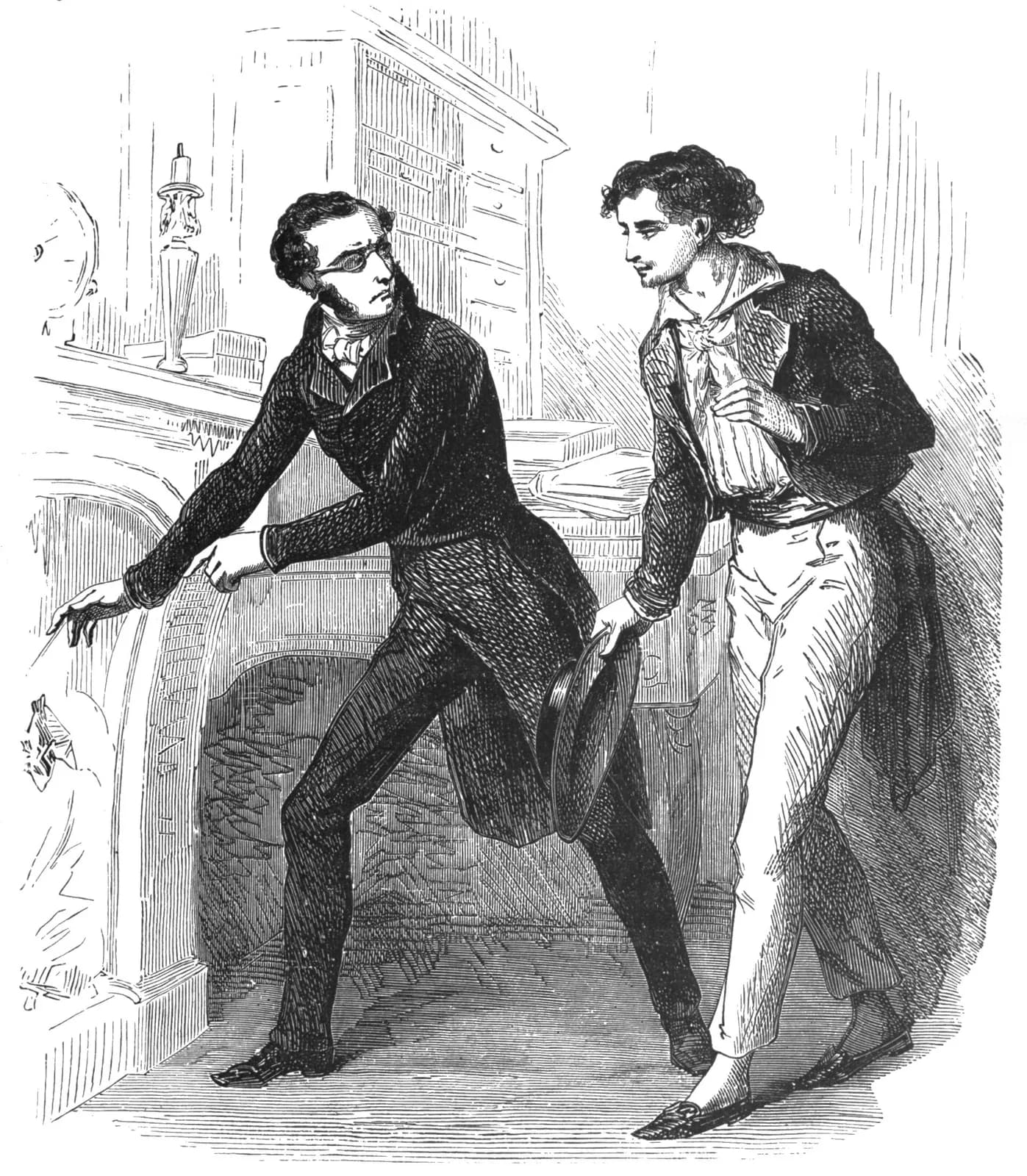
Spoilers for the first seventeen chapters of The Count of Monte Cristo, including what Dantès learns from the Abbé Faria in prison.
Most summaries say he destroys the evidence, which is true and misses the point. The book gives three scenes about that letter, and in each of them someone says out loud what he was protecting. The interview where it burns is a doorway in the playable Count of Monte Cristo, and the lines below are the ones the scene is built from.
🔥 What does Villefort say when he burns it?
He presents it as a favour. The deputy prosecutor has told Dantès that the letter is the main charge against him, and then, mid-sentence, he puts it in the fire.
“The principal charge against you is this letter, and you see——” Villefort approached the fire, cast it in, and waited until it was entirely consumed. “You see, I destroy it?”
Dantès calls him goodness itself. Villefort then tells him the letter is destroyed, that the two of them alone know it existed, and that he should deny it boldly if anyone asks. He makes the young man swear it was the only letter he carried.
✉️ Who is the letter addressed to?
To his father. Villefort asks the question almost as an afterthought, while Dantès is already picking up his hat and gloves, and the answer stops him cold.
“To Monsieur Noirtier, Rue Coq-Héron, Paris.” Had a thunderbolt fallen into the room, Villefort could not have been more stupefied.
Dantès asks whether he knows the man. Villefort says that a faithful servant of the king does not know conspirators. It is the first lie in the scene, and the reader does not yet know it is one, because the prosecutor goes by a different surname from his father.
😰 What is Villefort thinking while he reads?
Only about himself. He reads the letter for the third time, sweating, and the narrator lets us hear him.
“Oh, if he knows the contents of this!” murmured he, “and that Noirtier is the father of Villefort, I am lost!”
The moment Dantès is led out, Villefort half-faints into a chair and says it again in plainer words: if his superior had been in Marseilles, he would have been ruined, and his father’s past keeps interfering with his successes. Then a smile appears, and he decides that the letter which might have ruined him will make his fortune instead. He takes the news it carried to Paris himself, racing to be the first to warn the king.
👴 What does he tell his father?
The truth, and his father hears the part he leaves out. In Chapter 12, Father and Son, Noirtier turns up unannounced at Villefort’s rooms in Paris, and his son warns him that the letter could have had him shot. Noirtier laughs, asks whether the Restoration will adopt imperial methods so promptly, and wants to know where the letter is.
“I burnt it, for fear that even a fragment should remain; for that letter must have led to your condemnation.” “And the destruction of your future prospects,” replied Noirtier.
That reply is the book’s own answer to the question in the title. Villefort frames the burning as protecting his father. His father, who knows him well, finishes the sentence with the reason Villefort left out.
🕯️ How does Dantès find out?
From the Abbé Faria, years later, in a cell at the Château d’If. Dantès still thinks of the burning as the one kind act in his arrest. He tells Faria that Villefort burnt the sole evidence that could have convicted him, and quotes him from memory.
He did; saying at the same time, ‘You see I thus destroy the only proof existing against you.’
That is not quite what Villefort said. The words in Chapter 7 were only “You see, I destroy it?”, and Dantès has added the kindness in the years since. Faria asks one more question: whether the magistrate made him swear never to say the name on the address. When Dantès says yes, the abbé laughs and tells him: “This Noirtier was his father!”
⚖️ Was he protecting his father or himself?
Himself, by the book’s own account. Each time Villefort is alone or honest, the word is ruin, his ruin. The standard plot summary puts it the same way: his political career would be ruined if it were known that his father is a Bonapartist. The text supports that reading line by line. How the three men behind the arrest compare is laid out in the characters guide to Villefort, Danglars and Fernand, and every line quoted here can be checked in the Project Gutenberg text.
Sources
- The Count of Monte Cristo (Project Gutenberg #1184) — Project Gutenberg
- The Count of Monte Cristo — Wikipedia
- The Count of Monte Cristo, illustrated edition, London: George Routledge and Sons, 1888 — Internet Archive
- Villefort destroys the letter, plate from the 1888 Routledge edition — Wikimedia Commons
Frequently asked questions
- Why does Villefort burn the letter?
- Because it was exactly the proof the anonymous denunciation promised: a letter carried from Napoleon's camp for the Bonapartist committee in Paris, with his own father's name on the front. Burning it removes the one object that links the prosecutor to the conspiracy.
- What did the letter say in Monte Cristo?
- Dumas never prints it. What we learn comes from Villefort in Chapter 12: the letter came from the Island of Elba, and it is how he learned of Napoleon's plan to land in France before the landing happened. He says simply, I was aware of his intention, which is why he could race to Paris ahead of the news.
- Who was the letter addressed to in The Count of Monte Cristo?
- To Monsieur Noirtier in Paris. Villefort repeats the address under his breath with a house number added, M. Noirtier, Rue Coq-Héron, No. 13, growing paler as he says it, which tells the reader he already knows the door. Dantès has no idea who lives there.
- Did Villefort know his father was a Bonapartist?
- Yes, and he had said so in public that same morning. At his betrothal breakfast in Chapter 6 he tells the royalist guests he has laid aside even the name of my father and disowns his politics, calling himself de Villefort rather than Noirtier. The letter threatens that careful separation.
- Who gave Dantès the letter in The Count of Monte Cristo?
- The grand-marshal at Porto-Ferrajo. Captain Leclere, dying at sea, ordered Dantès to put in there and deliver a packet; the grand-marshal then handed him a letter for a person in Paris. Dantès agreed because his captain had asked, without knowing what it contained.
Enjoyed this one?