The Real Count of Monte Cristo: Alexandre Dumas's Father and the Man Who Inspired the Plot
There is no single real Count of Monte Cristo, and the two candidates usually get mashed into one story. One is a French shoemaker whose case a police archivist wrote down. The other is Alexandre Dumas's own father.


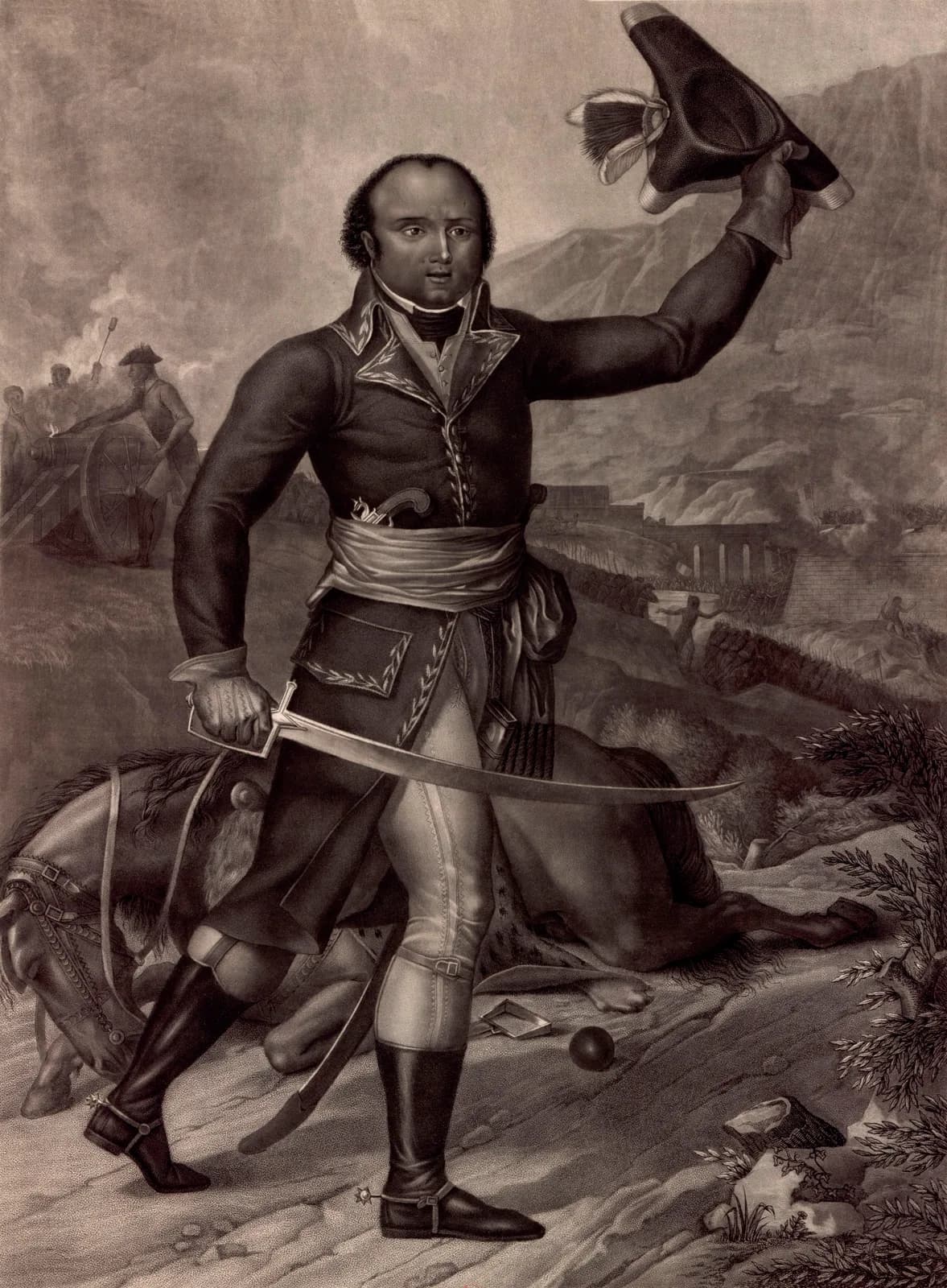
There is no single real Count of Monte Cristo, and the two candidates usually get mashed into one story on the internet. One is a French shoemaker whose case a police archivist wrote down. The other is Alexandre Dumas’s own father, a general who really was thrown into a foreign prison and came out ruined.
The cell is where the novel and the family history touch, and it is a doorway in the playable Count of Monte Cristo: a wall, a sound behind it, and a decision about whether to answer.
🎖️ The general who was the author's father
Thomas-Alexandre Dumas was born in 1762 in Saint-Domingue, now Haiti, the son of a French nobleman and Marie-Cessette Dumas, an enslaved woman. He took his mother’s surname when he enlisted, which is why the most famous name in French popular fiction is hers.
- A general at thirty-one. By 1793 he had risen to general, and he was the first person of colour in the French military to reach brigadier general, divisional general and general-in-chief.
- The Black Devil. Austrian troops who had faced him in the field gave him the nickname, in German rather than French: Schwarzer Teufel.
- Egypt, and then a cell.He commanded French cavalry in Napoleon’s Egypt campaign, and on the voyage home was taken prisoner in the Kingdom of Naples and held for about two years.
He came out with his health broken and no career left, and died in February 1806, when the son who would write this novel was about three years old. The boy grew up on the story of a father who had been enormously strong, spectacularly brave, and destroyed by a captivity nobody was ever punished for.
The best-known modern account of that life is Tom Reiss’s The Black Count, subtitled Glory, Revolution, Betrayal, and the Real Count of Monte Cristo, published by Crown in 2012. It won the Pulitzer Prize for Biography or Autobiography the following year.
🥾 Pierre Picaud, and how far to trust him
The plot parallel is a different story with a different provenance. It concerns a shoemaker named Pierre Picaud, and it reaches us through one man: Jacques Peuchet, an archivist of the Paris police, who published it in an 1838 collection drawn from the police archives.
In Peuchet’s telling, three jealous friends denounced Picaud as an English spy, and a fourth man, Allut, knew about the plot and said nothing. Picaud was held at the fortress of Fenestrelle for seven years. A fellow prisoner, an Italian priest named Father Torri, left him a hidden fortune in Milan. Picaud came back under another name and set about the four of them.
The overlap with the novel is obvious, and so is the problem. Historians do not treat this as documented history. Peuchet was writing to romanticise the archives, and the police records that might have settled the question burned in 1871, so it sits somewhere between a case file and a legend and cannot now be moved either way. Two accounts of how Picaud’s revenge ended contradict each other outright, which is why this essay stops before the ending.
The honest summary is that Dumas almost certainly read Peuchet, took the shape of the thing, and built something much larger on it. The wrongful denunciation, the long imprisonment, the dying fellow prisoner, the treasure and the return under a new name are all in Peuchet first. What Peuchet does not have is a hero who worries about whether he has the right.
🏝️ The island, and the real fortress
Two of the novel’s locations are ordinary geography. Monte Cristo is a real island in the Tuscan archipelago, and Dumas had seen it: he sailed around it in 1841 with a young Bonaparte prince, and promised him a novel with the island’s name on it. Two things about that trip are worth not repeating. The commonly given date is a year later, and the sources of record give 1841. And the prince is often identified as the future Napoleon III, which cannot be right: the Ham prison register for 7 October 1840 records him arriving, and he was still there in 1846. Which Bonaparte it actually was, the sources do not agree on, so this essay does not name him.
The Château d’If is even more concrete. Construction began in 1524 on the orders of Francis I, on a small island off Marseille, and the fortress really did become a prison. A ferry still runs out to it from the Old Port, and the crossing takes about twenty minutes.
What the site itself is careful about is the escape. Marseille’s own tourism office calls it an impregnable prison and sets out what getting off the island would actually have taken: breaking the chains, forcing the doors, scaling the walls, and then swimming a kilometre and a half against the current. It also states plainly that Edmond Dantès is a fictional character, which is a sentence a tourist office only writes when it is asked the question a great deal.
✍️ Who actually wrote the book
There is a fourth real person worth naming, because readers keep finding him and assuming a scandal. Dumas worked with a collaborator, Auguste Maquet, who drafted plots and characters that Dumas then filled out with the dialogue and the voice. The arrangement produced a lot of the work Dumas is famous for.
Maquet later sued, three times, between 1856 and 1858, asking to be named as co-author on eighteen novels including this one. The court found for Dumas, and Maquet did not appeal. Project Gutenberg’s own catalogue record for the novel lists both men, which is how most readers discover the collaboration at all.
None of this is the usual ghostwriting story, and it is worth keeping the two things apart. The plot machinery a reader admires may well be partly Maquet’s. The thing that makes the novel survive, which is a man who gets everything he wanted and then has to decide what he has become, is the part a boy who lost a broken father at three years old was uniquely equipped to write. The text is at Project Gutenberg, and the hero-or-villain essay on this hub follows that decision to where the book rules on it. Maquet’s name sits on the other novel Dumas wrote that year too, which the essays on The Three Musketeers take up from the authorship side.
Sources
- The Real Count of Monte Cristo Was Alexandre Dumas' Father, a Trailblazing Black General — Smithsonian Magazine
- The Black Count, by Tom Reiss — Penguin Random House
- Pierre Picaud — Wikipedia
- If Castle — Marseille Tourism
Frequently asked questions
- Is The Count of Monte Cristo based on a true story?
- It is based on two, loosely. The novel appeared in instalments across 1844 to 1846, roughly six years after the police-archive anecdote it borrows its shape from was published. The character, rather than the plot, echoes the author's own family history instead.
- Who was Alexandre Dumas's father?
- General Thomas-Alexandre Dumas, born in 1762 in Saint-Domingue. He commanded cavalry in Egypt and, on the way home, was held prisoner in the Kingdom of Naples from 1799 to 1801. He came back with his health broken and died in 1806, leaving a three-year-old son.
- Who was Pierre Picaud?
- A shoemaker, in the version a Paris police archivist published in 1838. That account names the three who denounced him, Loupian, Solari and Chaubart, and has him find the fourth man, Allut, at Nîmes and buy the story from him for a large diamond. How the revenge ended is told two incompatible ways by the sources that carry it.
- Did Alexandre Dumas write The Count of Monte Cristo himself?
- He wrote it with Auguste Maquet, and the courts settled who owned it. Maquet brought three separate suits and lost all of them, and the free digital editions still carry the trace: Project Gutenberg's record for this novel lists both men as authors, which is where most readers first learn the name.
- Can you visit the Château d'If?
- Yes. A ferry runs out from Marseille's Old Port and the crossing takes about twenty minutes. What you cannot see is the escape: Dumas stages it in Chapter 20, The Cemetery of the Château d'If, by having Dantès take a dead man's place in the burial sack thrown from the rocks.
Enjoyed this one?