Why does Dracula have to be invited in? It's the oldest boundaries rule in fiction (2026)
The most famous vampire rule isn't fangs or sunlight — it's the doorstep. A vampire can't come in until you invite it; once you do, it comes and goes as it likes, forever. Stoker wrote it in 1897, and two recent movies turned it into the internet's favorite metaphor for the people you let into your life and can't get back out.


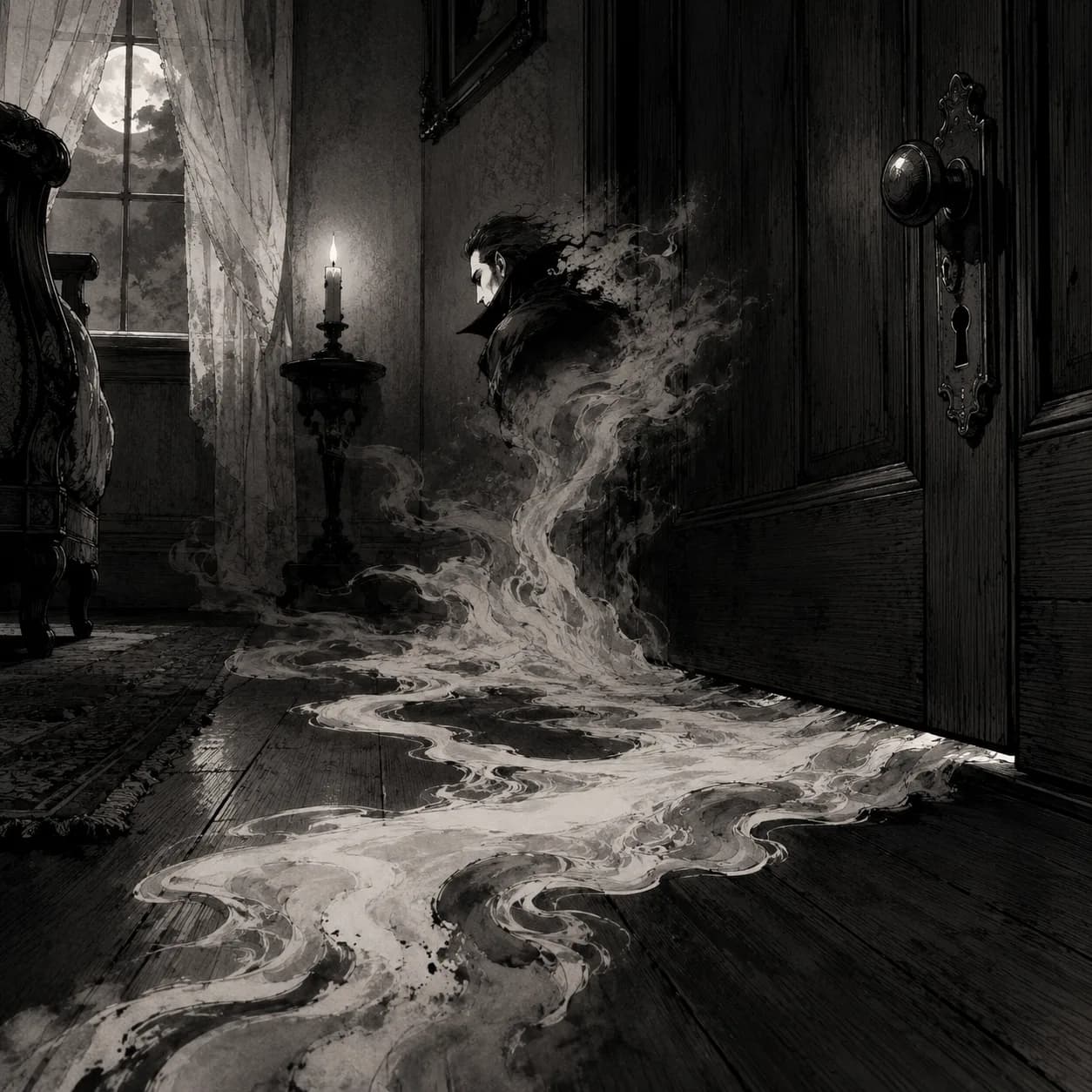
Think about everyone who has a key to your life that you handed over exactly once — a boss, a newsletter you can't escape, the group chat that quietly ate your week. The book that nailed how that works is, weirdly, the one with the vampire in it. The most famous rule in Dracula isn't about fangs or sunlight. It's about a doorstep: a vampire can't come in until you invite it — and once you do, it comes and goes as it pleases, forever.
- The rule is Van Helsing's, Chapter XVIII.A vampire “may not enter anywhere at the first, unless there be some one of the household who bid him to come.”
- The lock only works before you open it. After the invitation, the threshold stops protecting you.
- The internet rediscovered it as a boundaries rule — the toxic boss, the houseguest, the person who only has power because you let them in.
- Two recent movies are built on it — Renfield (2023) and Nosferatu (2024), the second of which made around $182 million.
🚪 The rule, in plain words
Strip away the lore and the rule is almost administrative. Van Helsing, explaining the vampire's limits to the people hunting him, lays it out: a vampire “may not enter anywhere at the first, unless there be some one of the household who bid him to come; though afterwards he can come as he please”. That second clause is the whole horror of it. The protection is real, but it expires the instant you use up your one decision.
A vampire can't cross your doorstep unless you invite it in. But invite it once, and it comes and goes as it likes, forever.
🔒 The lock only works before you open it
We've had fifteen years of a wellness industry selling boundaries like a checklist you fill out once and then you're safe. Stoker's version is darker and more useful: the boundary isn't a setting you toggle, it's a single door, and the only power you have is before you open it.
The lock only works before you open it. After that, it isn't even a lock.
Half the book, read this way, is people being painfully polite to something they should have turned away at the door. You don't get to renegotiate after you've already said come in. Which is exactly why the rule has stopped being about vampires for most modern readers and started being about everyone they've handed a key to.
😈 How the internet rediscovered it
Two movies dragged the threshold rule into the language of therapy. The first is Renfield (2023), where Dracula's bug-eating servant from the novel is recast as a codependent assistant who joins a support group to set boundaries with his vampire boss. The film's director, Chris McKay, described Dracula as “the ultimate toxic narcissist… literally the boss from Hell”.
The film's director put it perfectly. Dracula is the ultimate toxic narcissist. The boss from Hell.
The second is Nosferatu (2024) — a vampire film descended from the same legend, which made around $182 million worldwide on the very same idea: a woman opens her door to something she can't put back out. The a much-liked Letterboxd review just reads, “Never show an ugly man attention, they'll never leave you alone” — a dating-app horror story about an 1897 novel.
🗝️ You don't get to redo the doorstep
The everyday version needs no vampire at all. Your boss texts late and asks for the impossible thing, framed as a favor, in a voice that sounds almost reasonable. You answer it — just once. And then the threshold has already been crossed.
Just once. By Tuesday you're dreaming in their cadence. By Friday you're using their phrases. By next month you're telling your therapist why this one really needs you. Why this one will finally change.
And the worst part of the rule is the asymmetry. The invitation is yours to give alone — but taking it back is rarely a solo job. The book knows this: it takes the whole group of friends, showing up together, to get the vampire out. The same is true of the houseguest who was supposed to crash for a week and is, by month four, telling everyone how lucky they are to have him.
The invitation is yours to give. But taking it back takes everyone who loves you.
So the question the book is actually asking isn't who's at the door. It's who you'd open it for on purpose — because you only get the one yes, and it can echo for years.
You get one yes, and it can echo for years. The real question was never who's at the door. It's who you'd open it for on purpose.
Bram Stoker wrote the rule for vampires in 1897; the 2020s rediscovered it as the rule for everyone. They only get the power you give them — but once they're across the threshold, the threshold doesn't help anymore. Next door, the same book has a quieter, sadder lesson about a change you can't name in time: what happens to Lucy.The Phantom of the Opera runs its own invitation rule, except Christine never quite gets to refuse him.
Sources
- Dracula (1897 text) — Chapter XVIII — Project Gutenberg
- Dracula, Chapter 18 — analysis (the threshold rule) — LitCharts
- How Comedies Like 'Renfield' Are Portraying Codependency and Toxicity — Variety
- Nosferatu (2024) — reviews — Letterboxd
- Nosferatu (2024 film) — box office — Wikipedia
Frequently asked questions
- Why does Dracula have to be invited in?
- In the novel, a vampire cannot cross the threshold of a home unless someone inside invites him in — but once invited, he can come and go as he pleases forever. Van Helsing states the rule explicitly in Chapter XVIII. It's a rule about consent and power: the vampire only gets the access you grant him, which makes the moment of invitation the one moment you're actually in control.
- What chapter is the invitation rule in Dracula?
- The threshold rule appears in Chapter XVIII, spoken by Van Helsing as he explains the vampire's limitations to the group hunting Dracula: a vampire 'may not enter anywhere at the first, unless there be some one of the household who bid him to come.' It's the book's clearest statement of the rule that the rest of vampire fiction inherited.
- What does the threshold rule in Dracula mean?
- On the surface it's supernatural mechanics — a vampire is physically barred from a home until invited. But the rule encodes something deeper: harm tends to need your permission to get in, and the safeguard only works before you grant it. Modern readers have re-read it as a metaphor for boundaries and consent — the toxic boss, partner, or houseguest who only has power over your life because, at some point, you opened the door.
- Who is Renfield in Dracula?
- Renfield is a patient in Dr. Seward's asylum who eats insects and is psychically devoted to Dracula, whom he calls his master. In the novel he's a disturbing minor figure; the 2023 film Renfield recast him as Dracula's codependent personal assistant trying to leave his abusive supernatural boss — a modern reading that surfaces a rule already in the book: once Renfield is bound to the Count, he can't simply walk away.
- Is the 'you have to invite him in' rule from the book or the movies?
- It's from the book. Unlike the cape (1931 film) or death-by-sunlight (1922's Nosferatu), the invitation rule is genuinely Bram Stoker's — Van Helsing lays it out in Chapter XVIII. It's one of the few pieces of vampire lore the movies kept faithfully, probably because it's the most psychologically resonant rule in the whole rulebook.
Enjoyed this one?