What happens to Lucy in Dracula — and why it reads like every 'I should've seen it sooner' story (2026)
Lucy Westenra is the most loved character in Dracula — and the one who gets lost. She's bitten once, then fades over weeks while the people around her, including the doctor who knows exactly what's wrong, can't or won't name it in time. It's the original 'I should have seen it sooner' story, and the book's quietest, most useful lesson.


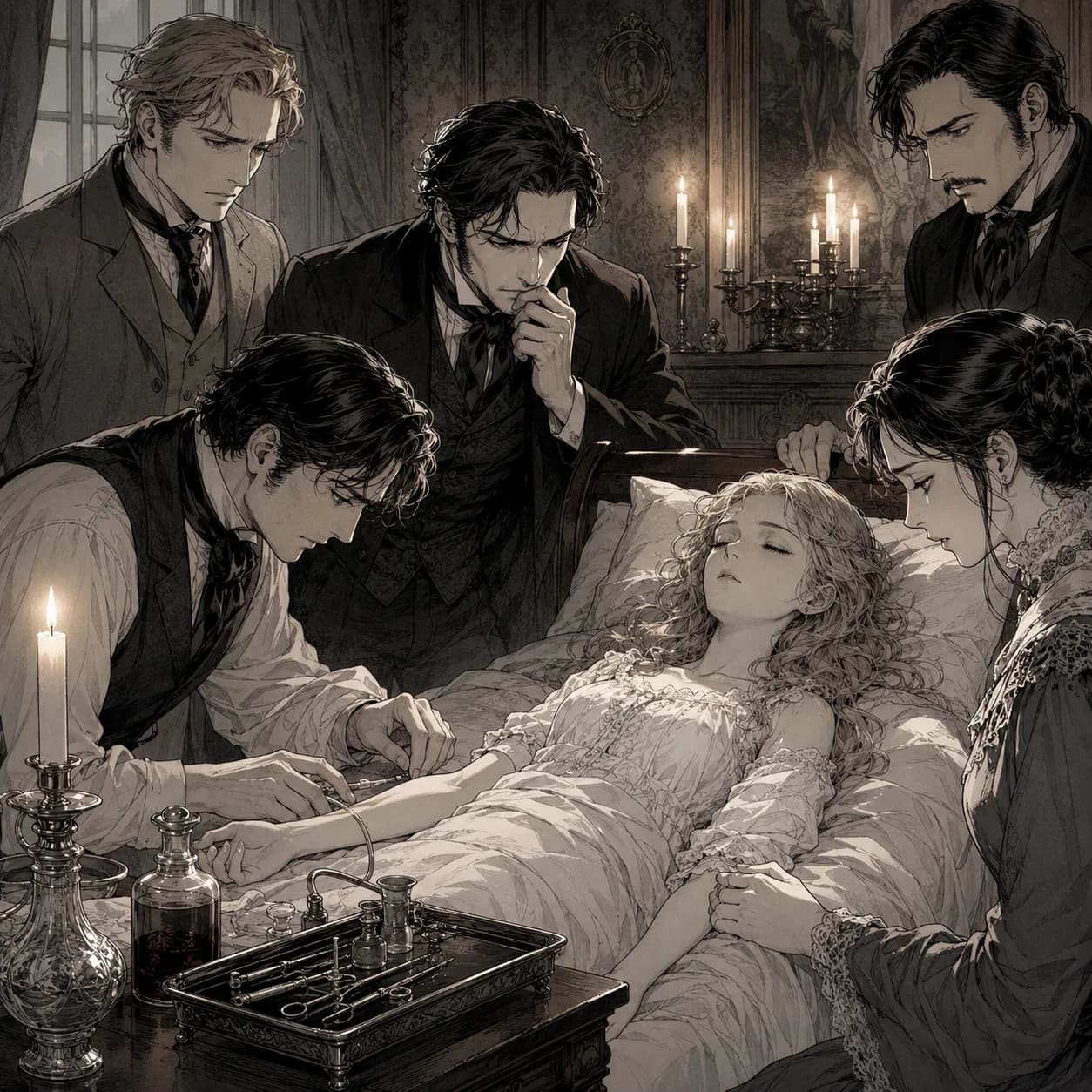
Most people remember Dracula for the Count. The part that actually stays with readers is Lucy — the bright, beloved young woman who gets bitten once and then fades, over weeks, while everyone around her, including the doctor who knows exactly what's wrong, fails to say the word out loud in time. It's the original “I should have seen it earlier” story, and it's the most quietly useful thing in the book.
- Lucy is patient zero.Adored, freshly engaged, bitten once — and then she declines in tiny increments she can't perceive in herself.
- The doctor saw it and went quiet.Van Helsing recognizes the cause almost at once but doesn't name it for weeks.
- The horror is the drift, not the bite.She changes a little every night until, by the time anyone names it, she's someone else.
- The rule: name it earlier.Knowing isn't the cure — saying it out loud is.
| How we remember Lucy | What the arc is really about |
|---|---|
| The tragic damsel, a victim of the monster | The person who can feel herself changing and has no word for it |
| A bite, and then she's gone | Six weeks of slow drift nobody names in time |
| A horror subplot | The original 'I should have seen it earlier' story |
| Something that happens to her | Something that happens, slowly, to all of us |
🕯️ Patient zero
Before any of the horror starts, Lucy is the brightest person in the book — courted by three men in a single day. That's what makes her the case study. The change doesn't come for some marked, doomed figure; it comes for the one everybody loves, and it comes so gradually that she's the last to know.
Her name's Lucy. Before this starts, everyone's in love with her, vivacious, sweet, freshly engaged after three proposals in one day. She's patient zero. Every “I should have seen it earlier” story traces back to her.
She's bitten once and doesn't see it. Then she's tired, paler, sleepwalking. Her best friend Mina, keeping a diary, can't name what she's watching either. The decline runs across Chapters IX–XII in a calm, clinical register that makes it worse, not better.
🩸 The doctor who saw it and went quiet
They send for the smartest doctor available — Van Helsing — and he looks at Lucy and knows almost immediately what's wrong. He's done this before. And then he treats the symptoms for weeks without naming the cause. That's the detail that turns the arc from a horror subplot into something that aches.
Blood transfusions, four men, six weeks straight, real period medicine, and she keeps slipping back. He could have named it in week one. He didn't until week six.
Read it in 2026 and it's almost unbearable, because the fix was never more blood. The fix was a sentence.
Lucy needs an intervention, not a transfusion. She needs somebody she trusts to say the word out loud.
🌙 The bite isn't the event — the slow takeover is
The Lucy arc is the read everyone's landing on right now. An essay on the 2024 film Nosferatu argued that the menace in these stories spreads like a plague — a contagion, not a single attack. The drama isn't the moment of the bite; it's the invisible, night-by-night takeover after it.
The bite isn't the event. The slow takeover is.
And the modern audience reads it in pure dating-app language. Reviews of recent vampire films sound like situationship columns: one of the most-liked reviews is just “Girls in situationships have never felt so seen”; another lists, as a relatable thing, “being drawn to the evil guy, and even though everyone's against it, you just can't help it.” Swap a few nouns and that's a century of “I knew, and I went anyway” — which Stoker mapped in 1897.
🗣️ The rule: name it earlier
The appetite isn't always a person. It's the Wednesday two p.m. where you reach for your phone and look up at 2:35 and don't remember what was on the screen — the small drift that's been quietly eating your days. That's the part you can actually use.
The appetite that takes you over is the one you won't name. The thing stealing your sleep, your energy, your attention, it's rarely the thing you think.
Lucy was lost in the gap between knowing and saying. The cure isn't insight; it's language — and sometimes you can't supply it for yourself.
Knowing isn't the cure. Saying it out loud is. The gap between knowing and saying is exactly where Lucy was lost.
If you're Lucy, you can't say the name. Somebody else has to. Be the friend at the coffee shop.
The earliest contagion thriller in the canon is also the earliest case study in a slow personal change going un-named. Lucy didn't die because the monster was strong; she was lost in the weeks nobody would say the word. Name it earlier. And if it's not happening to you but to someone you love, be the friend at the coffee shop. Next, the question the whole series has been circling: how much of the Dracula in your head is actually in the book.Les Misérablestracks its own slow turn, except Valjean's runs the opposite direction, toward the light instead of away.
Sources
- Dracula (1897 text) — Lucy's arc, Chapters IX–XII — Project Gutenberg
- Dracula — Chapters 11–12 summary (Lucy's decline) — SparkNotes
- The Inevitable Nosferatu Essay (appetite as contagion) — Ashlander Analysis
- Nosferatu (2024) — reviews — Letterboxd
Frequently asked questions
- What happens to Lucy in Dracula?
- Lucy Westenra, a vivacious young woman freshly engaged, is bitten by Dracula and begins a slow decline — fatigue, paleness, sleepwalking — over several weeks. Four men give her repeated blood transfusions and Van Helsing treats her, but she keeps slipping, dies, and returns as a vampire. She is eventually freed from that state by her friends. Her arc, in Chapters IX–XII, is the novel's emotional core: a person changing in tiny increments while everyone around her struggles to name what's happening.
- Who is Lucy Westenra?
- Lucy is Mina Harker's best friend and the bright, beloved center of the novel's first half — courted by three men in a single day. She becomes Dracula's first English victim, and her gradual transformation is the book's 'patient zero' story. She's often read as the tragic damsel, but a closer reading makes her the most relatable figure in the book: the person who can feel something shifting in herself and has no language for it yet.
- Why didn't Van Helsing tell anyone what was wrong with Lucy?
- Van Helsing recognizes Lucy's condition almost immediately — he has seen it before — but he doesn't name it as vampirism for weeks, treating the symptoms with transfusions instead of saying the word out loud. Stoker leaves his reasons ambiguous (disbelief, the fear of not being believed, the slow accumulation of proof), but the effect is the book's sharpest lesson: knowing isn't the same as saying, and the gap between the two is where Lucy is lost.
- What is 'the slow turn' in Dracula?
- The slow turn is the way Dracula's horror works: not the single dramatic bite, but the gradual, night-by-night takeover that the victim can't perceive in herself. As one essay on the 2024 film Nosferatu put it, the menace 'spreads like a plague' — the bite isn't the event, the slow takeover is. It's why modern readers map Lucy's arc onto slow personal changes — a drifting relationship, a creeping habit — that you only recognize in hindsight.
- Why does Dracula feel so relevant to modern relationships?
- Because Lucy's arc is the structure of almost every modern 'I should have seen it sooner' story — the appetite or attachment that grows slowly until it's running your days, invisible to you while it's happening. Reviewers of recent vampire films describe the feeling in dating-app language ('girls in situationships have never felt so seen'), which is just the 2020s rediscovering a pattern Stoker mapped in 1897: the thing taking you over is usually the one you haven't named.
Enjoyed this one?