Dracula is secretly a group chat — and that's why 240,000 people read it together every year (2026)
Bram Stoker wrote Dracula as a stack of letters, telegrams, diary entries and one voice memo dictated into a machine — all dated, all arriving a day too late. Binge it in a week and it drags. Read it one entry a day, the way 240,000 people now do, and it's the funniest sitcom about denial in the language.


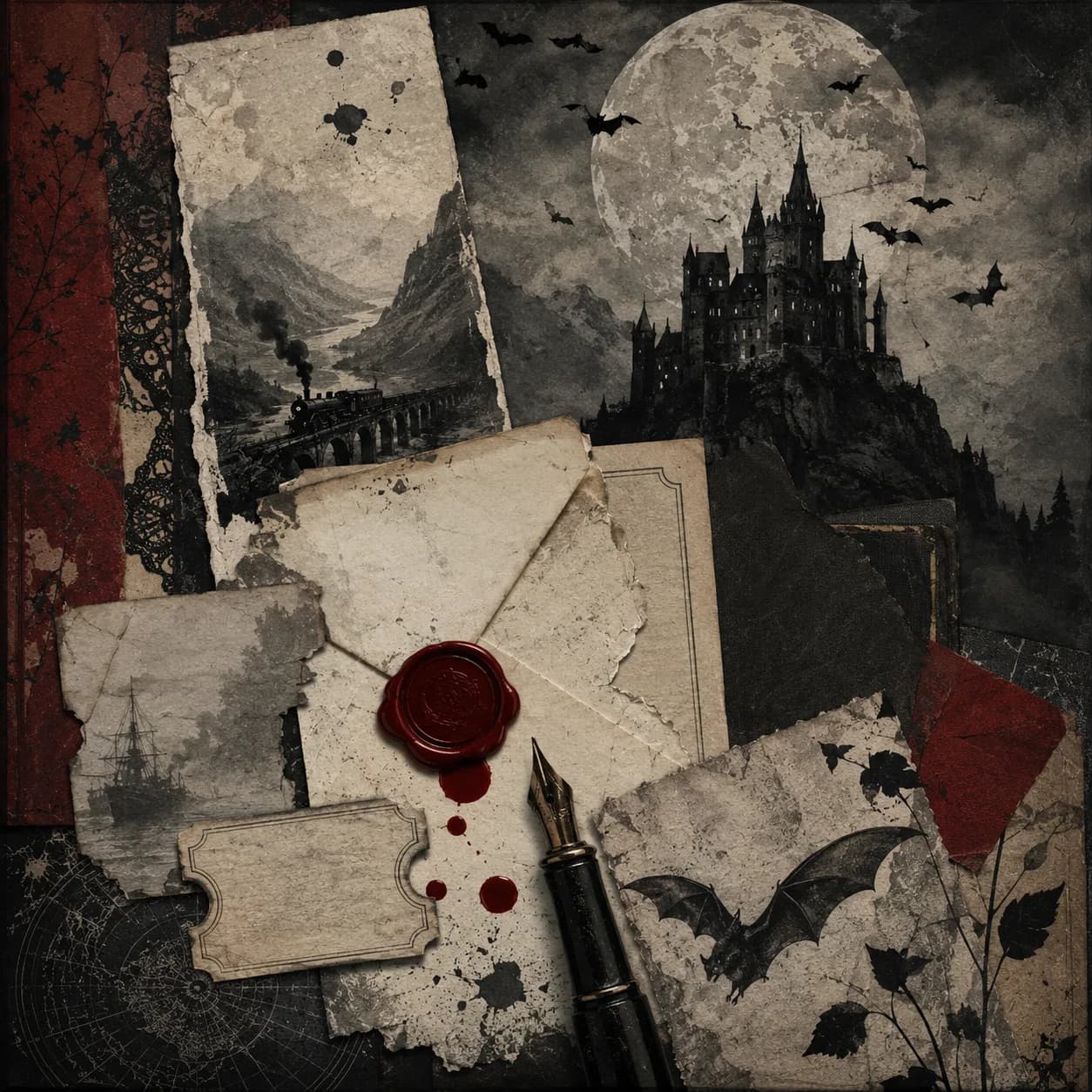
You've been told Dracula is gothic horror — fog, fangs, a cape, a scream. Then you actually open it and find something stranger and much funnier: a stack of letters, telegrams, diary entries, newspaper clippings, and one diary dictated into a recording machine and typed up later. Nobody narrates. The whole book is just people writing things down and mailing them to each other, each one a day too late. It is, structurally, a six-month group chat — and once you see that, you can't un-see it.
- Dracula is an epistolary novel — told entirely through documents, with no narrator. The form is the joke.
- Read fast, it drags. Read slow, it sings. The suspense lives in the gaps between letters that arrive too late.
- 240,000 people now read it in real time — one dated entry a day, May to November, via a newsletter called Dracula Daily.
- Every group chat has a Jonathan — the one cheerfully explaining away red flags while everyone else reads ahead and winces.
| The Dracula you've been sold | The book Stoker wrote |
|---|---|
| A caped count looming out of the fog | An old man in black who does his own dishes |
| A single scary narrator | A pile of letters and diaries with no narrator at all |
| A horror novel | A comedy of obliviousness, if you read it slowly |
| A book that drags | A six-month group chat that was never meant to be binged |
💬 The book is shaped like a group chat
The thing nobody tells you about Dracula is that the Count barely appears in it. After the opening chapters at his castle he mostly vanishes, and the book becomes the people around him writing to each other — Jonathan's diary, Mina's letters, Dr. Seward's recorded journal, telegrams flying back and forth. The horror isn't a voice in the dark; it's a thread everyone's on, where nobody has the whole picture and every message lands a beat too late.
Read it like that, and Dracula isn't horror. It's the funniest sitcom about denial in the English language.
And the format is the punchline. Stoker reaches for every cutting-edge communication technology of 1897 — including a phonograph, a wax-cylinder recorder Dr. Seward uses to keep his diary, which is to say the first voice memo in fiction. It's a book built out of inboxes.
The form is the comedy. Letters, telegrams, diary entries. And one diary even gets dictated into a recording machine, typed up later.
🌶️ “It may have been the paprika”
Here is the single most-quoted joke in the modern Dracula fandom, and it's a line from the actual 1897 text. Jonathan Harker has traveled to a remote castle. The locals at the inn pressed crucifixes into his hands and begged him not to go. Wolves ran alongside his carriage in the dark. He arrives, can't sleep, and writes in his diary — verbatim, “I did not sleep well, though my bed was comfortable enough, for I had all sorts of queer dreams” — and then blames it on the spice in his dinner.
First night, he writes, I did not sleep well, or it may have been the paprika.
That's the whole comedy of the book in one sentence. A man surrounded by every warning sign a story can throw at a person, and the explanation he reaches for is the paprika. The Dracula Daily community turned it into a running gag: whenever anything is obviously, catastrophically wrong and someone's rationalizing it, the answer is could be the paprika.
It's every red flag you ever talked yourself out of — filed, in real time, under “must have been the paprika.”
📬 Why 240,000 people read it in real time
A newsletter is what finally cracked the book open for modern readers. Dracula is dated — every entry carries a calendar date, running from early May to early November of a single year. In 2021, a developer named Matt Kirkland set up Dracula Daily to email subscribers each piece on the day it's dated, so the book unspools in real time across half a year. It went viral on Tumblr in 2022, and the readership has settled at around 240,000 people reading the book together every year.
So the calendar really does the work. Binge it in a week, it drags. Read one a day and it sings.
That solves the oldest complaint about the book. The most common Goodreads gripe is that Dracula is repetitive and slow — which is true if you try to read it like a thriller in one weekend. But it was never built for that. Read slowly, the gaps between letters become suspense, and, as one Slate feature put it at the height of the 2022 craze, you get the dramatic irony of “Jonathan Harker doesn't know that he's in Dracula”. The structural defect is the structural feature.
📱 Every group chat has a Jonathan
A 129-year-old book reads like your phone for one reason: once you're a beat ahead of the characters — seeing the warnings they can't — you realize you've been in this exact thread. Every group chat has a Jonathan: the friend sending bright, everything's-fine updates from a situation everyone else can tell is going wrong, while the rest of you read along and don't know how to say it.
Somebody finally sends the long confession at one a.m. on a Wednesday. And the rest of us have been sitting on weeks of cheerful updates. Yeah, we know. We've been holding our breath. Nobody wants to say it first.
And sometimes the Jonathan is you. You scroll back through your own messages from a hard month — the new apartment you swore was great, the job you kept calling fine — and you hear the bright voice papering over the thing you hadn't let yourself see yet. You weren't lying to anyone. You just couldn't name it. That's the paprika, and you only catch it on the slow read.
So if Dracula has been sitting in your memory as a scary book you never finished, try it again as what it actually is: a group chat where the new guy keeps insisting it must have been the paprika. Read one entry a day. You'll see what Jonathan can't — and one of the book's other rules, the one about who you let through the door, is a whole story of its own.The Count of Monte Cristo runs its own slow-burn correspondence, told through revenge instead of dread.
Sources
- Dracula (1897 text) — Project Gutenberg
- Why Hundreds of Thousands of People Are Reading Dracula Together Right Now — Slate
- A Substack newsletter gave Dracula a new lease on life — Fast Company
- Dracula Daily — Wikipedia
- Dracula — reader reviews — Goodreads
Frequently asked questions
- Why is Dracula written as letters and diaries?
- Dracula is an epistolary novel — it's told entirely through documents: letters, telegrams, diary entries, newspaper clippings, and even one diary dictated into a phonograph and typed up later. Bram Stoker never narrates directly; the story is assembled from the papers of the people living it, each of whom only knows their own piece. That fractured, out-of-order format is exactly why a modern reader experiences the book as a group chat where nobody has the full picture in time.
- What is Dracula Daily?
- Dracula Daily is a free newsletter, started by Matt Kirkland in 2021, that emails you each part of Dracula on the calendar date it's dated in the novel — so the book unfolds in real time from May to November every year. It went viral on Tumblr in 2022 and now has a stable readership of around 240,000 people who read the book together annually. It works because Dracula's dated-document structure was practically built to be read one entry at a time.
- Is Dracula scary or funny?
- It's both, and which one you get depends on how you read it. Read in a single sitting it's a slow-burn gothic horror; read slowly, one dated entry at a time, it becomes a comedy of obliviousness — the humor of watching a character cheerfully explain away every red flag while the reader can see exactly what's coming. The modern Dracula Daily community largely experiences it as the funniest book nobody told them was funny.
- Why does Dracula feel like it drags or is hard to read?
- The most common Goodreads complaint about Dracula is pacing and repetition — but that's a side effect of reading it the wrong way. The book was never built to be read in a week; its document-by-document structure was designed to unfold slowly, with the suspense living in the gaps between letters. Read one entry a day and the thing readers call 'dragging' becomes the slow burn that makes the comedy and the dread work.
- Who is the main character in Dracula?
- Not Dracula. The Count barely appears after the opening castle chapters — he's the absent center of the book, not its narrator. The story belongs to the people writing it down: Jonathan Harker, his fiancée Mina (who assembles the whole record), Lucy, Dr. Seward, and Van Helsing. Dracula is the thing they're all circling; the book is really about the group of friends trying to name what's happening before it's too late.
Enjoyed this one?