The National Theatre's Frankenstein: Why Cumberbatch and Miller Swapped Roles Every Other Night
In 2011 the National Theatre sold tickets to a production whose two leads had no fixed parts. Benedict Cumberbatch and Jonny Lee Miller each played Victor and each played the creature, and fourteen months later they shared a single Olivier Award for it.


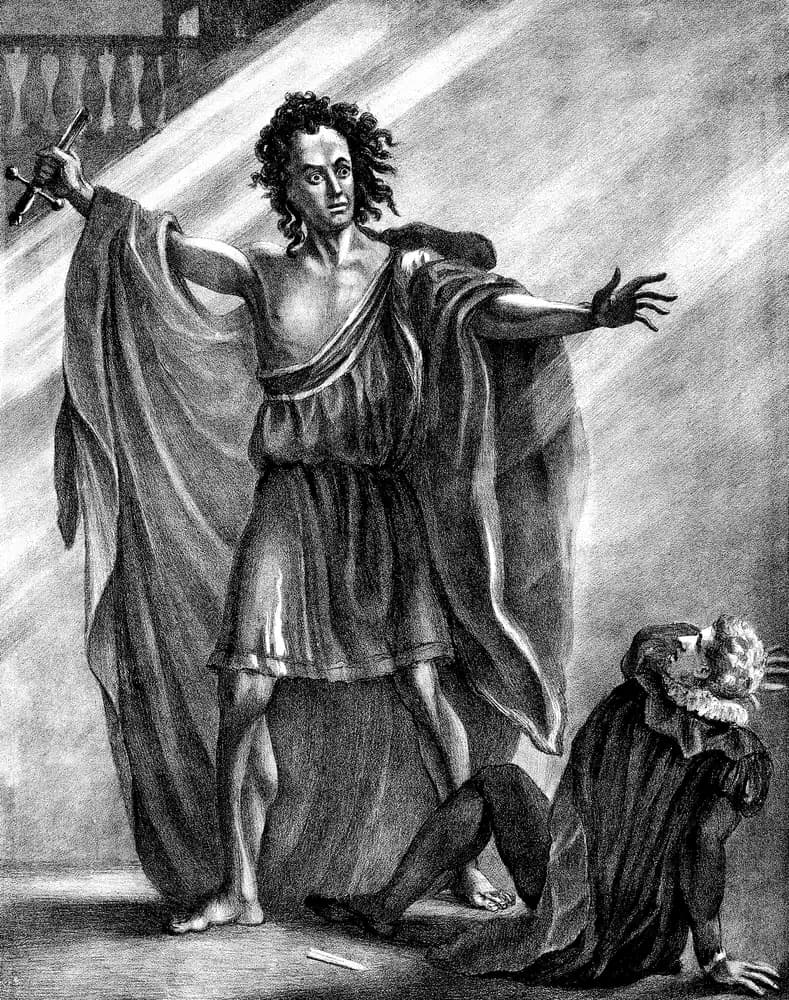
In the spring of 2011 the National Theatre sold tickets to a production where the two lead actors did not have fixed parts. Benedict Cumberbatch and Jonny Lee Miller both played Victor Frankenstein and both played the creature, trading between performances, so the show you saw depended on the night you booked. Fourteen months later the two of them shared a single Olivier Award for it.
- Danny Boyle directed. Nick Dear adapted. The Olivier Theatre, February to May 2011.
- Two press nights. One for each casting, on 22 and 23 February.
- One award, two names. Best Actor at the 2012 Oliviers went to both men jointly.
- Still watchable. Both versions stream on National Theatre at Home as separate titles.
This production made an old question unusually literal: which of the two men is “playing Frankenstein” in any given sentence. The wider confusion about who the name belongs to is a companion post’s subject. If you would rather take one of the two parts than read about them, the playable Frankenstein opens The Cabin of Reckoning, where the creator and the creation make their last arguments, and lets you arrive as either one.
🎭 One production, two castings, alternating performances
The run began previewing at the Olivier on 5 February 2011 and closed on 2 May. The National Theatre gave it two press nights rather than one, on 22 and 23 February, because there were two shows to review, and its own archive still lists the production under two separate titles, one per casting. Susannah Clapp, writing in the Guardian after seeing both, summarised the arrangement in a sentence: on one night that thing is Jonny Lee Miller, on the next it is Benedict Cumberbatch.
The staging around them was on the same scale as the conceit. Designer Mark Tildesley rigged roughly 3,500 bare lightbulbs above the stage and the auditorium and switched them on close enough that the audience could feel the heat, hung an antique bell over the stalls whose ring Underworld sampled into the score, and drove a steam train at the front rows. Michael Coveney, reviewing for WhatsOnStage, called the whole thing a flashy, noisy, exciting affair, and described an extraordinary opening forty minutes in which the creature is born and is alone.
🔁 Why swap the roles at all
Boyle was asked, before the run, whether this was a stunt. His answer to the Guardian’s Maddy Costa is the clearest statement anyone involved made about it, and it is an argument about the book rather than about casting.
“Frankenstein is creating life without women. The idea is to bring two actors as close to that notion as possible. And how do you do that? In terms of the performance, Frankenstein and the Creature literally create each other: every other night they reinhabit each other.”
The cadence gets written up both ways, so it is worth stating plainly. The two parts changed hands from one performance to the next, which means that from either actor’s own side of it he played the creature every other night. Boyle wanted the two parts to become two strands of the same part, and in the same interview he rejected the suggestion that it was a marketing tool. That is one outlet and one director, so treat it as his account of his own intention. What can be checked independently is whether the novel supports the reading, and it does, repeatedly.
📝 What the critics said about each pairing
The interesting thing about the reviews is that the two most-read critics disagreed about which casting was better, which is the strongest evidence that the swap was doing something rather than doubling the press coverage.
Michael Billington in the Guardian preferred Cumberbatch in both directions. He called Cumberbatch’s creature unforgettable and an astonishing performance, located Miller’s strength in menace instead, and said that when it came to Frankenstein he felt Cumberbatch had the edge. Coveney at WhatsOnStage went the other way on the numbers, giving four stars to the night on which Miller played the creature and three to the night on which Cumberbatch did.
The Olivier panel declined to choose. At the 2012 ceremony Best Actor went to Benedict Cumberbatch and Jonny Lee Miller for Frankenstein, as one entry with two names, in the Official London Theatre’s own record of the winners. Bruno Poet took Best Lighting Design for those 3,500 bulbs. The production was also nominated for Best Sound Design and lost it to Matilda.
📺 Where to watch it now
NT Live broadcast the production to cinemas on 17 March 2011, early enough in that programme’s history that it is now one of the titles people cite when they explain what NT Live is for. Both castings were filmed, and both are on National Theatre at Home today, listed as two separate titles named after whichever actor is playing the creature. Checked on 8 September 2026, both are marked as streaming now.
Watch them in either order and watch them close together. The second one is where the production’s argument lands, because you already know every line and you are watching the other man say it.
🪞 What the staging argues about the book
Mary Shelley builds the mirror into the structure. The creature does not merely appear in Victor’s narration; he takes it over. Six consecutive chapters in the middle of the novel are his own first-person account, nested inside Victor’s account, nested inside Walton’s letters, so the reader spends a quarter of the book looking out through the creature’s eyes. Victor never gets a comparable stretch inside anybody else’s.
Victor sees the resemblance himself, and it frightens him more than the murder does.
“I considered the being whom I had cast among mankind… nearly in the light of my own vampire, my own spirit let loose from the grave, and forced to destroy all that was dear to me.”
By the last chapter the positions have completely inverted. The creature is leading Victor across the ice, leaving him food and taunts, and Victor is the pursuer with nothing left to protect. When Walton finally walks in on them, it is the creature standing over the body, saying that there is his last victim, and grieving. Boyle’s two actors were making the same case with their bodies that the novel makes with its structure: the maker and the made are one part, played twice.
The novel is free and complete at Project Gutenberg, and everybody the two men are fighting over, from Justine to Ernest, is set out here.
Sources
- Frankenstein — production record — National Theatre
- A monster role: Danny Boyle on Frankenstein — The Guardian
- Frankenstein — review — The Guardian
- Review round-up: is Frankenstein a monster hit? — WhatsOnStage
- Olivier Awards 2012 winners — Official London Theatre
- Frankenstein (1831 text) — Project Gutenberg
Frequently asked questions
- Did Benedict Cumberbatch play Frankenstein or the monster?
- Both. He and Jonny Lee Miller alternated the two leading roles across the 2011 run, so each played Victor Frankenstein on some performances and the creature on others. The novel supports the swap with a threat that fits either mouth. In chapter 20 the creature says, I shall be with you on your wedding-night, and Victor assumes it means his own death.
- Why did Cumberbatch and Miller alternate the two lead roles?
- Danny Boyle told the Guardian it was an argument about the book rather than a stunt: Frankenstein is creating life without women, so the two actors should be brought as close to that notion as possible. The novel tests the same idea directly. In chapter 17 the creature demands a female, and in chapter 20 Victor tears her to pieces while the creature watches.
- Can you still watch the 2011 National Theatre Frankenstein?
- Yes. NT Live broadcast it to cinemas on 17 March 2011 and both castings were filmed. Both are on National Theatre at Home today, listed as two separate titles named after whichever actor is playing the creature. Nick Dear's opening covers a stretch the novel withholds: the creature's own account of his first days does not arrive until chapter 11.
- Who directed and adapted the National Theatre's Frankenstein?
- Danny Boyle directed and Nick Dear wrote the adaptation, at the Olivier Theatre. Previews began on 5 February 2011 and the run closed on 2 May. Mark Tildesley rigged roughly 3,500 bare lightbulbs over the stage and auditorium. The novel opens two removes from any of that: Walton's first letter, dated St. Petersburgh, December 11th, the second sent from Archangel in March.
- Did the 2011 Frankenstein win any awards?
- At the 2012 Olivier Awards, Best Actor was awarded jointly to Benedict Cumberbatch and Jonny Lee Miller for Frankenstein, listed as one winner entry with two names, and Bruno Poet won Best Lighting Design. The novel gives the last word to the creature, who promises Walton he will seek the most northern extremity of the globe and burn on his own funeral pile.
Enjoyed this one?