Irene Adler on Screen vs the Book: What the BBC and Elementary Invented
One story, under nine thousand words, and she is out of the country by the end of it. Everything else you have seen Irene Adler do — the romance, the phone, the reveal that she is Moriarty — was written for television.


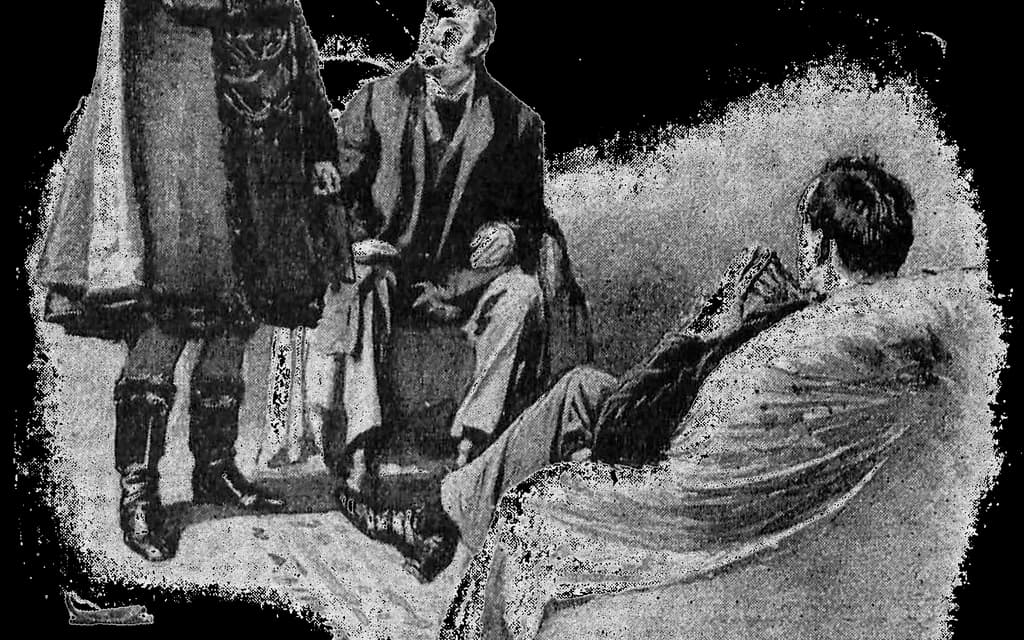
Irene Adler has a substantial part in the BBC series, in Elementary and in the Guy Ritchie films. In Arthur Conan Doyle she is in one story. Not one season, not one recurring arc. One short story of under nine thousand words, first printed in The Strand in 1891, in which she outmanoeuvres Holmes, marries somebody else and leaves the country overnight. Everything else you have seen her do was written for television.
This piece discusses how “A Scandal in Bohemia” ends.
- One appearance, three mentions. She acts in the opening story and is named in two later ones, always in the past tense.
- Her whole biography is an index card. Holmes reads it aloud in about thirty words.
- BBC made her a dominatrixwhose scheme runs through Moriarty, in an episode first shown on New Year’s Day 2012.
- Elementary went further. It made her Moriarty, merging the one woman who beats Holmes with a villain she never meets in the text.
What Doyle’s Adler is like on the page, and why Holmes calls her the woman, already has an essay here, and this one does not repeat it. This is about the gap between that story and the screen. If you would rather stand outside Briony Lodge and watch her come and go, the playable Adventures of Sherlock Holmes opens A Scandal in Bohemia as its own doorway.
📇 The short answer: she is an index card
Holmes keeps a scrapbook of biographies and looks Adler up in it before he ever sees her. What he reads out is the whole of what the collection tells us about her life, and it takes him about ten seconds.
“Let me see! Hum! Born in New Jersey in the year 1858. Contralto—hum! La Scala, hum! Prima donna Imperial Opera of Warsaw—yes! Retired from operatic stage—ha! Living in London—quite so!”
An American singer, a serious career in two of the great opera houses of Europe, retired young, now living quietly in a villa in St John’s Wood. That is the source material. Every adaptation since has had to invent a profession, a motive and a present tense for her, because Doyle supplied a past and then let her walk out of the book.
She is named twice more in the collection, and both times she is finished business. In A Case of Identity, Watson records that Holmes had failed only once, in the matter of the King of Bohemia and the Irene Adler photograph. In The Adventure of the Blue Carbuncle, Holmes lists her among his recent cases that involved no crime at all. Twelve stories, one appearance, two footnotes.
💍 How the story actually ends
She works out who Holmes is, follows him home to Baker Street in men’s clothes to be sure, wishes him good night by name, and leaves England overnight with her new husband. In place of the compromising photograph the King came for, Holmes finds a letter and a different photograph, of Adler alone, in an evening dress. The letter is signed with a name that no adaptation has ever wanted to use.
“IRENE NORTON, néeADLER.”
The King offers Holmes an emerald ring as payment. Holmes asks for the photograph of Adler instead, takes it, and walks out without shaking the hand the King has put out to him. Watson closes on the observation that Holmes used to make merry over the cleverness of women and has not been heard to do it since. There is no meeting afterwards, no correspondence and no second case. Doyle had in fact settled the matter before the story even started: the opening paragraph calls her the late Irene Adler, of dubious and questionable memory. She is dead on page one, and the whole of her one appearance is Watson remembering her.
📱 What BBC’s Sherlock built on it
Sherlock, created by Steven Moffat and Mark Gatiss, ran four series between 2010 and 2017. Its version of the story, “A Scandal in Belgravia”, first aired on 1 January 2012 and keeps the skeleton: a compromising photograph, a royal client, a woman who is several moves ahead. Then it changes almost everything else. Adler is recast as a dominatrix whose clients supply her leverage, the photograph becomes a phone full of them, and the plot she is running is not her own but connected to Moriarty.
The larger change is the ending. Doyle’s Adler wins outright and exits; the episode has Holmes crack her passcode and then, in a coda, save her life. The episode is a genuine piece of television and it turns the one adversary who beat Holmes into a woman he rescues. That is the exact reversal readers of the story tend to object to, and it is the reason the argument about screen Adlers has never gone away.
🃏 What Elementary did instead
Elementaryran on CBS from 2012 to 2019, seven seasons and 154 episodes, with Holmes in recovery in New York and Watson as his sober companion. Its first season spends months on a dead woman named Irene Adler who is spoken of as the love Holmes lost. In the two-part finale, “The Woman” and “Heroine”, broadcast on 9 and 16 May 2013 as reported at the time by TVLine and TV Guide, she turns out to be alive, and then to be Moriarty. Natalie Dormer plays both, because they were always one person.
Doyle has no connection at all between these two characters. They never meet, they are never mentioned together, and they do not even appear in the same book: Adler is in the 1892 collection and Moriarty is not. Judged as fidelity it is indefensible. Judged as construction it is the most coherent of the three screen Adlers, because it takes the one fact the text does give her, that she is the only person who ever beat him, and makes that her whole reason for existing.
There is a bleak irony in it, too. Elementary solved the Adler problem by giving her the power adaptations keep implying she has, and it had to borrow a character from another book to do it.
🎭 Why the romance keeps getting added
Screen Holmes needs a continuing cast, and Doyle’s twelve stories do not have one. Each is a self-contained case with new clients and a new culprit, and the only recurring figures are Holmes, Watson, a landlady and two policemen, which is not enough to build a returning series around. Writers looking for a woman with standing in the canon find precisely one, and she is already characterised as his equal. So she gets promoted.
The promotion costs something specific. In the text, the reason Holmes respects Adler is that she wanted nothing from him, saw him coming and left. Every version that gives her feelings for him converts a clean defeat into a relationship, and a relationship is not what the story is about. Doyle wrote a man who kept a photograph of somebody who did not want him, and never mentioned it again.
The 1892 collection is free at Project Gutenberg and A Scandal in Bohemia is its opening story, so the comparison takes an hour to make yourself. If you want the wider argument about which screen Holmes is closest to the text, that comparison is here, and the rest of the book’s cast is set out in the guide to who is actually in it.
Sources
- The Adventures of Sherlock Holmes — Project Gutenberg
- Elementary Finale Recap: Moriarty Is Irene Adler — TVLine
- Elementary Postmortem: Natalie Dormer on Playing Moriarty — TV Guide
- A Scandal in Belgravia — Rotten Tomatoes
Frequently asked questions
- How many Sherlock Holmes stories is Irene Adler in?
- She acts in one and is named in three. A Scandal in Bohemia is her only appearance; A Case of Identity and The Blue Carbuncle mention her as a closed case. The story's first paragraph already puts her in the past tense: to Sherlock Holmes she is always the woman, and Watson has seldom heard him mention her under any other name.
- Is Irene Adler really Moriarty in Elementary?
- Yes, and it is a television invention with no basis in Doyle. Elementary reveals it across its two-part finale on 9 and 16 May 2013, with Natalie Dormer playing both. The text goes the other way. Adler's farewell letter says she keeps the photograph only to safeguard myself, as a defence against anything the King might do.
- What does BBC Sherlock change about Irene Adler?
- Her job, her leverage and the ending. The 2012 episode makes her a dominatrix whose clients supply the material, ties her scheme to Moriarty, and closes with Holmes saving her life. What the screen versions leave out is how the original wins: she spots Holmes through a disguise, follows him home dressed as a young man in an ulster, and says good-night, Mister Sherlock Holmes to his back.
- Does Irene Adler marry anyone in the books?
- She marries Godfrey Norton, a lawyer, in a hurried ceremony at which Watson is dragged in off the street as a witness. She signs her farewell letter to Holmes as Irene Norton, née Adler, which is the last thing Doyle ever has her write. No adaptation has been willing to leave her married and gone.
- Is Irene Adler a villain in the Sherlock Holmes stories?
- No, and the text rules it out. She breaks no law in A Scandal in Bohemia, and in The Blue Carbuncle Holmes lists her case among the recent ones that involved no legal crime at all. Her own letter gives the reason she is leaving: I love and am loved by a better man than he.
Enjoyed this one?