Every Sherlock Holmes Adaptation, Ranked for Faithfulness: Granada, BBC, Downey, Elementary
Guinness counted 254 screen Sherlock Holmeses back in 2012. Ask which one is best and you get a fight; ask which is closest to what Doyle actually wrote and the answer has been the same for forty years.


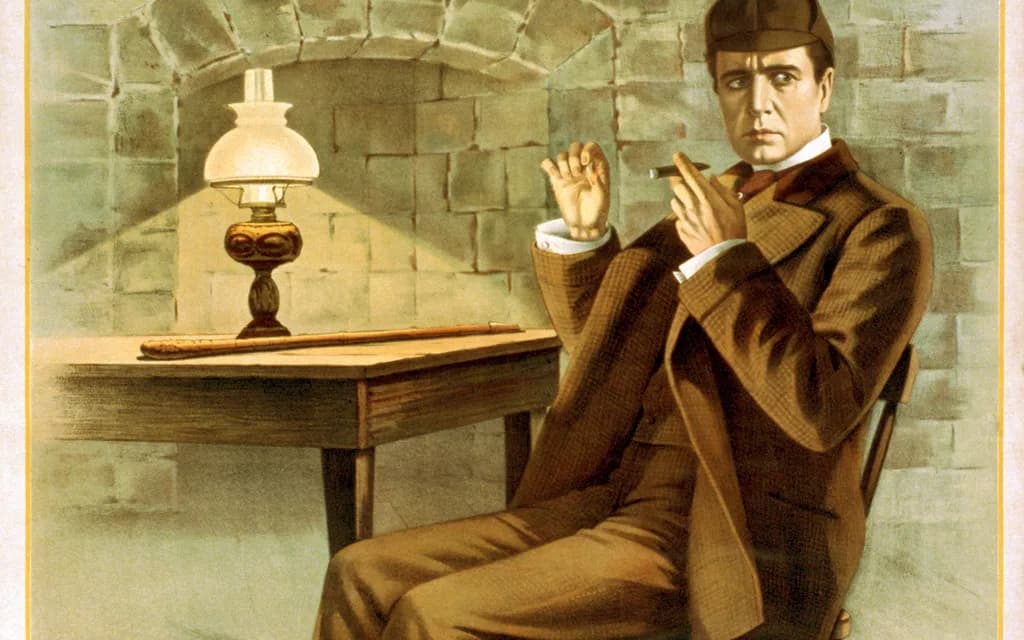
Guinness World Records counted 254 screen portrayals of Sherlock Holmes by more than 75 actors when it named him the most portrayed literary human character in film and television, and that count was taken in 2012, before two of the four versions people now argue about had finished airing. Ask which one is best and you get a fight. Ask which one is closest to what Arthur Conan Doyle actually wrote and the answer is duller, older, and fairly settled.
- Most faithful: Granada, 1984 to 1994. Jeremy Brett, 41 episodes, adapted story by story from the page.
- Most watched: BBC’s Sherlock. Thirteen episodes in seven years, and a deliberate rewrite rather than an adaptation.
- Loosest: the Guy Ritchie films. Two of them, 2009 and 2011, with the second one closer to Doyle than the first.
- Best long game: Elementary. Seven seasons of the weekly casework the stories are actually made of.
The yardstick this piece measures all four against is the twelve stories in The Adventures of Sherlock Holmes, and the playable version of that book puts you inside them rather than in front of them. What follows compares the four screen versions against the same source.
🎬 The short answer, and the older answer
Before any of the four, there was a man on a stage. William Gillette’s play opened on Broadway on 6 November 1899 at the Garrick Theatre, and Gillette had written to Doyle to ask whether he could marry Holmes off. Doyle, by then thoroughly sick of the character, is reported to have wired back that Gillette could marry him or murder him or do anything he liked with him. The wording drifts from one retelling to the next, so the line is an anecdote rather than a transcript. What is not in doubt is that the play went ahead with Doyle’s blessing. Every screen Holmes since has been working inside that permission, and the argument about faithfulness is really an argument about how much of it to take.
| Version | What it does with the text |
|---|---|
| Granada, 1984-1994, 41 episodes | Adapts the stories one at a time, in period, often close to the dialogue, with the episode titles taken from the collections |
| BBC Sherlock, 2010-2017, 13 episodes | Moves the plots to present-day London, rewrites the endings, and builds the run around a continuing antagonist the stories do not have |
| Guy Ritchie, 2009 and 2011, two films | Original action plots; only the sequel reaches into the canon, and it reaches past this collection into two later stories |
| Elementary, 2012-2019, 154 episodes | New city, new cases, canon names reassigned to new people, and the weekly rhythm the original serial actually had |
🎩 Granada, 1984 to 1994
Forty-one episodes across four series titles, thirty-six of them an hour long and five feature length, made in Manchester on a purpose-built Baker Street. Wikipedia’s own summary of the series is that it is considered to present the most faithful screen adaptations of many of the Holmes stories, and CBR puts it more bluntly in its case for Brett: none are as faithful as Granada’s.
The reason is structural rather than reverential. Granada adapted one story per episode and took the episode title from the story, so the shape of an hour matches the shape of a short story, which is what Doyle wrote. Jeremy Brett, who lived from 1933 to 1995 and played the part for the last decade of his life, also read the text as a script rather than a legend: the abruptness, the boredom between cases and the flashes of cruelty are all on the page, and most other screen Holmeses smooth them away.
📱 BBC’s Sherlock, 2010 to 2017
Thirteen episodes in seven years, created by Steven Moffat and Mark Gatiss, and the version that put Holmes back in the centre of popular culture. It is also the one that changes the most, which its makers have never pretended otherwise about. The plots are transposed to modern London, the endings are rewritten, and the series is built around a continuing antagonist, which is precisely the thing the twelve stories do not have.
Its pilot is the clearest illustration of the scope problem. The episode everybody cites in the book-versus-show argument adapts A Study in Scarlet, a novel from 1887, and not one of the twelve Adventures at all. Comparing the show to the collection through that episode compares two different books. Where it does adapt one of the twelve, in the 2012 episode drawn from A Scandal in Bohemia, it keeps the premise and reverses the outcome, and that change has an essay of its own.
💥 The Guy Ritchie films, 2009 and 2011
Two films, both directed by Ritchie, with Robert Downey Jr and Jude Law. Neither adapts a specific story: the first is an original plot, and the second, A Game of Shadows, is the one that reaches into the canon, drawing on “The Final Problem” and “The Adventure of the Empty House”. Both of those are from later collections, so a reader who has only finished the twelve Adventures has not met that material yet.
On fidelity the honest verdict is narrow. The plots are inventions and the pacing is a modern action film’s. The physical competence is not one of the inventions. In The Five Orange Pips, Watson recites the written assessment he once made of his friend and the list includes violin-player, boxer and swordsman, and in The Speckled Band Holmes answers a man who has bent a steel poker into a curve by straightening it out again with his hands. The films enlarge something the text actually contains and ignore most of what surrounds it.
🗽 Elementary, 2012 to 2019
Seven seasons and 154 episodes on CBS, with Holmes in recovery in New York and Joan Watson as his sober companion. On any measure of textual fidelity it ranks last of the four: the setting, the cases and most of the characters are new, and it takes the largest liberty any Holmes adaptation has taken with the canon by revealing, in its first-season finale in May 2013, that its Irene Adler is Moriarty.
It earns a defence anyway, and it is a defence about form. The stories are a monthly serial of self-contained cases with a difficult man and a patient friend, and 154 episodes of weekly casework reproduce that rhythm far better than thirteen feature-length events do. Readers who prefer Elementary usually turn out to be arguing about structure rather than about accuracy, and on structure they have a point.
❄️ Why screen Holmes keeps getting colder
There is a legal reason lurking behind the tonal one. Holmes’s later stories entered the public domain in the United States much more slowly than the early ones, and in June 2020 the Conan Doyle Estate sued Netflix, Penguin Random House and the author Nancy Springer over Enola Holmes, arguing that Holmes’s warmth, his empathy and his respect for women were original to the later stories it still held rights in. The case was dismissed with prejudice on 18 December 2020 under a stipulated settlement whose terms were never made public, so no court ever ruled on the argument.
The argument itself is the interesting part, because it concedes something about the version of Holmes everyone thinks is the accurate one. A cold, unfeeling calculating machine is the safe, free, early-canon Holmes. The man who is kind to a frightened client is the one somebody claimed to own. Readers who find the screen versions chillier than the book are noticing something real, and one of the twelve stories catches Holmes worrying about a client in a way none of these four versions has room for.
The twelve stories every one of these versions is standing on are free at Project Gutenberg, and if you are deciding where to begin, Doyle ranked them himself in 1927. The screen Watsons are worth comparing against the Watson Doyle actually wrote, who is an army surgeon and not a punchline.
Sources
- Jeremy Brett Delivered the Most Faithful Sherlock Holmes — CBR
- Sherlock Holmes awarded title for most portrayed literary human character in film & TV — Guinness World Records
- The Sherlock Infringement Mystery Has Been Resolved — BYU Copyright Licensing Office
- Sherlock Holmes: The Play's the Thing — The Grolier Club
Frequently asked questions
- Which Sherlock Holmes adaptation is most faithful to the books?
- Granada Television's, with Jeremy Brett, made between 1984 and 1994, one story per episode with the titles taken from Doyle. The yardstick is small and exact. In A Scandal in Bohemia Holmes tells Watson there are seventeen steps up to their sitting room, because he has both seen and observed them, and Watson has climbed them without counting.
- Is Robert Downey Jr's Sherlock Holmes accurate to the books?
- Not as plots. Neither the 2009 film nor the 2011 sequel adapts any of the twelve stories; both are original screenplays. On character the films are less wrong than they look. The collection's opening page has Watson describing Holmes alternating from week to week between cocaine and ambition, which is where the wreck in the films comes from.
- Is Elementary a good Sherlock Holmes adaptation?
- It is the least faithful of the four and the one that best matches the shape of the original. Doyle's twelve stories run from 6,985 words for A Case of Identity to 9,819 for The Speckled Band: one television hour each, not a season arc. Its 154 episodes are also more Holmes screen time than Granada's 41 and BBC Sherlock's 13 put together.
- How accurate is BBC Sherlock to the books?
- Less accurate than its reputation suggests. The episode people argue about, A Study in Pink, adapts an 1887 novel that is not in this collection. The show is also built on a continuing antagonist the twelve do not have: Moriarty's name occurs zero times across them, and the only returning professional is Inspector Lestrade, in The Boscombe Valley Mystery and The Noble Bachelor.
- Which Sherlock Holmes adaptation should I watch after reading the book?
- Granada's, and start with the series that shares the book's title, because it adapts one story per episode and takes each title from Doyle. The collection's last story carries the line worth taking into any of them: Holmes telling Watson that the lowest and vilest alleys in London do not present a more dreadful record of sin than does the smiling and beautiful countryside.
Enjoyed this one?