Dr. Watson isn't the bumbling sidekick — he's the blueprint every genius-and-friend duo copies (2026)
You've been told Dr. Watson is the bumbling comic sidekick who fumbles while the genius thinks. Doyle wrote the opposite: a sharp ex-army surgeon, wounded in Afghanistan, who narrates almost every case — the reader's stand-in who keeps an impossible genius human. If you have one brilliant, difficult friend, you're already playing Watson, and it's more work than it looks.


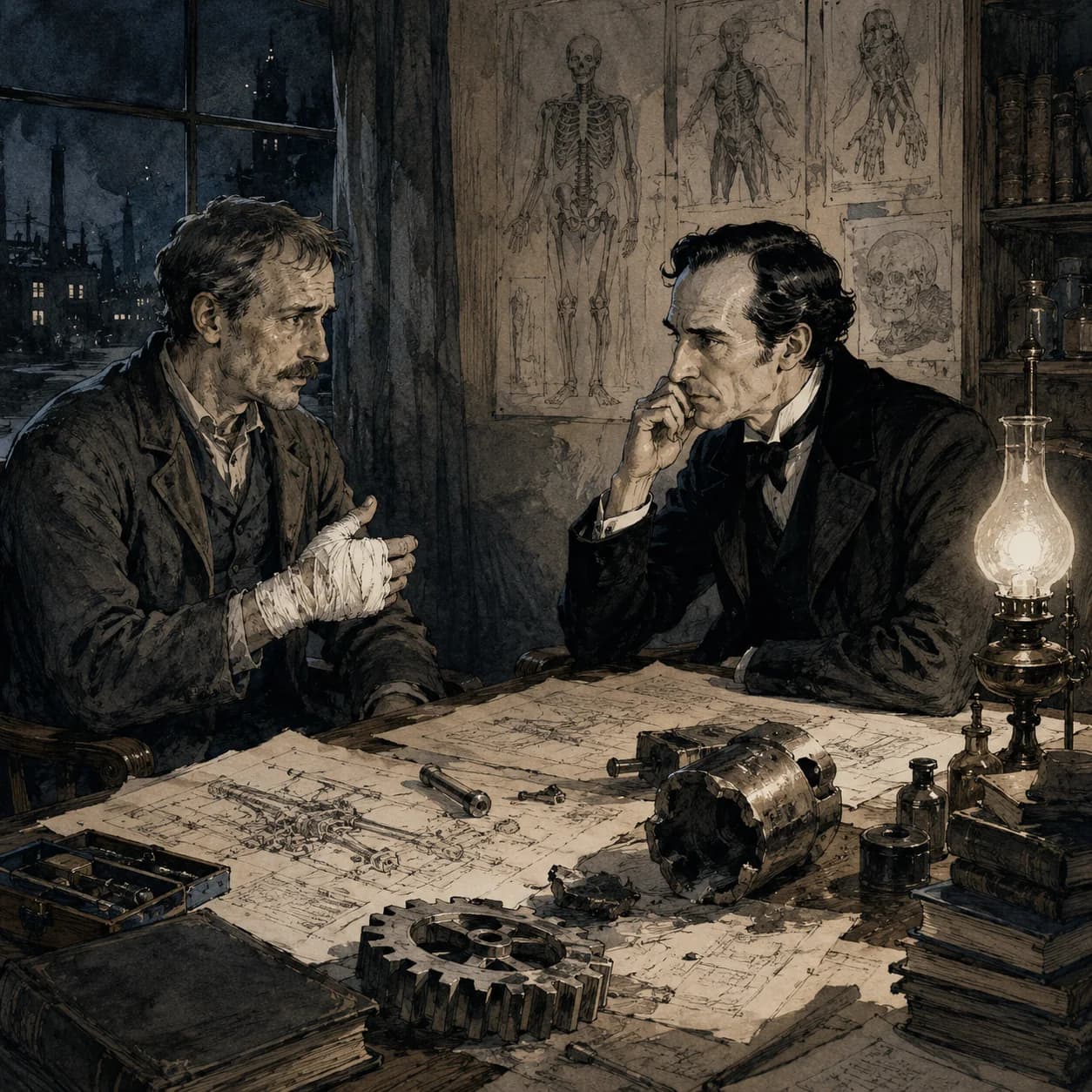
Picture Doctor Watson and you probably picture a well-meaning duffer: mouth open, a beat behind, scribbling notes while the genius does the thinking. That's the man most people carry around in their heads. Then you open the actual 1892 stories and meet someone else entirely — a sharp, brave, ex-army surgeon, and the person telling you the whole thing.
Because here's the twist nobody mentions: the Sherlock Holmes stories aren't written by Sherlock. They're written by Watson. You've been reading the friend the whole time, never the genius — and once you see that, the entire partnership flips. Watson isn't the sidekick in Holmes's story. Holmes is the impossible man in Watson's. And if you have one brilliant, difficult friend of your own, you already know this role from the inside.
- Watson is the narrator, not the sidekick. You read almost every case in his first-person voice — Holmes only reaches the page because Watson is writing him down.
- He's no fool. Doyle's Watson is an ex-army surgeon wounded in Afghanistan — sharp, kind, competent. The bumbling version is a 20th-century movie invention.
- Doyle invented the template in 1892: the everyday-competent friend who anchors a brilliant weirdo. House & Wilson, Doctor Strange & Wong — they're all copies.
- If you have one brilliant, difficult friend, you're already playing Watson — and the quiet job of anchoring a genius is far more work than it looks.
| The Watson you remember | The Watson Doyle wrote |
|---|---|
| A bumbling comic sidekick, mouth open | A sharp ex-army surgeon, wounded at Maiwand |
| Taking notes while the genius thinks | Doyle's narrator — the eyes you see every case through |
| Nigel Bruce fumbling next to Basil Rathbone | Doyle's own deliberate choice of point of view |
| The lesser half of the duo | The reason an impossible genius still has anyone at all |
📖 You've been reading Watson the whole time
Start with the fact that reframes everything: Holmes never narrates his own legend. Watson does. Almost every story is written up by the doctor, in the first person, as the chronicle of his remarkable friend — which means every deduction reaches you filtered through the person who loves the man doing the deducing. You never get inside the genius. You only ever get the friend, looking at him and going, more or less, look at this weirdo I love.
Here's the thing people really miss. The book isn't written by Sherlock, it's written by Watson. You're reading the friend the whole time, never the genius.
Holmes says the quiet part out loud exactly once, and then tosses it away like he's remarking on the weather — “I am lost without my Boswell.” James Boswell wrote the most famous biography in the English language, of his brilliant, impossible friend Samuel Johnson; his whole role was being the room Johnson thought aloud in, and then writing it all down. So when Holmes calls Watson his Boswell, he's admitting the genius needs the chronicler. Readers have felt that pull for over a century — one Goodreads reviewer simply calls Watson “the Boswell to Sherlock's equally-eccentric Dr Johnson.”
🎖️ The Watson Doyle actually wrote
The doddering Watson in your head has a specific source, and it isn't Doyle. It's the movies — most famously Nigel Bruce, who played Watson as a lovable bumbler opposite Basil Rathbone's Holmes across a run of 1940s films. That comic-relief version stuck so hard it quietly replaced the original in the popular imagination. But go back to the page and the man is unrecognizable: an ex-army surgeon wounded at the Battle of Maiwand in the Second Anglo-Afghan War, invalided home, and every inch the steady professional. Sharp, kind, competent — and the one quietly holding the whole operation together.
So he's actually the steadier one of the two. The one quietly holding the whole thing together.
That's the correction worth making. Watson isn't slow — he simply isn't a machine that reads a man's whole life off his hat-band, because almost nobody is. What he is, is the trained, level, courageous man who can walk into a stranger's tragedy, keep his head, and still come home and find the human warmth in it. The genius is the fireworks. Watson is the person who makes the fireworks safe to stand next to — which is why the narration is his, not Holmes's: Doyle knew whose eyes you'd actually want to borrow.
🧩 Doyle invented the duo everyone keeps copying
Here's the part people get backwards. We assume the thing every show cloned from Sherlock Holmes was the mystery — the deduction, the whodunit, the reveal. It wasn't. The thing that got lifted, again and again, is the pairing: the brilliant, difficult one and the grounded, decent friend who translates him for the rest of us. House and Wilson. Doctor Strange and Wong. Sheldon and Leonard. The same odd couple, drawn over and over, all the way back to a doctor and a detective sharing rooms on Baker Street.
That's what people get backwards. The mystery isn't what got copied. This is.
And it works because of where Doyle put the camera. By telling the stories through Watson, he made the friend the reader's way in — the essay Why Watson Is Essential calls him the lens through which readers engage with the narrative, and the grounding human presence that renders Holmes' genius comprehensible. Strip Watson out and Holmes is an unreadable calculating machine you'd never want to spend an evening with. Keep him in, and the machine has a heart — because someone in the room clearly loves it, and you're watching over that person's shoulder.
🤫 A grand gift of silence
So what does playing Watson actually feel like? It feels like being the one who sits quietly on the phone while the smart, anxious friend thinks out loud — saying almost nothing, and somehow that being the entire job. Doyle names it, and names it beautifully, in The Man with the Twisted Lip, when Holmes turns to Watson mid-case and says: “You have a grand gift of silence, Watson. It makes you quite invaluable as a companion.” He isn't praising the medical degree or the war record. He's praising the exact way his friend sits next to him while he thinks. The whole bond, in a single sentence.
All of it. When his mom got sick last year, he called me from a hospital parking lot at midnight and just talked. Twenty five minutes straight, and I mostly listened. When he finally hung up he said, thanks, that really helped. And I sat there another ten minutes in the dark, wondering how saying almost nothing had counted as helping.
If you've ever hung up from a call like that unsure whether you did anything at all, here's your answer: you did the exact thing Doyle spent a whole career describing. The gift of silence isn't passivity — it's the steadiness that lets a combustible, brilliant person keep one person in the world. That role isn't the smaller job, and it isn't owed to the genius as some kind of debt. Very often it's the only reason the genius still has anyone at all.
The whodunit is the part everyone remembers. The friendship is the part everyone copied.
So the next time you're sitting quietly on the phone while your one brilliant, difficult friend thinks out loud, know that Doyle put a name on the job back in 1892. You're the Watson — and it's the most important seat in the room. Holmes, of course, would point out that you've been in that seat for years and never once observed it — which, as it happens, is a whole story of its own.The Murder of Roger Ackroyd plays the same narrator trick Christie perfected, on a narrator you should trust even less.
Sources
- The Adventures of Sherlock Holmes (1892 text) — Project Gutenberg
- The Adventures of Sherlock Holmes — reader reviews — Goodreads
- Why Watson Is Essential — Sherlock Adjacent
- Dr. Watson — Wikipedia
Frequently asked questions
- Is Dr. Watson smarter than people think?
- Yes. The bumbling image comes from 20th-century films, not Doyle. In the original stories Watson is an ex-army surgeon, wounded in the Second Anglo-Afghan War at Maiwand — trained, brave, and observant. He rarely matches Holmes's leaps because almost no one could, but he's a sharp, competent professional and the steady one who keeps the partnership functioning.
- Why is Dr. Watson important to the Sherlock Holmes stories?
- Watson is the lens the reader looks through. As Doyle's first-person narrator he turns Holmes's cold genius into something human and comprehensible — asking the questions we'd ask, reacting the way we'd react. Without Watson, Holmes is an unreadable calculating machine; with him, the stories have a heart. He's the grounding presence that makes the whole canon work.
- Who narrates the Sherlock Holmes stories?
- Dr. John Watson narrates almost all of the Sherlock Holmes stories in the first person — he's writing the cases up as his friend's chronicler. A handful of later stories are told by Holmes himself or in a third-person voice, but the default point of view, and the one readers know, is Watson's. You experience Holmes entirely through Watson's eyes.
- Was Dr. Watson a doctor or a soldier?
- Both. Watson qualified as a doctor of medicine at the University of London, then served as an army surgeon in the Second Anglo-Afghan War, where he was wounded at the Battle of Maiwand (1880) and invalided home — which is how he ends up sharing rooms at 221B Baker Street. So the man Holmes lives with is a trained physician and a combat veteran, not the doddering comic sidekick that 20th-century films (Nigel Bruce opposite Basil Rathbone) turned him into.
- What does 'I am lost without my Boswell' mean?
- Holmes says it in A Scandal in Bohemia. James Boswell wrote the most famous biography in English, of his brilliant friend Samuel Johnson — so 'my Boswell' means 'my chronicler, the one who records me.' Holmes is quietly admitting he needs Watson: the friend who is the room he thinks aloud in, and the one who writes it all down.
Enjoyed this one?