“You see, but you do not observe”: Sherlock Holmes's two-move superpower (2026)
It's eleven at night and he still hasn't texted back — and your brain has already written the whole story. Sherlock Holmes has a 130-year-old fix, and it's two moves, not one: notice before you narrate, and refuse to build the story until you have the data.


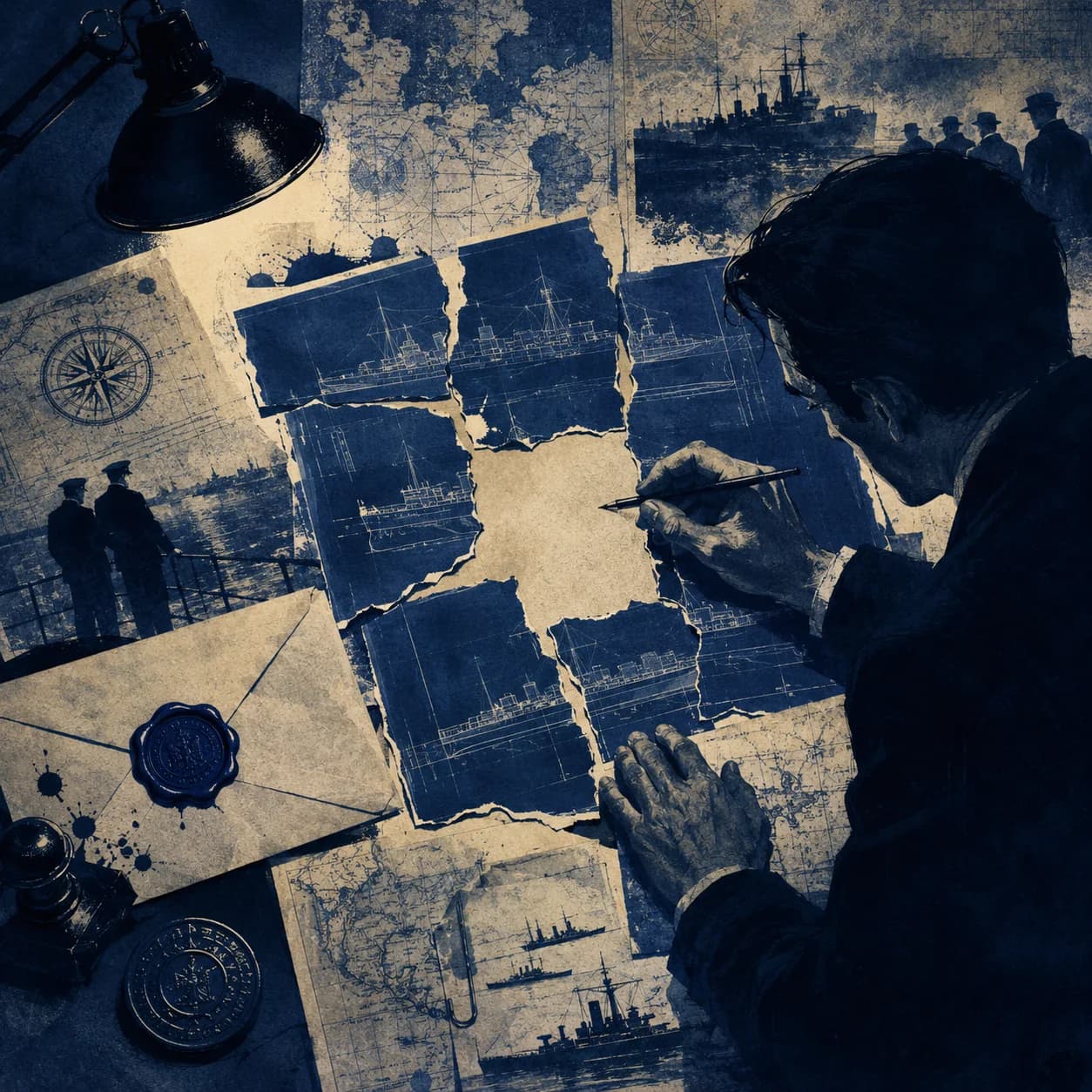
It's eleven at night. Your phone is face up on the cushion beside you, and he hasn't texted back since six. You already know the whole story: he's annoyed, he's pulling away, you said the wrong thing at lunch and he's been stewing on it all afternoon. None of it has happened. You have exactly one fact — an unanswered message — and around it you've built a finished movie, with dialogue.
There's a 130-year-old fix for that spiral, and it comes from a detective. In the very first story of The Adventures of Sherlock Holmes, Holmes turns to Watson one March night and delivers the line half the internet has tattooed on its forearms. The trick isn't noticing more. It's something two-part and much sneakier — and once you have both halves, the eleven-p.m. sofa loses most of its power.
- “You see, but you do not observe” — the most-quoted line in the Holmes stories, from the 1891 opener A Scandal in Bohemia.
- The skill is two moves, not one. Notice before you narrate — then refuse to build a theory before you have the data.
- Seventeen steps. Watson climbed the stairs to 221B a thousand times and never counted them. Holmes counted his first week and never stopped.
- The real takeaway isn't “observe more.” It's pause the story in your head, then look at what's actually there.
| Seeing | Observing |
|---|---|
| Your eyes pass the stairs a thousand times | You know there are seventeen |
| You register that he hasn't texted back | You catch that you've invented the reason he hasn't |
| You take in the raw scene | You separate what happened from the story about it |
| “Notice more” — where the posters stop | Notice, then refuse to theorise before the data — where Holmes keeps going |
🔍 “You see, but you do not observe”
The story is A Scandal in Bohemia, published in 1891 and collected the next year as the opening piece of The Adventures of Sherlock Holmes. Watson has just dropped in on Holmes one March evening, and Holmes asks a strange little question: how many steps lead up from the hall to their sitting room at 221B Baker Street? Watson has climbed that staircase a thousand times. He has no idea. Holmes does — there are seventeen — and he explains the gap between them in one sentence: “You see, but you do not observe. The distinction is clear.”
Both men have walked the same stairs the same number of times. Watson saw them daily and never once registered a number. Holmes observed them — counted, filed, kept — from his first week, and never stopped: the stairs, the mud on a boot, the ash on a sleeve. It sounds exhausting, and it is. It's also the single most-quoted idea in the whole canon; a top reviewer on Goodreads pulls exactly this exchange — the seventeen steps, “I have both seen and observed” — as the line that stuck with them years later.
Here's Sharon, my co-host, laying out how the scene actually plays:
No idea. So Holmes says, the way he lands it, you see, but you do not observe. The distinction is clear. I know that there are seventeen steps, because I have both seen and observed.
That's move one, and it's the half everybody already knows. Notice the thing in front of you before you decide what it means. Count the stairs. But if noticing were the whole method, the self-help posters would have fixed us all by now — and they haven't. There's a second move, and it's the one nobody prints.
🧭 The second move nobody teaches you
The second move comes moments later in the very same scene — that same Baker Street evening in A Scandal in Bohemia, only a few lines past the seventeen stairs — and it's the move that actually rescues you at eleven at night. Holmes hands it to Watson as a rule: “It is a capital mistake to theorise before one has data. Insensibly one begins to twist facts to suit theories, instead of theories to suit facts.”
Unpack the old word and it's brutal in its simplicity. Capital means serious, first-order — the kind of mistake that poisons everything downstream. And the mistake is starting with the story. Once you've decided he's pulling away, every new fact gets bent to fit: the short reply is coldness, the delay is avoidance, the like on someone else's photo is proof. You stop collecting evidence and start recruiting it. Writers on thinking clearly — Farnam Street's much-shared guide to thinking like Sherlock Holmes — keep circling back to this exact ordering: gather, then conclude, never the reverse.
Leo — that's me — put the tie together on the episode, because this is precisely what the sofa spiral is:
A capital mistake, meaning a serious one. And that's the eleven pm sofa, isn't it. The story, written out in full, before a fact even lands.
That's the whole trap named in one breath. The eleven-p.m. story isn't observation at all — it's a theory, a rich and emotionally convincing theory, arriving before a single fact has landed. Holmes's two moves are a sequence, and we almost always run them backwards: we build the theory first, then go looking for stairs to count that prove it.
🛋️ The 11 p.m. sofa: pause the story, then look
The reason “just observe more” never helped is that it stops one move too early. Every mindfulness poster tells you to be present and notice — good advice, and useless at eleven p.m., because in that moment you are noticing. You're noticing furiously. You're just noticing a movie you wrote yourself. Scientific American's piece on what Holmes can teach us about mindful decisions lands on the same correction: the skill isn't cranking up attention, it's catching the moment your mind swaps observation for invention.
That's the second move stated as an instruction, and Sharon put it more plainly than any poster:
Because the posters stop there, and Sherlock doesn't. He adds the second move. Pause the story your brain is writing, then look at what's actually in front of you.
Not “think positive.” Not “he probably didn't mean it.” Just: stop the reel, and check the data you actually have. And usually the honest data is thin — one unanswered text, sent five hours ago, from a person who has a job and a phone battery and a hundred reasons to go quiet that have nothing to do with you. The story was a skyscraper. The facts were a Post-it.
It scales past the group chat, too. A one-line message from your boss — we need to talk, nothing else, meeting in six minutes — and by minute two you're rehearsing how you'll break the news at home and picturing your desk in a cardboard box. Then you walk in and he wants the slide deck moved to Thursday. Six minutes of a disaster movie that was never playing, off zero data. The pause is the whole cure: before the reel starts casting, ask what you actually know. Almost always, it's less than the story needs.
🎬 Why the story always feels like the facts
There's one more thing that makes this so hard, and it's the reason willpower alone won't save you. In the moment, the story doesn't feel like a story. It feels like clear-eyed realism — like you're the only one brave enough to see what's coming.
And honestly, that's what gets everybody. In the moment, the story never feels like a story. It feels like the facts.
That's why you can't just decide to stop catastrophizing. The theory is wearing the costume of fact; it doesn't announce itself as a guess. Which is exactly why Holmes's trick is a procedure, not a mood. You don't win the argument with the story — the story always sounds right — you just refuse to act on it until you've looked. Ask one boring question: what do I actually know, right now, for certain? The costume falls off the second you make the theory show its evidence.
And there's a generous version of the same move, pointed outward. If you're the one who's gone quiet — heads-down on a deadline, phone ignored — you can hand the other person their missing data before they build the skyscraper. A one-line text: heads down this week, it's not you. That's the seventeen steps in reverse: you can't always count your own stairs at eleven p.m., but you can spare someone else the imaginary novel. The clearest thinkers, as Farnam Street notes, aren't the ones with the loudest hunches — they're the ones who wait for the data before they commit to a plot.
The detective who runs this method with almost no physical evidence is not Holmes at all. Porfiry Petrovitch, in Dostoevsky's Crime and Punishment, says out loud that all he has is psychology that cuts both ways, and then wins anyway — seven essays on that novel live here.
The takeaway was never “observe more.” It's pause the story in your head — then look at what's actually there.
So the next time your phone goes quiet and the movie starts rolling, try Holmes's order of operations: notice the one real fact, then refuse to build anything on top of it until more facts arrive. Count the stairs before you write the story. And if you want the flip side of that always-on mind — what it costs Holmes when there's no case to point it at — that restlessness is a whole story of its own.The Murder of Roger Ackroyd is the case where not observing is the whole point, and Poirot still catches it.
A London criminal lawyer states the same discipline thirty years before Holmes does, in one sentence and without the flourish: take nothing on its looks, take everything on evidence. The essays on Great Expectations start with the scene that produces it.
Sources
- The Adventures of Sherlock Holmes (1892 text) — Project Gutenberg
- The Adventures of Sherlock Holmes — reader reviews — Goodreads
- Don't Just See, Observe: What Sherlock Holmes Can Teach Us About Mindful Decisions — Scientific American
- How to Think Like Sherlock Holmes — Farnam Street
Frequently asked questions
- What is the difference between seeing and observing?
- Seeing is passive: light hits your eyes and you register a scene without processing it. Observing is active: you attend to the details and draw conclusions from them. Sherlock Holmes's example is a staircase — Watson has seen the steps up to 221B Baker Street thousands of times but never observed how many there are (seventeen). Seeing takes the world in; observing notices it, and knows.
- What does “you see but you do not observe” mean?
- It's Sherlock Holmes's line to Dr. Watson in Arthur Conan Doyle's “A Scandal in Bohemia” (1891). It means Watson's eyes take in the world without his mind registering the details — he has walked up the stairs to their flat countless times yet can't say how many there are. The point is that looking is not the same as paying attention.
- How many steps are there up to 221B Baker Street?
- Seventeen. In “A Scandal in Bohemia,” Holmes tells Watson there are seventeen steps from the hall up to their Baker Street sitting room. Watson has climbed them a thousand times and never counted; Holmes knows the number because, in his words, he has both seen and observed. The detail is Doyle's illustration of the gap between the two.
- What does “it is a capital mistake to theorise before one has data” mean?
- It's Holmes's warning in “A Scandal in Bohemia” — the same evening-visit scene as “you see, but you do not observe.” A “capital” mistake is a serious, first-order one: building a theory before you have the facts, because once you hold a theory you start bending the facts to fit it instead of the other way around. In plain terms — don't decide what happened before you actually know what happened.
- How can I learn to observe like Sherlock Holmes?
- Run two moves, not one. First, notice before you narrate — count the stairs, register the detail, take in the scene before you explain it. Second, refuse to build the story until you have data; when you catch yourself theorising, pause the story in your head and look at what's actually in front of you. Practise on small, low-stakes things daily.
Enjoyed this one?