Is Daisy Buchanan the Villain of The Great Gatsby? The "Careless People" Case, Both Ways
The novel never puts the word villain next to her name. It simply tells you who was driving, who took the blame, and who sent nothing afterwards, and then hands the summing-up to the one character who was never going to be impartial about her.


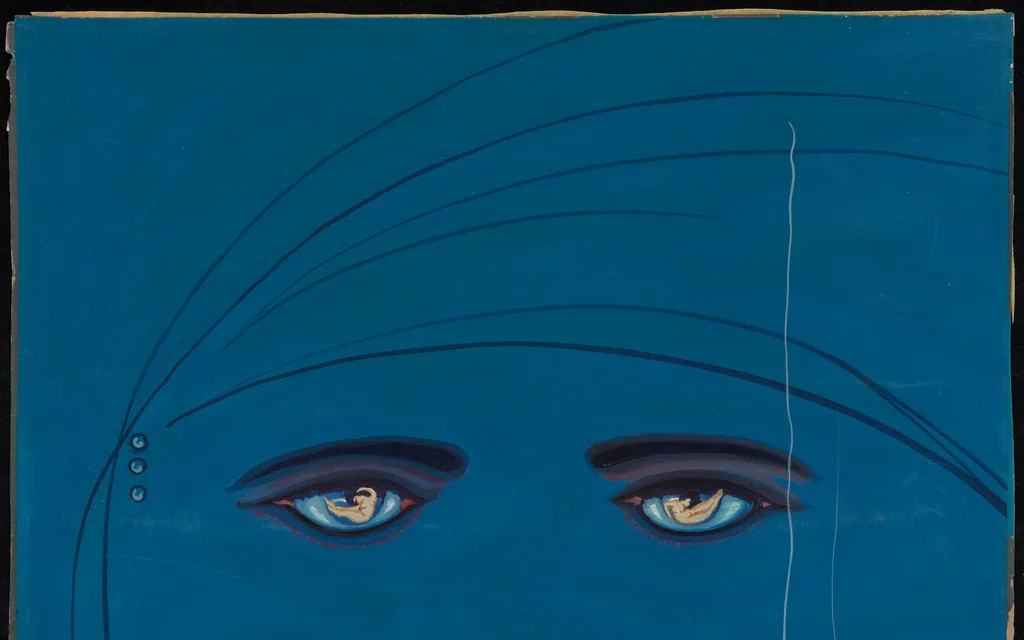
The Great Gatsby never uses the word villain about Daisy Buchanan. It does not need to. It gives you a woman who kills someone with a car, lets another person take the blame, and leaves town before the funeral, and then it hands the summing-up to a narrator who loved her cousin enough to stay polite about it for eight chapters. The case is entirely assembled. The verdict is left to you.
- She was driving. Gatsby says so to Nick, in chapter seven, in one word.
- She let him keep the blame. No telephone message arrived at his house that night, or the next day.
- The word is Jordan’s first.“I hate careless people” is said in chapter three, six chapters before Nick applies it.
- The defence is on the page too. Chapter one gives her the most self-aware line any character gets.
If you would rather argue it inside the room where it happens, the playable The Great Gatsby includes the Plaza Hotel suite on the hottest afternoon of the year, with everyone in the room and nobody able to leave.
⚖️ The short answer: no verdict, and a complete file
Fitzgerald builds the novel so that Daisy is judged by consequence rather than by narration. Nick is her second cousin once removed and spends most of the book being charmed by her voice, so the prose almost never turns on her directly. What turns on her is the plot. Three people are dead within two days of each other, and the chain that reaches all three runs through a decision she makes at speed on a road, and a decision she makes afterwards in a quiet house.
That structure is why the argument never settles. A reader who tracks events puts her at the centre of the wreckage. A reader who tracks speeches finds a woman who has been telling everyone what her life is like since page thirty and being heard by nobody.
🃏 Jordan says the word first, and the book waits six chapters to cash it
Almost every reader remembers the indictment at the end. Very few remember that the vocabulary for it is planted early, and not by Nick. In chapter three, driving badly and being teased about it, Jordan Baker gives the novel its moral term.
“‘Suppose you met somebody just as careless as yourself.’ ‘I hope I never will,’ she answered. ‘I hate careless people.’”
Six chapters later Nick reaches for the same word and attaches it to two specific people, and the sentence has become the most quoted verdict in American fiction after the book’s own last line.
“They were careless people, Tom and Daisy—they smashed up things and creatures and then retreated back into their money or their vast carelessness.”
Two details are worth holding on to. The first is that the word arrives from a character who has just been caught being careless herself, which makes it a diagnosis rather than a boast. The second is that Nick names two people, not one. Every version of the argument that puts Daisy alone in the dock has quietly dropped half of Nick’s own sentence.
🚗 Who was driving, and what Gatsby says about it
This is the part of the case that is not open to interpretation. Nick asks it directly in chapter seven, standing in the dark outside the Buchanans’ house where Gatsby has posted himself, and Gatsby answers it.
“‘Was Daisy driving?’ ‘Yes,’ he said after a moment, ‘but of course I’ll say I was.’”
What follows in that same speech is the detail most summaries skip. Gatsby describes Daisy losing her nerve, turning back toward the woman, the shock through the wheel. Then: “Anyhow—Daisy stepped on it. I tried to make her stop, but she couldn’t.” The car did not stop after the impact. That is not an accident anyone could have prevented; it is what happened afterwards.
The rest of the case is silence. Gatsby stays outside the Buchanan house all night, and Nick leaves him there “standing there in the moonlight—watching over nothing”. Fitzgerald then does the cruellest piece of bookkeeping in the novel. In chapter eight, at Gatsby’s house, “No telephone message arrived, but the butler went without his sleep and waited for it until four o’clock.” In chapter nine, after the funeral, Nick records without commentary that Daisy “hadn’t sent a message or a flower”. Who did and did not come to that funeral, and what the attendance says about the whole social machine around it, is the subject of the essay on the parties and the funeral.
🥀 The line where Daisy sounds like she knows exactly what she is
The defence rests on a single speech, delivered before any of the events above, at the Buchanans’ dinner table in chapter one. Daisy is telling Nick about the birth of her daughter.
“‘All right,’ I said, ‘I’m glad it’s a girl. And I hope she’ll be a fool—that’s the best thing a girl can be in this world, a beautiful little fool.’”
It is usually quoted as evidence that Daisy is shallow. Read in place, it says the opposite. She is describing a world in which a woman’s intelligence is a liability, and hoping her daughter is spared it, moments after Nick has watched her husband take a phone call from his mistress in the next room. The woman who says that line is not unaware of her position. She has priced it.
The same double reading covers the Plaza. Pressed by Gatsby to say she never loved Tom, she gives an answer that is the most honest sentence anyone speaks in the suite: “I did love him once—but I loved you too.” That refusal to lie for him is often read as her betrayal of Gatsby. It is also the only moment in the novel where somebody declines to simplify their own life to make a man’s story work.
| The case against | The case for |
|---|---|
| She was driving the car that killed Myrtle Wilson (ch. VII). | Gatsby chose to take the blame before she asked (ch. VII). |
| No message came to Gatsby's house that night (ch. VIII). | Tom, who sent George Wilson to Gatsby's door, is never held to account at all (ch. IX). |
| She sent neither a message nor a flower after his death (ch. IX). | She is the one character who names the trap she is in, in chapter one. |
| Nick's closing verdict puts her in it by name (ch. IX). | Nick's closing verdict names Tom in the same breath, and readers keep dropping him. |
🔍 If not Daisy, is Gatsby the villain instead?
This is a genuinely separate argument with its own life online, and it is worth naming rather than absorbing. The man at the centre of the book made his money in bootlegging and in something Nick never quite gets described, keeps a business partner who fixed a World’s Series, buys a house across a bay in order to be near a married woman, and spends five years constructing a version of a person who has moved on. There is a real case that the novel’s tragedy is a stalker’s, and readers make it.
This post does not resolve it, for a reason worth stating plainly: the two questions run on different evidence. Daisy’s case is about what she did in one afternoon and the days after. Gatsby’s is about what five years of wanting does to a person’s judgement, which is a different essay and mostly a different set of chapters. What his wanting actually costs, and why “you can’t repeat the past” is the line the whole book turns on, is taken apart in the essay on the American Dream.
What can be said from the text is that Fitzgerald gives exactly one character a clean exit. Tom Buchanan breaks a woman’s nose in chapter two, keeps a flat in the city, points George Wilson at the wrong man in chapter nine, and walks into a jewellery shop afterwards. He is not the one the argument is ever about, which is itself worth noticing.
Every chapter number and quotation above was checked against the free 1925 text at Project Gutenberg.
Sources
- The Great Gatsby (1925 text) — Project Gutenberg
- Daisy Buchanan — Wikipedia
- The Great Gatsby - Critical analysis: gender relations — Wikipedia
Frequently asked questions
- Is Daisy Buchanan the villain of The Great Gatsby?
- The book never says so, and the picture it leaves is not of one guilty person. Hours after the crash, in chapter seven, Nick looks through the pantry window and sees Tom and Daisy at the kitchen table with a plate of cold fried chicken between them and two bottles of ale, talking. Neither of them is alone in that room.
- Was Daisy drunk when she killed Myrtle Wilson?
- The novel never says she was drunk. Gatsby's account in chapter seven is that she was very nervous after the Plaza and thought driving would steady her. She turned away from the woman, lost her nerve, turned back, and then stepped on the accelerator rather than braking. The car did not stop; Gatsby pulled the emergency brake.
- Why did Daisy choose Tom over Gatsby?
- Because Tom produced a memory Gatsby could not match. In the Plaza suite he stops arguing about love in the abstract and names a day: not that day I carried you down from the Punch Bowl to keep your shoes dry. Gatsby was asking her to delete five years of marriage. Tom put one afternoon of it back on the table.
- Is Jay Gatsby a villain too?
- It is a separate argument with its own following, built on the bootlegging and the invented biography. The company he keeps is on the page: in chapter four his business partner Meyer Wolfsheim invites Nick to admire his cuff buttons, which turn out to be finest specimens of human molars. Fitzgerald never explains the joke.
- Did Daisy go to Gatsby's funeral?
- No, and she was already gone. In chapter nine Nick telephones her half an hour after the body is found, and is told that she and Tom had gone away early that afternoon and taken baggage with them. He asks whether they left an address. The answer he gets back is one word: no.
Enjoyed this one?