Gatsby's parties were the original social media — and the funeral is the receipt (2026)
Gatsby's parties aren't fun — they're a performance for one specific person across the bay. Hundreds show up every weekend; you can count the mourners at the funeral on one hand. It's your feed, a hundred years early, and the receipt is who's there when you have nothing to give.


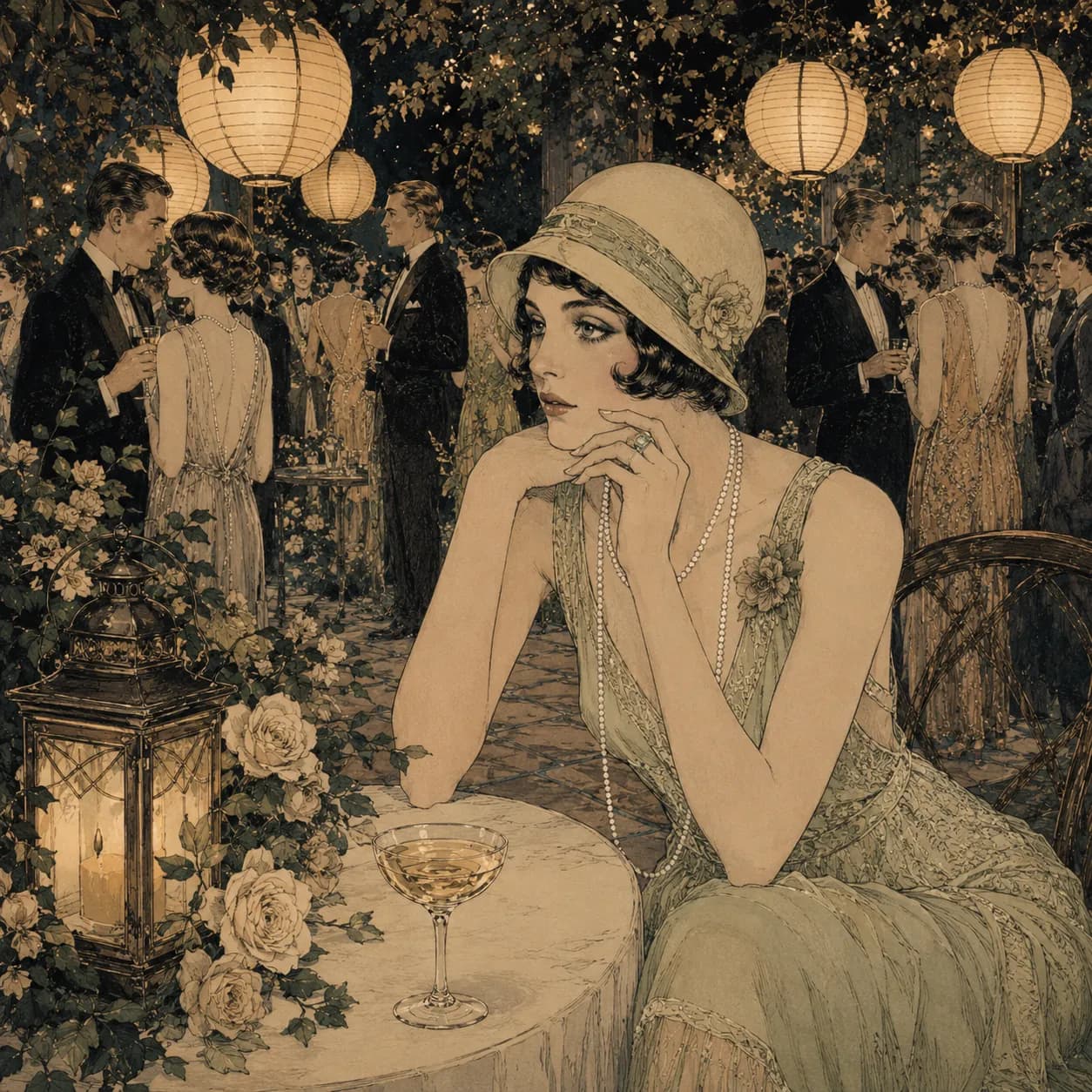
Think of the last thing you posted, and be honest about who it was really for. Not the whole feed — the one specific person you hoped would see it. That instinct is the entire plot of The Great Gatsby. There's a man in a 1925 novel who throws the biggest parties on Long Island every single weekend — orchestra, champagne, hundreds of strangers — for exactly one reason: to make one person, across the bay, notice him. He wrote the social-media defense a century before social media existed.
- Gatsby doesn't enjoy his own parties.He doesn't drink, doesn't know most of the guests, and often watches from an upstairs window.
- The whole spectacle is for an audience of one — Daisy, the woman across the bay. Everyone else is decoration.
- It's your feed, a hundred years early: a curated highlight reel measured by who notices.
- The receipt is the funeral. Hundreds came to the parties; you can count the mourners on one hand.
🥂 The host who watches his own party from upstairs
The strangest thing about the most famous parties in literature is that the host isn't at them. Gatsby doesn't drink, doesn't dance, and doesn't know most of the people flooding his lawn. He stands at an upstairs window and watches. He's the one person at the party of the century who isn't enjoying it — because for him it was never a party. It was a broadcast, and he's waiting to see if the one viewer he cares about tunes in.
And this is the trick of it. The party isn't for everyone there, it's one long show put on for a single person. Everyone else is just decoration.
📲 An audience of one — your feed, a century early
Fitzgerald even built the paradox of the crowd into the book. At one of the parties, Jordan Baker delivers the line “I like large parties. They're so intimate. At small parties there isn't any privacy” — a joke that's exactly true of a feed: in a big enough crowd, nobody is actually watching you, so you can perform freely and disappear at the same time. Surrounded by hundreds, genuinely seen by none.
Modern essayists keep arriving at the comparison without prompting. One puts it plainly: “Instagram, TikTok, and Facebook are the new stages where people try to get attention”; another describes the modern Gatsby as someone chasing “a carefully curated online persona” in the hope that attention turns into happiness. The parties were the original status feed — and the line about large parties has nearly five thousand likes on Goodreads, because readers recognize the move.
So the parties aren't the problem, the audience is. They came for the champagne, not for the man throwing it.
⚰️ Why almost nobody came to Gatsby's funeral
Almost nobody comes to Gatsby's funeral. He dies, and his one real friend, Nick, spends days working the phone, trying to find anyone at all who will show up. The hundreds who packed the lawn every weekend are suddenly unreachable — they came for the parties, not the man, and with no more champagne on offer they simply evaporate. When the day comes, you can count the mourners on one hand: Nick, Gatsby's father, and the partygoer known as Owl Eyes, plus a servant or two.
Three people show up. Nick, Gatsby's father, and one guest who barely knew him. That's it.
The bitterest note comes earlier, from Meyer Wolfsheim — Gatsby's old business associate. Nick goes to Wolfsheim's office to beg him to come, and Wolfsheim refuses; then, as his reason for staying away, he offers “Let us learn to show our friendship for a man when he is alive and not after he is dead”. He delivers the warmest sentence in the book while declining to attend the funeral— the exact failure the novel is indicting. That's the moment it stops being a party and becomes a receipt: a tally of who showed up for the show versus who showed up for the man. It's also why Gatsby reads poorly as a simple love story — its tenderest line about loyalty is spoken by a man dodging a funeral, and it lands on friendship, not romance.
Hundreds came to the parties. A handful came to the funeral. That gap is the whole book.
🧾 Count who shows up when you have nothing to give
The usable version of the book is a single question you can run on a Wednesday. Not how many people liked the post — how many would show up the week you have nothing to offer: no news, no party, no champagne, no reason. That smaller number is the real list. Everyone else came for the feed.
Count who shows up when you have nothing to give. That's your real list. The ones with nothing to gain.
The parties aren't the problem. Posting isn't the problem. The trap is mistaking the crowd at the show for the people who'd sit with you when the lights are off — and Gatsby spends his whole life confusing the two.
So the next time the Gatsby aesthetic floats past on your feed — the gold, the fireworks, the perfect party — remember that Fitzgerald already wrote the ending. The performance is easy. The funeral is the truth. Count who shows up when you have nothing to give.
Sources
- The Great Gatsby (1925 text) — Project Gutenberg
- Social Media and The Great Gatsby Party — Bamboo and Bananas
- The Modern Era of Great Gatsby: Social Media Version — Yoamer (Medium)
- The Great Gatsby — quotations — Goodreads
- The Great Gatsby — study guide — SparkNotes
Frequently asked questions
- Why did almost nobody come to Gatsby's funeral?
- Because the hundreds who came to his parties came for the parties, not for him. They never really knew Gatsby — they used his house, his champagne, and his orchestra, and when there was nothing left to take, they vanished. Only a handful turn up to bury him: Nick Carraway, Gatsby's father, the man known as Owl Eyes, and a few servants. The empty funeral is Fitzgerald's receipt for a life built on performance.
- Why does Gatsby throw such big parties?
- For one person. Gatsby throws his enormous weekend parties hoping that Daisy — the woman across the bay he's loved for years — will hear about them, wander in, and find her way back to him. He doesn't drink, he barely knows his guests, and he often watches from an upstairs window. The whole spectacle is a performance staged for an audience of one; everyone else is decoration.
- Is The Great Gatsby a love story?
- Not really — it's often shelved as one, but it reads more as an indictment of people who use love and money to avoid responsibility. The romance is the engine, but the novel ends on a funeral nobody attends and Nick's verdict that Tom and Daisy were "careless people." It's less about two people finding each other than about what it costs to perform a life for an audience that won't show up when it matters.
- What does Jordan Baker mean by "I like large parties. They're so intimate"?
- Jordan's line — "I like large parties. They're so intimate. At small parties there isn't any privacy" (Chapter III) — is a joke with a real point: in a huge crowd, no one is watching you, so you can do as you like unnoticed. It captures the paradox of Gatsby's parties and of a modern feed: surrounded by hundreds, genuinely seen by no one. The bigger the room, the easier it is to disappear in it.
- How is The Great Gatsby about social media?
- Fitzgerald wrote the social-media critique a century before the platforms existed. Gatsby's parties are a curated highlight reel performed for one specific person, measured by who shows up and who notices — exactly the logic of posting today. Multiple modern essays make the comparison directly: the parties are the original status feed, and the empty funeral is the part of the feed you don't see — who actually answers when you have nothing to offer.
- Who came to Gatsby's funeral?
- Almost no one. Nick Carraway organizes it and can barely find anyone willing to attend. Gatsby's father, Henry Gatz, travels in; the partygoer known only as Owl Eyes turns up at the grave; a minister and a few servants are present. The contrast with the hundreds who filled his parties every weekend is the whole point — and it's underlined by Gatsby's business partner Meyer Wolfsheim, who declines to come at all, telling Nick he has "learned to show our friendship for a man when he is alive and not after he is dead."
Enjoyed this one?