Why does Gatsby say "old sport"? It's the tell that he's trying (2026)
Gatsby says "old sport" to sound like the people he wants to be. The phrase itself is the giveaway he isn't one of them. Born James Gatz in North Dakota, he guessed at how the rich talk and committed. Every code-switch leaves a seam — his is "old sport." Yours might be "circle back."


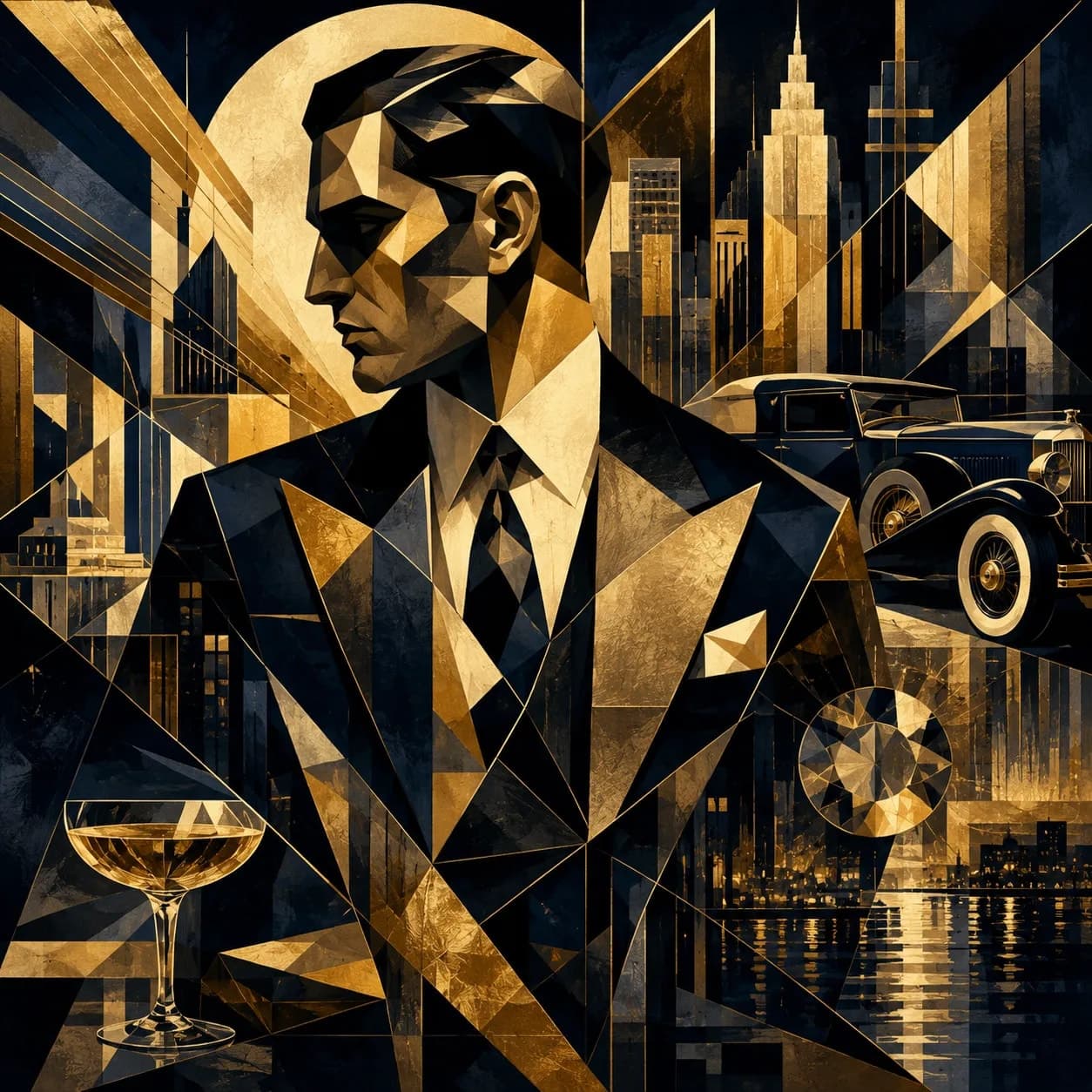
Say it out loud once: old sport. It instantly sounds like a man trying a little too hard to belong in a room he just walked into — which is exactly the point. Gatsby says it constantly because he thinks that's how the rich talk. The phrase he reaches for to pass as old money is the precise thing that proves he isn't. And if you've ever heard yourself say “let's circle back” and winced, you already know the feeling.
- “Old sport” is Gatsby's tell, not period slang.Daisy doesn't say it; Tom doesn't say it. The people born rich never reach for it.
- He says it 42 times in the book — so often it becomes the seam in his disguise.
- Gatsby isn't even his name.He was born James Gatz, a farmer's son from North Dakota, and invented himself at seventeen.
- The tell is the trying:the phrase you grab to sound like the room is the proof you're not in it yet.
| What Gatsby thinks it does | What it actually does |
|---|---|
| Makes him sound like old money | Marks him instantly as new money trying to pass |
| Signals easy upper-class familiarity | Signals a rehearsed line, repeated too often |
| Hides where he came from | Points straight at it — Tom asks 'where'd you pick that up?' |
| A small, charming verbal tic | The seam in the whole disguise |
🎩 The phrase that gives him away
Here's the tell at work: only Gatsby talks this way. Daisy doesn't say “old sport,” Tom doesn't, none of the people who grew up rich do — because they grew up hearing how their world actually sounds and don't need to perform it. Gatsby reaches for the phrase because he thinks that's the sound of the room, and the reaching is the giveaway. He says it to his guests, at his parties, when he's nervous, even to busboys. He can't stop.
That's kind of the joke. The book has it forty-two times. Movie fans counted four hundred and twenty-six in the two thousand thirteen film, and that's the number that stuck.
🌾 Gatsby isn't even his real name
The reveal most casual fans never reach: “Jay Gatsby” is a costume. He was born James Gatz, the son of poor farmers in North Dakota, and renamed himself at seventeen. He even worked as a janitor at college to pay his way, then quit after two weeks because he couldn't stand being the hired help in the world he wanted to join. Which means “old sport” is, quite literally, what a seventeen-year-old from a farming town imagines rich people on the East Coast say — a guess he committed to for life.
“Old sport” is a teenager from North Dakota's best guess at how the rich talk — and he never stopped saying it.
🔎 “Where'd you pick that up?” means “who are you?”
The old-money characters clock the tell every time, and one of them finally says it out loud. In Chapter VII, Tom Buchanan — Daisy's husband, born into exactly the world Gatsby is imitating — calls him out to his face: “All this ‘old sport’ business. Where'd you pick that up?” He doesn't raise his voice. He doesn't need to. It's a calm little question, and Gatsby has no answer.
It's the only question that mattered that whole summer. Because where did you pick that up really means, who are you. The one question he spends the whole book dodging.
💼 Your own “old sport”
Every code-switch leaves a seam, and most of us still do this — just on email now. The phrase you over-formalize. The LinkedIn headline that calls you a “transformational leader,” because no actual leader describes themselves that way. The first day at a job a notch above your last one, where you hear yourself saying things you'd never say to a friend.
Look, I've heard myself this week. Last Tuesday, first day at a job slightly above my last one. Within forty minutes I'd said let's sync, said circle back, and dropped the word synergy on a real adult. My LinkedIn headline says transformational leader, which, no.
That half-second pause from the senior person in the room? That's Tom's question without the words. The rule the book hands you is small and usable: the tell is the trying — and you can't cover it by explaining it, because anyone who noticed already knows.
And the people already in the room can always tell. So, say less, mean it more, and never explain where you picked it up.
So “old sport” isn't a charming Gatsby quirk — it's the first cringe of class-passing, the wrong note you can hear yourself hit in real time. A hundred years on, we're still saying his name, which is not bad for a phrase some farm boy invented out of thin air at seventeen. Say less, mean it more, and never explain where you picked it up.
Sources
- The Great Gatsby (1925 text) — Project Gutenberg
- Jay Gatsby — character analysis — LitCharts
- Is Gatsby Great? Explaining the Title — PrepScholar
- The Great Gatsby — Encyclopædia Britannica
- The Great Gatsby — reader reviews — Goodreads
Frequently asked questions
- Why does Gatsby say "old sport"?
- Gatsby says "old sport" because he thinks it's how wealthy, well-bred people talk — it's the phrase he reaches for to sound like the old-money world he's trying to join. The irony is that the reaching is the giveaway: the people actually born into that world never say it, because they grew up hearing it and don't need to perform it. The phrase he uses to pass is exactly the thing that marks him as an outsider.
- How many times does Gatsby say "old sport"?
- In Fitzgerald's novel, "old sport" appears 42 times — often enough that it becomes Gatsby's verbal signature. The popularly cited figure of "45" is slightly off; 42 is the count in the public-domain text. The 2013 Baz Luhrmann film cranks it much higher — fans counted around 426 uses on screen — and that movie number is the one that stuck in internet memory, but it's a film exaggeration, not the book's count.
- What is Gatsby's real name?
- Jay Gatsby was born James Gatz, the son of poor farmers in North Dakota. He renamed himself at seventeen and invented the persona of a wealthy, worldly gentleman from scratch. He even worked briefly as a janitor at college to pay his way, then quit after two weeks because he couldn't stand being the hired help in the world he wanted to belong to. "Gatsby" is a costume; "old sport" is part of it.
- Is "old sport" a real 1920s phrase or did Fitzgerald invent it?
- "Old sport" was a genuine period expression of casual upper-class familiarity, but in the novel it functions as Gatsby's specific affectation, not common slang everyone uses. The other characters notice it precisely because Gatsby overuses it. Tom Buchanan challenges him on it directly in Chapter VII — "All this 'old sport' business. Where'd you pick that up?" — which exposes it as something Gatsby acquired rather than grew up with.
- What does "old sport" reveal about Gatsby's character?
- It reveals that Gatsby is self-made and self-invented — a man performing a class he wasn't born into. The phrase is what one episode of the Saylia podcast calls "the tell is the trying": the word you reach for to sound like the room you're in is often the proof you're not in it yet. Gatsby's "old sport" is the seam in his disguise, the small, repeated tell that the people who actually belong can always hear.
- What does Tom mean by "Where'd you pick that up?"
- When Tom Buchanan asks Gatsby "Where'd you pick that up?" about his constant "old sport," he's really asking a deeper question: who are you, actually? It's a calm, cutting way of saying he can tell Gatsby is performing. "Where did you pick that up" means "this isn't really yours" — and it lands on the one question Gatsby spends the entire novel trying to dodge, because the honest answer is James Gatz from North Dakota.
Enjoyed this one?