Is Moby-Dick Actually Worth Reading? Yes, and Here Is Which Chapters to Skim
The reputation says half the book is whale trivia. The table of contents says one chapter in eight, and it is the easiest claim in the argument to check.


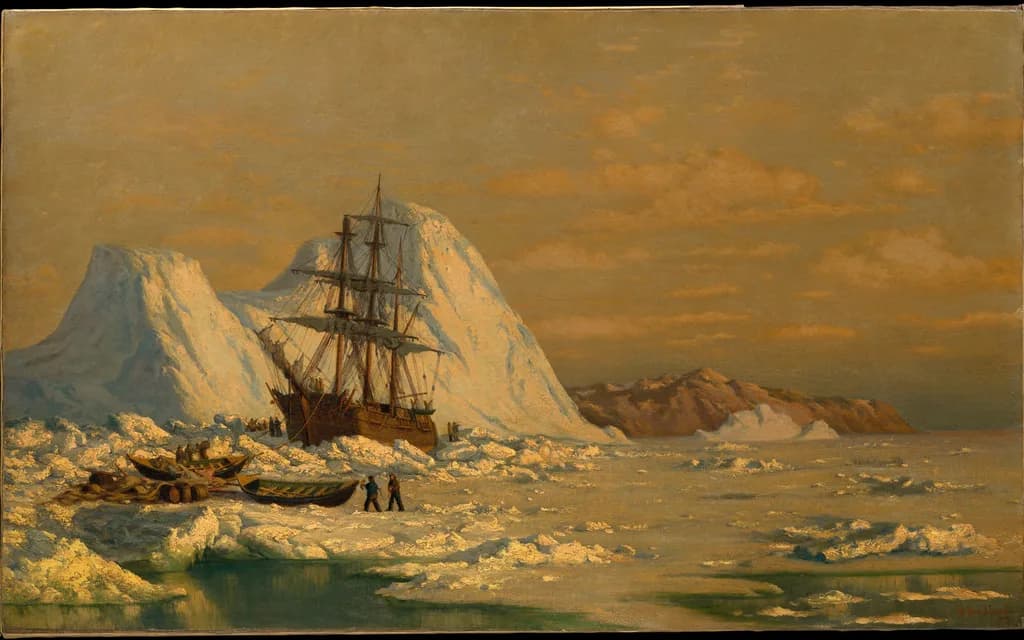
The reputation arrives before the book does. Half of it is whale trivia, people say. It is the one everybody starts and nobody finishes. It is homework with a harpoon in it.
The table of contents disagrees, and it is the easiest thing in the argument to check. The novel is a whaling story: a broke narrator ships out of New Bedford, and the captain he sails under, Ahab, turns the voyage into a hunt for one particular white whale. Moby-Dick runs 135 numbered chapters and an Epilogue, and the chapters that are genuinely essays about whale bodies and whale pictures come to sixteen of them. That is roughly one chapter in eight, and they are numbered, so you can see them coming.
- Sixteen of 135 chapters are pure whale digression, not half the book. The list is below, by number.
- The first quarter is a comedy, set on land, in an inn, with a bed-sharing problem and a landlord enjoying himself.
- It failed on publication. The London edition sold fewer than 300 of its 500 copies in four months.
- Two chapters look skippable and are not:one has a giant squid, the other drops a man inside a whale's head.
Below is the honest version: what the book is actually like, which chapters you can skim by number, and why the thing sank on publication and came back seventy years later. If you would rather walk into it than read about it, the playable Moby-Dick opens where the novel does, at the Spouter Inn, with a bed you have to share.
🐋 Does it actually work as a story?
For long stretches, yes, and the opening is the proof. The first twenty-odd chapters happen on land, in New Bedford and Nantucket, and they are close to farce: a broke narrator, a landlord who will not stop enjoying the joke, a harpooneer out selling a shrunken head, and a night of negotiation over one bed.
Nobody warns you that the book is funny, which is why the humour lands so oddly when it arrives. The voice is the other surprise. Ishmael narrates like a man with time to kill and something to prove, and the first sentence tells you how to read him.
“Call me Ishmael. Some years ago—never mind how long precisely—having little or no money in my purse, and nothing particular to interest me on shore, I thought I would sail about a little and see the watery part of the world.”
The land chapters also contain the two set pieces that convert most first-time readers. Chapters 8 and 9 are Father Mapple in the Whaleman's Chapel: an old sailor who climbs a rope side-ladder into his pulpit and then drags the ladder up after him, and preaches on Jonah to a room of men about to go to sea. Chapter 19 is Elijah, a ragged stranger who stops Ishmael and Queequeg on the dock, asks whether they have shipped in that ship, and then asks whether the articles they signed said anything about their souls.
Once the Pequod sails, the book runs on scenes rather than on chapters: an oath sworn on deck over a gold coin nailed to the mast, a captain nobody has seen for days appearing at the rail, a boy left in open water for a few minutes too long, a supper of whale steak argued over with the cook. They are short. Melville writes in two-page and three-page chapters, which is why the book reads faster than its size suggests.
What it withholds is momentum of the usual kind. There is no puzzle to solve and no secret being kept from you. Everyone aboard knows by Chapter 36 that Ahab intends to kill the whale that took his leg, and the rest of the voyage is the crew deciding, one at a time, what they are prepared to do about it.
📖 The whale chapters, and exactly which ones you can skim
Sixteen chapters out of 135 are whale essays with no plot in them, and here they are by number: 32 (Cetology), 55, 56, 57 and 58 (whales in pictures, and the sea meadows of brit), 74, 75, 76, 77, 79 and 80 (heads, jaws, the brow and the brain), 85 and 86 (the spout and the tail), and 103, 104 and 105 (the skeleton, the fossil record, and whether whales will outlast us).
Skim any of them and the story on the other side is unchanged. Two chapters inside that range are traps, which is why a blanket rule about the whale chapters fails. Chapter 59 is called Squid and is a scene: the lookout sights something enormous and white on a flat sea, the boats go out, and what surfaces is not a whale. Chapter 78 is called Cistern and Buckets, which sounds like plumbing, and is the chapter where a harpooneer falls into the severed head of a sperm whale and has to be cut out of it while it sinks.
A second set of essay chapters is worth keeping, because the book's argument lives in them rather than in its plot. Chapter 42 is the famous one about the colour white, and it refuses to settle on a single meaning. Chapter 45 exists to convince you that a whale really can sink a ship, and cites cases. Chapter 89 divides the world into fast-fish and loose-fish, then applies the rule to nations and to people. Chapter 99 hands the same gold coin to six men and lets each read his own life in it.
It is worth knowing what the digressions are doing, because the answer is not padding. They cluster in the middle of the voyage, between the oath in Chapter 36 and the sighting of the whale, and they hold the hunt still for two hundred pages while the reader learns the trade. By the time the chase starts you know what a harpoon line does, how a whale is cut up, how long a boat crew can hold on. The last three chapters are unbearable partly because you have been taught the physics in advance.
A practical version, then. Skim the sixteen numbered above, read everything else, and give 42, 45, 89 and 99 your full attention. If you would rather work from a rule than from a list: read every chapter with a person's name or a ship's name in the title, and treat an anatomy noun in a title as permission to skim — but the rule has two named exceptions already above (Squid and Cistern and Buckets) plus 42, 45, 89 and 99, so check a title against that short list before you skim on the strength of the rule alone.
📉 It flopped in 1851, then came back in the 1920s
The book failed commercially, and the numbers are specific. The British edition appeared first, on 18 October 1851, under the title The Whale; by Wikipedia's account of the publication, that printing of 500 copies sold fewer than 300 in the opening four months.
The American edition followed on 14 November as Moby-Dick: about 1,500 copies moved in eleven days, then sales fell to under 300 for the whole of the next year. Encyclopedia.com puts the lifetime total at fewer than five thousand copies. Melville lived another forty years and watched the book stay out of print in America. What turned it around was not a rediscovered manuscript or a new edition. It was a birthday: the reputation as a Great American Novel was established in the twentieth century, after the 1919 centennial of the author's birth sent critics back to a writer most readers had filed under sea stories.
That is worth holding onto while you read, because the parts modern readers find strangest are the parts that sank it in 1851. A whaling adventure interrupted by essays on whale anatomy was a commercial mistake in its own decade. Seventy years later the same interruptions were the reason the book was worth reviving.
⏳ How long it actually takes
The Project Gutenberg text runs 212,796 words, Etymology and Extracts included, across 135 chapters and an Epilogue. That is long, but the shape matters more than the total: chapter lengths swing from a single page to twenty, and the short ones cluster in the parts with people in them, so the reading speeds up exactly where you want it to.
Chapter 122 is a stage direction and one speech: a harpooneer at the masthead in a thunderstorm, telling the thunder to stop and asking for rum. That is the entire chapter, about forty words of it. Two front-matter sections sit before Chapter 1 and stall a lot of first-timers. Etymology is a page of the word whale in a dozen languages. Extracts is eighty-odd quotations about whales, gathered by a fictional junior librarian whom Melville pities at length. Neither is the book. Both are a joke about scholarship, and you can start at Chapter 1 without missing anything.
The text is public domain, so the cost of trying it is nothing at all. If it does not take, you are out an evening, and the parts most likely to catch you are in the first hundred pages.
The full 1851 text is free at Project Gutenberg. If you want to know how it ends before committing two weeks to it, the last three chapters are laid out plainly here, spoilers flagged. Homer's Odyssey gets the same treatment on this blog, if long books are your project this year. For the other nineteenth-century novel that stops its chase to catalogue the sea, the essays on Twenty Thousand Leagues under the Sea take up the same argument about whether the digressions are the point.
Sources
- Moby Dick; Or, The Whale (1851), full text — Project Gutenberg
- Moby-Dick — Wikipedia
- Moby-Dick — Encyclopedia.com
- Moby (musician) — Wikipedia
Frequently asked questions
- Is Moby-Dick boring?
- It is uneven rather than boring, and the unevenness is structural: sixteen of the 135 chapters are whale-anatomy essays with no plot in them, and the rest move quickly. A detail that shows how loosely the thing was assembled is that Chapters 26 and 27 carry the same title, Knights and Squires, one straight after the other.
- Can I skip the whale chapters in Moby-Dick?
- Yes, and you can do it by chapter number rather than by feel. The one essay chapter worth reading anyway is Chapter 45, The Affidavit, where Melville sets out to convince a doubting reader that a whale really can sink a ship, and cites the 1820 loss of the Nantucket ship Essex under Captain Pollard, along with the account written by her chief mate.
- How long is Moby-Dick, and is there a free version?
- The Project Gutenberg text runs 212,796 words across 135 chapters and an Epilogue, which is long but very unevenly distributed: many chapters run two or three pages. The novel is public domain in the United States, so the complete text is free as Project Gutenberg ebook number 2701, and volunteer-read audio versions are free as well.
- When did Moby-Dick become famous?
- Not in Melville's lifetime. Its standing as a Great American Novel was established in the twentieth century, after the 1919 centennial of his birth sent critics back to him. The 1851 notices were not uniformly hostile, though: by Encyclopedia.com's account the proportion of positive to negative reviews was highest in England, where the book appeared first.
- Is Ishmael the narrator's real name?
- The book never confirms it. The opening line is a request rather than a statement, and no one in the novel independently verifies the name. The nearest thing to an identification comes in the Epilogue, where the narrator explains himself as the man who took the place of Ahab's bowsman after the Parsee vanished, which is why he is thrown clear at the end.
- Is the musician Moby related to Herman Melville?
- By family story rather than by descent. His father gave him the nickname three days after he was born, because his parents thought the baby was unusually large, and the name nodded to an ancestry his family had told him about; Wikipedia's article on him states plainly that he is not directly related to Melville.
Enjoyed this one?