Jekyll and Hyde Ending Explained: Whose Body Is in the Cabinet?
Everyone knows they are one man. Fewer readers remember the order in which the book proves it, or that its last page belongs to someone who is about to lose the power to write.


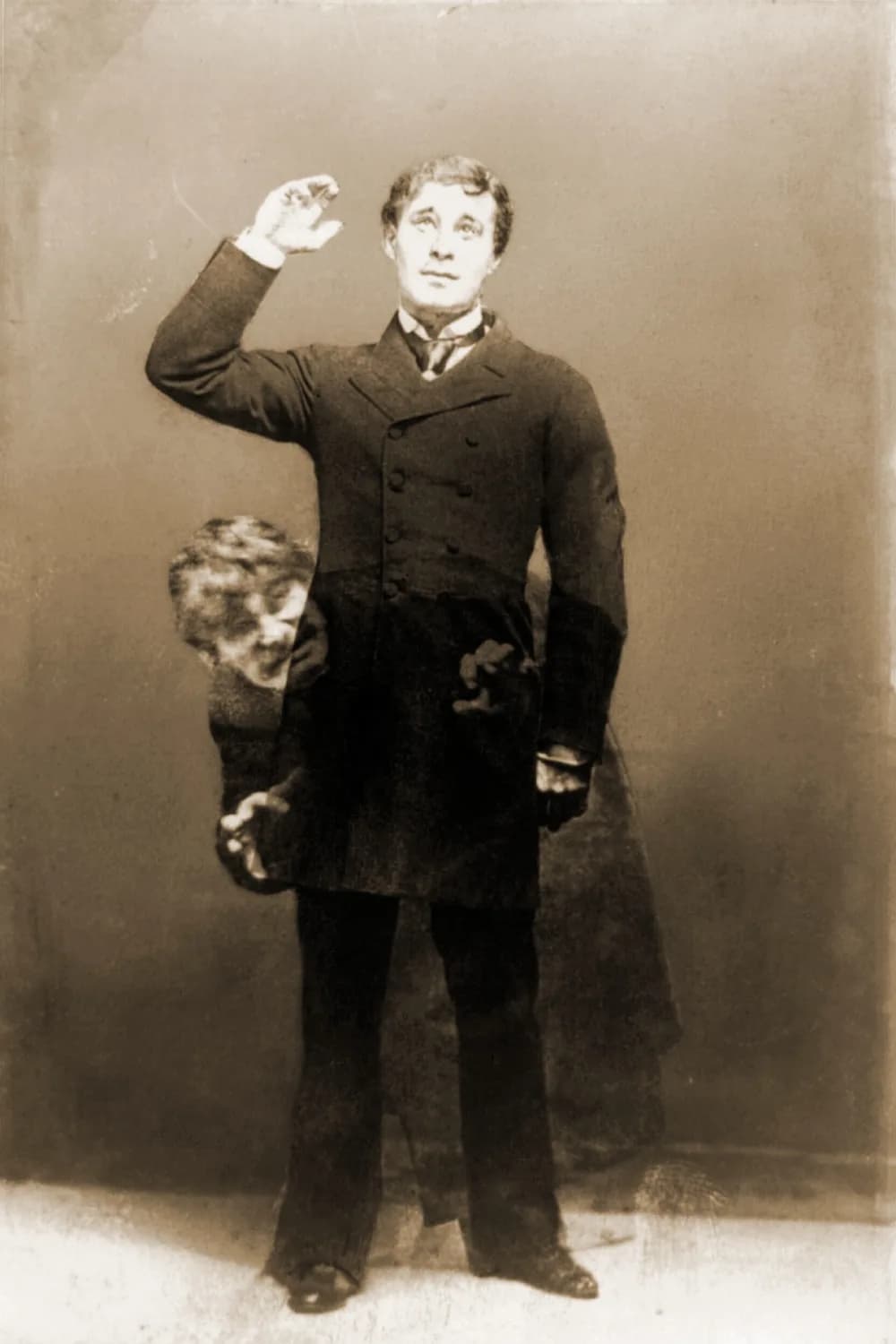
Spoilers for the whole of Strange Case of Dr Jekyll and Mr Hyde, including the last page.
The ending arrives in a strange order. You see the corpse first, then read two accounts of how it got there, and the man who explains everything is already dead by the time you meet his voice. The night of the break-in is its own doorway in the playable Dr Jekyll and Mr Hyde, where you can stand outside the red baize door with Poole and decide how long to keep knocking.
🪓 Whose body is on the cabinet floor?
It is Hyde’s. Utterson calls through the door, a voice begs him for mercy, and he recognises it at once as Hyde’s rather than his friend’s. Poole needs five blows of the axe before the lock gives. A scream comes from the cabinet after the first. By the time the door falls in, the man inside is on the carpet and still twitching.
He was dressed in clothes far too large for him, clothes of the doctor’s bigness; the cords of his face still moved with a semblance of life, but life was quite gone; and by the crushed phial in the hand and the strong smell of kernels that hung upon the air, Utterson knew that he was looking on the body of a self-destroyer.
The two men then search the whole building for the doctor’s own body: the theatre, every closet, the cellar sealed by years of cobweb. The narration is flat about the result. There is no trace of Henry Jekyll anywhere, dead or alive, and Poole starts tapping the flagstones in case his master has been buried under them. The reader learns why from the confession: the corpse on the floor is Jekyll’s own body, wearing Hyde’s shape, so there was never a second body to find.
📜 What is waiting on Jekyll’s desk?
A large envelope addressed to Utterson, holding three things. The first is a new will. It uses the same odd terms as the one that left everything to Edward Hyde, except that the lawyer finds his own name written where Hyde’s used to be. He points out the obvious problem: Hyde has had this paper in his reach for days and did not destroy it.
The second is a short note in Jekyll’s hand dated that same day, which convinces Utterson that his friend was alive hours earlier and may have fled. He hesitates before calling what he has just seen a suicide, because he is still trying to protect Jekyll’s name. The third is a sealed packet, and he takes it home to read, together with the letter Lanyon gave him weeks before.
🕯️ What did Lanyon see?
He saw the change happen in his own consulting room. Hyde arrived at midnight to collect a drawer of chemicals, mixed a draught, drank it, and turned into Jekyll in front of him. Lanyon writes that the sight broke his health and that he expects to die of it.
I saw what I saw, I heard what I heard, and my soul sickened at it
His letter is the book’s first plain statement that the two men are one. How carefully the first readers were kept from guessing that, and why the reveal still lands for readers who arrive knowing it, is a separate essay on the twist.
⚗️ Why did the potion stop working?
Because the salt ran out, and the replacement did nothing. Jekyll had never renewed his original supply. When he ordered more and mixed the draught, the colour changed once instead of twice, and the drink had no effect. He had London searched for the old stock, and nothing his agents brought back would work.
His conclusion is the strangest detail in the book: the first batch was impure, and some unknown impurity is what made the potion work at all. The experiment that split him could never have been repeated, even by him. The dose-and-tolerance reading of that sequence is covered in the essay on the addiction story.
💀 Was it suicide?
Almost certainly, but Stevenson never narrates the moment. Utterson reads the phial and the smell as the signs of a self-destroyer, and then talks himself out of saying so aloud. Jekyll does not know the answer either. In his last pages, written before the final change, he asks it about the creature he is about to become and leaves it open.
Will Hyde die upon the scaffold? or will he find courage to release himself at the last moment? God knows; I am careless
The book therefore splits its suicide in two. Jekyll ends his own life as a writer when he seals the statement, and Hyde ends the body later, behind a locked door, with the axe coming through it. The standard plot summary describes the scene as one that suggests a suicide, which is as far as the text itself goes.
✒️ What is the last sentence?
It is Jekyll laying down his pen. He is writing under the last of the old powders and expects to turn into Hyde for good within the hour. That makes this, in his own words, the last time Henry Jekyll can think his own thoughts.
this is my true hour of death, and what is to follow concerns another than myself. Here then, as I lay down the pen and proceed to seal up my confession, I bring the life of that unhappy Henry Jekyll to an end.
Stevenson never returns to Utterson after that. There is no scene of the lawyer finishing the packet or calling the police, which he promised to do before midnight. The Project Gutenberg text simply stops on the confession, so the reader closes the book holding the same papers Utterson was holding. Whether Jekyll was the guilty party all along is argued in the essay on who the villain is.
Sources
- Strange Case of Dr Jekyll and Mr Hyde (Project Gutenberg text) — Project Gutenberg
- Strange Case of Dr Jekyll and Mr Hyde — Wikipedia
- Richard Mansfield — Wikipedia
- Richard Mansfield as Jekyll and Hyde, photograph by Henry Van der Weyde — Wikimedia Commons
Frequently asked questions
- What happened at the end of Jekyll and Hyde?
- Hyde poisoned himself in Jekyll's locked cabinet on a cold March night, and Utterson read the truth afterwards in two letters. Poole had been sure for eight days that his master was gone, because the voice behind the door was wrong and the orders came through on scraps of paper thrown onto the stair.
- Who was the killer, Dr. Jekyll or Mr. Hyde?
- Hyde struck the blows, and Jekyll owns the body that struck them. The murder in the book is of Sir Danvers Carew, an elderly M.P. clubbed to the ground and trampled in the roadway, and Lanyon's letter closes by naming the visitor who changed in front of him as the man hunted in every corner of the land as the murderer of Carew.
- What is the significance of the closing scene?
- It hands the ending to the one man who cannot witness it. Jekyll writes that "half an hour from now" he will become Hyde for good, pacing what he calls his last earthly refuge, so the novella's final scene is something he foresees, and the break-in the reader has already watched is that scene coming true.
- Why are the clothes on Hyde's body too large?
- Because they are Jekyll's, and Hyde is the smaller man. The detail is planted earlier, in Lanyon's account of his midnight visitor, whose rich clothes were too big in every measurement, with the trousers rolled up off the ground and the coat collar sprawling across his shoulders. Lanyon says the outfit was far from moving him to laughter, because the man inside it was so disturbing to look at.
- Who wrote the last chapter of Jekyll and Hyde?
- Jekyll himself, in a chapter titled Henry Jekyll's Full Statement of the Case. Among its last confessions is a list of Hyde's petty revenges on him, including scrawling blasphemies in Jekyll's own handwriting across the pages of his books, burning his letters and destroying the portrait of his father.
Enjoyed this one?