Pride and Prejudice is a comedy, not a romance — and Mr. Collins proves it (2026)
Everyone sells Pride and Prejudice as a wet-shirt romance. Open it and you find the funniest book in English — a comedy about people misjudging each other, anchored by Mr. Collins, the patron saint of secondhand embarrassment. Austen even told you so: the first draft was called First Impressions.


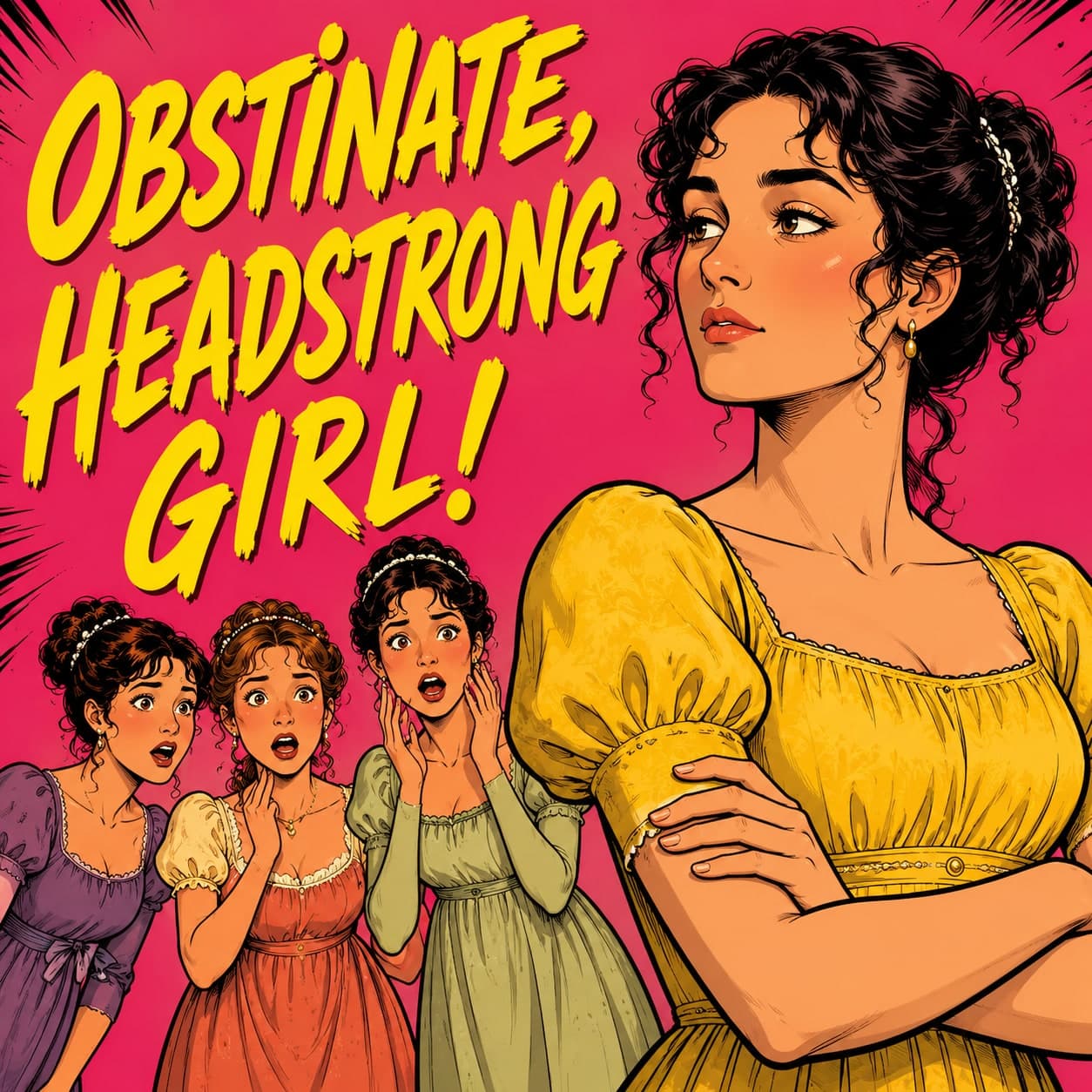
You've been sold Pride and Prejudice as a wet shirt and a lot of longing — a sweeping period romance with a brooding man in a soaked linen shirt. Then you actually open it, and the surprise that hits nearly every first-time reader is that it's funny. Not gently amusing — laugh-out-loud, secondhand-embarrassment funny. Jane Austen wrote the closest thing English has to a sitcom, two hundred years before the form existed, and she practically told you so: the first draft was called First Impressions.
- The original title was First Impressions. Austen named the comic engine herself — the whole book is about getting people wrong.
- The opening line is a joke, not a thesis — village gossip dressed up as a law of nature.
- Mr. Collins is the original cringe character. Every sitcom you love is downstream of him.
- Read it expecting jokes, not swooning,and the “hard” book moves fast.
| The Pride and Prejudice you've been sold | The book Austen actually wrote |
|---|---|
| A sweeping wet-shirt romance | A comedy of manners — the funniest book in English |
| Brooding, romantic Mr. Darcy | A man who writes the heroine off in one cruel sentence |
| A timeless love story | A 400-page satire of people getting each other wrong |
| Titled Pride and Prejudice | Originally titled First Impressions |
🎭 The book everyone calls a romance is a comedy first
The marketing has done Pride and Prejudice a real disservice. Two centuries of covers and film posters have sold it as a love story, when the load-bearing pleasure of the book is the narration — dry, merciless, and very funny. It's the single most common thing first-time readers say once they get past the reputation: it's funnier than anyone warned them. Goodreads reviewers, where it sits at a 4.29 average across millions of ratings, keep circling the same surprise — they came for the romance and stayed for the comedy.
It's the funniest book in English. The first draft was called First Impressions. The whole novel is people getting each other wrong.
📝 First Impressions: the original title was the whole thesis
Austen drafted the novel between 1796 and 1797, when she was about twenty, and called it First Impressions. She only renamed it for the 1813 publication — partly because, as Jane Austen's House documents, two other novels titled First Impressions had been published in the years in between. The discarded title is basically a spoiler for the theme: the whole book is about how catastrophically wrong first impressions usually are.
And the famous opening line is the joke that sets it all up: “It is a truth universally acknowledged, that a single man in possession of a good fortune, must be in want of a wife.” Read straight, it sounds like a maxim. It isn't true at all — it's a mother saying it loudly at brunch, village gossip pretending to be physics. That ironic narrator's wink in the very first sentence is the tone for everything that follows.
It's village gossip pretending to be a law of physics, and that's Austen's wink.
The engine, once you see it, is everywhere. Mr. Darcy walks into the first dance, looks at the heroine, and dismisses her in a single sentence — “She is tolerable, but not handsome enough to tempt me” — loud enough that she hears it. He's wrong about her; she's then wrong about him for three hundred more pages. As one Substack essay on Austen puts it, most of the harm in her world comes not from malice but from people who “see poorly”. That misjudgment machine is the comedy.
🥔 Mr. Collins, the patron saint of secondhand embarrassment
If the book has a mascot, it's Mr. Collins — the pompous clergyman cousin who proposes to Elizabeth by listing his reasons, name-drops his wealthy patroness Lady Catherine at every turn, and flatly refuses to believe she's said no. He is the ancestor of every TV character who explains a thing the room already understands and cannot read the air while doing it. The line readers quote most isn't even from the novel: “What excellent boiled potatoes” is from the 2005 film — but it's pure Mr. Collins energy, a man delivering a TED talk about a vegetable at someone else's dinner table.
The original cringe character. Every sitcom you love is downstream of him. And every office has one.
That's the part worth sitting with: the secondhand-embarrassment beat — the one every modern sitcom runs on, from The Office to every cringe edit on your feed — Austen was already running in 1813. The discomfort of watching someone confidently misjudge a room is a 200-year-old invention.
🪑 You've had a boiled-potatoes moment too
Here's why it still lands. You don't need a drawing room to recognize Mr. Collins — you've sat across from him at work, and if you're honest, you've been him. The new hire at the all-hands; the meeting where someone explains what everyone already knew, for nine minutes, while the room studies the floor. Everyone has a boiled-potatoes moment.
New hire, first day, the all hands. They raise their hand, and explain a thing the room already understood, for nine minutes, while everyone makes brief eye contact with the floor.
And the takeaway underneath the comedy is genuinely usable. The whole book is a 400-page argument that your snap read of a person is almost always wrong — Austen titled the draft after the problem and then spent the novel proving it. Somewhere there's a person you wrote off in a sentence and never updated.
Austen wrote four hundred pages to prove your first impression is almost always wrong. She titled the draft after the problem.
So if Pride and Prejudice has been sitting on your shelf with a reputation for being a difficult, stately romance, try opening it as what it actually is: a comedy about people being completely, hilariously wrong about each other. It reads in an afternoon, it's sharper than the marketing, and the mortifying cousin holding forth about a potato is waiting for you in the first act. Read it for the jokes — the reminder that your first impression is almost always wrong comes free.Little Women runs its own cringe comedy through four sisters instead of five, minus the entail.
Sources
- How First Impressions became Pride and Prejudice — Jane Austen's House
- Sunday Wisdom: Jane Austen and the Error of Seeing — Culture Faultlines
- Pride and Prejudice (1813 text) — Project Gutenberg
- Pride and Prejudice — reader reviews — Goodreads
- Pride and Prejudice — Wikipedia
Frequently asked questions
- Is Pride and Prejudice a comedy or a romance?
- Both, but the comedy comes first. Jane Austen's 1813 novel is best read as a comedy of manners — a sharp satire about people misjudging each other — with the Elizabeth-and-Darcy romance as the slower-burning B-plot. What surprises most first-time readers isn't the love story but how funny the narration is. Austen's own working title, First Impressions, names the comic engine: nearly everyone in the book reads everyone else wrong.
- Why was Pride and Prejudice originally called First Impressions?
- Austen drafted the novel between 1796 and 1797, when she was about twenty, under the title First Impressions. By the time it was published in 1813 she had renamed it Pride and Prejudice, partly because two other novels titled First Impressions had appeared in the intervening years. The original title was almost a thesis statement: the whole book is about how wrong first impressions usually are.
- What is the famous opening line of Pride and Prejudice?
- “It is a truth universally acknowledged, that a single man in possession of a good fortune, must be in want of a wife.” It's one of the most quoted opening sentences in English literature. The joke is that it isn't actually true — it's village gossip dressed up as a law of nature, and that ironic narrator's voice sets the comic tone for the entire novel.
- Who is Mr. Collins in Pride and Prejudice?
- Mr. Collins is the pompous clergyman cousin who stands to inherit the Bennet family's estate. He's Austen's great cringe character: he delivers long, self-important speeches, constantly name-drops his wealthy patroness Lady Catherine, and proposes to Elizabeth by listing his reasons and refusing to believe she's said no. Readers consistently single him out as the funniest — and most secondhand-embarrassing — character in the book.
- Is Pride and Prejudice hard to read?
- It has a reputation for being dense, mostly because of its formal Regency sentences and a slow opening chapter. But read as a comedy rather than a stately romance, it moves quickly — the dialogue is sharp and frequently funny. Going in expecting jokes rather than swooning is the single best way to enjoy a first read.
- What is the main message of Pride and Prejudice?
- On one level it's a warning about snap judgments: nearly every character forms a confident first impression that turns out to be wrong, and the plot is the slow, often comic work of correcting it. The title pairs the two traps — Darcy's pride and Elizabeth's prejudice — that keep two well-matched people apart until each finally learns to see the other clearly.
Enjoyed this one?