It's always 'wyd' — Pride and Prejudice is really about saying the thing (2026)
Strip away the muslin and Pride and Prejudice is a 400-page panic attack about not being able to say what you mean. The most-tattooed line isn't even Austen's. The book's actual rule is simpler and more useful than the longing: nothing moves until someone finally writes the thing down.


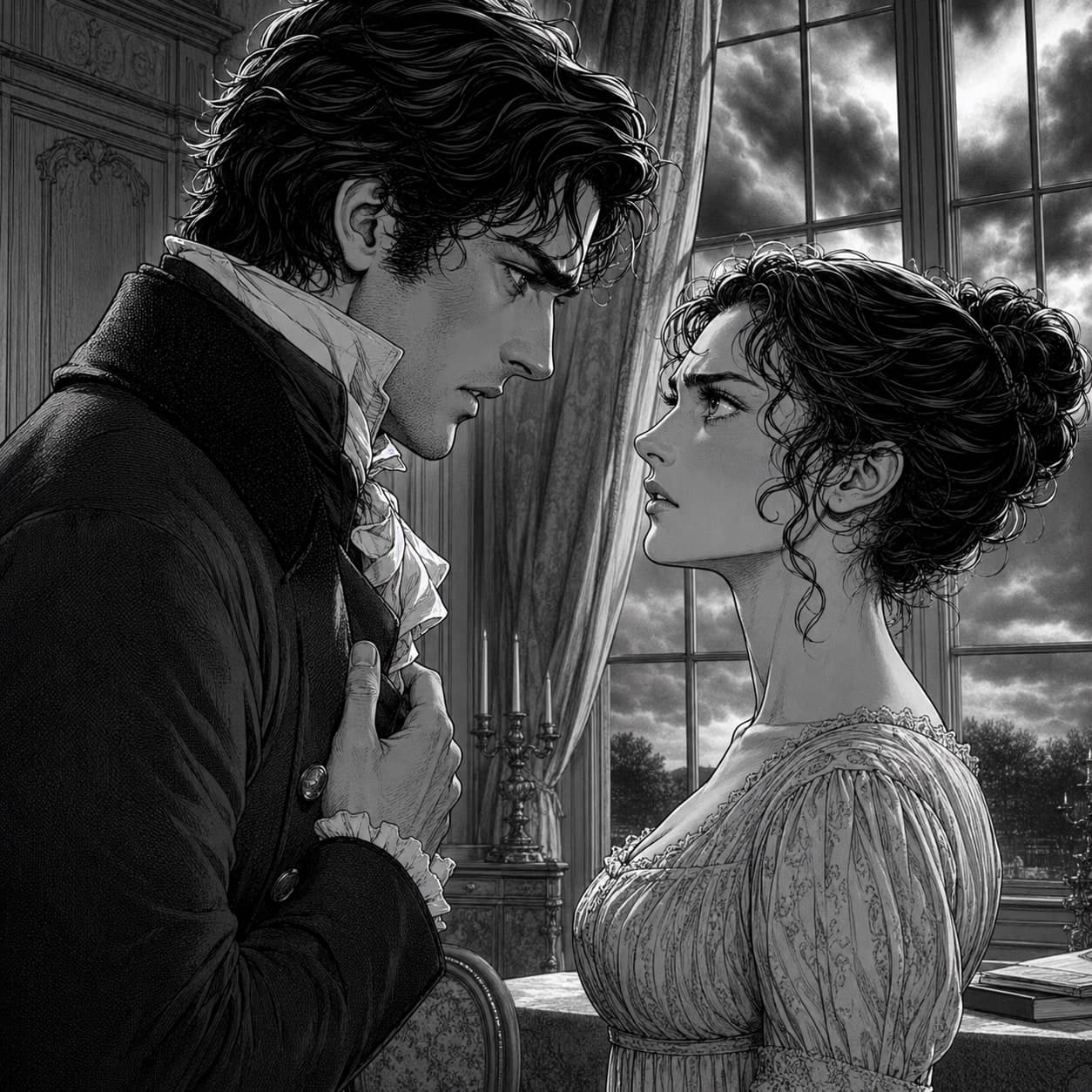
One of the most-liked things anyone has ever written about Pride and Prejudice is a Letterboxd one-liner: “it's always ‘wyd’ and never ‘you have bewitched me, body and soul.’” It's a joke about the gap between Austen-level declaration and the three-letter text you actually send at 11:47 p.m. But it's also accidentally the best one-line summary of the book. Strip away the muslin and Pride and Prejudice is a 400-page panic attack about not being able to say what you mean — and it hands you the cure.
- The most-tattooed “Austen” line isn't Austen. “You have bewitched me, body and soul” is from the 2005 film.
- Darcy's real proposal is strangled and backhanded — and Elizabeth says no.
- The plot only ever moves when someone writes a letter.That's the book's actual mechanism.
- The usable rule: send the letter. Say the thing.
The whole plot of Pride and Prejudice is just people who can't say what they feel, nearly wrecking everything over it.
| What the internet quotes | What the book actually says |
|---|---|
| “You have bewitched me, body and soul” | Not in the book — it's the 2005 film |
| A swoony, confident declaration | “In vain have I struggled. It will not do.” |
| She melts into his arms | She refuses him, flatly |
| Love is the climax | A letter is the climax |
💌 The most romantic line isn't even in the book
The most-quoted “Austen” line in circulation was never written by Austen. “You have bewitched me, body and soul” — the one you've seen on Pinterest, on tote bags, tattooed on forearms — was written for the 2005 film by screenwriter Deborah Moggach and appears nowhere in the 1813 novel. The real book is far more strangled than the movie — which is exactly the point.
It's real, kind of. Just not in the book. Some screenwriter just made it up for the 2005 movie.
Text anxiety in a corset.
🙊 What Darcy actually says — and how Elizabeth answers
The real proposal is a short-circuit, not a swoon. Darcy gets Elizabeth alone, hours into an awkward visit, and instead of a smooth declaration he blurts it out: “In vain have I struggled. It will not do. My feelings will not be repressed. You must allow me to tell you how ardently I admire and love you.” It's a man who has been workshopping this in the mirror for two volumes — and then spends the rest of the speech dwelling on how far beneath him her family is.
He gets her alone, three hours into this painfully awkward visit, and he just snaps.
So to the most ardent proposal in English literature, Elizabeth says — no. Beautifully, and at length: she tells him he's arrogant, conceited, and indifferent to other people's feelings. In modern terms, the climax of the book is a left-on-read in a drawing room.
And then she says no, beautifully.
✉️ Every fix in the book is a letter
The plot only moves when someone writes it down. Nothing changes while people simply feel things at each other; it changes the moment the feeling lands on paper. The day after the failed proposal, Darcy hands Elizabeth a long letter explaining himself — and it reorganizes everything she believes. The Lydia crisis arrives by letter; it gets resolved through more letters. The book runs on correspondence.
The book ends when feelings finally land on paper.
There's even a small mercy buried in the mechanism. When the dreaded conversation finally happens — when the thing gets said — it's almost never as bad as the version you've been rehearsing.
The conversation in your head was so much worse than the one that actually happens.
📲 Send the letter: the rule you can use on Wednesday
The book still lands because you are living its plot device. The typing-and-deleting, the draft you keep backspacing, the message that sits in your drafts folder for three days — that's a 200-year-old mechanism in a new font. The message you didn't send, the apology you keep reopening, the conversation with your mom you'll have “just not yet.”
A message. To a coworker. Four fifty pm on a Friday, end of a tough week, and I had this whole paragraph about how she shot my idea down in front of the whole room. I typed it, deleted it, typed it again. Closed the laptop. Got a beer.
Austen's recipe is the whole takeaway, and it's a good one: when in doubt, send the letter. The book doesn't end when the feelings are felt. It ends when they finally get said.
You'll never get the 2005 movie version, Darcy on a foggy field at dawn, shirt half unbuttoned. But you can still hit send.
So the next time you're three drafts deep on a text and reaching for the backspace, you're not being dramatic — you're in chapter thirty-four. The most romantic book in English isn't about the perfect words. It's about finally saying the imperfect ones out loud. Send the letter.Dream of the Red Chamber runs on the same unsaid feelings, in a household with far more to lose.
Sources
- Pride and Prejudice (1813 text) — Project Gutenberg
- Pride & Prejudice (2005 film) — Wikipedia
- Why Pride and Prejudice Still Resonates 200+ Years Later — Melanie Rachel
- Pride & Prejudice (2005) — reviews — Letterboxd
Frequently asked questions
- Is “You have bewitched me, body and soul” in the Pride and Prejudice book?
- No. That line is from the 2005 film adaptation (screenplay by Deborah Moggach), not Jane Austen's novel. It has become one of the most-tattooed and most-quoted “Austen” lines, but it appears nowhere in the 1813 text. The closest the book comes is a quieter narrator's line in chapter ten: “Darcy had never been so bewitched by any woman as he was by her.”
- What does Mr. Darcy actually say in his first proposal?
- In chapter 34 Darcy blurts out: “In vain have I struggled. It will not do. My feelings will not be repressed. You must allow me to tell you how ardently I admire and love you.” It's strangled and backhanded — he spends much of the proposal dwelling on how unsuitable her family is — which is exactly why Elizabeth refuses him.
- Why does Elizabeth reject Darcy's first proposal?
- Because the proposal insults her even as it declares love: Darcy emphasizes how far beneath him her family is. Elizabeth, who already believes he's arrogant and blames him for hurting people she cares about, refuses him flatly and tells him exactly why. The rejection is the turning point of the novel — and it only gets resolved later, in writing, through Darcy's long explanatory letter.
- How long is Darcy's letter to Elizabeth?
- Long enough that Austen tells you before you read a word of it: chapter 35 describes Elizabeth opening "an envelope containing two sheets of letter paper, written quite through, in a very close hand" — with the envelope itself "likewise full." That's the physical weight behind the book's argument that the truth takes more than a sentence to say properly.
- Why are letters so important in Pride and Prejudice?
- Letters are the novel's engine. Almost every misunderstanding is created face-to-face and resolved on paper: Darcy explains himself in a long letter after the failed proposal, the news of Lydia's elopement arrives by letter, and the crisis is sorted out through written correspondence. The book's quiet argument is that things only move once someone finally writes the thing down.
Enjoyed this one?