Mrs. Bennet was right all along — the entailment everyone forgets (2026)
For two hundred years readers have laughed at the loud, panicking mother of five. Then the internet did the math: the Bennet estate is entailed to a male heir, so one death leaves five daughters homeless — and Mrs. Bennet is the only adult in the house treating that as the emergency it is.


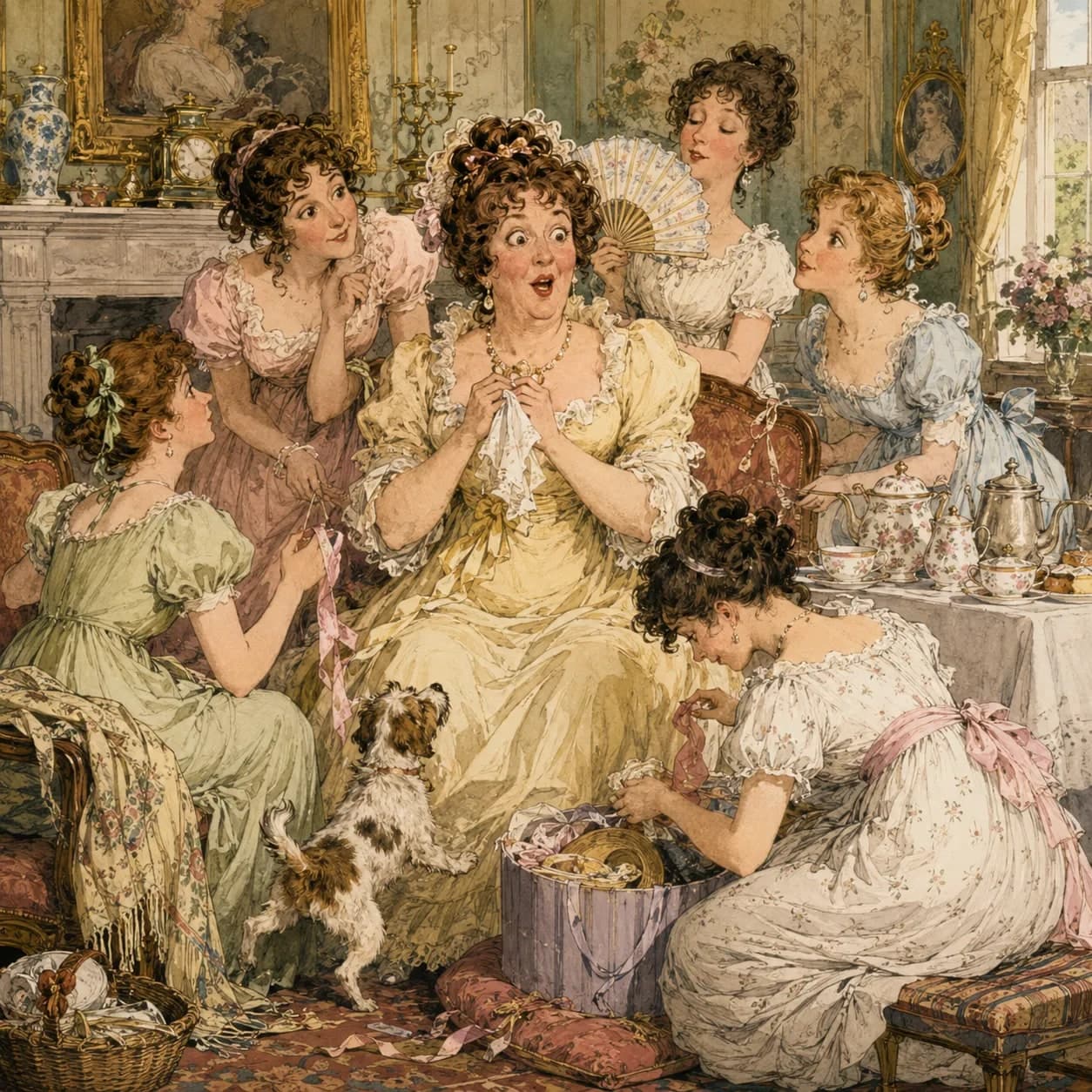
For two hundred years, the agreed-upon joke of Pride and Prejudice has been Mrs. Bennet: the loud, fluttering, marriage-obsessed mother of five whom everyone — the dad, the reader, the critics — has rolled their eyes at. Then a generation of readers did the math she was doing the whole time, and the joke curdled. The Bennet estate is entailed to a male heir. One death, and five daughters are homeless. Mrs. Bennet is the only adult in the house treating that as the emergency it is.
- Longbourn is entailed to a male heir. One death and the five Bennet daughters lose the house.
- Mrs. Bennet is the only one acting on the threat.Her “panic” is the only survival plan in the book.
- Even the actress who played her agrees. Brenda Blethyn called Mrs. Bennet the only one taking the problem seriously.
- The real comic villain is Mr. Bennet — celebrated for his wit, guilty of decades of doing nothing.
| The traditional read | The modern re-read |
|---|---|
| Mrs. Bennet: shrill comic relief | The only adult taking the real emergency seriously |
| Mr. Bennet: the witty, wise one | A father who knew for 20 years and did nothing |
| A romance about marrying for love | Labor economics with a corset |
| Her marriage panic is foolish | One death from homelessness |
🎯 The character everyone laughs at was right
The cultural verdict on Mrs. Bennet has been brutal and near-unanimous. One Letterboxd reviewer of the 1995 adaptation simply listed the characters they wanted to “beat up through the screen”, Mrs. Bennet first. That's the consensus. And it's the consensus a wave of recent essays and video essays has quietly overturned — not by claiming she's likeable, but by pointing out she was correct.
The internet just noticed she was right all along.
🏚️ The entailment: one death from homelessness
Here's the bind, in plain terms. The Bennets have five daughters and no son. Their home, Longbourn, is entailed— a legal arrangement restricting inheritance to a male heir — so when Mr. Bennet dies, the house doesn't go to his wife or his children. It goes to a cousin. As the official JaneAusten.co.uk blog puts it, “the Longbourn property was entailed, and in default of heirs male would revert to Mr Collins.” The day Mr. Bennet dies, that cousin can evict the lot of them.
The day the dad dies, that cousin evicts the wife and five unmarried daughters.
And in 1813, a gentleman's daughter without family money had essentially no way to earn a living — the job, brutally, was to marry money or live as a dependent on a relative. That's the whole reason marriage is the book's life-or-death stakes rather than a romantic flourish. Even the heroine's pragmatic friend Charlotte says the quiet part in chapter six: “Happiness in marriage is entirely a matter of chance.” Marriage here isn't about love. It's survival, and Mrs. Bennet is the only one running the numbers.
It's not romance, it's labor economics with a corset. And Mrs. Bennet is the only one treating it that way.
🎬 Even the actress who played her says so
This isn't a fringe internet take. Brenda Blethyn, who played Mrs. Bennet in the 2005 film, pushed back on the idea that the character is just a comic cartoon — arguing that she's “the only one taking the problem seriously.” She's in good company. A whole cluster of pieces now make the same case — an entire “In Defence of Mrs Bennet” video essay, and a Substack defense that tells readers to “give Mrs. Bennet a break: she's in a very real, very terrible bind” while her husband gives, in the writer's words, “not a single damn about it.”
The actress who played Mrs. Bennet in the 2005 film said it in an interview. She's the only one taking the problem seriously.
🎭 The real comic villain is Mr. Bennet
So if the fandom has been laughing at the wrong character, who should they be laughing at? Mr. Bennet — the witty, detached father everyone quotes and adores. He's charming precisely because he treats the family crisis as material for jokes. But he has known about the entailment for the entire length of his marriage and saved nothing against it, retreating into his library while his wife does the unglamorous work of trying to keep everyone housed.
He's the guy who has known about the entailment for twenty years and done nothing.
Even his most beloved line reads differently from this angle. In chapter fifty-seven he asks, “For what do we live, but to make sport for our neighbours, and laugh at them in our turn?” Quoted on its own it sounds like wise detachment. Read as a verdict on the man, it's chilling — he's making bits while the house burns.
He makes bits about the neighbors while his wife runs drills on the actual fire.
📋 The Mrs. Bennet in your own life
The reason this reframe sticks is that you've lived it. Every workplace, every family, has a Mrs. Bennet — the one who keeps raising the uncool topic nobody wants to deal with. The lease. The security audit. The runway. The eldercare conversation. The room rolls its eyes, the funny one makes a joke, and six months later the thing they kept flagging is exactly what explodes.
I remember saying, this is how she copes, like that was the diagnosis. We were so wrong. The hospital call came in February, and she'd been the only one ready.
The apology usually never quite arrives; the alarm-raiser gets quietly tolerated, then forgotten. Which makes the book's takeaway genuinely useful two centuries later, and worth keeping for Wednesday morning.
When somebody in the room won't drop the uncool topic, check whether they're right before you check whether they're annoying.
Next time you re-read Pride and Prejudice — or finally start it — watch what the book actually does with Mrs. Bennet. Austen lets you laugh at her, then quietly arranges the facts so that, if you're paying attention, you can't. She was right all along. The household owed her an apology, and so, probably, does the reader.Jane Eyre runs the same trick on a different heroine, a woman everyone underestimates until the book won't let them. Wuthering Heights takes the opposite bet on an unlikeable woman, and refuses to redeem her at all.
Sources
- In Defence of Pride and Prejudice's Mrs Bennet — JaneAusten.co.uk
- In Defense of Mrs. Bennet — Part 1 — Veronica Leigh
- Pride and Prejudice and Zombies, or in defense of Mrs. Bennet — Eleanor's Horrors
- In Defence of Mrs Bennet — Video Essay — YouTube
- Pride and Prejudice (1813 text) — Project Gutenberg
Frequently asked questions
- Was Mrs. Bennet right in Pride and Prejudice?
- By the logic of her world, yes. The Bennet estate, Longbourn, is entailed to a male heir, so when Mr. Bennet dies the house passes to a cousin and his wife and five unmarried daughters are left with almost nothing. In 1813 a gentleman's daughter had essentially no way to earn a living. Mrs. Bennet's loud campaign to get her daughters married was, in that context, the only realistic plan to keep the family out of poverty — which is why modern readers increasingly argue she was the only one taking the real emergency seriously.
- What is the entailment in Pride and Prejudice?
- An entail was a legal arrangement that fixed who could inherit an estate — here, restricting Longbourn to a male heir. Because the Bennets have five daughters and no son, the property is set to pass to Mr. Bennet's cousin, Mr. Collins, when Mr. Bennet dies. The entailment is the quiet engine of the whole plot: it's why the daughters must marry well, and why Mrs. Bennet panics.
- Why is Mrs. Bennet so annoying?
- Austen writes her as comic relief — loud, anxious, and socially graceless — and for two centuries readers have laughed at her. But the modern re-read notices that her “annoying” fixation on marriage is a rational response to a genuine threat of homelessness. The traditional reading mistakes her panic for foolishness; the newer reading sees it as the only clear-eyed response in the household.
- Who inherits Longbourn in Pride and Prejudice?
- Mr. Collins, the Bennets' pompous clergyman cousin, is the male heir set to inherit Longbourn under the entail. That's why his visit and his proposal matter so much: marrying him would have kept the estate in the immediate family. When Elizabeth refuses him, the threat of eventual eviction stays live for the whole Bennet household.
- Is Mr. Bennet a good father in Pride and Prejudice?
- He's the witty, detached one readers tend to love — but the novel quietly indicts him. He has known about the entailment for his entire marriage and saved nothing to protect his daughters, preferring to retreat into his library and make jokes at his family's expense. Read against Mrs. Bennet's frantic effort, his celebrated detachment starts to look a lot like negligence.
Enjoyed this one?