The Murder of Roger Ackroyd vs And Then There Were None vs Murder on the Orient Express
An island nobody can leave, a train nobody can leave, and a village anybody can walk out of — which is why the third one caused a fight.


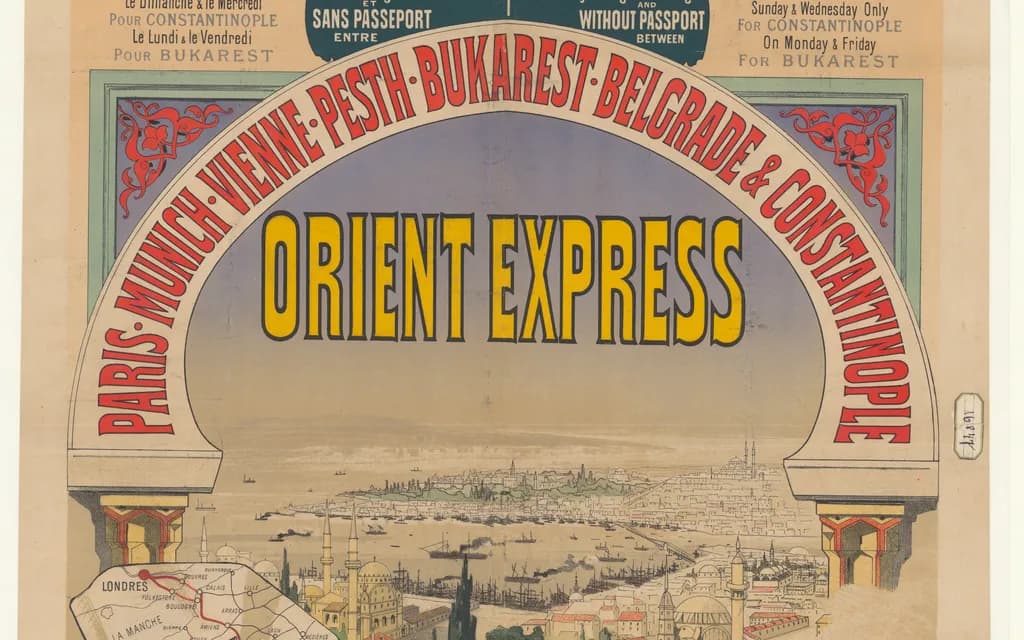
Structural spoilers below for And Then There Were None and Murder on the Orient Express. Nothing here gives away The Murder of Roger Ackroyd.
Ask which Agatha Christie to read and you will be given these three, usually in one breath and usually in a different order each time. They are not three versions of the same book. Each one breaks a different assumption a reader brings to a detective story, and the assumption each breaks is a better guide to which you should read first than any ranking.
- And Then There Were None takes away the detective, then takes away everyone who could report what happened.
- Murder on the Orient Express gives you twelve suspects and a solution that refuses to pick one.
- The Murder of Roger Ackroyd ends in a way that had critics arguing about the rules of the genre by the summer of 1926.
- They are not a series. Nothing crosses between them except Poirot, and he is absent from one.
Here is the comparison in detail, and a reading order with reasons. If you would rather play one of them than pick between them, the playable Murder of Roger Ackroyd puts you in the room where it gets settled.
🎲 Three different impossible tricks
Each of these books removes a different thing a reader depends on. And Then There Were None removes the investigation: ten people are accused of past crimes on an island off the coast of Devon and die one at a time to the pattern of a rhyme, with no detective present and, eventually, nobody left to explain anything, which is why the explanation has to arrive from outside the story altogether.
Christie called it the hardest of her novels to write, and thought it better made than anything else she had done. Murder on the Orient Express removes the process of elimination. A train is stopped by snow with a fixed number of people aboard and a body in a compartment, and the case is built the way a fair puzzle should be, except that the arithmetic every reader is doing turns out to be the wrong arithmetic. It is the only one of the three in which the moral question at the end is harder than the factual one.
The Murder of Roger Ackroyd removes something else again, and this is where the description has to stop, because saying what would be the spoiler. What can be said is the effect. The book was published in June 1926, and by that summer reviewers were arguing about whether Christie had been allowed to do it. That argument is still running a century later, and our spoiler-flagged piece settles most of it with dates, if you do not mind knowing.
💥 Which twist lands hardest
Readers genuinely split, and the two record books point in different directions, which is the most useful thing anyone can tell you about this argument. Roger Ackroyd wins with the professionals: in 2013 the Crime Writers' Association voted it Best Ever Novel, and it had already placed fifth in the CWA's 1990 Top 100 and twelfth in the Mystery Writers of America's 1995 equivalent.
And Then There Were None wins with everybody else, by a distance nothing else in the genre approaches.
| Book | What the record says |
|---|---|
| The Murder of Roger Ackroyd (1926) | Christie's third Poirot novel. CWA Best Ever Novel, 2013, voted by 600 crime writers. On Le Monde's 100 Books of the Century in 1999. |
| Murder on the Orient Express (1934) | Published 1 January 1934; sold in the United States as Murder in the Calais Coach to avoid a clash with a Graham Greene title. Opens in Istanbul; the train is stopped by snow in what is now north-eastern Croatia. |
| And Then There Were None (1939) | The world's best-selling mystery novel, past 100 million copies by 2007, adapted more often than any other Christie, and winner of a global public vote in 2015. |
The split is not really about quality. It is about what kind of shock a reader wants. And Then There Were None produces dread, because you watch the count go down and cannot stop it. Orient Express produces a moral problem you carry around afterwards. Roger Ackroyd produces the specific feeling of having been outplayed, which some readers love and some resent for years.
📚 Which one to read first
Orient Express, and the reason is calibration rather than quality. It is the most conventional of the three, which is exactly what makes it the right opening move: Poirot works at full strength, the suspects are interviewed one by one, and you learn what a Christie investigation is supposed to feel like. Everything the other two do to you depends on your having that baseline first.
Roger Ackroyd goes second, and there is a practical reason to put it early rather than saving it for last. Its ending is the most spoiled in crime fiction. Search for the book by name and the results themselves may hand it to you, which is a hazard readers warn each other about and print editions have occasionally caused in their own front matter. Every year you save it is another year of exposure.
And Then There Were None goes last, because it is the least dependent on genre literacy. Ten people on an island, dying in order, works on somebody who has never read a mystery in their life. It needs nothing before it, so it costs nothing to leave it there, and it makes a very good place to stop if you only ever read three.
🔢 Do you have to read Poirot in order?
No, and Roger Ackroyd is the proof. It is only Christie's third Poirot novel, and it introduces him from scratch as a retired foreigner nobody in the village can place, because she assumed her 1926 readers had not met him either. Nothing in it requires knowledge of an earlier case. Orient Express, eight years later, assumes just as little.
The one thing publication order does give you is Poirot ageing in public, which is a real pleasure across a long series and a poor reason to postpone three good books. And Then There Were None sits outside the question entirely, since Poirot is not in it. Christie wrote it with no series detective at all, which is part of why it travels so far outside crime readership.
So the honest answer to which of Christie's big three is best is that they are best at different things, and the argument about it has been running for the best part of a century. What is worth avoiding is the one order that spoils something: do not read about Roger Ackroyd before you read it.
The 1926 text of Roger Ackroyd is free at Project Gutenberg; the other two are still in copyright. If you want the solo case for the 1926 one, with the caveat about reading it soon spelled out, it is here.
Sources
- The Murder of Roger Ackroyd — Wikipedia
- And Then There Were None — Wikipedia
- Murder on the Orient Express — Wikipedia
Frequently asked questions
- Which is better, The Murder of Roger Ackroyd or And Then There Were None?
- Readers split, and the two records point different ways. By sales there is no contest: the island novel is the best-selling mystery ever written, past 100 million copies by 2007, and won a global public vote run by Christie's estate in 2015. Roger Ackroyd won the professionals' vote instead, taking the Crime Writers' Association's Best Ever Novel in 2013.
- Is Murder on the Orient Express connected to The Murder of Roger Ackroyd?
- Only through Poirot himself. Roger Ackroyd was published in June 1926 and Orient Express on 1 January 1934, and no character or event crosses between them. Christie wrote Poirot as a series of self-contained cases rather than a continuing story, which is why almost any order works.
- What is Agatha Christie's most shocking twist?
- Roger Ackroyd usually wins that argument, and it is the one that made critics angry rather than merely surprised. Christie herself rated a different book hardest to build: she called And Then There Were None the most difficult of her novels to write, because of the complexity of the plot and its solution.
- Should I read Agatha Christie's Poirot novels in order?
- No. Roger Ackroyd is only the third Poirot novel and it introduces him from scratch, as a stranger nobody in the village can place, because Christie assumed her readers had not met him. The one order worth respecting is your own: read the famous twists after a couple of ordinary cases, not before.
- Which of the three should a first-time Christie reader start with?
- Orient Express, then Roger Ackroyd, then And Then There Were None. The first gives you a snowbound train and a detective at full power, the second gives you a village small enough to hold in your head, and the third gives you an island off the Devon coast and no detective at all to lean on.
Enjoyed this one?