The Romeo and Juliet Effect is real — a 1972 study named after the play (2026)
Tell someone no, and suddenly it's all they want. There's a real 1972 psychology study named after this play — the Romeo and Juliet Effect — showing that the harder families pushed against a couple, the harder the couple fell. The obstacle wasn't in the way of the romance; a lot of the time, the obstacle was the romance. And the play saw it coming.


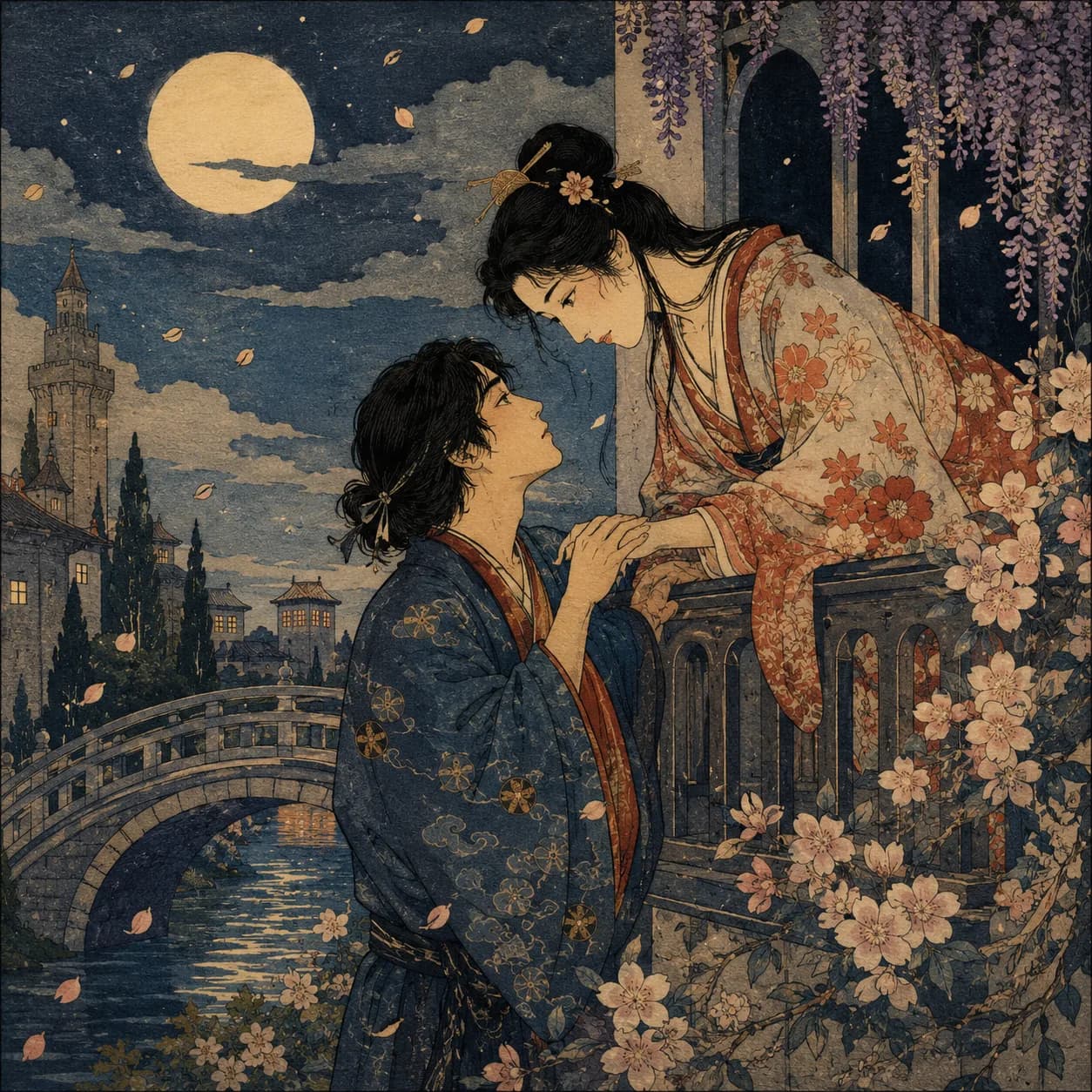
A friend tells you to drop someone you're into, and suddenly you want them twice as much. Nothing about the person changed — the only new thing in the room is a no. It makes no sense, we all do it, and it turns out there's a real psychology study about it, published in 1972, named after this exact play: the Romeo and Juliet Effect.
- It's a real 1972 study. Psychologist Richard Driscoll and colleagues found that parental opposition tracked with a stronger bond, not a weaker one.
- The obstacle can be the romance.Sometimes the wall isn't in the way of the feeling — the wall is generating the feeling.
- The play saw it coming.Friar Laurence warns Romeo “these violent delights have violent ends” — and marries the couple anyway.
- It's not just romance.The job you're told you can't have, the sold-out show, the table that's taken — same reflex, every time.
| What we tell ourselves | What's often actually happening |
|---|---|
| I want this person | I want to win the argument about this person |
| The obstacle is in the way of us | The obstacle is half of what I'm feeling |
| It's chemistry | It's the resistance — remove it and the pull can drain out |
| We're chasing a person | We're chasing a locked door |
🧪 What the Romeo and Juliet Effect actually is
The name isn't a metaphor a blogger coined — it's the actual title researchers gave the finding. In a 1972 study, Richard Driscoll and his colleagues looked at couples whose relationships were opposed by their parents and found the opposition correlated with a stronger attachment, not a cooling one. The pushback wasn't slowing the couples down. It was part of the fuel.
It's the Romeo and Juliet Effect. A psychologist named Driscoll and his team published it back in nineteen seventy-two. And the cleanest version of what they found is this, the harder the parents pushed against the couple, the harder the couple fell for each other. The no was doing half the work.
🚧 The obstacle isn't in the way — sometimes it is the romance
The unsettling version of the idea isn't “obstacles make love harder.” It's that the obstacle can be doing the work you think the person is doing — and when you take the obstacle away, you find out how much was ever really there.
The obstacle isn't in the way of the romance. A lot of the time, the obstacle is the romance. Pull the whole obstacle out, and you have to wonder how much was ever actually there?
Both hosts test it on themselves — and the two stories are mirror images. Leo's obstacle was people telling him no: the more his sister and his best friend pushed against someone he was seeing, the harder he dug in, until an ordinary morning gave the whole thing away.
And then one ordinary morning that same person's at the sink asking if we're out of oat milk, completely kind, completely unremarkable, and it hits me. The spark was never them. It was six straight months of proving the two of them wrong, and the whole time, I'd been calling it love.
Sharon's version wasn't even a person — it was a job — and it ran the opposite direction: the wanting survived right up until the moment the door swung open.
There was this role at work they kept telling me I wasn't ready for. I wanted it so badly. Then one day my boss pulled me aside and said, look, it's yours, just say the word. And right there, I felt the whole thing drain out of me. Nobody was in the way anymore, so I didn't want it.
🔥 The play saw it coming: “these violent delights”
Shakespeare didn't need the 1972 study — he named the mechanism in Act 2, Scene 6. Friar Laurence, about to perform the wedding, looks straight at the couple and tells them what kind of love this is: the kind that consumes itself. Then he marries them anyway.
He looks right at those two and says it flat out, these violent delights have violent ends. Fire and powder, he calls them, the kind that blow up on contact. Then he marries them anyway.
These violent delights have violent ends — and he marries them anyway.
It's the same wager everyone makes: standing over the fire and the powder, quietly betting they'll be the exception. The play just lets you watch someone place the bet with his eyes wide open.
🔒 We're not chasing a person — we're chasing a locked door
The reflex doesn't retire when the romance does. Fourteen years past the crush, it shows up in the smallest, most ordinary wanting — anything with a “you can't have this” stuck to it.
And fourteen years on, I still feel it everywhere. A show that's sold out, an apartment others want, a table that's taken. Tell me I can't have it, and it's all I want. Same reflex, every time.
The wanting and the wall were never two different things. Take the wall away, and the want just walks out with it. We keep telling ourselves we're chasing a person. Really, we're chasing a locked door.
And here's the honest part the episode refuses to skip: naming the pattern doesn't switch it off. This isn't a life hack for auditing your partner across the table — it's a quiet question to ask yourself in the shower.
Naming it out loud changes nothing, that's the real kicker. You can catch yourself doing it in real time, narrate every step of it, and still not slow down an inch.
The wall Romeo and Juliet were up against wasn't a metaphor — it was a real family standing on the other side of a real door, which is the same opposition that had Romeo falling at full speed the moment he was still on the rebound from Rosaline, and the same feud that got Mercutio killed in the middle. So the next time something gets more attractive the second you're told you can't have it, ask the kind version of the question — would I want this as much if no one were telling me I couldn't? Two households. Sometimes the whole romance is the wall between them.
Sources
- Parental interference and romantic love: The Romeo and Juliet effect (Driscoll, Davis & Lipetz, 1972) — Journal of Personality and Social Psychology
- Romeo and Juliet, Act 2, Scene 6 (full text) — MIT — The Complete Works of William Shakespeare
- Romeo and Juliet — most-quoted lines — Goodreads
- Romeo and Juliet (reading text) — Folger Shakespeare Library
Frequently asked questions
- What is the Romeo and Juliet Effect?
- The Romeo and Juliet Effect is a documented psychological phenomenon where parental or social opposition to a relationship intensifies the partners' feelings for each other, rather than cooling them. It's named after the play because the couple's love burns hottest when their families try hardest to stop it. In plain terms: telling two people they can't be together can make them want each other more, not less.
- Is the Romeo and Juliet Effect a real study?
- Yes. Psychologist Richard Driscoll and colleagues (Driscoll, Davis & Lipetz) published a study in 1972 that found parental interference in a romance was associated with a stronger, not weaker, bond between partners — and they named the pattern the Romeo and Juliet Effect. Later research complicates the picture, but the original finding gave the effect its name and its lasting hold on pop psychology.
- Why do we want things more when we can't have them?
- Because the obstacle can become part of the appeal. When something is blocked — a person your family disapproves of, a job you're told you're not ready for, a sold-out show — the resistance itself can generate desire, and the fight to get it can feel like proof of how much you want it. As the podcast puts it, a lot of the time the obstacle isn't in the way of the romance; the obstacle is the romance.
- How does Romeo and Juliet show forbidden love?
- The lovers come from feuding families, so every step toward each other is against the rules — and Shakespeare shows the feeling escalating in step with the danger. The play even names the risk out loud: Friar Laurence warns Romeo that “these violent delights have violent ends,” comparing the love to fire and gunpowder that destroy each other as they meet — and then marries them anyway.
- Does the Romeo and Juliet Effect apply to more than romance?
- Yes — the same reflex shows up far beyond dating. The job everyone tells you not to take, the apartment other people want, the sold-out table, the show that's already gone: the moment something is denied, it can get more attractive. Naming the pattern doesn't switch it off, but it can help you ask the useful question — would I want this as much if no one were telling me I couldn't have it?
Enjoyed this one?