Saylia/Blog

The Phantom of the Opera

Six essays on the 1910 novel and the playable version of it: what kind of book Gaston Leroux actually wrote, what happens to Erik in the last two chapters, whether the text ever convicts him of anything, how the book parts company with the stage musical and the screen versions, which of its strangest details are real Paris history, and why Christine spends most of the story unable to say no to a voice in the wall. The novel is free; the game is over here.

Role-play The Phantom of the OperaAll book essays
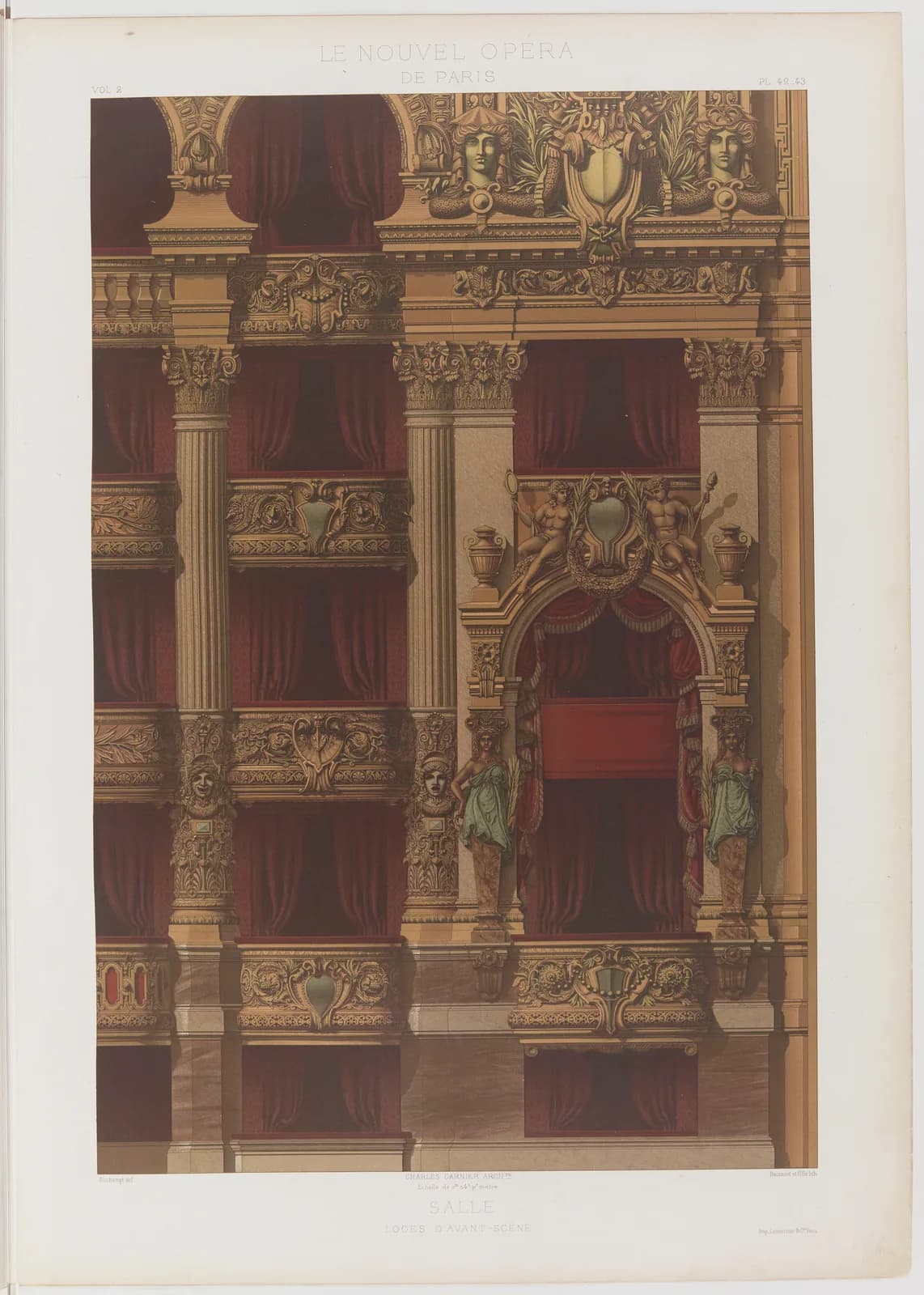
Charles Garnier's own 1880 chromolithograph of the Paris Opera auditorium's proscenium boxes, tiers of gilded balconies behind heavy red curtains, from his plate volumes on the building he designed
Worth Reading?

Is The Phantom of the Opera Worth Reading If You Already Know the Musical?

Most readers arrive from the stage musical expecting a longer version of the show. Leroux wrote something else: a Paris crime story whose narrator claims to have proved the ghost was a real man.

September 12, 2026 · 8 min read

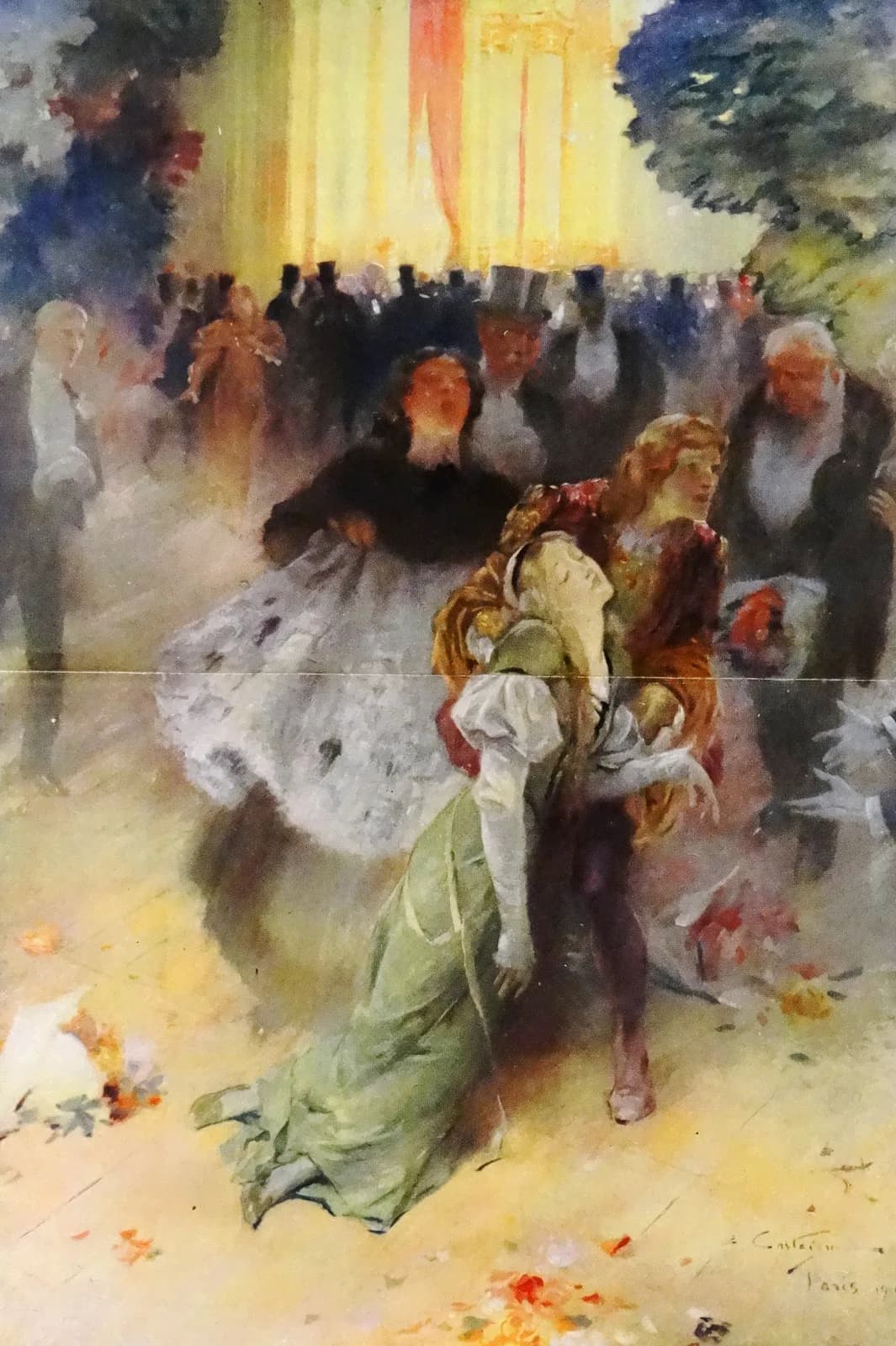
Andre Castaigne's 1911 illustration for the novel: a masked-ball crowd in the opera lobby recoiling as a young woman in a pale green dress collapses, top-hatted figures behind her and confetti across the floor
Ending Explained

The Phantom of the Opera Ending Explained: What Happens to Erik

The ending people remember is a man weeping alone in a cellar. The one Leroux wrote turns on a detail that readers who know the story secondhand almost always have backwards.

September 12, 2026 · 8 min read

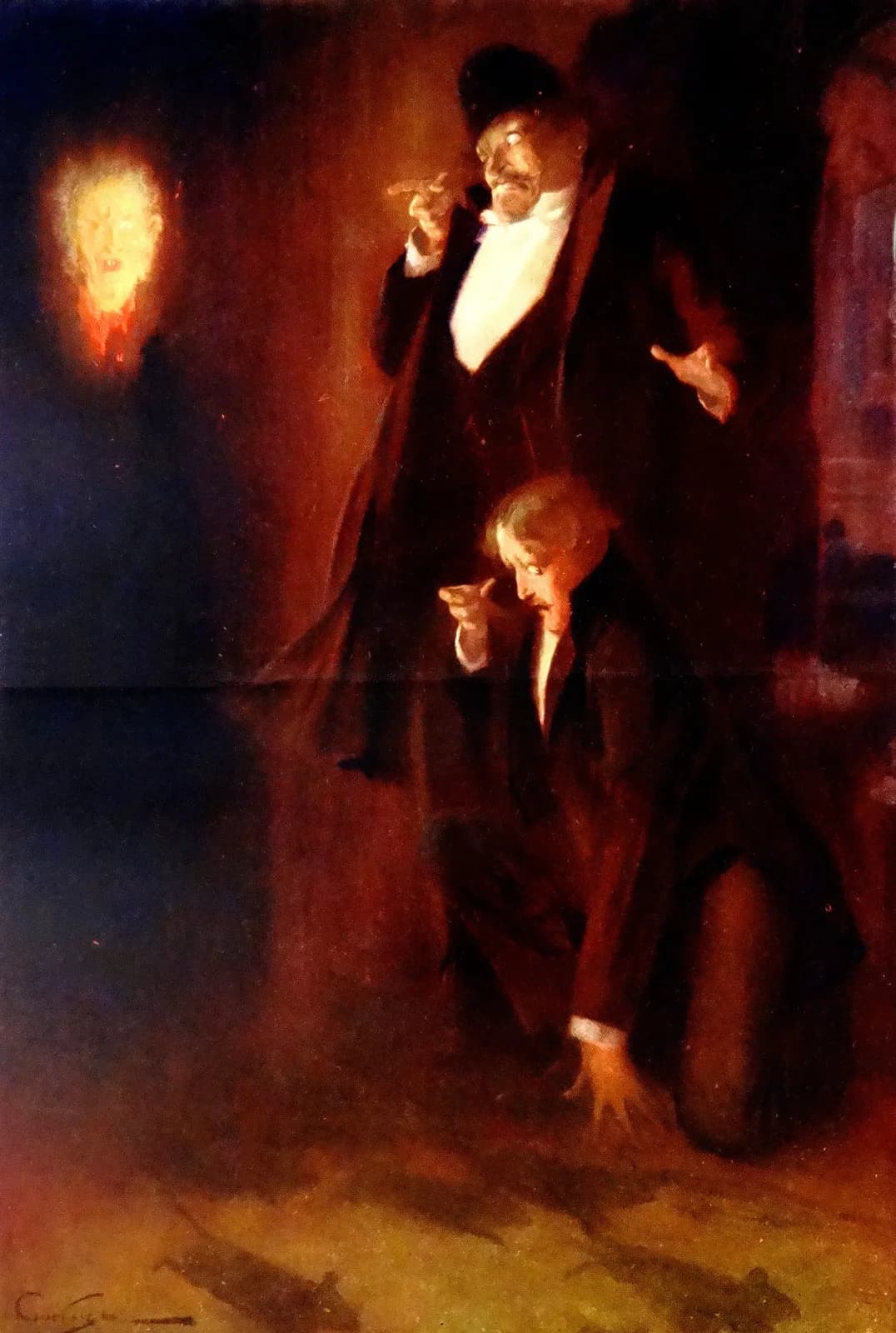
Andre Castaigne's 1911 illustration for the novel: two men in evening dress in a dark cellar, one of them on his knees, staring at a disembodied burning face glowing in the blackness beside them
Villain or Tragic?

Is Erik the Phantom a Villain or a Tragic Hero?

Leroux does not leave this to the reader. He asks the question out loud on the second-to-last page and answers it four sentences later, and the answer is the surprising half.

September 12, 2026 · 9 min read

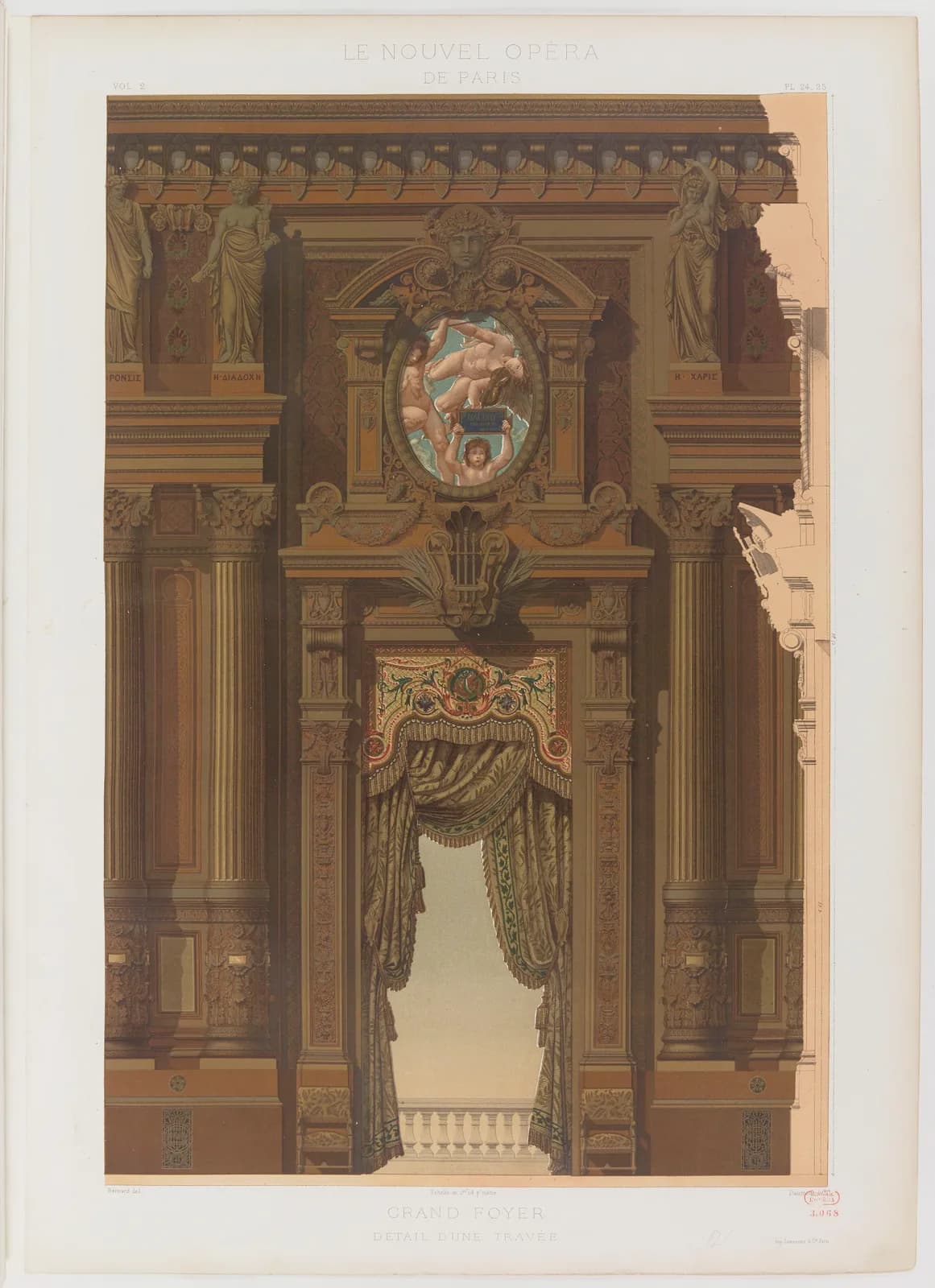
Charles Garnier's own 1880 chromolithograph of one bay of the Paris Opera's grand foyer, a gilded doorway under a painted oval ceiling panel, with draped curtains and carved figures on either side
Book vs. Musical

The Phantom of the Opera: Book vs. Musical vs. Movie

The single best-known image from this story is a white half-mask. It is not in the book, it is not in the 1925 film, and it exists because a full mask made it hard to sing.

September 12, 2026 · 9 min read

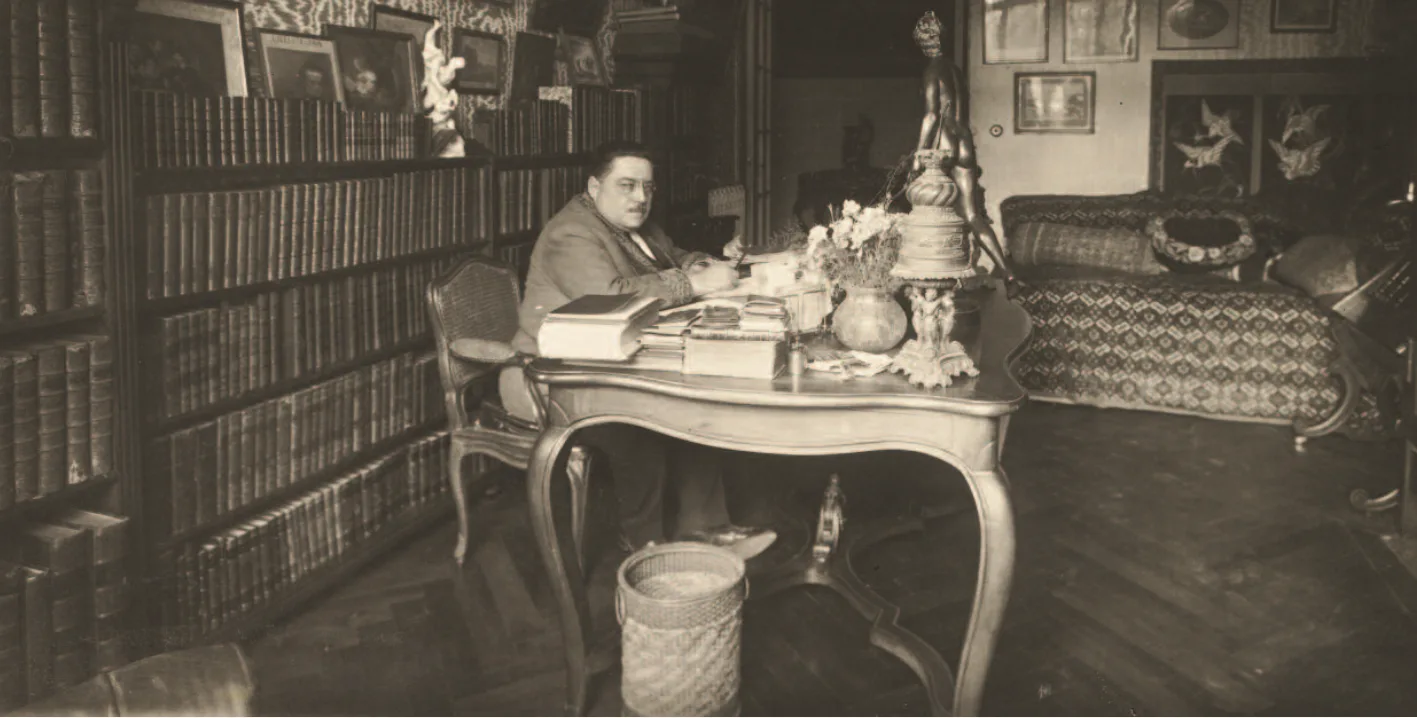
A photograph of the novelist Gaston Leroux seated at his writing desk in Nice, taken about 1919, from the Bibliotheque nationale de France's Leroux papers
A True Story?

Is The Phantom of the Opera Based on a True Story?

Leroux opens by saying the Opera ghost was a real man and that he has the documents to prove it. Two of the strangest details in the book turn out to be the true ones.

September 12, 2026 · 9 min read

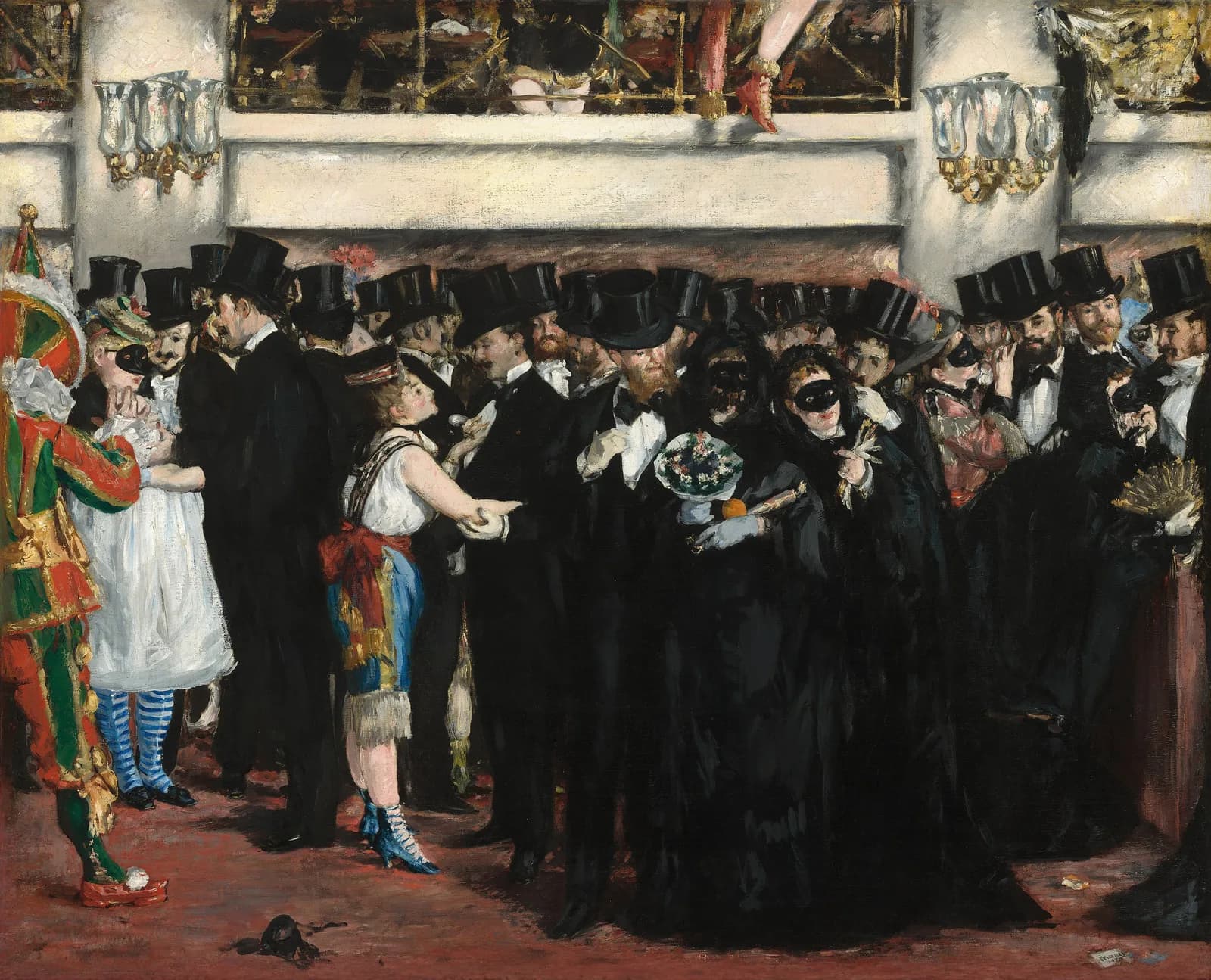
Edouard Manet's 1873 oil painting of a masked ball at the Paris Opera: a dense crowd of men in black top hats and evening dress, masked women in dominoes among them, and a balcony of costumed legs above their heads
The Love Triangle

Christine, Raoul, and Erik: Who Does She Really Choose?

Calling this a love triangle flatters it. For most of the novel Christine is not choosing between two suitors, because for most of the novel she does not believe one of them is a man.

September 12, 2026 · 9 min read