Zhu Bajie: The Case for Pigsy as Journey to the West's Best Character
The party's punchline turns out to be the only one honest enough to say the journey sounds miserable, and the only one whose weaknesses are ordinary.


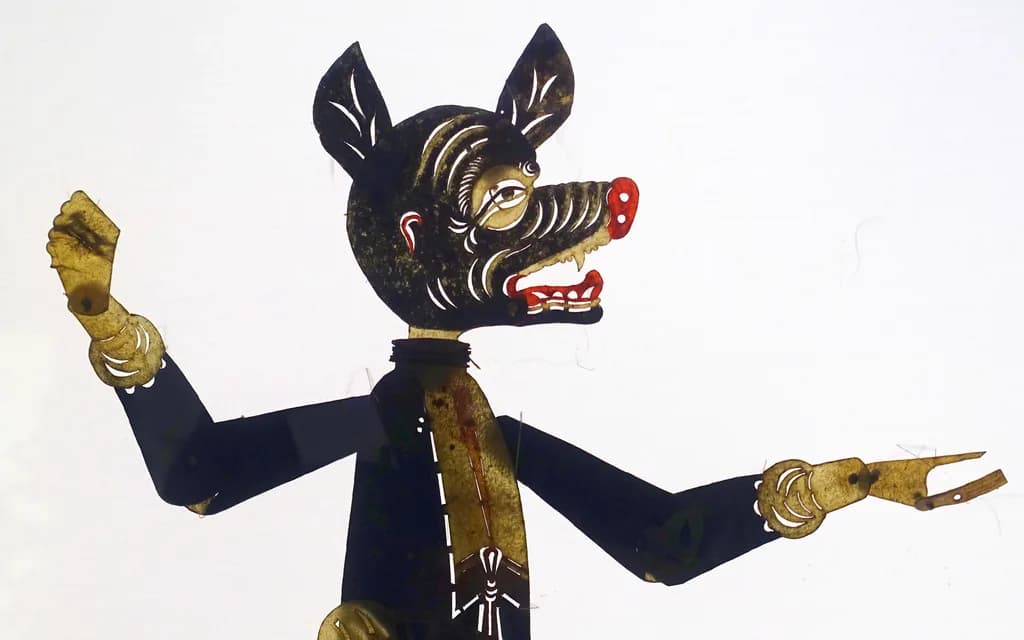
Every reader of Journey to the West arrives expecting to love the monkey and leaves arguing about the pig. Zhu Bajie is the party's comic relief, its weakest fighter, and the only one who says out loud, repeatedly, at volume, that the quest is a terrible idea and he would like to go home now. He is also, on a second reading, the most human thing in a novel about immortals.
- He used to run Heaven's navy. Marshal Tianpeng, commander of the Heavenly River, before one drunken evening ended it.
- He is a pig by clerical error. His soul was sent to be reborn and took the wrong road on the way.
- His name is a joke about his appetite. Bajie means Eight Prohibitions, and the monk gives it to him to keep him off the meat.
- He is the only pilgrim who tells the truth about how much the pilgrimage costs, which is why readers keep voting for him.
Below is the disgrace under the joke, what the novel actually gives him, and what recent retellings have added. If you would rather meet him at work, the playable Journey to the West includes the morning the pilgrims arrive at the village where he has married into the family.
🍜 What is the joke everyone remembers?
That he is hungry, lazy and keeps trying to break up the band. The novel runs this gag for eighty chapters and never lets it go stale, because Bajie is not a coward in the abstract. He is specifically the member of the party who has done the arithmetic on this journey and concluded it is not worth it, and he brings the subject up at the worst possible moments.
The naming scene in chapter nineteen sets the whole character in about ten lines. Guanyin had already given him a religious name, Wuneng, and made him swear off the five pungent vegetables and the three forbidden meats. On meeting his actual master he immediately asks whether, now that the waiting is over, he might break his fast. The monk says no, and adds that since he already abstains he shall have a second name to remember it by: Bajie, Eight Prohibitions. The pig accepts the name with delight and, in his very next sentence, asks for his wife to be brought out to meet everyone.
His equipment tells the same story. He fights with a nine-toothed rake, which is a farming implement, against a party-mate carrying a cudgel taken from a dragon king's treasury. And he can transform, but only thirty-six ways. That number is not random: it is the smaller of the two sets of transformations the monkey was offered by his own teacher, the one Sun Wukong turned down on the grounds that seventy-two was more. The pig learned the option the monkey rejected, and the novel never once draws attention to it.
That is the engine of the comedy for the rest of the book. He is given a religious identity he sincerely accepts and an appetite he sincerely cannot govern, and neither ever wins. He keeps a private stash of food. He falls asleep on lookout duty. He proposes selling the horse and splitting up. And every time the party is genuinely in danger he stays, which is the part the summaries leave out.
🌙 What is the disgrace underneath the joke?
He was a senior officer of Heaven, and he lost it in one night for something small and stupid. The novel gives this in his own voice in chapter eight, long before the pilgrimage starts, when Guanyin finds him living as a man-eating monster on a mountain and asks what he is.
“I am no wild boar. I was Marshal Tianpeng of the Heavenly River. Because I took drink and made sport with Chang'e, the Jade Emperor had me beaten two thousand strokes and cast down into the dust. My one true spirit went to seize a womb, missed the road, and entered the womb of a sow.”
Read that slowly, because four separate catastrophes are stacked in it. He commanded a celestial fleet. He harassed the moon goddess at a party. He was flogged two thousand times and thrown out of Heaven. And then, at the very last step, the one part of the sentence that was supposed to be routine went wrong: a soul on its way to a human birth took a wrong turning and arrived in a pig. His punishment was survivable and his accident was not.
What he does next is the detail that makes him a character rather than a joke with a backstory. He kills the sow that bore him, kills the rest of the litter, takes the mountain, and starts eating travellers. Guanyin finds a monster and talks to a demoted bureaucrat, and what she offers him is a posting rather than a pardon. Come and be somebody's disciple, work off the sentence, and the record may be cleared.
Every complaint he makes for the next eighty chapters is being made by a man who used to have rank and now carries the luggage. It is worth holding on to when he is being tiresome about dinner.
🕸️ What did the recent versions add, and what is in the book?
The tragic romance is not in the novel. Readers arriving from Black Myth: Wukong often believe Bajie is cursed to live out a thousand doomed love stories, and that he had a beloved among the spider demons before his fall. That material is the studio's own elaboration, built on top of two chapters of the book that contain nothing of the kind.
What the book has is chapter seventy-two, whose own heading calls it plainly: at Web Cave the seven passions confuse the mind, and at the Filth-Cleansing Spring, Bajie forgets himself. Seven female spider demons live there, and they have taken over a hot spring that used to belong to seven immortal women. Sun Wukong finds them bathing, declines to hit them with his staff on the grounds that it would be beneath the weapon, turns into a hungry eagle and steals their clothes instead. Bajie's contribution is to strip, jump in, turn himself into a fish, and spend the scene being too slippery to catch while seven demons grope around the pool for him until they are worn out.
That is farce of the exact kind the novel has been running since chapter nineteen. There is no romance in it, no history between him and any of them, and no tragedy. It is also the source of a beat almost every retelling keeps and quietly upgrades, usually by naming the species: the Chinese text says only that he became a fish spirit, and the catfish everyone remembers is a later storyteller's improvement on it.
This is worth saying without any disapproval attached. The game is a sequel rather than a retelling, and inventing a five-hundred-year backstory for a character the novel treats as a punchline is a legitimate and rather generous thing to do with him. It also flattens him in one specific way: the game's Bajie is built around arrogance where the novel's is built around appetite and complaint, and the second is much harder to write. The full comparison of what the game keeps and invents is here.
🐖 Why do readers keep voting for him anyway?
Because he is the only pilgrim who admits the journey is awful. Sun Wukong is too proud to say it, the third disciple Sha Wujing, the river demon English versions call Sandy, barely speaks at all, and the monk believes it is worth any price.
Bajie says what a real person in that party would say, roughly every second week, for eighty chapters, and he is never once rewarded for it. His failings are also the only ordinary ones on the road. The monkey's flaw is that he is too powerful to be governed. The monk's flaw is that he is too trusting to survive without protection. Those are heroic problems. Bajie's problems are that he is hungry, that he would like to lie down, and that he is frightened of things that are genuinely frightening. Readers recognise themselves in exactly one member of that party.
And he stays. That is the whole argument, and the novel makes it by repetition rather than by speeches: he threatens to leave constantly and leaves almost never, and when the monkey is banished it is usually Bajie who is sent to fetch him back, grumbling the entire way. Loyalty from someone who never stops complaining about the cost is a more interesting kind of loyalty than loyalty from someone who feels nothing.
Chinese readers have had a head start on this argument, mostly through Ma Dehua's performance in the 1986 television series, which is still the version of the character most people picture. English readers, arriving through abridgements and a video game, are having the argument now, several centuries late and with roughly the same conclusion.
Every chapter reference above was checked against the Chinese text at Project Gutenberg. If you want the pilgrim who outranks him, Sun Wukong's powers and headband are explained here, and if you are choosing an English version to read them all in, the four translations are compared here.
Sources
- Journey to the West (Chinese text, 100 chapters) — Project Gutenberg
- The Many Faces of Zhu Bajie — The World of Chinese
- Zhu Bajie — Wikipedia
- Black Myth: Wukong Is More Than a Journey to the West Retelling — Game Rant
Frequently asked questions
- Was Zhu Bajie a god before he became a pig?
- He was Marshal Tianpeng, commander-in-chief of eighty thousand celestial sailors, and he lost the post for harassing the moon goddess while drunk. The naming afterwards is bleaker than the crime. When Guanyin gives him his religious identity in chapter eight, the novel says she points at his body for a surname, so the surname is Zhu, which is simply the word for pig.
- Why is Zhu Bajie called Pigsy in English?
- Because a literal rendering is unusable: Zhu means swine and Bajie means eight precepts, so his name is roughly Pig Eight-Precepts. English versions have tried Pig, Piggy, Monk Pig and Pigsy, and Pigsy is the one that stuck. Complete translations skip the nickname and keep Zhu Bajie, or his religious name Zhu Wuneng.
- Is the romance in Black Myth: Wukong's Zhu Bajie chapters actually in the book?
- No, that backstory is the game's own. The related catfish detail is easy to check yourself: search a full Chinese text of the novel for any of the three characters used to write catfish and you get exactly one hit in a hundred chapters, and it has nothing to do with Zhu Bajie. It is a catfish clerk checking the paperwork in the dragon kings' water army in chapter forty-one.
- Are Sun Wukong and Zhu Bajie actually friends?
- They are colleagues who bicker, and the novel settles their rank on the first day. Because the monkey joined the pilgrimage first, Bajie has to address him as elder brother from chapter nineteen onward, which is the seniority rule of a Chinese religious household applied to two monsters. He spends the next eighty chapters using the title sarcastically.
- Was Zhu Bajie evil before he joined the pilgrims?
- He was a man-eater, and the novel does not soften it. Before Guanyin recruited him he had taken Mount Fuling, killed the sow that bore him along with the rest of her litter, and lived on travellers. The pilgrimage is offered to him as a sentence to be worked off rather than as a forgiveness, and he accepts it on those terms.
Enjoyed this one?