The Cheshire Cat gave you better life advice than your therapist (2026)
He's in the book for barely ten pages, but the Cheshire Cat owns the lines people put on their forearms. Carroll wrote four pieces of usable life advice into one minor character — the fork in the road, “we're all mad here,” the grin without a cat, and refusing the shape.


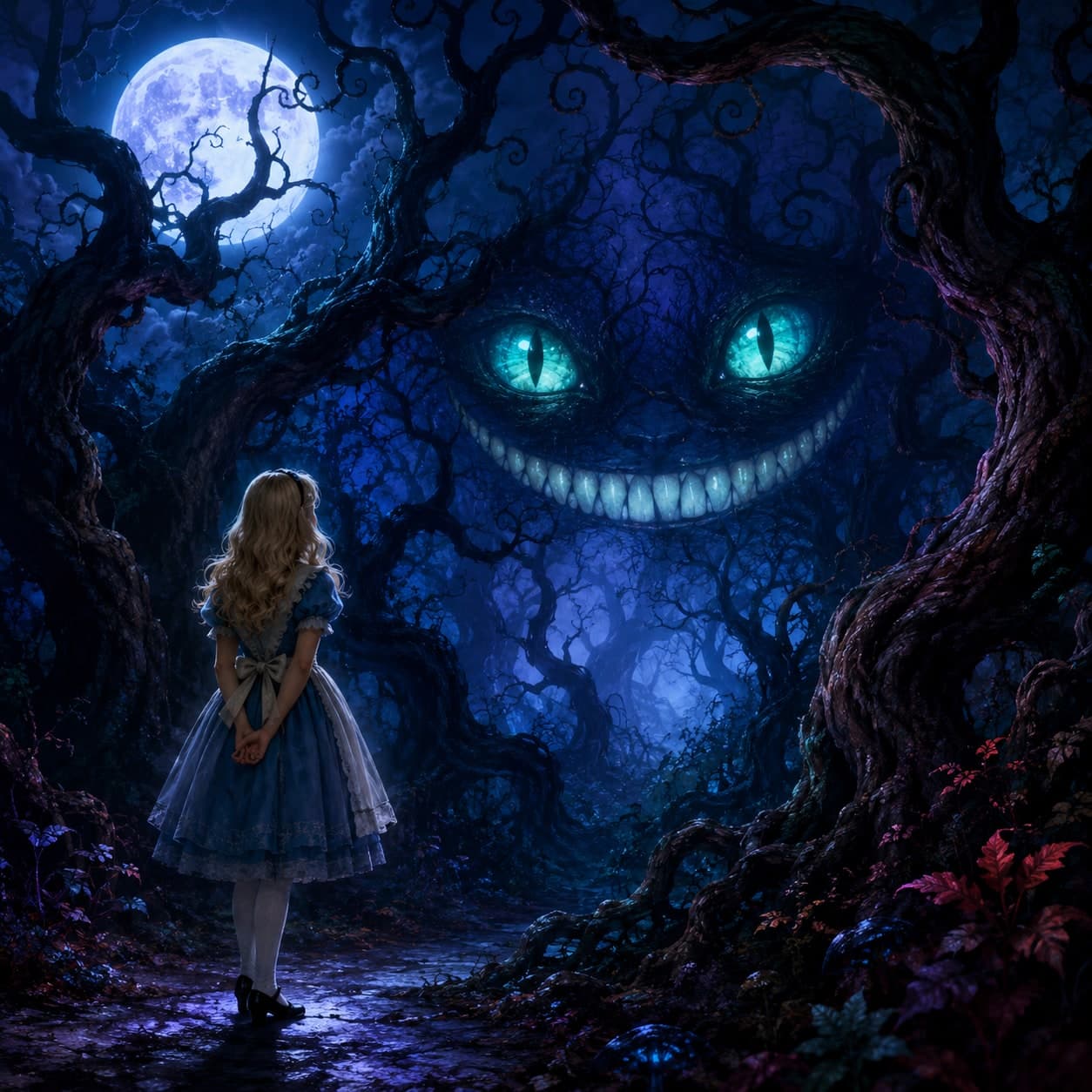
The Cheshire Cat is on barely ten pages of Alice's Adventures in Wonderland. He never does much — appears, grins, gives a cryptic answer, disappears. And yet he owns the lines people tattoo on their forearms. That's not an accident. Carroll wrote four pieces of genuinely usable life advice into one minor character — and we've been quoting all four ever since, often without remembering where they came from.
- The fork in the road.If you don't know where you want to go, no road is the right one.
- “We're all mad here.” You belong by the simple fact that you arrived.
- The grin without a cat. The impression outlives the thing that made it.
- Refuse the shape.A system can't punish a shape it can't grab.
😺 Why people quote a cat that's barely in the book
Four scenes, all with the Cheshire Cat, all inside two short chapters — and each one is a complete, portable idea. That's the trick. Carroll didn't write a wise mentor who lectures Alice; he wrote a grinning cat who answers her questions so logically that the answer does the teaching. The Cat is the rare literary advice-giver who never tells you where to go.
🛣️ Lesson 1: the fork in the road
Alice reaches a crossroads and asks the Cat which way she ought to go. He answers that it depends a good deal on where she wants to get to. She says she doesn't much care — and he closes the trap:
Then it doesn't matter which way you go.
It looks like a brush-off; it's actually the most useful thing anyone says to her. The question she's agonizing over — which way?— isn't the real question. She hasn't picked a destination, so the route is unanswerable. Decide where you're going, and the “which way” tends to answer itself.
The Cat isn't being cute, he's pointing out the question she's agonizing over isn't the real one. She hasn't picked a destination.
🌀 Lesson 2: “we're all mad here”
It's the most-quoted line the Cat has, and usually read as spooky. In context it's the opposite. When Alice asks how he knows she's mad, the Cat replies: “You must be, or you wouldn't have come here.” He isn't insulting her. He's telling her she fits — and the only proof required is that she showed up.
I keep thinking that's the warmest line in literature. The Cat isn't insulting her, he's telling her she fits here, and the proof is that she arrived. You don't have to earn your way in.
Read that way, it's imposter syndrome defused with a single logic move. You're qualified by being in the room. Every person on the first day of a new job needed to hear it — and a grinning cat drops it to a nine-year-old in 1865.
🫥 Lesson 3: the grin without a cat
The Cat's signature exit is to fade away until nothing is left but his smile. Alice watches it and says:
I've often seen a cat without a grin, but a grin without a cat is the most curious thing I ever saw in my life.
Carroll dressed it up as a parlor trick — a magic cat dissolving in mid-air — and accidentally wrote one of the deepest images of memory in English. It's how you write about grief without naming it: the impression outlasts the thing itself. A laugh you can still hear from someone long gone is a grin without a cat.
I can still hear her laughing at something on the radio in her kitchen on Sundays, this big surprised laugh that always came half a second too late. She's been gone a decade now, and that laugh is right here with me when I write at night. The grin is still here. The cat is gone.
🃏 Lesson 4: refuse the shape
The last lesson hides inside a slapstick argument. The Cat shows up at the Queen's croquet ground as a floating head, and the executioner is stumped: you can't behead something that has no body to cut from. The Queen wants it done anyway; the system needs a shape to grab onto, and the Cat simply doesn't give it one. The punishment has nowhere to land.
Carroll hides the takeaway in plain sight: you can't be punished for the shape you don't fit. Refuse the shape a system needs you to be, and its leverage evaporates. People reach for this one at work — when a process tries to label you a certain way, declining the label can leave nothing for it to act on.
Every performance review I've sat in wanted me a slightly different shape than I am. Refuse the shape, and the feedback can't quite land.
Four pieces of advice, one minor character, two short chapters. Tune your ear to the Cat's lines and you start hearing them everywhere — in songs, in movies, in your boss's emails. Which is its own rabbit hole. We'll go down that one next.Strange Tales from a Chinese Studio runs on the same grin-without-explanation logic, three centuries earlier.
Sources
- Alice's Adventures in Wonderland (1865 text) — Project Gutenberg
- Cheshire Cat — Wikipedia
- Cheshire Cat — quotations — Goodreads
- Alice's Adventures in Wonderland — book review — Keeping Up With The Penguins
Frequently asked questions
- What life advice does the Cheshire Cat give Alice?
- Across two short chapters the Cheshire Cat hands Alice four usable ideas: if you don't know where you want to go, no road is the right one (the fork in the road); you belong here by the fact that you arrived (“we're all mad here”); a strong impression outlives the thing that made it (the grin without a cat); and the system can't punish a shape it can't grab (the bodyless head it can't behead). He gives advice by handing Alice the logical consequence of her own answers.
- What does “if you don't know where you want to go, any road will take you there” mean?
- It's the Cheshire Cat's reply when Alice asks which way she ought to go and then admits she doesn't much care where she ends up. His point isn't cute — it's that the question she's agonizing over isn't the real one. She hasn't picked a destination, so the route is unanswerable. Decide where you're going first, and the “which way” usually answers itself.
- What does “we're all mad here” actually mean?
- It's often read as the book's warmest line. When Alice asks how the Cat knows she's mad, he answers, “You must be, or you wouldn't have come here.” He isn't insulting her — he's telling her she fits, and the proof is simply that she showed up. It's imposter syndrome defused with one logic move: you're qualified by being in the room.
- What is the meaning of the grin without a cat?
- The Cat fades away until only his grin is left, and Alice calls it “the most curious thing I ever saw in my life.” It's how you write about memory and grief without naming either: the impression outlasts the thing itself. A laugh you can still hear from someone long gone is a grin without a cat — the cat is gone, the grin is still here.
- Why can't they behead the Cheshire Cat?
- When only the Cat's head is showing, the executioner argues you can't behead something that has no body to cut from. The squabble is a logic puzzle, but the lesson is practical: refuse the shape the system needs to grab, and the punishment can't land. People apply it at work — when a process tries to label you a certain way, declining the label leaves nothing for it to act on.
Enjoyed this one?