Saylia/Blog
Antony and Cleopatra book cover

Antony and Cleopatra

William Shakespeare · 1607 · 10 essays

Ten essays on the play and the playable version of it: which screen and stage versions carry Shakespeare’s own words and which famous one carries none, what the scene count says about whether this is a love story, the winner nobody roots for, what Plutarch actually wrote about Cleopatra’s beauty, the long decline Antony is warned about in Act 2, six famous lines with their scenes attached, and the four essays that pick up where the Saylia Antony and Cleopatra podcast leaves off.

Role-play Antony and CleopatraListen to the podcast
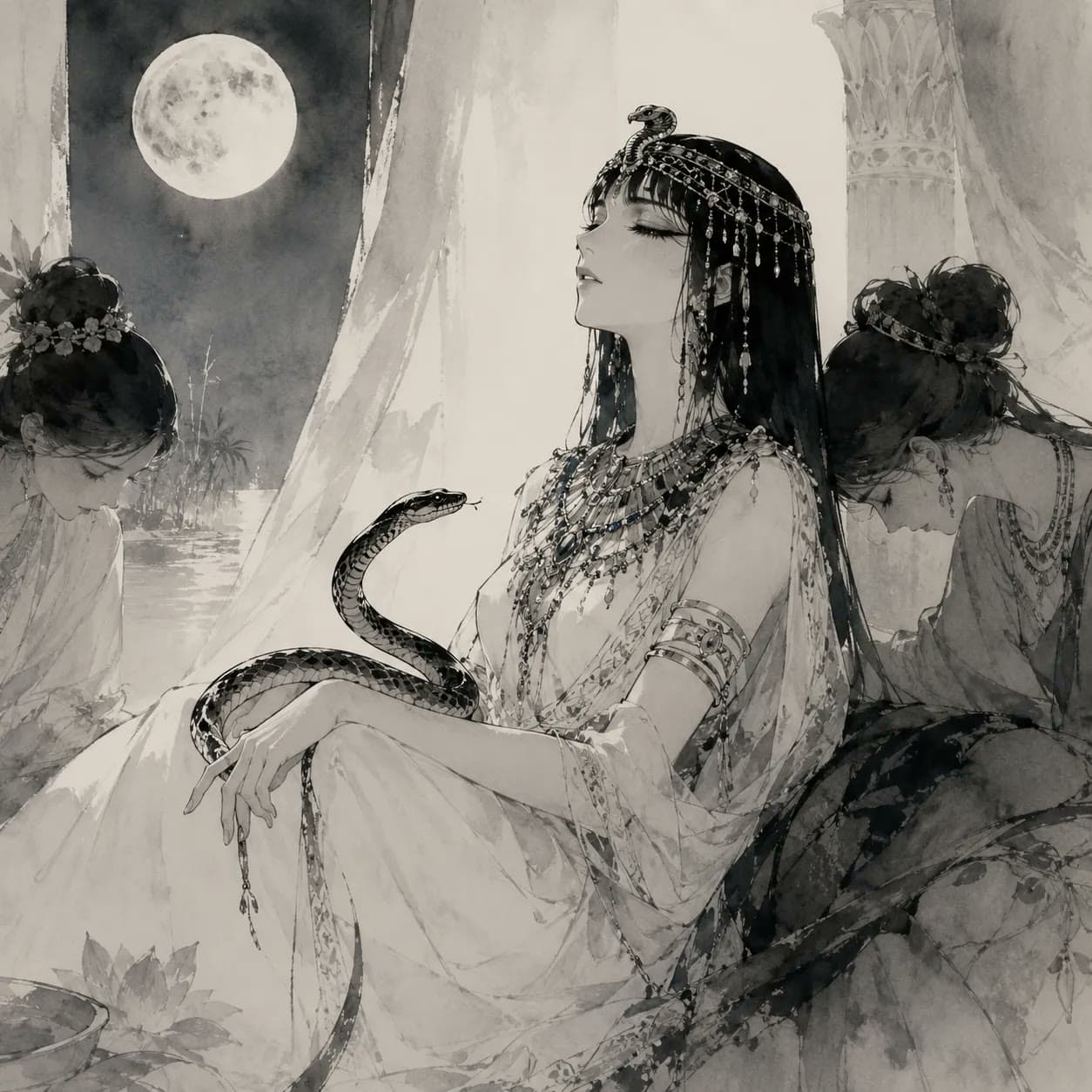
Cleopatra reclining with the asp under a pale moon, in ink-wash — Antony and Cleopatra cover art for the Saylia podcast
On Her Own Terms

How Cleopatra died: Shakespeare wrote her suicide as a power move, not a tragedy (2026)

The war is lost, Antony is dead, and Octavian plans to march her through Rome as his trophy. So Cleopatra does the last thing he expects — she calls for her robe and crown and scripts her own ending. Not defeat. Refusal. He gets Egypt; he does not get her exit.

July 9, 2026 · 10 min read

Mark Antony walking alone into the desert, turning his back on Rome — Antony and Cleopatra cover art for the Saylia podcast
Let Rome Melt

Antony and Cleopatra: the man who threw away a world for a person (2026)

The job you quit, the move nobody vouched for, the person your family voted no on. Four hundred years ago Shakespeare wrote that leap and gave it an empire to throw away — and Antony’s “Let Rome in Tiber melt” proves he wasn’t seduced. He decided.

July 9, 2026 · 8 min read

A lone soldier keeping a quiet watch by the moonlit sea — Antony and Cleopatra cover art for the Saylia podcast
The Enobarbus Rule

How do you love someone who's picking wrong? Antony and Cleopatra's answer is Enobarbus (2026)

It's eleven at night and the group chat has spent six months watching a friend pick wrong. Antony and Cleopatra has a character for exactly this: Enobarbus, who loves his friend, says his piece, leaves when he has to — and dies of grief. The distance and the love are both allowed to be real.

July 9, 2026 · 8 min read

Cleopatra's profile layered beneath three moons in different phases — Antony and Cleopatra cover art for the Saylia podcast
Infinite Variety

Every era invents its own Cleopatra — Shakespeare named why in 1607 (2026)

You already have a Cleopatra in your head — Elizabeth Taylor's eyeliner, or the Netflix casting fight. Almost nobody's read the 1607 play all of it keeps remaking, and Shakespeare named the whole pattern in two words: infinite variety — a line about how every era re-makes her, not about her face.

July 9, 2026 · 7 min read

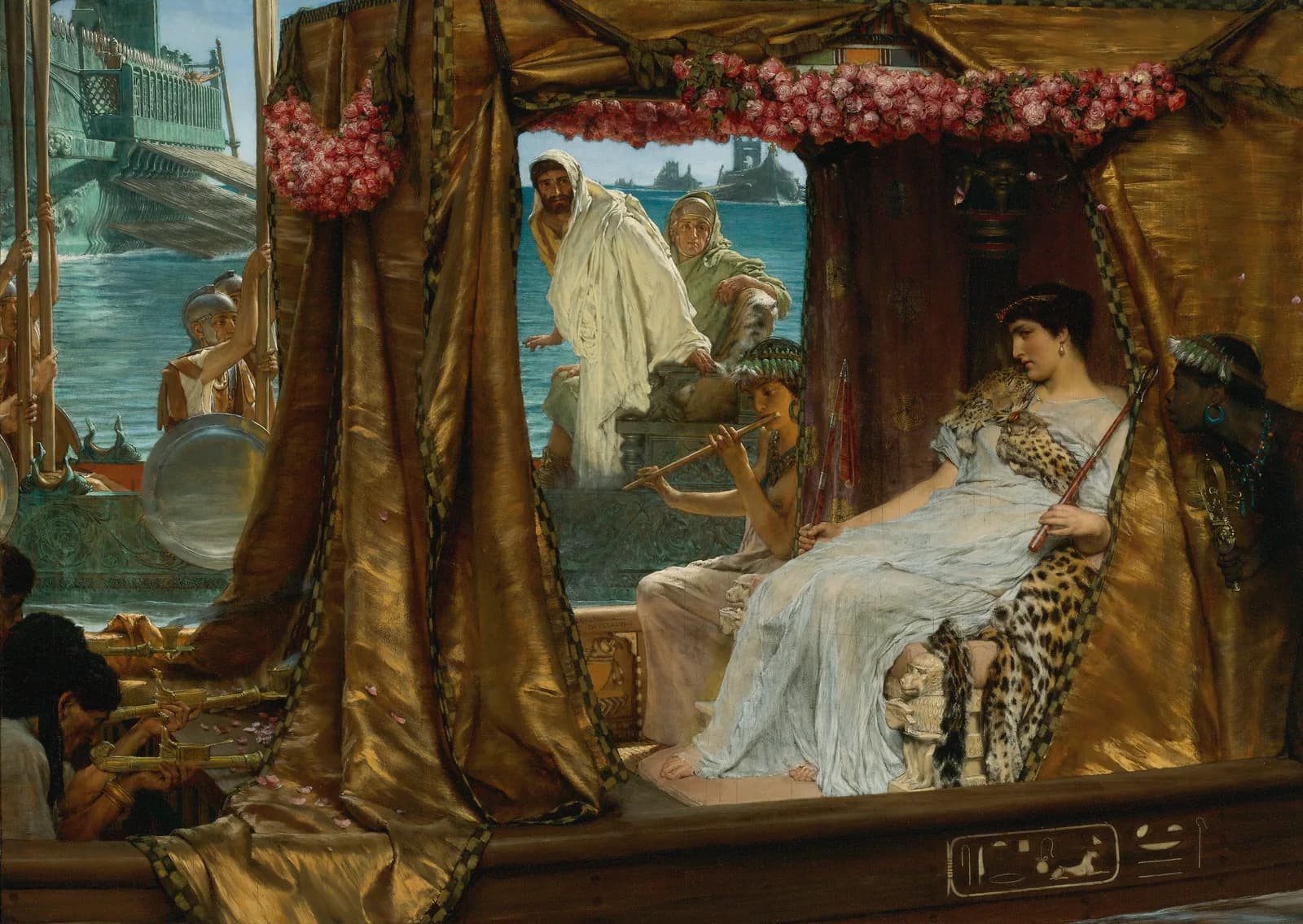
Alma-Tadema's painting of the meeting at Cydnus: Cleopatra reclines in a gold-curtained barge hung with roses, watched from a second ship by Antony, while a boy plays the double flute at her feet and rowers work at the left
Not the 1963 Film

The 1963 Cleopatra Is Not Shakespeare: What the Film, the Stage and the Play Each Get Right

Almost everyone picturing Antony and Cleopatra is picturing a film with none of Shakespeare's words in it. Here is what the 1963 epic actually adapts, which two screen versions stage the play itself, which staging theatre people still name, and the one scene every director is graded on.

September 8, 2026 · 9 min read

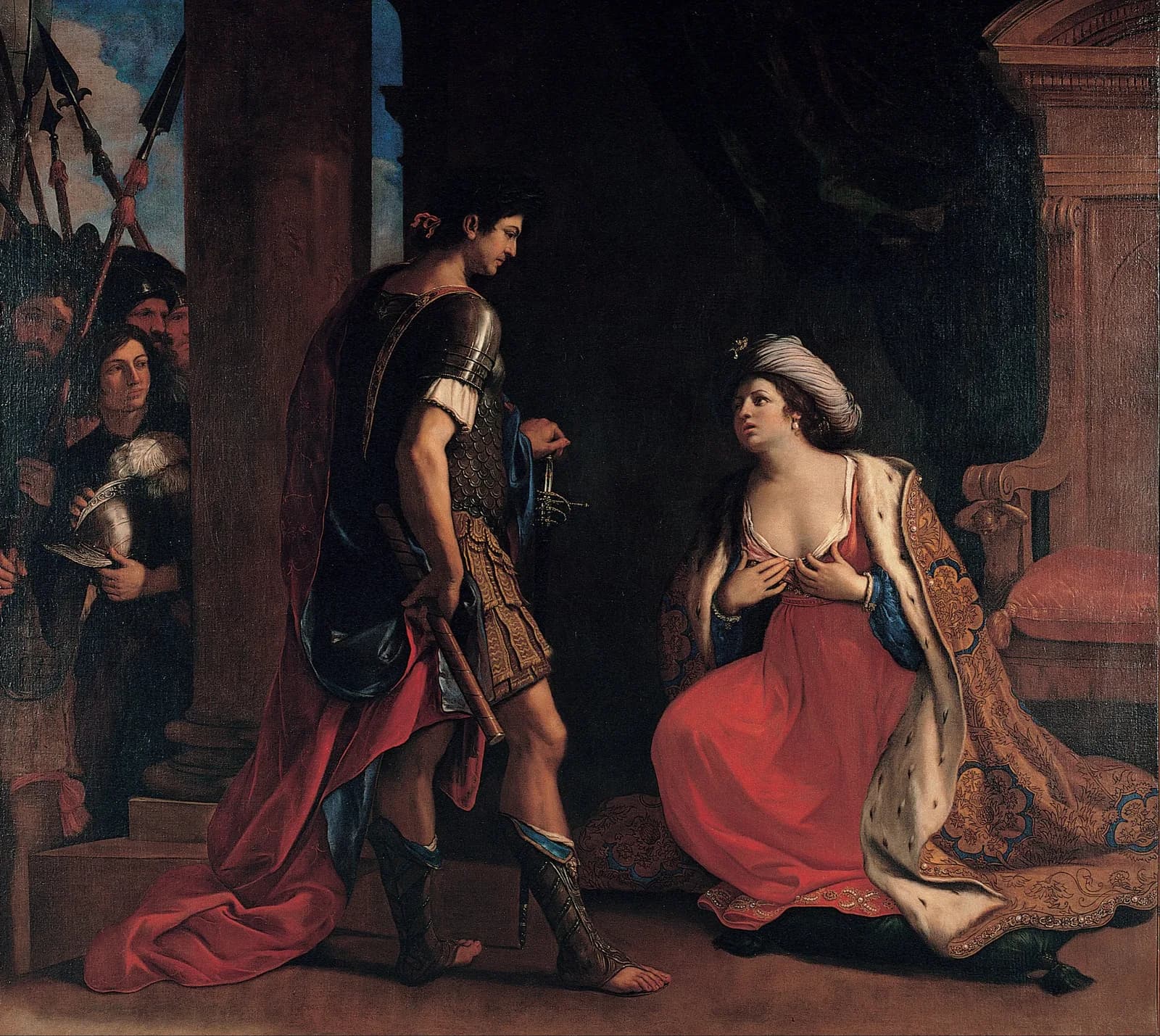
Guercino's painting of Cleopatra kneeling before Octavian: she looks up at him in a red gown and ermine-lined cloak with one hand at her breast, while he stands over her in Roman armour with a baton, his soldiers waiting in shadow behind a column
Not a Love Story

Is Antony and Cleopatra a Love Story or a Political Play? Both, and the Octavia Marriage Proves It

One camp reads the greatest love story Shakespeare wrote; the other reads a study of power with a romance inside it. The scene list answers more clearly than either. Forty-two scenes, eleven with both leads speaking, one with nobody else talking, and a wedding negotiated like a treaty clause.

September 8, 2026 · 9 min read

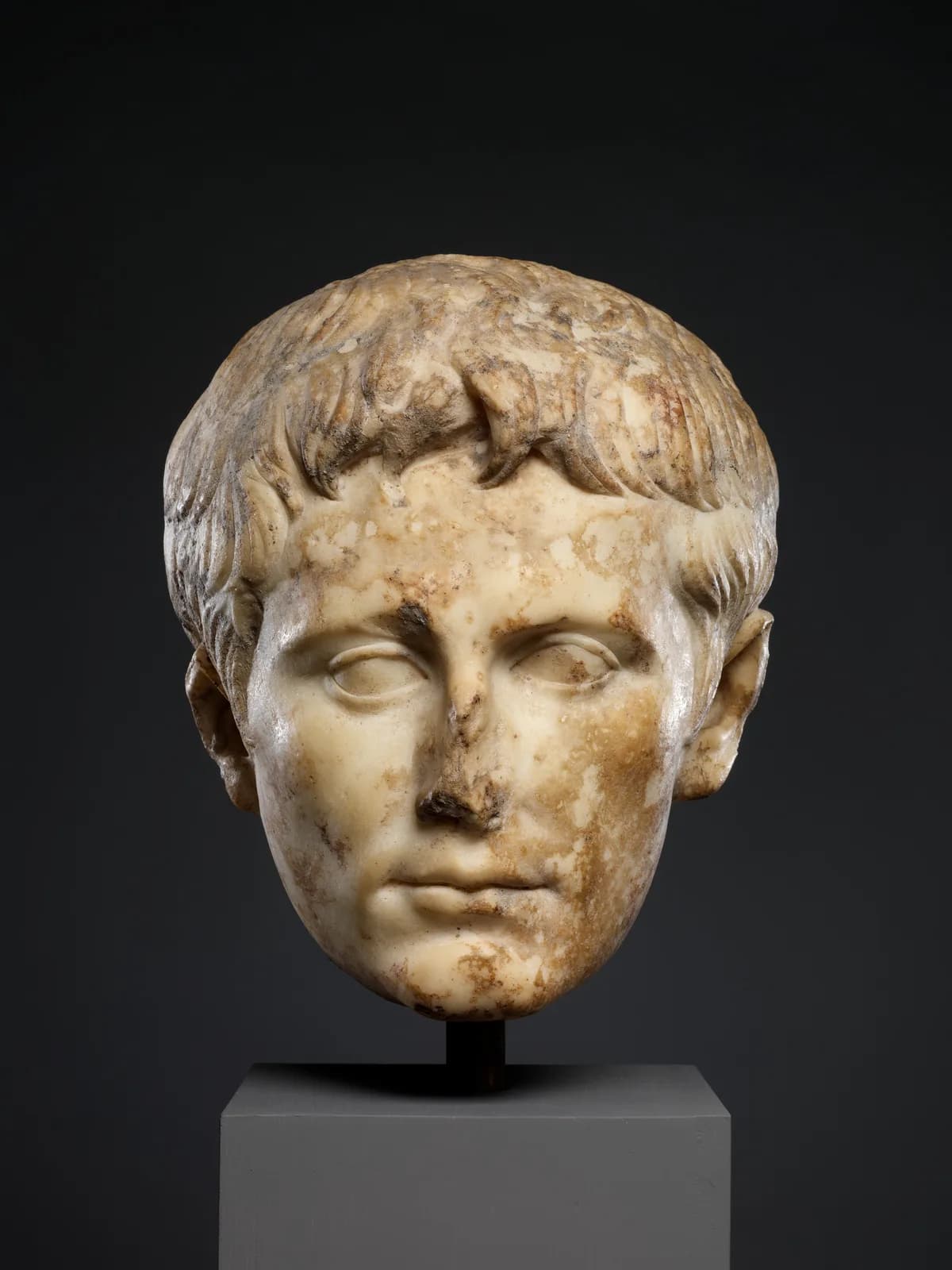
A Roman marble portrait head of the emperor Augustus on a plain grey plinth against a black background: young, clean-shaven, hair combed forward in flat locks, the stone stained brown across one cheek and the nose broken away
The Cold Winner

Octavius Caesar in Antony and Cleopatra: the Cold Winner Shakespeare Refuses to Like

Everybody arrives at this play on somebody's side, and nobody is on Octavius's. His grievance is a genuine constitutional offence, his judgment is better than Antony's from first scene to last, and Shakespeare still withholds every quality that would let you enjoy watching him win.

September 8, 2026 · 9 min read

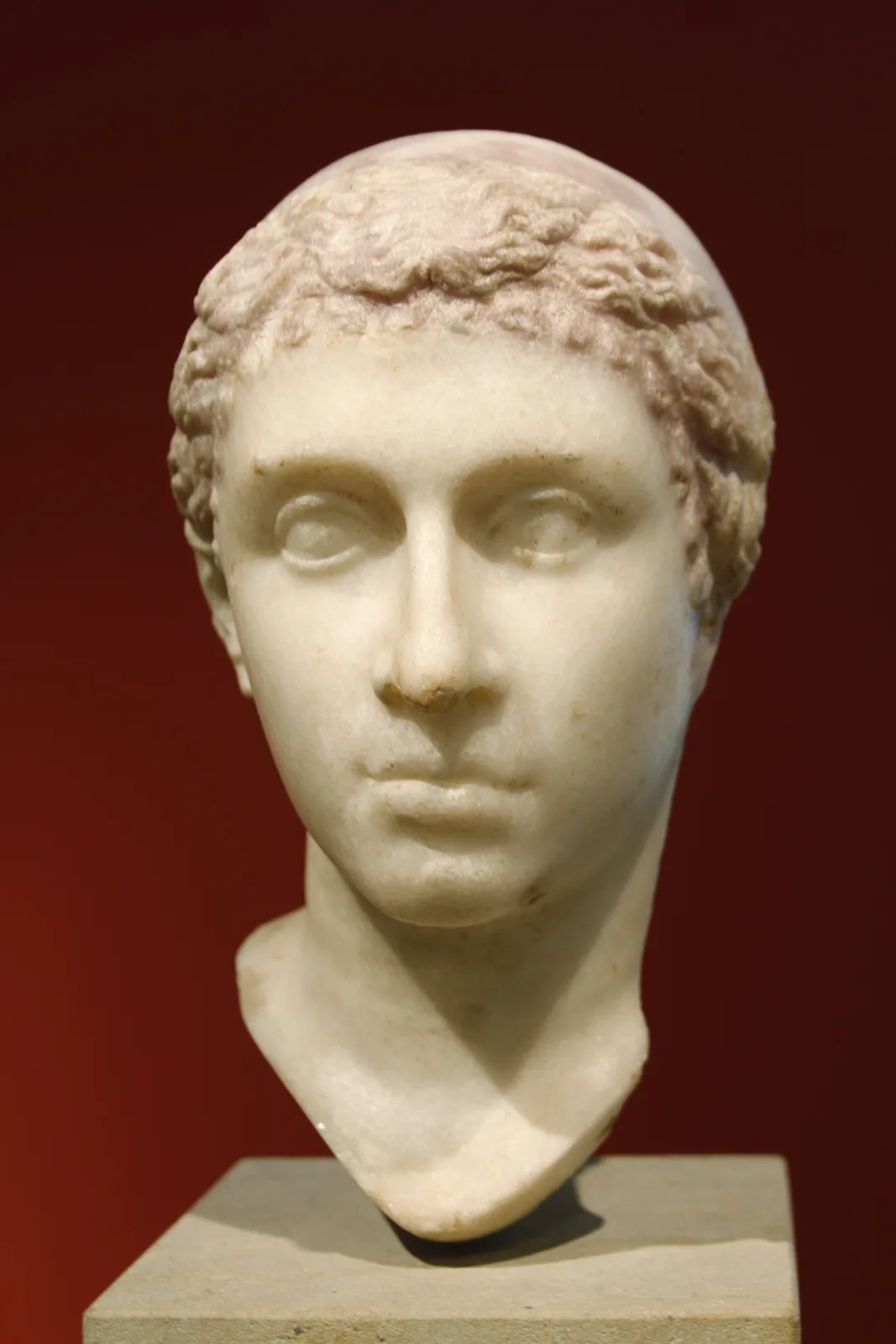
A white marble portrait head of Cleopatra VII in the Altes Museum, Berlin, lit against a deep red wall: melon-coiffed hair drawn back in waves under a plain diadem, a long straight nose, a small mouth and a broken column of neck on a stone plinth
The Golden Mouth

Was Cleopatra Beautiful? Plutarch, Shakespeare and the Case That It Was Never About Her Face

Plutarch, the historian Shakespeare worked from, stops his own narrative to say that Cleopatra's beauty was not the remarkable thing about her. What he puts in its place is a voice like an instrument of many strings, and a list of seven nations she answered without an interpreter.

September 8, 2026 · 9 min read

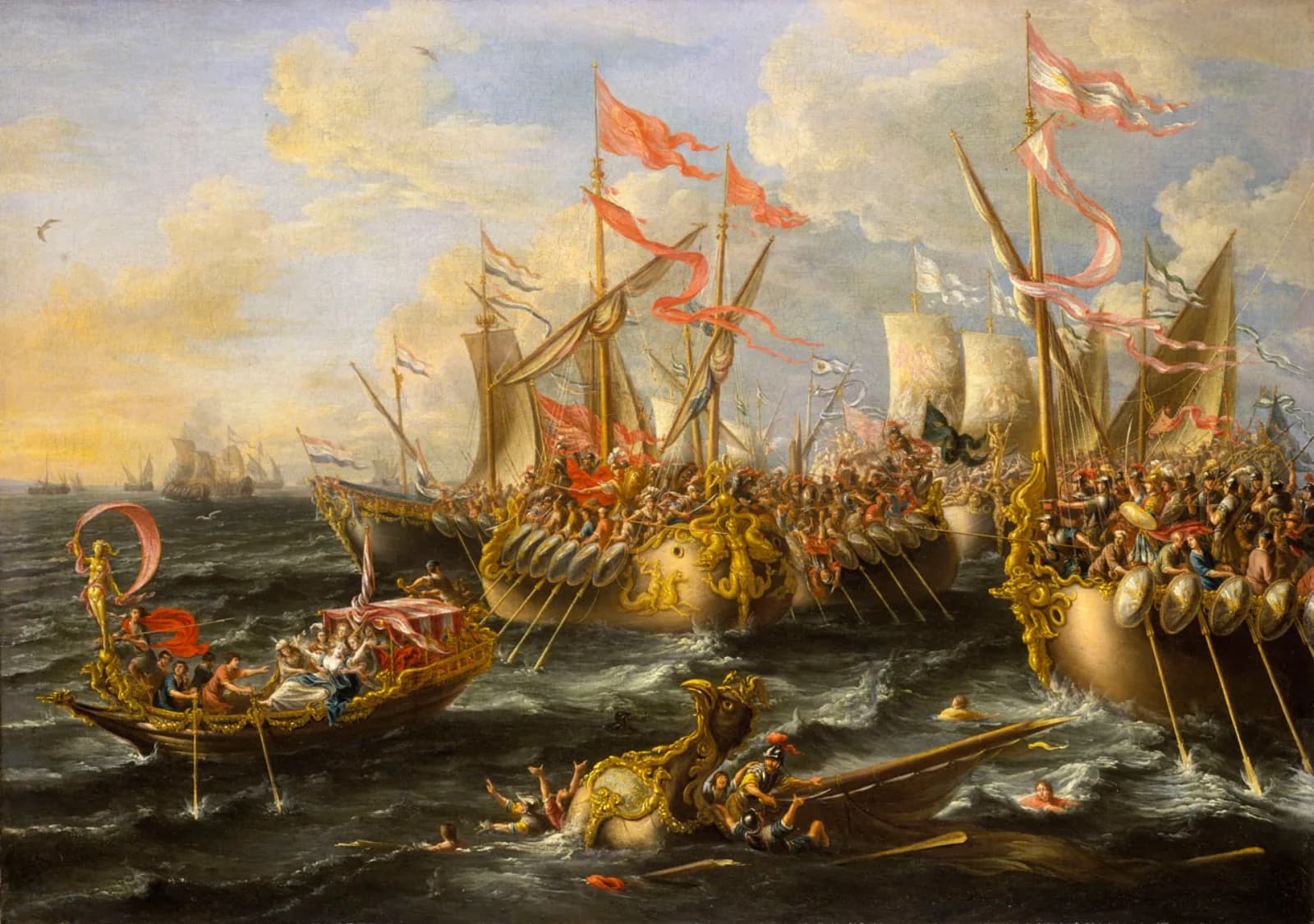
A seventeenth-century painting of the Battle of Actium: two ranks of gilded war galleys crowded with shielded soldiers collide under red banners, men swim among broken oars in the foreground, and a small canopied barge pulls away to the left
The Long Decline

Mark Antony's Long Decline: How Shakespeare Turns Rome's Greatest Soldier Into a Man Who Loses Everything

Antony makes his choice in the first scene and never takes it back. Shakespeare spends the rest of the play delivering the bill: a warning he accepts and ignores, a battle he leaves while winning, allies who go over one at a time, and a death he has to ask the guards to finish.

September 8, 2026 · 10 min read

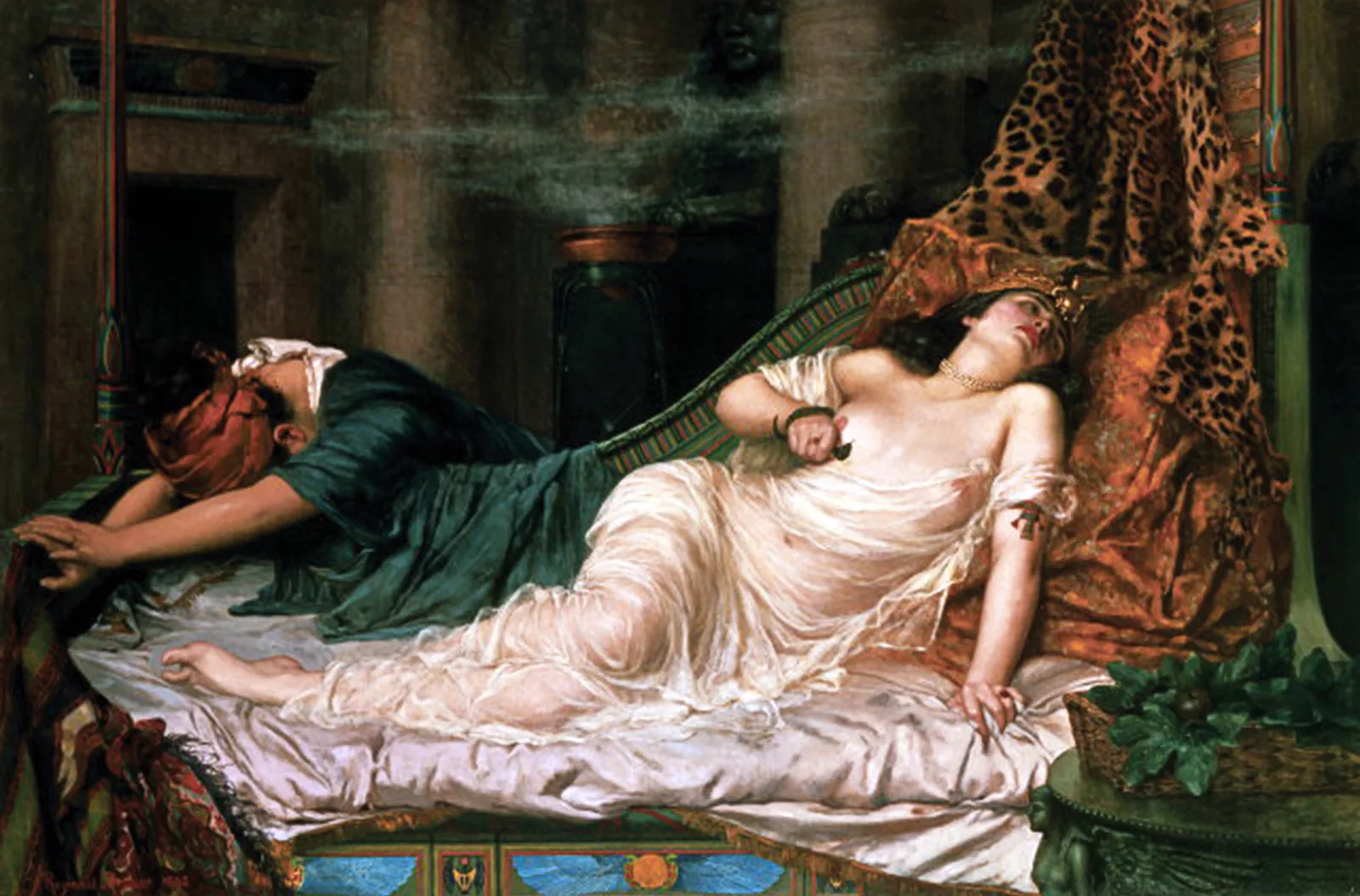
Reginald Arthur's painting of Cleopatra's death: she lies back on a low couch in white silk with a gold headdress, a leopard skin hung behind her, incense drifting from a burner, while a maid collapses face-down across the foot of the bed
Dying, Egypt, Dying

“I Am Dying, Egypt, Dying” and Five More Antony and Cleopatra Lines, Explained With Their Scenes

People quote this play more than they read it, and the quoting has drifted. The most famous line in it belongs to a man who has already failed to kill himself and is being hauled up a wall on ropes, and it is not the last thing he says.

September 8, 2026 · 9 min read