How Cleopatra died: Shakespeare wrote her suicide as a power move, not a tragedy (2026)
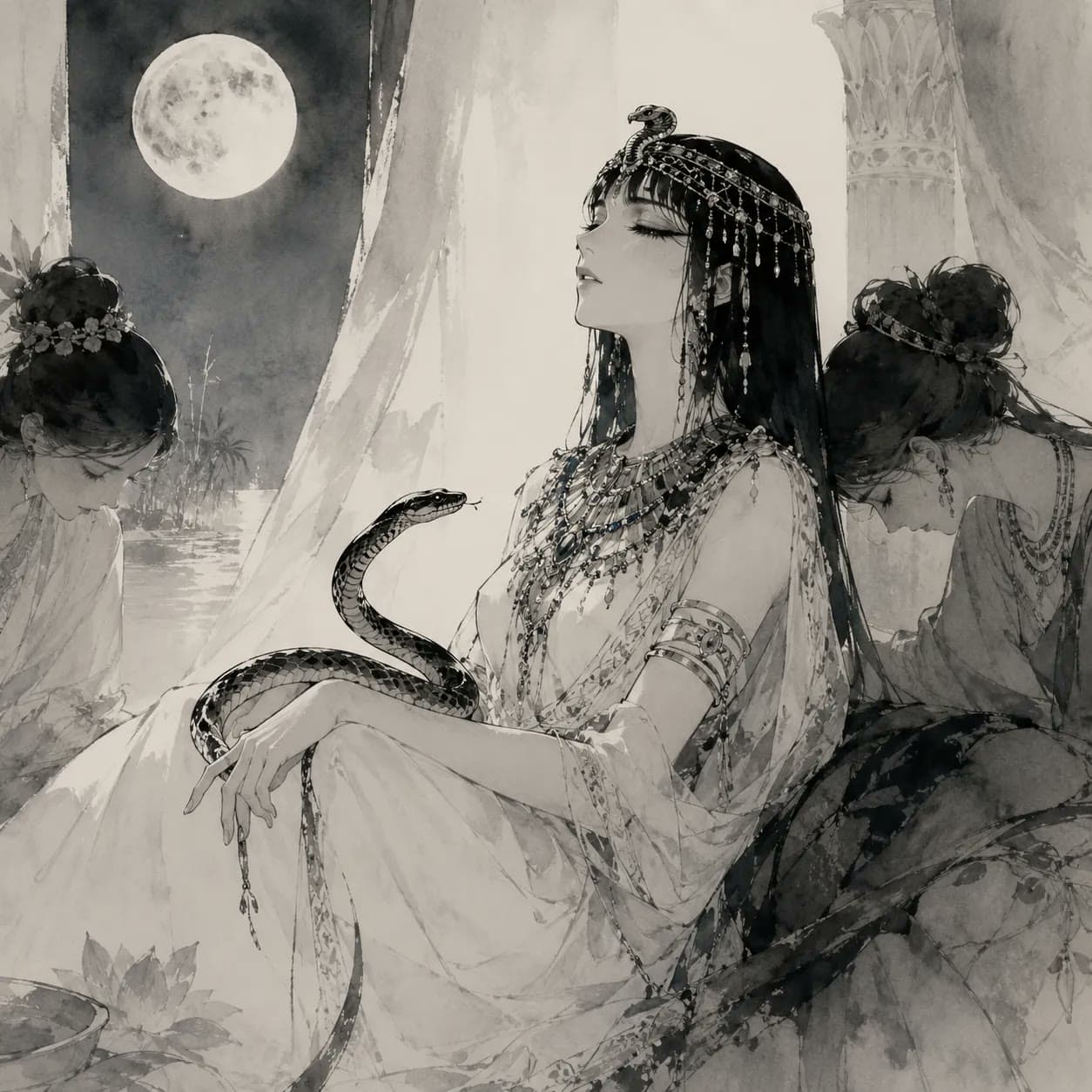
The war is lost, Antony is dead, and Octavian plans to march her through Rome as his trophy. So Cleopatra does the last thing he expects — she calls for her robe and crown and scripts her own ending. Not defeat. Refusal. He gets Egypt; he does not get her exit.


You already know you're going to lose this one. The relationship is over — you can hear the speech coming, the one that casts you as the problem. Or the job is gone, and tomorrow someone in HR gets to write the sentence that becomes your file. You can't stop any of it. But there's one thing left that's still yours: how it ends, and which version of you walks out the door.
A queen figured that out four hundred years before your group chat did. In the last act of Shakespeare's Antony and Cleopatra, Cleopatra has lost everything — the war, the man, the throne. Her enemy has won, and his plan for her is humiliation, not death. So she does the last thing he's expecting. We call it history's most famous suicide. It was really a power move. Here's Leo, my co-host, saying it flat out at the top of the episode:
Four hundred years, every summary calls it heartbreak. It wasn't. That ending was a power move.
- She couldn't win the war — so she changed the game. The question stopped being “how do I survive this?” and became “who gets to write my last scene?”
- Her enemy wanted a trophy, not a corpse. Octavian planned to march her through Rome alive, in chains, as the centerpiece of his victory parade.
- She staged her own death instead — in full royal costume. Robe, crown, and a line she says herself: “I have immortal longings in me.”
- The move isn't winning. It's authorship. When you can't control the outcome, you can still refuse to be somebody else's version of you.
| The tragic love story | The power move |
|---|---|
| A queen dies of a broken heart for her lover | A ruler refuses to become her enemy's trophy |
| Something that happens to her | Something she authors, down to the wardrobe |
| The famous question: how did she die? | The real question: who did she refuse to let write the ending? |
| Octavian wins | Octavian gets Egypt — not her exit |
🐍 How did Cleopatra die — and why “how” is the wrong question
Cleopatra dies by the bite of an asp — a small venomous snake she holds to her own skin in the final scene of the play. That's the mechanism, and it's the thing everyone Googles. But the mechanism is the least interesting part. The snake is a detail; the choiceis the whole scene. By Act 5 she has already lost the war, and her lover Antony — who fought on her side — is already dead. What's left to decide isn't whether she dies. It's who gets to say what her death means.
That's the flip the episode opens on. We treat this ending as a romantic tragedy, one of the great ones — four centuries of summaries filing it under “heartbreak.” Read the scene closely, though, and it's something colder and far more deliberate: a ruler with one lever left, pulling it hard. The interesting question was never how did Cleopatra die. It's who she refused to let write her last scene.
🏛️ What Octavian actually wanted: a trophy, not a corpse
Octavian didn't want Cleopatra dead — he wanted her displayed. The Roman triumph was a victory parade, and a defeated foreign monarch marched through the streets in chains was its prize exhibit. Killing her would have been too clean; the plan was to use her first. For a woman who had ruled Egypt, that was the real horror — not the dying, but the being-shown. Leo lands exactly why that's worse than an execution:
For a woman who ran Egypt, being someone's trophy is worse than dying. A death is at least hers to keep.
And Cleopatra sees it coming. She names the parade out loud before it can happen, in a line Shakespeare gives her in Act 5, Scene 2: “Shall they hoist me up / And show me to the shouting varletry / Of censuring Rome?” The archaic words hide a very plain picture — varletry is the rabble, censuringis jeering — so on the show my co-host Sharon decodes it the way you'd explain it to a friend:
She says it herself, to her maids: shall they hoist me up and show me to the shouting varletry of censuring Rome. Roughly, march me past a jeering crowd.
That's the whole stake in one image. Octavian's victory only works if she's alive to be walked past that crowd. So the one thing she can still take from him is the exhibit itself.
👑 She scripts her own last scene, in full royal costume
Cleopatra's answer isn't to hide from death — it's to direct it. She calls for her robe and her crown and dresses as a reigning queen, not a captive, in the line that has become one of the most-quoted in the play: “Give me my robe, put on my crown; I have / Immortal longings in me.” Sharon reads it straight from the text on the episode:
She calls for the royal robe and crown. And the line, right from the text: give me my robe, put on my crown. I have immortal longings in me.
Look at the timing. She puts on the full costume of power at the exact moment her power is gone — the empire is falling and she's dressing like she still runs it. That isn't grief. Leo calls it what it is:
That's not grief, you know. That's defiance. She looks more like a queen dying than a prisoner losing.
Then the act itself, and every detail of it is hers. She turns even to the snake with a kind of command — “Come, thou mortal wretch, / With thy sharp teeth this knot intrinsicate / Of life at once untie” — and dies on her own timing, dressed as herself. Sharon draws the line between her hand and his:
holds it to her own arm and goes still, dressed as the queen. Her hand, not his. She planned every second of it.
So the parade never gets its centerpiece. The trophy version of Cleopatra — the humbled captive in Octavian's procession — simply never comes to exist. He conquered a country and reached for the one prize that would have made it feel like a total victory, and found she'd already left the building on her own terms.
🎬 When you can't win, you can still choose how it ends
Nobody “wins” this ending — Cleopatra is dead and Octavian rules the Mediterranean. But four hundred years later, the thing people repeat isn't the battle he won. It's the exit she chose. That's the whole point Leo lands:
But she gets the last word, not Octavian. And that's what people still repeat, four hundred years on. Not the battle. The exit.
And this is where a play about a dead Egyptian queen turns into a Wednesday-afternoon tool. Most of us have had a much smaller version of the same moment — the day you couldn't change the outcome, but you could still refuse to be the shrunken version of yourself the other person needed you to be. Sharon told one on the episode: a relationship she knew was ending, and the speech she could feel her partner writing for her. She said it first, in her own words, one afternoon on the couch — not to save it, but to save who she got to be inside it:
What I was saving was who I got to be in how it ended. I still remember my exact wording. I don't remember his.
That's the small, unglamorous, entirely human version of the crown and the robe. It isn't about the outcome — the relationship was gone either way, the war was lost either way. It's about authorship: which sentence about you gets to be the one that lasts. And the flip side, the cautionary one, is just as real — Leo's own story on the episode is of a job he was pushed out of, where he let his manager write the smaller version of him and “signed his name to his sentence.” Same lesson, learned the hard way.
You can't always control what happens to you. You can still refuse to be somebody else's version of you.
Which is exactly where Leo lands the takeaway — the line that turns a queen's death into something you can use the next time you're on the losing end of a room:
You can't always control what happens to you. But you can still refuse to be somebody else's version of you. You get the last word about who you were. Don't be their trophy.
So the next time you're losing something you can't save — a job, a relationship, an argument the room has already decided — try Cleopatra's move instead of Octavian's. You may not get to change the ending. But you almost always get to choose how you meet it, and which version of you is the one that's remembered. And if you want the other half of this play — the man who startedthe whole collapse by throwing an empire away out loud — that's a story of its own.Les Misérables scripts its own ending just as deliberately, around a man who chooses his death on his own terms.
Sources
- Antony and Cleopatra, Act 5, Scene 2 (full text) — The Complete Works of William Shakespeare (MIT)
- Antony and Cleopatra (1607 text) — Project Gutenberg
- Antony and Cleopatra — Folger Shakespeare Library
- Cleopatra, queen of Egypt — Encyclopædia Britannica
Frequently asked questions
- How did Cleopatra die?
- In Shakespeare's Antony and Cleopatra she dies by the bite of an asp — a small venomous snake — which she holds to her own skin in the play's final scene. It's a suicide she stages deliberately, dressed in her royal robe and crown, rather than be captured alive and displayed by her Roman conqueror.
- Did Cleopatra kill herself?
- Yes. In the play she takes her own life rather than be taken to Rome as a prisoner. Shakespeare writes it as a choice, not a collapse: she prepares carefully, calls for her royal costume, and uses the asp on her own timing — so the death reads as an act of control, not just grief for Antony.
- What did Octavian want to do with Cleopatra?
- Octavian (the future emperor Augustus) planned to keep her alive and parade her through Rome in his triumph — a victory procession in which a defeated foreign ruler is marched through the streets as the prize exhibit. That public humiliation, not her death, was his goal, which is exactly what her suicide denies him.
- What does “I have immortal longings in me” mean?
- It's Cleopatra's line in Act 5, Scene 2, spoken as she dresses for death: “Give me my robe, put on my crown; I have / Immortal longings in me.” The “immortal longings” are her readiness for — even her reaching toward — death and lasting fame, delivered as a queen putting on her regalia, not a prisoner giving up.
- Why did Cleopatra put on her crown and robe to die?
- To die as a reigning queen rather than a captive. Dressing in full royal costume at the moment her power is gone turns her death into a final act of authority: she looks, in the words of the podcast, more like a queen dying than a prisoner losing. It's defiance staged as ceremony — she controls the picture her enemy is left with.
- Is Cleopatra's death a tragedy or a victory?
- Both, and that's the point. She loses the war and her lover, so it's a tragedy — but she refuses to let her enemy write the ending, so it's also a kind of victory. Octavian gets Egypt and the throne; he never gets to display her. Four hundred years on, what people remember isn't the battle he won but the exit she chose.
Enjoyed this one?