Are Liaozhai's Fox Spirits and Ghosts Villains, or Victims?
Search for what fox spirits are and the internet hands you a monster. Open Pu Songling and the fox marries the household's useless son and improves him.


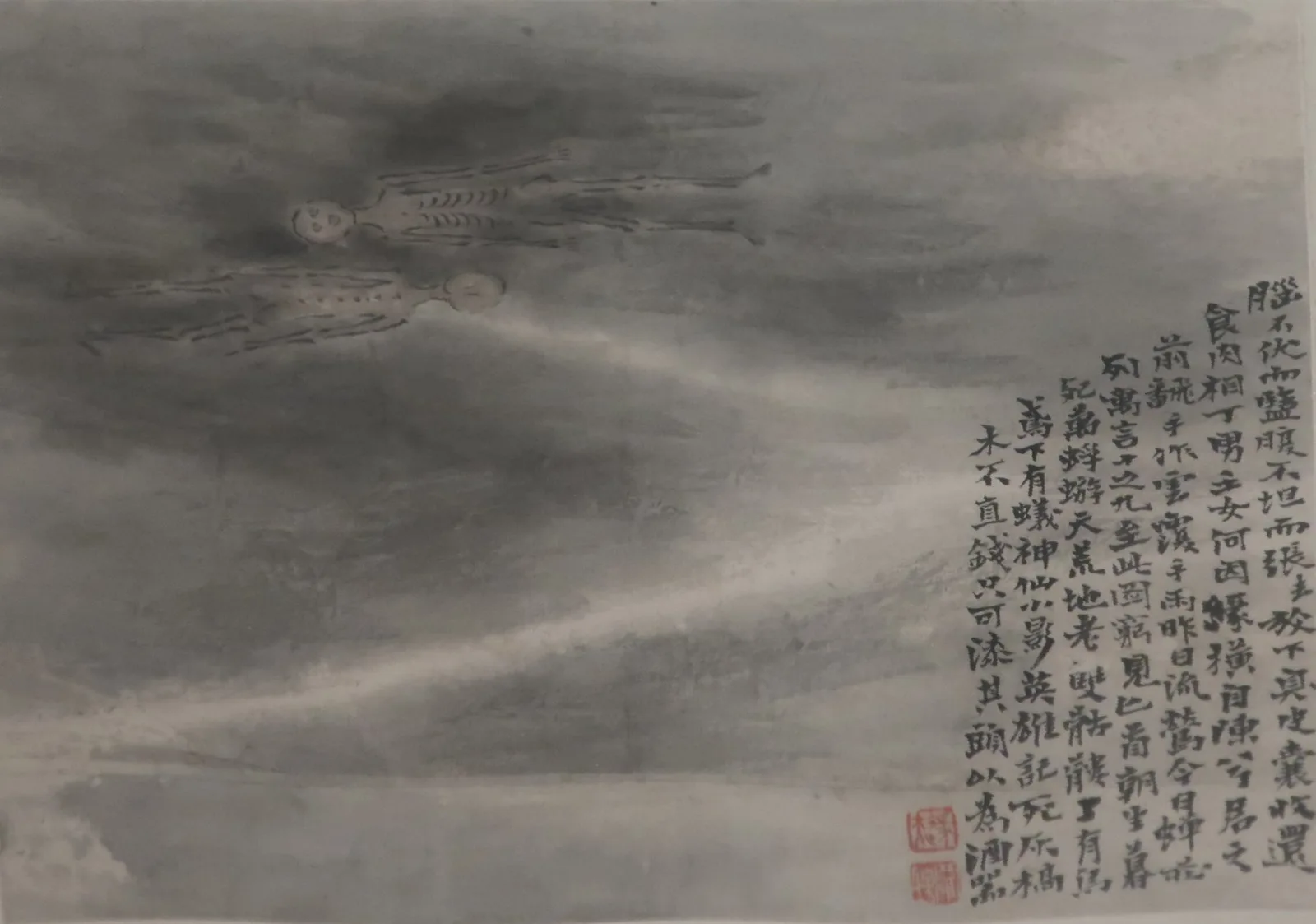
Search in English for what fox spirits are, and the internet will hand you a monster. Nine tails, seduction, ruin, a woman who eats men. That picture is assembled from several different traditions across several centuries, and when you open Pu Songling’s collection expecting to find it there, the book keeps handing you something else: a fox who marries the household’s useless son and improves him.
Quotations below come from Herbert Giles’ free 1880 translation with their line references attached. The same spirits are playable in Strange Tales from a Chinese Studio, where you meet them one encounter at a time and find out how wrong your first read was.
The short answer, with a count behind it
The game built on this collection publishes a cast list of sixty figures drawn from the tales it curates, each with a short description of who they are. Counted directly, five of those sixty are described in terms that make them adversaries: a greedy underworld sovereign, a pair of cruel infernal enforcers, a lecherous schemer, and two versions of the same predator wearing a borrowed face. Every other entry is a scholar, a bride, a friend, a benefactor or a bystander.
That ratio is not a curation artefact. It matches what the collection does when you read it straight through: the supernatural arrives, it turns out to want company or a favour or a marriage, and the danger in the story is usually a human being with authority. Foxes in this book are more likely to lend you money than to drink your blood.
The exception that makes the headlines
There is one unambiguous monster in the material most English readers have actually met, and she is the reason the villain reading exists at all. The demon of Painted Skin lies her way into a household, kills the man who sheltered her and moves on to the next address, and the tale offers nothing in mitigation beyond a priest’s observation that she must be in great distress to be hunting a substitute for herself.
She is also the single most adapted, most summarised and most illustrated figure this book has, which is how one outlier came to stand for five hundred stories. The tale itself is short and worth reading properly, and it is explained here in full. Everything below is about the other pattern, the one that has no film franchise attached.
The far more common pattern
The recurring shape in this collection is a supernatural being who is under an obligation, or wants one. Three examples, all from the free English text, show how consistently the sympathy runs the other way.
- The ghost who is being made to do it.Hsiao-ch’ien, the ghost of the ruined temple, tells the scholar she is trying not to kill outright: “a devil then took possession of me, and employed me to bewitch people by my beauty, contrary to my inclination” (Giles’ 1880 translation, l.4094-4097). She is a coerced instrument of something worse, and she asks him for a burial rather than a life.
- The fox who marries in. Ying-ning is the daughter of a fox, raised in secret by a ghost after her mother left, and the marriage she makes is an ordinary, working, affectionate one. The trouble she causes is social embarrassment. Her full story is set out in the essay on this book’s recurring characters.
- The underworld official who does you favours.Judge Lu drinks with a dim scholar for months and then improves him by hand, telling him mid-operation not to be afraid because “I am only providing you with a more intelligent heart” (l.3297-3299). The scene is written as friendship, not as horror.
“I have seen many men, but none with a steel cold heart like yours.”
That line is spoken by a ghost, admiringly, to the man she has failed to seduce, and it is a fair summary of how this book allocates virtue. Uprightness is rare and it is worth remarking on when it turns up. The creature noticing it is a ghost, and the story treats her judgement as reliable.
Why English coverage skews toward the monster
Two things are happening at once, and both are about search rather than about Pu Songling. The first is collision. Fox spirits appear across an enormous span of East Asian material, much of it far older or far newer than this collection and none of it written by this author, and a query about foxes and evil returns all of it at once. Very little of what comes back is about these particular foxes.
The second is the adaptation record. The tales that reached film are disproportionately the frightening ones, because that is what sells a ticket, and a reader arriving from the films has been shown a curated highlight reel of this book’s cruelty with its ordinary kindness left out. The films are covered in a separate essay on the adaptation history, and the plain fix for the misreading is to read ten consecutive tales rather than the three that were filmed. The whole English selection is free at Project Gutenberg.
Sources
- Strange Stories from a Chinese Studio, translated by Herbert A. Giles (1880) — Project Gutenberg
Frequently asked questions
- Are fox spirits always evil in Chinese folklore?
- No, and the question is wider than this book. The nine-tailed figures that dominate English search results are drawn from several traditions at once, Japanese and Korean material included, spanning well over a thousand years. Pu Songling's foxes are a narrow seventeenth-century slice of that, and they behave very differently from the rest of it.
- How many characters in Liaozhai are actually villains?
- Five, and they are worth naming: 冥王, the king of the underworld; 二鬼, a pair of infernal enforcers; 毛大, a lecherous schemer; 独行女子, the woman walking alone; and 画皮鬼, the painted-skin demon. The last two are one predator wearing two faces, so the cast really carries four distinct adversaries. Two further entries, the clerk 冥吏 and the draining ghost 李氏, sit on the line and are not counted here, because their own descriptions are written sympathetically.
- Is the Painted Skin demon representative of the whole book?
- No, and you can see the difference in the naming. 婴宁, 聂小倩, 莲香 and 青凤 all get names, families and histories; Giles lists the third of them in his contents as Lien-hsiang, the Fox-girl. The skin-wearer gets none of the three. In a collection that hands a personal name to almost every supernatural being it meets, withholding one is the strongest signal Pu Songling has.
- Is Yingning dangerous?
- No. Giles files her tale under the title Miss Ying-ning; or, the Laughing Girl, and the playable edition's cast entry for her lists no power at all: it describes a light step, a flower held between her fingers, and a laugh that starts before she has spoken to anyone. Her worst habit in the tale is climbing the neighbours' tree to steal their blossom, which her mother-in-law cannot make her stop.
- Is Liaozhai's underworld a villainous place?
- It is a bureaucracy, and it behaves like one in both directions. In the tale of 席方平 a man goes down there to sue on his dead father's behalf and is tortured by the clerks for persisting; that tale sits in juan 10 of the Chinese text at Project Gutenberg (#51828). In another, a judge from the same administration performs unpaid favours for a friend. The difference is rank, exactly as it is above ground.
Enjoyed this one?