Every Jekyll and Hyde Adaptation, Ranked for Faithfulness
More than a century of screen Hydes, and the two that come closest to the book were both made before sound settled down. Here is the order, and the reasoning.


This story has been filmed, staged and sung more times than anybody has reliably counted, and almost all of those versions do the same two things: they enlarge Hyde, and they give Jekyll a fiancee. Stevenson supplied neither. Ranking them for faithfulness therefore means ranking degrees of departure, and the results are not what the posters have trained anyone to expect.
The two closest to the book were both made before the sound era had settled down. The most famous one buried its own best predecessor for a quarter of a century. And the version most people can quote from memory is a stage musical that ends with a swordfight.
- Best film overall: the 1931 Paramount version, directed by Rouben Mamoulian, which is also the only one that ever won anything.
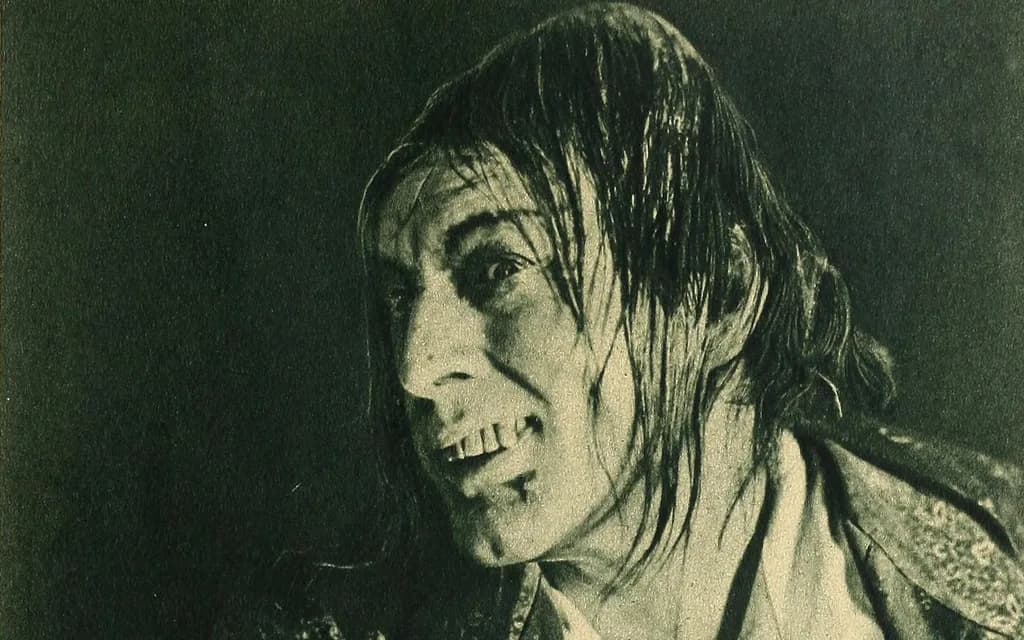
- Closest to the book's Hyde: the 1920 silent, which starts its first transformation with no makeup at all.
- Most widely seen and least faithful: the 1941 remake, which is also the reason the 1931 film vanished for a generation.
- Most quoted: the stage musical, which outran its reviews by nearly four years and still lost money.
Below is the reasoning, version by version, with what each one adds and what it drops. If you would rather run the story yourself than watch somebody else's cut of it, the playable Dr Jekyll and Mr Hyde keeps the cast the book actually has.
🏆 Which adaptation is best?
Rank them by how much of Stevenson survives and the order comes out roughly like this. The 1931 film keeps the moral argument and adds a romance. The 1920 film keeps the physical idea and adds a fiancee and a villainous father-in-law. The 1941 remake keeps the plot and replaces the horror with psychology. The 2015 television series keeps the surname.
The 2023 film keeps the premise and changes almost everything else on purpose. Three tests do most of the work here, and they are worth stating before the list, because every version passes one and fails another. Test one is the shape of Hyde: is he smaller than the doctor, as the book insists, or bigger, as the poster prefers. Test two is the cast: the novella runs on five men and no romance, so anyone who is courting is an addition. Test three is the structure, which is a lawyer's investigation followed by two long letters, and which nobody has ever attempted.
| Rank | What survives of the novella |
|---|---|
| 1. 1931, dir. Rouben Mamoulian (Fredric March) | The moral argument, the laboratory, and a transformation that happens in one unbroken shot. Adds Ivy and a fiancee |
| 2. 1920, dir. John S. Robertson (John Barrymore) | A Hyde who changes by performance before he changes by makeup, and the book's sense of a man contorting into a smaller shape. Keeps Lanyon and Enfield by name |
| 3. 1941, dir. Victor Fleming (Spencer Tracy) | The plot beats, played as psychology, with the least physical Hyde of the three studio films |
| 4. 2023, Doctor Jekyll (Eddie Izzard) | The premise, deliberately rebuilt: Dr Nina Jekyll and an alter ego called Rachel Hyde |
| 5. 2015, ITV (Tom Bateman) | The surname. It is a sequel about Jekyll's grandson rather than an adaptation at all |
🎞️ 1920 and 1931: the two that matter
The 1920 Famous Players-Lasky production, directed by John S. Robertson and premiered in New York on 28 March 1920, remains the most interesting screen answer to the problem the novella sets. Barrymore begins the first transformation with no makeup at all, using only his face and body, and the prosthetics arrive afterwards to finish a job the acting has already started.
That order matters, because Stevenson's Hyde is a man other people cannot describe, and the book insists he is small. It is also the one film where the seams show in a charming way: a false finger works loose during the change back and is visible on screen. The 1920 film scores oddly on the cast test as well. It keeps Lanyon and it keeps Enfield, both by name, which is more of the novella's actual population than most later versions bother with. Then it invents a fiancee, Millicent Carew, a Sir George Carew to go with her, and a third woman called Gina, none of whom Stevenson wrote. The Carew surname is the tell: in the book it belongs to Sir Danvers Carew, an elderly MP who exists in order to be beaten to death in the street, and the film has quietly repurposed it into a family for the doctor to marry into.
Mamoulian's 1931 film, shot for Paramount and put into general release on 2 January 1932 despite everyone calling it the 1931 version, is the better movie by some distance. Its transformation is a single continuous take achieved in the camera: the makeup was applied in contrasting colours and a series of matching filters was rotated in front of the lens, so that one layer of it faded out of the black-and-white image while another faded in. March changes in front of you with no cut to hide behind, which is still a genuinely unsettling piece of craft.
It was rewarded accordingly. March took the Academy Award for Best Actor, the film picked up further nominations for its adapted screenplay and its cinematography, and it earned $1.25 million in domestic rentals. What it adds is a woman named Ivy, invented for the film, whose function is to be terrorised, and the addition sets the template every subsequent version has followed.
🪦 1941: the remake that buried the good one
Victor Fleming's MGM version, released in August 1941, is the one most people picture, and it is the least faithful of the three studio pictures. Spencer Tracy plays Jekyll, Ingrid Bergman plays the barmaid and Lana Turner the fiancee, and Jack Dawn's makeup deliberately alters face and stature far less than either earlier film, on the theory that the change should read as psychological.
Contemporary reviewers were not persuaded. The New York Times review, filed the day after it opened in New York and archived under the headline “Spencer Tracy Essays Dual Role of Dr. Jekyll and Mr. Hyde”, called it a preposterous mixture of hokum and high-flown psychological balderdash while praising Bergman, and the modern critical consensus has not moved far from that.
The lasting damage was commercial rather than artistic. MGM bought the rights to the 1931 film outright from Paramount and then withheld it, keeping the Oscar-winning version out of circulation for about twenty-five years, until 1967. An entire generation grew up believing the Tracy film was the definitive one because it was the only one they could see.
🎭 The musical everybody quotes
Frank Wildhorn and Leslie Bricusse's stage musical is, by a wide margin, the version most people can hum, and it is the furthest thing here from the novella's tone. Its centrepiece is Confrontation, in which one performer plays both halves of an argument in alternating voices, flipping his hair from one side of his head to the other to mark the switch. Stevenson wrote nothing remotely like it.
The number works anyway, which is why it has outlived most of the show around it. The commercial story is the strange part. The show ran on Broadway for years on lukewarm-to- poor reviews, sustained by an audience that kept coming back, and still closed more than $1.5 million in the red. Its ending, in which Jekyll dies on a swordstick during his own wedding, has become the ending a lot of people think the book has.
📺 What is actually new
Two recent versions are worth knowing about, and neither is an adaptation in the strict sense. The 2015 ITV series created by Charlie Higson starred Tom Bateman as Robert Jekyll, the Victorian doctor's grandson, and moved the story to the 1930s as a pulp adventure.
It opened on 4.8 million viewers, drew hundreds of complaints about violence in a teatime slot, finished its run on 1.8 million, and ITV announced in January 2016 that it would not be renewed. The newest is Doctor Jekyll, a Hammer production directed by Joe Stephenson and released in the United Kingdom on 27 October 2023, with Eddie Izzard as Dr Nina Jekyll and an alter ego named Rachel Hyde. Recasting the doctor as a woman turns the novella's secrecy into a different kind of secret, which is a live argument about the book rather than an invention of the film, and the readings behind it have a long critical history.
It is worth saying what a genuinely faithful version would have to accept, because the reasons nobody makes one are not cowardice. It would need a leading man who is off screen for most of the running time and a supporting actor, playing a solicitor, carrying the picture. It would need a monster who is physically less impressive than the hero and who commits exactly one murder on camera. It would need to withhold its own premise from every character while the audience sits three steps ahead. And it would have to end with twenty minutes of a man reading a letter aloud in an empty room.
No producer has ever signed that off, and it is easy to see why. It would be a strange film and quite possibly a bad one. It also remains the only genuinely unadapted thing left in a story that has been rewritten for the stage and the screen for a hundred and forty years, which makes it the most interesting thing on the list.
Production facts here come from the AFI Catalog of Feature Films and the film histories cited below; the 1886 text is free at Project Gutenberg, and it is shorter than any of these films.
Sources
- Dr. Jekyll and Mr. Hyde (1920) — AFI Catalog of Feature Films
- Dr. Jekyll and Mr. Hyde (1931) — AFI Catalog of Feature Films
- Dr. Jekyll and Mr. Hyde (1941) — AFI Catalog of Feature Films
- ITV axes Jekyll and Hyde after poor viewing figures — The Guardian
- Eddie Izzard's Doctor Jekyll: new Hammer film release date confirmed — Empire
- Spencer Tracy Essays Dual Role of Dr. Jekyll and Mr. Hyde (review, 1941) — The New York Times
- Doctor Jekyll (2023) — critic score — Rotten Tomatoes
- Jekyll & Hyde, Broadway production record — Internet Broadway Database
Frequently asked questions
- What is the most faithful Jekyll and Hyde adaptation?
- The 1931 Paramount version, on the understanding that no film is faithful in the strict sense. It is also the only one that has ever won anything: Fredric March took the Academy Award for Best Actor in a tie with Wallace Beery for The Champ, and the film picked up two further nominations, for its adapted screenplay and for Karl Struss's cinematography. For the look of Hyde, the 1920 silent gets closer.
- Is there a new Jekyll and Hyde film?
- There is one from 2023 and the reviews split hard: Rotten Tomatoes counts 42% of 33 critics positive, with an average score of 4.9 out of 10. Variety called it meandering and empty, an update with neither enough loyalty to its source material nor imagination to make its departures meaningful. Little White Lies enjoyed it as the sort of horror that has you laughing one minute and frightened the next.
- Why do Jekyll and Hyde films always add a fiancee?
- Because the novella has no love plot at all and a two-hour film usually wants one. The habit predates cinema. Muriel Carew, the fiancee in the 1931 film, comes not from Stevenson but from the 1887 stage version that first made the story a hit, and the barmaid Ivy is invented outright for the screen. Every later version has inherited one or both of them.
- Where can I watch the 1920 Jekyll and Hyde?
- Freely and legally, because the film is in the public domain. That is why prints circulate on archive sites rather than behind a rental fee, and why it has kept reappearing on home video: a VHS release from Thorn EMI in June 1982, then a DVD from Kino on Video in October 2001. Barrymore also plays a giant spider in one dream sequence, which is not in the book.
- Is the Jekyll and Hyde musical based on the book?
- Loosely, and it outran its reviews by a wide margin. The Broadway production opened at the Plymouth Theatre on 28 April 1997 and closed on 7 January 2001 after 1,543 performances, with David Hasselhoff taking the title role in the final months. Its ending, in which Jekyll dies on Utterson's swordstick, is not in Stevenson.
Enjoyed this one?