Little Women (2019) vs. 1994 vs. 1933: Comparing the Adaptations
Two of the lines most often quoted as Little Women's best are not in Little Women. A word search of Alcott's own text finds neither of them, which says something useful about how the story now reaches most people.


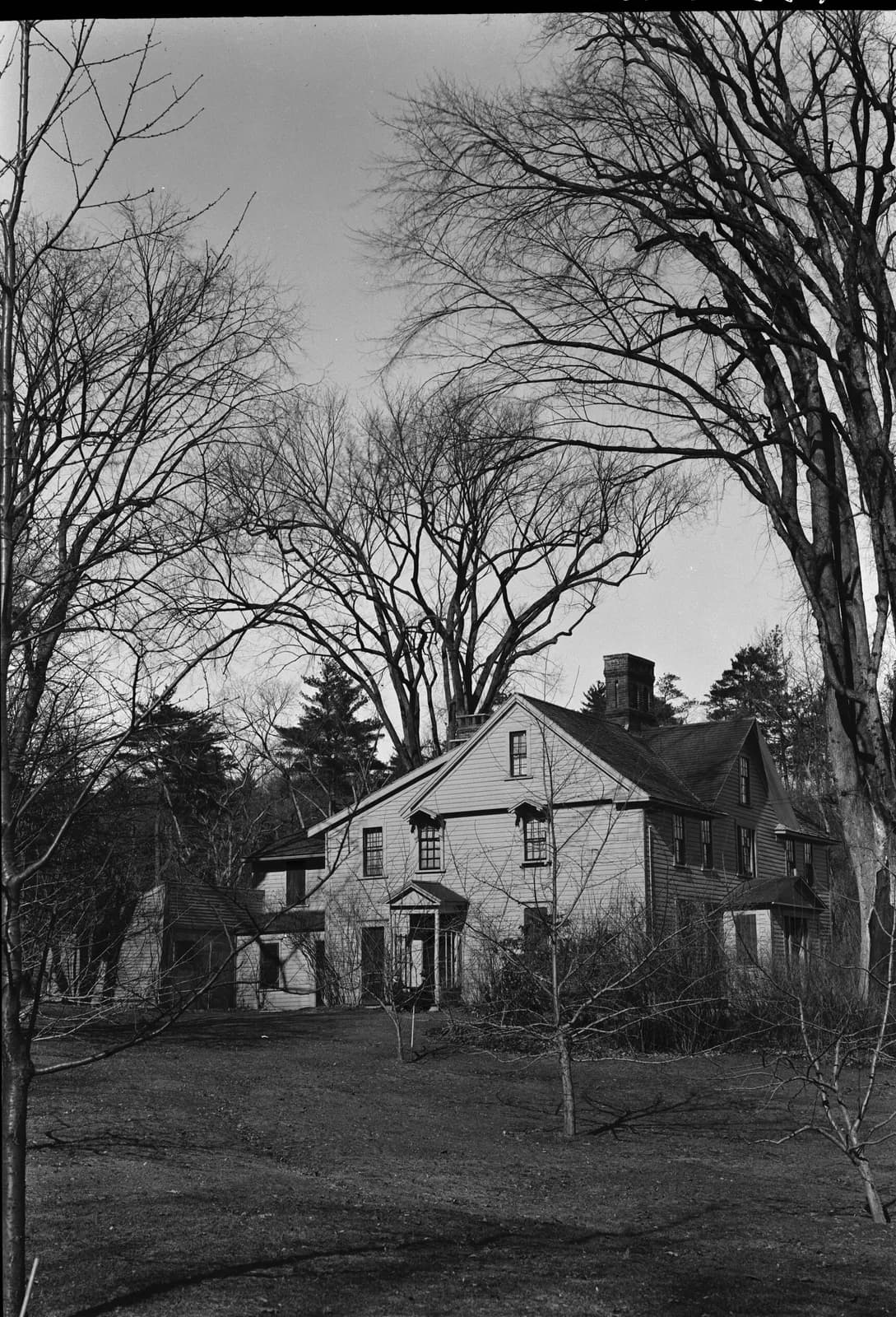
Two of the lines most often quoted as the best things in Little Women are not in Little Women. A word search of Alcott’s complete text finds neither of them. That is a small fact with a large consequence, because it tells you how most people now meet this story, and it is a better starting point for comparing the screen versions than arguing about who played Jo best.
Everything quoted from the novel below comes from the free Project Gutenberg text with the chapter attached. Both scenes under discussion are doorways in the playable Little Women, which stages them from Alcott’s words rather than from any screenplay.
Spoilers below: this post discusses how each version handles the proposal, the manuscript and Beth.
🔎 The line the book never wrote
A three-word reply from the proposal scene circulates as the line that breaks your heart in Little Women: “and I’ll watch”. It gets quoted back in every thread about the ending. Search the complete Project Gutenberg text of the novel and it is not there, in that chapter or in any other.
What is there is louder and less tidy. Alcott’s Laurie argues. He gets up off the grass, tells Jo she is wrong about herself, predicts that she will love somebody else tremendously one day, and refuses to accept the refusal. The ending essay on this hub walks through that scene line by line.
This is not a complaint about screenwriting. A film has ninety seconds for a scene a novel gives nine pages, and compression invents lines; that is the job. The interesting part is the direction of travel. The invented line is gentler than the original, and it is the one that survives into how the book is remembered, which means the version of Laurie most readers carry around is a quieter and more dignified man than the one Alcott put on the page.
🔥 Amy’s most quoted line has the same problem
The second line runs the same way. When Amy burns Jo’s only manuscript, the explanation that circulates is that she wanted to hurt her. It is quoted as the moment Amy becomes a real character instead of a spoiled brat, and it is not in the book either.
Alcott’s Amy offers no insight into her own motives. She confesses in four words, and when Jo demands to know why, she answers with a transaction.
“Yes, I did! I told you I’d make you pay for being so cross yesterday, and I have, so…”
She does not finish the sentence, because Jo grabs her. There is no self-knowledge in it and no apology; it is a child settling a score and saying so. The invented version gives Amy an emotional vocabulary the youngest March sister does not have on the page, and it hands readers a reason to forgive her three hundred pages before Alcott offers one.
Both substitutions push in the same direction, which is the useful finding. Each one hands a character more inner life, earlier, than the novel does. Alcott’s method is to withhold explanation and let behaviour accumulate, and the screen versions cannot afford to wait, so they explain. That is the real difference between the book and every adaptation of it, and it is bigger than any casting argument.
🎬 What each version actually changes
The three most-argued versions are separated by decades and by what each one thinks the story is for. George Cukor’s 1933 film is a performance vehicle: Katharine Hepburn plays Jo as a whirlwind, and the Library of America argues it is the version that fixed the story’s screen shape for everyone who came after.
- 1933.Depression-era, shot in black and white, built around Hepburn. It plays the family poverty straight to an audience living it, and it treats the sisters’ moral education as the plot rather than as the setting.
- 1994.Gillian Armstrong directs, Winona Ryder plays Jo and Christian Bale plays Laurie. It keeps the book’s order of events, which is why Slate’s cast-by-cast comparison treats it as the default against which newer versions are read.
- 2019. Greta Gerwig directs, with Saoirse Ronan as Jo, Florence Pugh as Amy and Timothée Chalamet as Laurie. NPR’s review singles out the ensemble; the structural change is that the two halves of the novel are cut apart and interleaved.
- 2017. A television version made for BBC One and PBS Masterpiece, and the only recent one with room for the domestic middle of the book that every feature film has to cut.
The 2019 restructuring is the change worth understanding, because it is an argument rather than a trim. The Ringer’s account of that screenplay describes how the timeline is reordered so that childhood and adulthood sit beside each other. The book runs forwards, and its second half was written after the first had already sold; putting the halves in parallel turns a sequence into a comparison.
That choice also changes who the story is about. Run the book forwards and Amy is a child who becomes an adult offstage. Interleave the halves and the grown woman is present from the first minutes, which is why the recent rehabilitation of Amy March belongs to the newest version rather than to the text.
⚖️ Which one is most faithful is still contested
Faithful to what is the question that decides the answer. If fidelity means event order, the 1994 version wins, and the case for it is made seriously by people who have read the novel more than once. If fidelity means the book’s argument about money, work and who gets to own what they write, the 2019 version has the stronger claim, because it keeps material about copyright and payment that the others cut.
There is a third answer that gets less attention: Alcott’s own opinion about the ending is documented, and no adaptation has ever followed it. Her journal, published after her death and free at Project Gutenberg, records the pressure she was under from readers writing in to ask who the sisters would marry, and her answer to it.
“I won’tmarry Jo to Laurie to please any one.”
It is worth being precise about what that does and does not prove. It shows Alcott resisting a specific demand from her readership, in writing, before she wrote the second half. It does not show an editor dictating whom Jo marries, which is the version of this story that circulates most widely. Her publisher did ask her for a second volume, and her readers did write in wanting marriages. She records both in the same journal, and neither entry hands the choice of husband to anyone but her. She wanted Jo unmarried, she was not given that, and she chose the husband herself — a compromise she made rather than one that was made for her. The full novel is free at Project Gutenberg if you would like to check any of these scenes against a screen version yourself.
Sources
- Little Women (Project Gutenberg text, complete 47-chapter edition) — Project Gutenberg
- Louisa May Alcott: Her Life, Letters, and Journals — Project Gutenberg
- Classic Hollywood: Little Women captures the story's appeal for all time — Library of America
- Comparing the stars of Greta Gerwig's Little Women with the 1994 cast — Slate
- Little Women is a dynamic sister act — NPR
- Make the Case: The Unparalleled Vision of Greta Gerwig's Little Women Screenplay — The Ringer
- Little Women casting announcement (Masterpiece) — PBS
Frequently asked questions
- How many film and television versions of Little Women are there?
- More than most lists bother to count, and at least five are still watched: 1933, 1949, 1994, the 2017 television version and 2019. The 1949 one is the odd omission from most comparisons — it was MGM's colour remake, shot from the same screenplay credit as the 1933 film, and it is the version many older readers saw first.
- Is "I wanted to hurt you" what Amy says in the Little Women book?
- No, the phrase is nowhere in Alcott's text. The detail the book does give is what was lost: Jo calls it "my little book I was so fond of, and worked over, and meant to finish before Father got home", which tells you it was a war-length project meant as a homecoming present. Amy burned the only copy.
- Which Little Women adaptation is the most faithful to the book?
- There is no settled answer, and the two front-runners are faithful to different things. The 1994 version, written by Robin Swicord and directed by Gillian Armstrong, keeps the chronology the book uses. The 2019 version keeps more of the book's argument about money and authorship while cutting the timeline in half and interleaving it.
- Did Louisa May Alcott want Jo to marry Laurie?
- No, and she wrote it down before she wrote the chapter. Her journal for 1 November 1868, the day she began the second half, records that girls were writing in to ask who the little women marry, "as if that was the only end and aim of a woman's life", and states flatly that she would not marry Jo to Laurie to please anyone.
- Is the 2017 Little Women miniseries worth watching?
- It is the roomiest version, which is its whole argument. Adapted by Heidi Thomas across three episodes for BBC One and PBS, with Maya Hawke as Jo, it has time for the domestic middle of the book that every two-hour film has to cut, and it is the only recent version that does not have to choose between the two halves.
Enjoyed this one?