Little Women Characters Guide: The March Sisters, Laurie, and Professor Bhaer
Every quiz that asks which March sister you are already knows the answer, because the book hands out its verdicts in the first chapter. Here is what Alcott's own text says about each of them, with the lines attached.


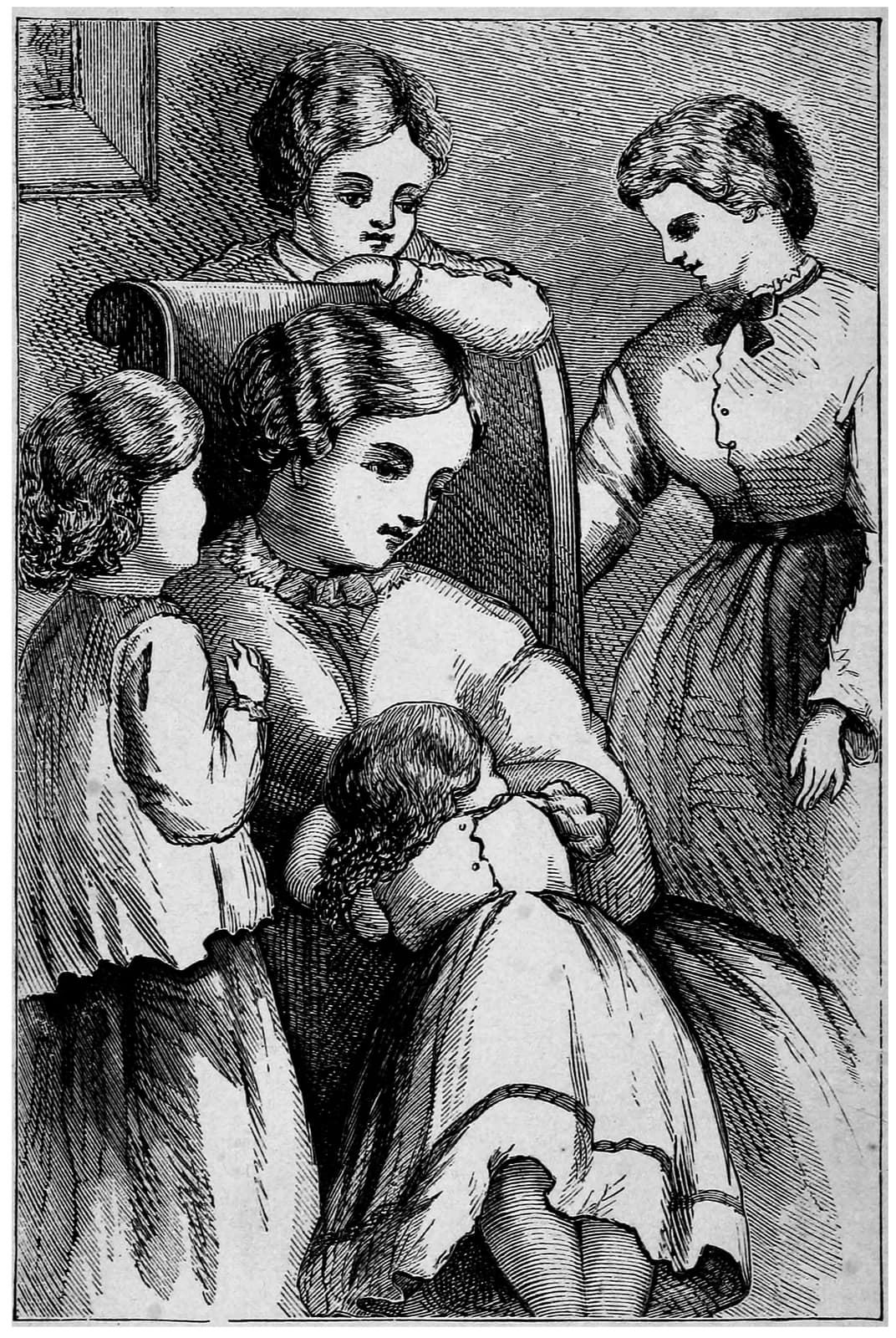
Every quiz that asks which March sister you are already knows the answer, because Alcott hands out her verdicts in the first chapter and never really revises them. Four sisters, four settlements with the same problem, and a paragraph each that tells you how it will go.
Everything below is quoted from the free Project Gutenberg text with the chapter attached. All six of these people are playable in the playable Little Women, which runs on the book’s own scenes rather than on a summary of them.
Spoilers below: this guide covers the whole book, including how Beth’s story ends.
🎭 The book hands out its verdicts early
The most-shared shorthand for these two sisters is that Amy is the Slytherin to Jo’s Gryffindor, and it is a good enough joke to be worth taking seriously for a moment. Jo is the one who acts on principle and pays for it. Amy is the one who reads the room, works out what the room rewards, and takes it. Neither is the villain, and the book is unusually even-handed about which approach gets further.
What the first chapter actually does is quieter than any quiz result. It gives each sister one paragraph and one wish, and it closes with a sentence that is almost a challenge to the reader: what the characters of the four sisters were, Alcott writes, we will leave to be found out. She writes that immediately after spending four paragraphs telling you exactly what they are.
👜 Meg, the eldest
Margaret is sixteen, pretty, plump and fair, and the narrator names her one flaw in the same sentence as her looks: she has white hands, of which she is rather vain. That vanity is the engine of her whole plot. She is the sister who remembers that the family used to have money, and one of the two who already work for wages outside the house when the book opens, as a nursery governess for a wealthier family.
Her romance is the one the book resolves first. John Brooke is Laurie’s tutor, he is poor, and marrying him means accepting a smaller life than the one she grew up expecting. The wedding gets a chapter to itself at the book’s midpoint, Chapter Twenty-Five of forty-seven, which tells you how Alcott rates its difficulty: the hard part for Meg is not choosing him, it is living on what he earns afterwards.
🖋️ Jo, the writer
Jo is fifteen at the start, very tall, thin and brown, and the narrator compares her to a colt that has not worked out what to do with its own legs. The physical description is unusually unkind for a heroine of this period, and it is doing work: round shoulders, big hands and feet, clothes with a flyaway look, and the appearance of a girl shooting up into a woman and disliking it.
“Round shoulders had Jo, big hands and feet, a flyaway look to her clothes, and the uncomfortable appearance of a girl who was rapidly shooting up into a woman and didn’t like it.”
Her one dollar goes on a book, and the narrator calls her a bookworm in the same breath. Everything else about her follows from that: the stories she writes and sells, the temper that gets her into trouble whenever her work is touched, and the refusal that has kept readers arguing for a century and a half. The ending essay on this hub covers that refusal in full, and this guide will not re-argue it.
🕯️ Beth, and how her death is written
Elizabeth, called Beth, is thirteen: rosy, smooth-haired, shy, with a peaceful expression the narrator says is seldom disturbed. Her father calls her Little Miss Tranquility and the name sticks. Her Christmas dollar goes on sheet music, and she sighs about it so quietly that the narrator says nobody hears except the hearth brush and the kettle holder.
She is the sister with no ambition at all, and the book refuses to treat that as a failing. She does not want to marry, travel, publish or rise. She wants the household to stay as it is, and she is the only one of the four who gets exactly what she wants for as long as it is available.
Her death is the most restrained writing in the novel, and it is worth knowing how restrained before you meet it. There is no deathbed speech. There is no final message to her sisters. Alcott stops the narrative to say, in her own voice, that real dying almost never looks the way books say it does, and then she writes the death in one sentence.
“she quietly drew her last, with no farewell but one loving look, one little sigh.”
Readers who arrive at this chapter braced for the famous sad scene often find the plainness harder than a big one would have been. The author has told you in advance that she is not going to give you memorable last words, and then she does not give you any, and the refusal is the effect. It is the clearest example in the book of Alcott declining a move the genre was handing her for free.
🎨 Amy, from spoiled to sensible
Amy is introduced as the youngest, a most important person in her own opinion at least, and a regular snow maiden with blue eyes and yellow hair. It is worth noting what is missing there: Alcott gives ages for Meg, Jo and Beth in that same paragraph and gives Amy none at all. The ages you find quoted for her come from elsewhere.
Her dollar goes on drawing pencils, and she is the only sister whose wish is equipment rather than pleasure. She is also the one who thinks most clearly about money — how families get it, what marrying it costs, and what a woman without it can actually do with a talent. The two scenes she is famous for, burning her sister’s manuscript and marrying Laurie, are handled elsewhere on this hub: the adaptation essay takes the first apart and the Laurie essay argues the second.
The reappraisal of Amy that has been running for a few years now is mostly a correction of reading rather than of text. She was always the pragmatist, always the one who noticed that the world runs on money and manners, and always the sister the book allows to succeed on those terms. What changed is that readers stopped reading a girl who wants money, travel and a good marriage as a girl with a character defect, and started noticing that Alcott gives her all three.
🎩 Laurie and Professor Bhaer
Theodore Laurence is the rich, motherless boy next door, and his own account of his nickname is the fastest introduction to him in the book. His first name is Theodore, he tells Jo, but the other boys called him Dora, so he made them say Laurie instead. Asked how, he answers: I thrashed them. He is charming, idle, generous and used to getting his way, in roughly that order.
- Lauriespends the first half of the book being adopted by a family with no money and more warmth than his own, and the second half discovering that being everybody’s favourite is not a plan for a life.
- Professor Friedrich Bhaerarrives far later, in a New York boarding house, as Jo’s German tutor. He is older, poor, foreign and plainly described; the first time the book gives his full name it is in his own handwriting, inside a book he has given her.
- The contrast is the argument. One of them offers a house and a position, the other offers work and conversation, and Alcott is entirely unsubtle about which of those two things she thinks a writer should marry.
Readers who dislike Bhaer usually dislike him on Laurie’s behalf, which is fair enough as a feeling and weak as a reading. On the page he is the first adult who takes Jo’s writing seriously enough to criticise it, and the only character in the novel who argues with her about the quality of her work rather than about the fact of it.
🧭 One careful note on Jo’s independence
A question that comes up constantly around Jo deserves one honest paragraph rather than a confident answer. Readers ask whether she is queer, and the book does not address it. What Alcott does say, more than once, is that Jo resists marriage because she does not want to give up her independence, and she says it in the language of freedom rather than of attraction.
That is as far as the text goes, and it is worth being precise about where it stops. Jo is written as a person who wants her own money, her own work and her own hours, in a period when marriage cost a woman all three. Readers who see more in her are reading a real pattern in a book that never comments on it, which is a legitimate thing to do and is not the same as the text saying so.
One last piece of colour, because it says something about the book’s reach. Joey Tribbiani reads Little Women in an episode of Friends, as one half of a book swap with Rachel, and is so upset by what happens to Beth that the episode has to give him a happier ending invented on the spot; Book Riot’s round-up of the show’s reading habits catalogues the whole swap. The full text is free at Project Gutenberg if you would rather meet these six people in their own chapters.
Sources
- Little Women (Project Gutenberg text, complete 47-chapter edition) — Project Gutenberg
- Remembering that time Joey got way too emotionally invested in Little Women on Friends — Yahoo Entertainment
- Here Are All the Books in Friends and Their Best Bookish Moments — Book Riot
Frequently asked questions
- How old are the March sisters at the start of Little Women?
- Meg is sixteen, Jo is fifteen, Beth is thirteen, and Amy has no age at all. Chapter One introduces her only as "the youngest", which is why the ages you see quoted for Amy online — usually twelve — come from adaptations and reference sites rather than from Alcott, who never gives one.
- What is Laurie's full name in Little Women?
- Theodore Laurence. The book confirms it in an unlikely place — the mock will Amy writes in Chapter Nineteen, where she leaves "my friend and neighbor Theodore Laurence" her papier-mâché, spelled "paper mashay" in her own hand. Everyone calls him Laurie because he hated being called Dora at school.
- What is Professor Bhaer's first name?
- Friedrich. Jo uses it for the first time during his proposal, and his reaction tells you how much it costs him: "she gifs me the name that no one speaks since Minna died". The book never says who Minna was. It says only that she died, and that a promise to her is why he must settle his two orphan nephews before he can marry. He says her name twice in the whole novel, both times to Jo.
- How does Beth die in Little Women?
- Quietly, off the page, in the chapter called "The Valley of the Shadow". Alcott gives her no deathbed speech; her parents are holding her hands, she dies in the dark hour before dawn, and the narrator stops to say that real dying rarely comes with memorable words. It is the least dramatic scene in the book by deliberate design.
- Was Jo March queer?
- Alcott never says, and the book is arguing about something else. Jo's own word for what she is protecting is liberty, and the one place she uses it is Chapter Thirty-Five, in the middle of refusing a proposal rather than in describing whom she wants. Readers take that further in both directions; the text itself stops there.
Enjoyed this one?