Was Jo Right to Reject Laurie? What Little Women Actually Says
Marmee gives Jo the real reason a marriage to Laurie would not work three chapters before Laurie gets around to asking. The book settles this argument itself, in its own words, and almost nobody quotes them.


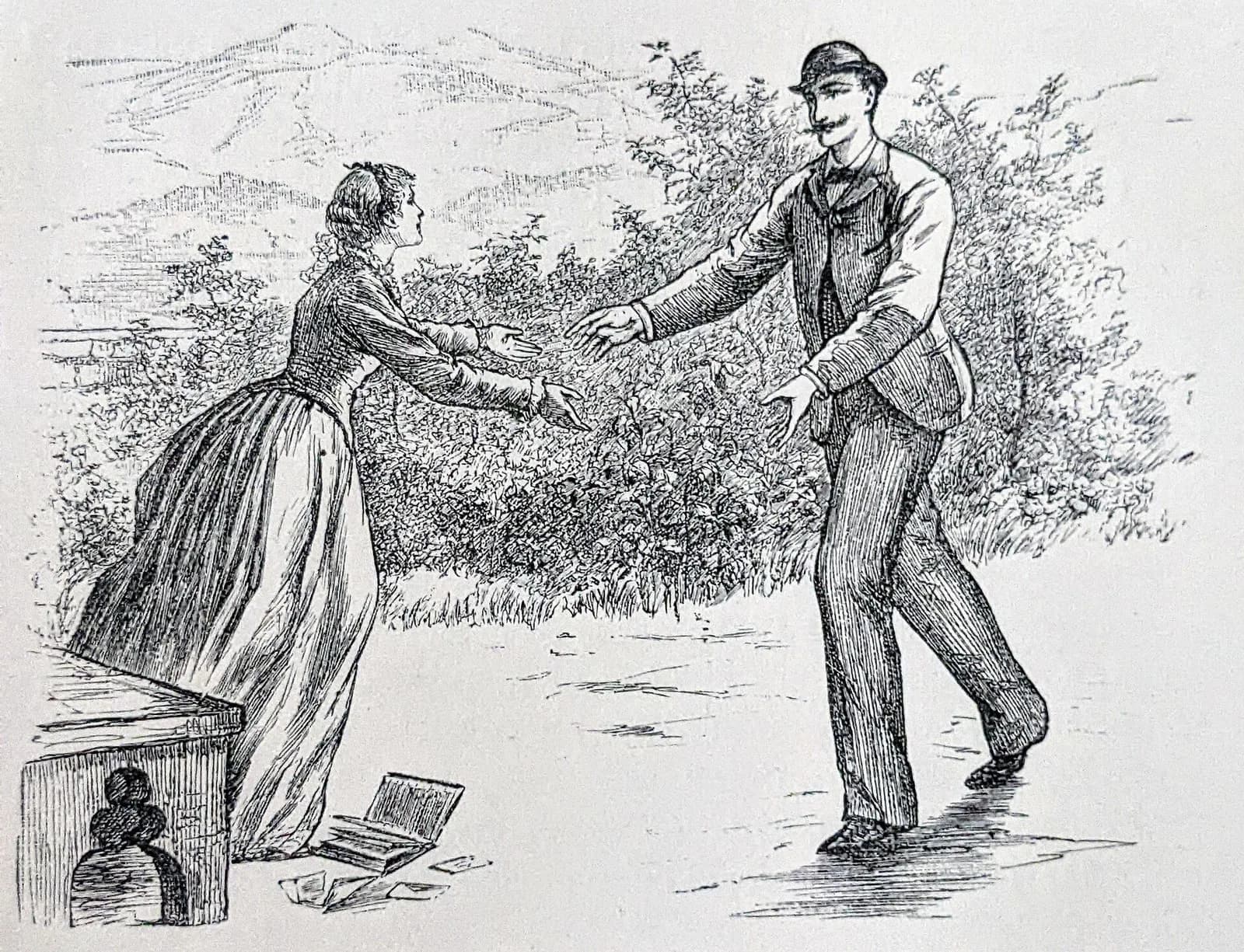
The argument about whether Jo should have married Laurie has been running for over a century, and it is usually conducted as though the book had no opinion. The book has an opinion. It states it three chapters before Laurie proposes, in a conversation almost nobody quotes, and it puts the reasoning in the mouth of the one character every reader trusts.
Everything below is quoted from the free Project Gutenberg text with the chapter attached. Both sides of this argument are playable in the playable Little Women, which lets the refusal land differently depending on what you have already done with Laurie.
Spoilers below: this post discusses Laurie’s proposal, its outcome, and who he marries afterwards.
🧵 Marmee makes the case before he proposes
Chapter Thirty-Two is a quiet domestic scene in which Jo, worried, tells her mother that Laurie is starting to care for her in a way she cannot return. Jo is clear about her own feeling: she loves the dear boy, as she always has, but anything more is out of the question. Her mother does not argue her into it or out of it. She agrees, and then explains herself.
“I don’t think you suited to one another… You are too much alike and too fond of freedom… to get on happily together.”
Note what that is not. It is not a warning that Laurie is a bad man, or that Jo is too young, or that money is a problem. It is a structural claim about two specific temperaments: both stubborn, both quick to anger, both unwilling to be managed. Marmee is saying the marriage would fail on its mechanics rather than on its feelings, and she says it while the feelings are still entirely warm on both sides.
The placement is the argument. Alcott could have put this speech after the proposal, where it would read as consolation. She puts it before, where it reads as a forecast, and then spends the next fifteen chapters letting the forecast come true in front of the reader. By the time Laurie asks, the book has already shown its work.
✍️ Jo argues from herself, not from him
The refusal scene itself is worth reading for one structural reason: Jo never says a single negative thing about Laurie. Every objection she raises is about her own unfitness for the life he is describing. She would not suit the house. She would not suit the society. She would keep writing, and he would come to resent it. The ending essay on this hub quotes that speech in full.
Laurie’s side of the same conversation runs the other way. His case is built almost entirely on other people. Alcott gives him a tone she describes as dangerously coaxing, and the sentence she puts in his mouth is about the audience rather than about Jo.
“Don’t disappoint us, dear! Everyone expects it.”
A modern reader hears that as pressure, and the book heard it that way too. The word Alcott chooses for his manner in that moment is not flattering, and the scene is constructed so that the refusal is a refusal of a public expectation as much as of a person. Jo is being asked to complete a story the whole neighbourhood has already written for her, and she declines to be the last chapter of it.
🇨🇭 Why Laurie and Amy holds up in the text
The usual objection to the pairing is that Amy gets Jo’s leftovers. The text does not support that reading, mostly because of one chapter that rarely appears in the argument. Alcott gives it a title that tells you the verdict in advance: Lazy Laurence.
In it, Amy tears into Laurie for drifting around Europe achieving nothing. She is not teasing. The narrator describes her voice as calm and cool and twice as effective as an angry one, which is the narrator’s way of telling you Amy is winning the exchange.
“Yes, very selfish… Here you have been abroad nearly six months, and done nothing but…”
- She judges him before she wants him.The scolding comes first in the book’s order, months before either of them is thinking about marriage, which makes her later choice a considered one rather than an availability.
- She is the one with standards here.Laurie’s reaction is surprise: generosity is the one virtue he prides himself on, and she has just told him he does not have it.
- The reunion is her scene, not his.When he finally reaches her abroad, the first line spoken is hers, and it is “Oh, Laurie, Laurie, I knew you’d come to me!” — an expectation being met, not a rescue being accepted.
Read in that order, Amy is the only person in the novel who tells Laurie the truth about himself and survives the conversation with his respect intact. Jo shook him, argued with him and refused him; Amy assessed him and set a condition. The book thinks that difference matters, and it spends a whole chapter demonstrating it before it allows either of them to fall in love.
⚖️ The case against, taken seriously
There is a real counter-argument and it deserves better than a dismissal. It runs like this: Alcott needed Laurie married off, Amy was the only sister left, and the Lazy Laurence chapter is retrofitted justification for a pairing chosen on plot convenience. Readers who hold this view usually point at the speed of the European sequence, where the two go from scolding to engaged in a handful of chapters.
The strongest version of that case is not about Amy at all. It is about Jo, and it says that the book punishes her for her refusal by handing her loneliness, a dead sister and an older husband, while Laurie gets the money and the wife and the comfortable life. On that reading the refusal is right and the book still makes her pay for it, which is a harder and more interesting complaint than the usual one.
What settles the smaller argument, at least, is that Marmee’s forecast is never withdrawn. No later chapter has anyone say she was wrong, and no scene shows Jo wishing she had answered differently. The full text of all three scenes is free at Project Gutenberg, and Alcott’s own journals record that she had decided against a Jo-and-Laurie marriage before she wrote a word of the second half.
Sources
- Little Women (Project Gutenberg text, complete 47-chapter edition) — Project Gutenberg
- Louisa May Alcott: Her Life, Letters, and Journals — Project Gutenberg
Frequently asked questions
- Why did Jo reject Laurie?
- Because she did not love him that way, and because the book has already explained why it would fail. Marmee's verdict opens gently — "as friends you are very happy, and your frequent quarrels soon blow over" — before she names the problem, which is that two people who are too much alike and too fond of freedom will both rebel inside a marriage.
- Did Jo ever regret rejecting Laurie?
- The text never shows regret, and it keeps proving the warning instead. Marmee's forecast names the mechanism precisely — hot tempers and strong wills, on both sides — and every later scene between the two of them behaves exactly as she predicted. What Jo is given afterwards is loneliness, which the book writes as a separate problem with a separate solution.
- Does Laurie really love Amy, or is she a substitute for Jo?
- Readers split, and the text gives the defence real material. Amy is nobody's consolation prize in her own plot: Fred Vaughn comes back and asks her again, with money behind the question, and she refuses him — then quietly makes sure Laurie hears that Fred has left for Egypt. She turns down the safe offer first and signals afterwards.
- Is Laurie's proposal in Little Women a red flag?
- Parts of it are, and Alcott flags them herself. The word she chooses for his tone as he presses the point is "wheedlesome" — a coaxing, slightly dishonest sort of charm — which is not how an author writes a man she wants the reader cheering for. The scene is sympathetic to him and clear-eyed about the method at the same time.
- Did Marmee approve of Jo and Laurie as a couple?
- She was relieved they were not one. The moment Jo says anything more than friendship is out of the question, Marmee answers "I'm glad of that, Jo", and only then explains why. Her closing clause is the sharp one: marriage, she says, is a relation needing infinite patience and forbearance as well as love, and she does not think either of them has the patience.
Enjoyed this one?