"I'm Not Afraid of Storms" — What the Little Women Quote Really Means
The most shared line from Little Women is usually credited to Jo, or to Louisa May Alcott with no chapter attached. It is Amy's, she is talking to her husband, and the scene around it is a joke about a lost bootjack.


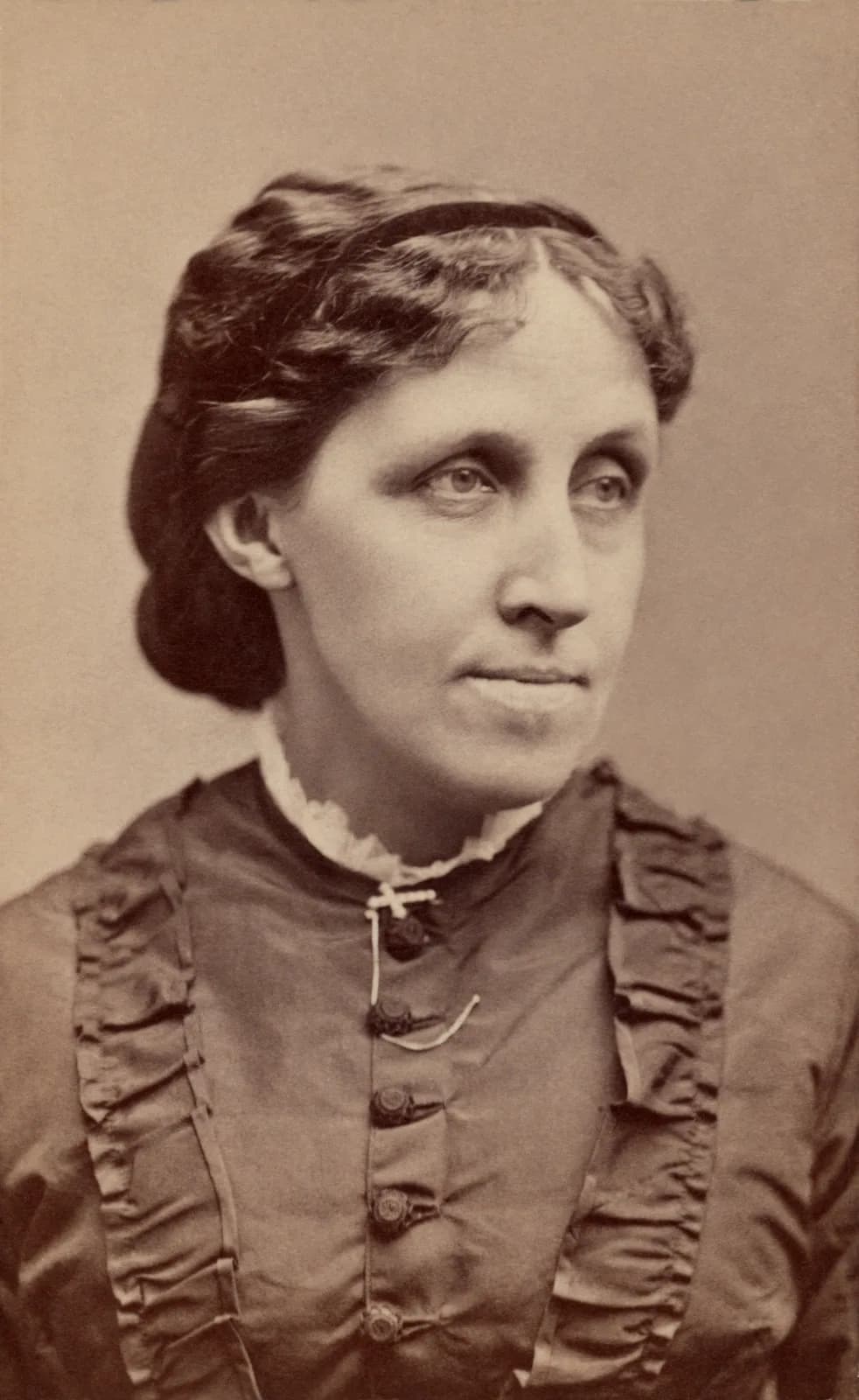
Search for the most famous line in Little Women and you will be handed a sentence about storms and ships, usually credited to Jo, sometimes credited to Louisa May Alcott with no chapter attached at all. Both attributions are wrong, and the real scene is much funnier than the one people imagine when they share it.
Everything below is quoted from the free Project Gutenberg text with the chapter attached. The chapter it comes from sits beside a doorway in the playable Little Women, where the same married household is somewhere you can walk into.
Spoilers below: identifying the speaker and who she is talking to gives away a late development in the book.
🪶 Who actually says it
The speaker is Amy March, the youngest of the four sisters, in the forty-fourth chapter of forty-seven. By that point she is married, she is running a household, and she is the one in the room with the least to prove. Jo is present for the conversation but is not the one who says it.
“I’m not afraid of storms, for I’m learning how to sail my ship.”
The misattribution to Jo is understandable and still wrong. Jo is the sister readers remember as brave, so a brave-sounding line drifts to her by gravity. Amy spends most of the first half of the book being vain, being spoiled, and burning something that did not belong to her, which makes her an awkward author for a motto. The book, however, is quite deliberate about giving her this one.
That is the first reason the attribution matters. Alcott gives the line about steering through weather to the sister who spent the whole novel learning to steer, and she gives it to her only after the learning is done. Handing it to Jo removes the point entirely, because Jo was never the one who needed to learn it.
👢 The scene it comes from
The conversation around it is nothing like the one people picture. It is an evening at home. Laurie has come in looking for something he has lost, he starts a sentence about not being able to get on without his little woman, and stalls halfway through the comparison. Jo, who has got her old teasing manner back, finishes the simile for him. He then runs with it for a whole speech, describing his wife as the thing that keeps him pointing in the right direction and reporting that he has not had an easterly spell since the wedding.
- It is a joke, and Amy is the one landing it. Her line is the last beat of a running gag about weather, delivered deadpan into the middle of it.
- The sentence does not end where quote pages end it. It carries straight on into an offer to go and look for the thing he has mislaid, which is the half nobody prints.
- Her mother is in the room. Amy addresses her last remark to Marmee rather than to her husband, which turns the whole speech into a performance of married competence for an audience of one.
None of that makes the line worse. It makes it a different kind of good line. Read as a slogan it is generic, the sort of thing that fits on a mug. Read in its own scene it is a woman being funny about her husband in front of her mother, and claiming — lightly, without raising her voice — that she now knows how to run her own life.
🌐 Why the misattribution sticks
Look at where the line actually lives online and the pattern is consistent. It appears on quote-of-the-day pages, in graduation cards and in motivational feeds, almost always with no chapter number and frequently with no speaker at all beyond the author’s name. A quotation with no citation cannot be checked, so nobody checks it, and the version with the wrong speaker copies as easily as the right one.
The chapter it comes from is also very late. It sits three chapters from the end, well past the point most casual readers reach, and long past every scene that gets adapted. A line that only exists in the last tenth of a long book, spoken by the least fashionable sister, is exactly the kind of line that gets reassigned to whoever the reader remembers best.
There is a practical test for any Little Women quotation you find in the wild. If the page gives you a chapter, you can check it in the free text in under a minute. If it gives you only the author’s name and a photograph, assume the speaker may be wrong, because for this particular line almost every page that circulates it is.
🧭 One more line worth knowing
If you want a line from this book that does real work, the storms sentence is not the strongest candidate. The most consequential piece of plain speaking in Little Women is Marmee’s verdict on whether two particular people should marry, delivered a dozen chapters earlier and almost never quoted, because it settles an argument readers prefer to keep having. A longer essay here quotes it and takes it apart.
Between the two, the difference is instructive. The storms line travels because it can be detached from everything around it. Marmee’s verdict does not travel at all, because it only means anything if you know who is in the room and what is about to happen to them. The one the internet chose is the one that survives being cut loose.
Both are in the same free edition at Project Gutenberg, and a word search will take you straight to either. Chapter Forty-Four is short, it is close to the end, and it will take you about four minutes to read the whole scene the storms line comes from.
Sources
- Little Women (Project Gutenberg text, complete 47-chapter edition) — Project Gutenberg
Frequently asked questions
- Who says "I'm not afraid of storms" in Little Women?
- Amy, the youngest March sister, in the chapter called "My Lord and Lady". She is married by then and speaking to her husband in their own sitting room, with her mother in the room as well. It is the forty-fourth of the book's forty-seven chapters, which is why almost nobody who quotes the line has read as far as it.
- Is it Jo who says the storms line in Little Women?
- No, and Jo is standing right there when it happens, which makes the mix-up almost forgivable. Laurie stalls halfway through a comparison and Jo is the one who finishes it for him: "Weathercock can without the wind," she suggests. He then runs with the conceit for a whole speech, and Amy answers with the storms line several turns later.
- What chapter is the "learning how to sail my ship" quote from?
- Chapter Forty-Four, near the end of the book's second half. The full sentence does not end on the ship at all: it runs on into "Come home, dear, and I'll find your bootjack", which is the half nobody prints and the half that tells you what kind of scene it is.
- Who is Amy talking to when she says it?
- Her husband, Laurie, who has come in hunting for something he has mislaid. The narrator closes the exchange by noting that Amy delivers it "with a matronly air, which delighted her husband" — a comic tag on a line the internet has spent a century treating as a motto.
- Why do quote pages get the Little Women storms line wrong?
- Because they inherited a tidied-up version. The wording that circulates is "I am not afraid of storms, for I am learning to sail my ship", with the contractions expanded and the word "how" quietly dropped. Alcott wrote it as speech, not as a motto, and the missing word is the difference between a declaration and a person describing a skill she is still acquiring.
Enjoyed this one?