Little Women Ending Explained: Does Jo Marry Laurie?
The most quoted proposal in Little Women has a famous line attached to it that Louisa May Alcott never wrote. Jo says no to Laurie in her own words, and they are blunter than the ones people remember.


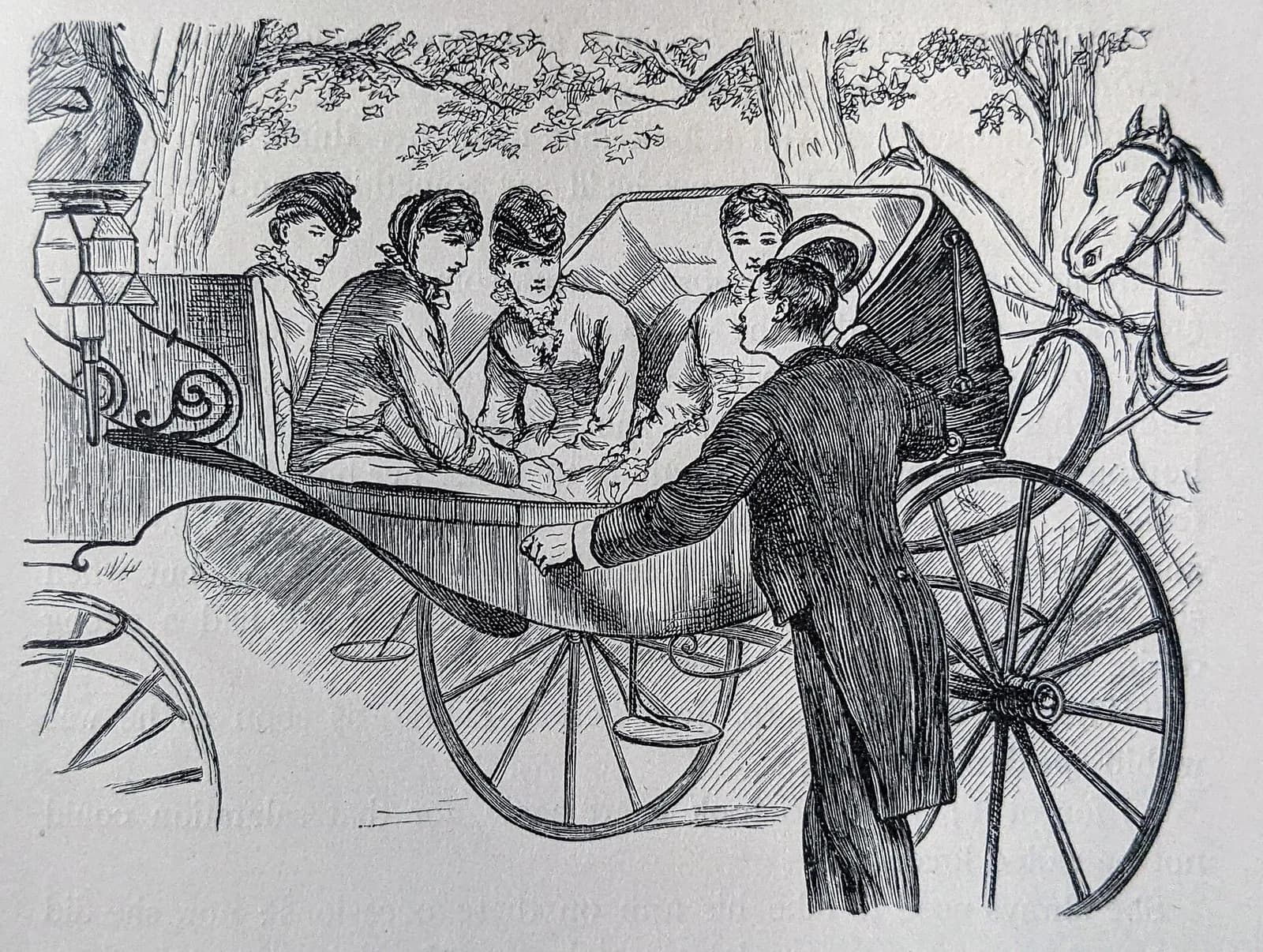
The most quoted proposal in Little Women has a famous line attached to it that Louisa May Alcott never wrote. What she did write is blunter, longer, and much less flattering to the person saying it, and it is worth reading in full before anyone decides how the book ends.
Everything below is quoted from the free Project Gutenberg text with the chapter attached. The same refusal is a doorway in the playable Little Women, where Laurie asks and you answer him yourself.
Spoilers below: this post states how Little Women resolves, including who Jo marries.
💔 Does Jo marry Laurie?
Jo does not marry Laurie. The refusal happens in a chapter Alcott titled Heartache, it takes several pages, and it is not a misunderstanding that a later scene clears up. She turns him down, he goes abroad, and when he comes back he is married to somebody else. The book never reopens the question.
What makes the scene worth reading rather than summarising is how it is built. Laurie does not arrive with a speech about love. He arrives with an argument about expectations, and his opening move is to point out that the whole neighbourhood is waiting for this. A longer essay here reads his side of that conversation closely; this one stays with hers.
“Not until months afterward did Jo understand how she had the strength of mind to hold fast to the resolution she had made when she decided that she did not love her boy, and never could.”
Jo answers that with a refusal so plain it is almost administrative. She will not say yes untruthfully, so she will not say it at all. The formulation matters: she is not saying she needs time, and she is not saying she is unsure. She is saying that the honest answer and the expected answer are different answers, and that she intends to give the honest one.
🗣️ What Jo actually says when she turns him down
The speech that follows is the part people misremember, because the version that circulates is gentle and the original is not. Jo does not let Laurie down by praising him. She builds a case against herself, at speed, in one unbroken sentence that runs for six lines of the printed text, and every clause is a reason she would be bad at the life he is offering.
“I can’t say ‘yes’ truly, so I won’t say it at all.”
- She starts with her own appearance and manner. “I’m homely and awkward and odd and old, and you’d be ashamed of me.” Four adjectives, none of them solicited, all of them aimed at herself rather than at him.
- Then the class problem. She would not like his elegant society and he would; the fine house he is describing needs a mistress, and she tells him she would not be one.
- Then the work. He would come to hate her scribbling, she says, and she could not get on without it. This is the only item on the list she does not offer to change.
- Then the conclusion nobody quotes.“I don’t believe I shall ever marry. I’m happy as I am, and love my liberty too well to be in a hurry to give it up.”
Read as a whole, the speech is a woman explaining that the job on offer is not one she can do. Laurie hears it as modesty and tells her she is wrong about herself, which is exactly the mistake the scene is built to expose. He has spent the conversation describing a house, a position and everyone’s expectations, and she has spent it describing her work.
🔍 The famous line that is not in the book
One line gets quoted more than anything Jo actually says in this scene: Laurie’s devastated three-word answer, “and I’ll watch”. It is shared as the emotional peak of Little Women, and it appears nowhere in Little Women. A word search of the complete Project Gutenberg text returns no match for it, in this chapter or in any other.
That is worth stating carefully, because the interesting part is not the error. Alcott’s Laurie is not quiet or resigned here. He bounces up off the grass, argues, predicts that Jo will fall in love with somebody else and love him tremendously, and refuses the whole premise of her refusal. The line people remember gives him a dignity the text withholds, and it is a better line than anything he manages on the page.
A second widely quoted line has the same problem, and the adaptation essay on this hub takes both of them apart properly. For the purposes of the ending, one fact is enough: the most-shared sentence from the most-shared scene in the book was written by somebody other than Louisa May Alcott.
☔ Who Jo marries instead
Professor Friedrich Bhaer arrives in Chapter Thirty-Three, two chapters before Laurie is refused rather than after it, and he arrives in the least romantic way available: Jo is boarding in New York, he is a tenant in the same house, and he teaches her German. He is older than her, poor, foreign, and the book is candid that he is not handsome. The first time his name appears in full it is written in a book he has given her, from her friend Friedrich Bhaer.
The proposal comes in Chapter Forty-Six, in the rain, under one umbrella, on a muddy street after Jo has walked out to meet him. He tells her he has nothing to offer but a full heart and two empty hands. Her answer is one syllable long and the narrator declines to report what she said afterwards, on the grounds that it was not coherent.
“the emotional remarks which followed her impetuous ‘Oh, yes!’ were not of a coherent or reportable character.”
Readers have been annoyed about this ending for a hundred and fifty years, and the annoyance usually takes the form of arguing that Alcott should have married Jo to Laurie. Her own journals say the opposite, and a longer essay here makes the case that the refusal was right, using the reasoning the book itself supplies three chapters before Laurie ever asks. The full text of both scenes is free at Project Gutenberg, and they read very differently side by side than either does alone.
Sources
- Little Women (Project Gutenberg text, complete 47-chapter edition) — Project Gutenberg
- Louisa May Alcott: Her Life, Letters, and Journals — Project Gutenberg
Frequently asked questions
- Does Jo marry Laurie in Little Women?
- No. She refuses him in Chapter Thirty-Five and never changes her mind. Laurie does not take it gracefully in the moment either — his first answer is "I'll be hanged if I do!", shouted while he bounces up off the grass — and the book lets him be furious for several pages before it moves either of them on.
- Who does Jo March marry at the end of Little Women?
- Professor Friedrich Bhaer, a German teacher she meets while boarding in New York. He proposes in the rain in Chapter Forty-Six, apologising that he has nothing to offer but a full heart and empty hands. Jo puts both her hands into his and says "Not empty now", which is the last thing she says before she kisses him.
- What does Jo say when she rejects Laurie?
- She argues from her own faults rather than his. She predicts they would quarrel — "we should quarrel, we can't help it even now, you see" — that she would hate his elegant society, that he would come to hate her scribbling. It is a list of incompatibilities, delivered at speed, and she has clearly rehearsed it.
- Is the line "and I'll watch" in the Little Women book?
- No. The proposal chapter runs about 450 lines in the Project Gutenberg text, and the phrase appears in none of them, or anywhere else across the book's forty-seven chapters. It is one of two lines widely quoted as Alcott's that a word search of her text does not find.
- Does Laurie end up with anyone in Little Women?
- Yes, with Amy, and it happens abroad rather than at home. Both of them are in Europe during the family's worst months, Laurie travels to her at Vevey on the Swiss lakeshore, and they are married there before either of them sails back. A separate essay on this hub argues whether the pairing earns itself; this one only records that it happens.
Enjoyed this one?