Who Is Dulcinea in Don Quixote? The Farm Girl Behind the Fantasy (and Your Curated-Crush Too) (2026)
Don Quixote spends a thousand pages adoring Dulcinea del Toboso — a peerless lady he has barely met. She is really Aldonza Lorenzo, an ordinary farm girl he idealized into a fantasy he wrote himself. It's the 1605 blueprint for falling for a curated profile instead of a person — and for the version of someone you keep arguing with in your head.


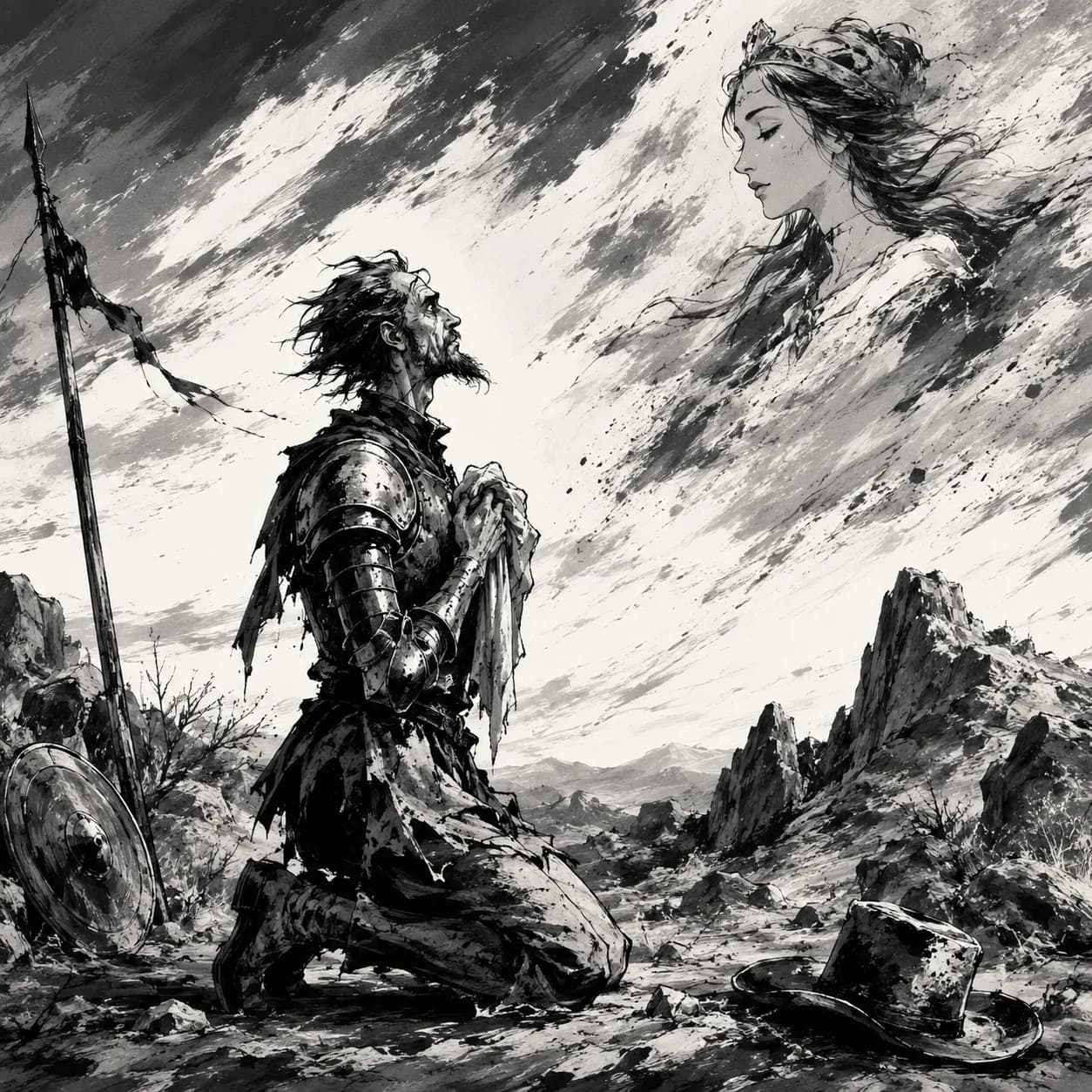
Picture someone you've invented a whole personality for and never actually met: the dating-app match, the work crush, the podcaster in your earbuds. Now meet the 1605 version. In Don Quixote, the knight devotes every deed to a peerless lady named Dulcinea del Toboso — and she is someone he has barely spoken to. He didn't fall for her. He wrote her, then fell for what he wrote.
- Dulcinea is mostly invented. Don Quixote dedicates every quest to her, but he authored most of her himself.
- Her real name is Aldonza Lorenzo. A farm girl from a neighboring village he has barely met.
- He never had the conversation.By Britannica's account he never even makes an offer of love — a one-sided monologue.
- It's the original curated-profile crush. Building a whole story about someone from almost no real data.
| The lady he worships | The woman who exists |
|---|---|
| Dulcinea del Toboso, peerless lady worth a thousand quests | Aldonza Lorenzo, a farm girl in the next village |
| The love of his life, in every chapter | Someone he has met once, and never properly spoken to |
| Devoted to him; the reason for every adventure | Getting on with her day — never asked, never told |
| A fantasy he wrote himself | A whole separate person, busy with a life he is not in |
🌾 Two names for one woman
Dulcinea del Toboso and Aldonza Lorenzo are the same woman seen two ways — the noble lady Don Quixote worships, and the ordinary farm girl who actually exists one village over. The whole romance lives in the gap between the two names.
Her name in his head is Dulcinea, the noble lady worth a thousand quests. In the village, she's Aldonza Lorenzo, a local farm girl.
He has met her once, if that, and never had a real conversation — yet she becomes the reason for every adventure in the book, a woman he's dedicating his whole life to from a distance she never agreed to.
He's met her once. Never had a proper conversation. He spends the whole book dedicating every adventure to a woman living her own life.
And Cervantes keeps the joke pointed at the knight, not the woman. Aldonza never asked for any of this — she's in the next village with a laugh he has never heard.
She's a farm girl, getting on with her day. No idea some local gentleman has spent the entire book swinging a lance for her honor. Never asked, never told. Basically drafted into somebody else's epic without being notified.
The scholarship is blunt about the gap. Britannica notes that Quixote never makes an offer of love to Aldonza Lorenzo, turning what should be a two-way relationship into a one-sided monologue; the real Aldonza is a farm girl he has idealized into the very model of female perfection, a noble lady who exists only in his head.
📱 You have written that bio, too
The reason a 420-year-old joke still lands is that everyone runs the same move: we build a detailed personality for someone we barely know, and then we believe it.
And the comedy is, we've all written that internal bio for somebody. About a coworker we barely talk to. About a partner's parent before we met them. About the ex we keep arguing with five years later. Some of them get pretty detailed.
That is the curated-profile crush, four centuries early — the dating-app match whose photos you script a future around, the work crush whose personality is mostly conjecture, the parasocial favorite you'd be devastated to actually meet. One Medium essay draws the line directly: social media profiles, flashy advertisements, and dazzling virtual worlds — these are our Dulcineas. Cervantes just got there first, with a windmill and a lance.
💛 It is love, not a mistake
The episode's real turn is that this projection is not a mistake to fix but a form of love — Quixote shrinks an overwhelming, fully real person down to a size he can carry.
It's love, not a mistake. Aldonza is, you know, too big to face. Vivid, separate, a whole person, busy with a life he's not in.
He shrinks her to something he can hold, a version that fits between morning and dinner — not because she isn't real, but because the real Aldonza is too big, too separate, too busy with a life he is not in. We do the same whenever the actual person feels too far away, or too vulnerable, for an ordinary Tuesday.
It's love that needs the room to update — not a flaw to fix, an actual person to meet.
🔎 How to meet the actual person
The practical takeaway is curiosity: catch yourself arguing with a version of someone in your head, and get hungry for the person who actually walks in the room.
Two questions make a decent check. First: when did this person last say something you didn't expect? Second: does the version of them you argue with in your head match the one who walks in the door? If you can't answer the first, you may be in love with a bio you wrote. The fix isn't cynicism — it's letting the real person update the picture.
And that is what Cervantes leaves you with. Four hundred years on. The actual person walks in the room, and you're suddenly, quietly, curious about them again. Hungry for what they actually think, all over again.
That's the strange gift of the oldest modern novel: it named the thing we still do every day, gently, four hundred years before the feed. You can read the whole of Don Quixote free at Project Gutenberg — Cervantes published it in two parts, in 1605 and 1615 — but the part worth carrying is smaller than the book: the next time you catch yourself adoring an idea of someone, get curious about the person instead. They're usually funnier than the picture you've been carrying — the same way the real book keeps turning out stranger and warmer than its reputation, right down to the most famous Don Quixote line, which he never actually wrote.
Sources
- Don Quixote (Ormsby 1885 translation, full text) — Project Gutenberg
- Dulcinea — Encyclopaedia Britannica
- Dulcinea del Toboso — Wikipedia
- The Don Quixotes of This Era and Our Digital Lances — Medium
- Don Quixote — Wikipedia
Frequently asked questions
- Who is Dulcinea in Don Quixote, really?
- Dulcinea del Toboso is the noble, peerless lady Don Quixote dedicates every quest and victory to throughout Cervantes' novel — but she is largely his own invention. In the real world of the book she is Aldonza Lorenzo, an ordinary farm girl from a village near his, whom he has barely met. Don Quixote idealizes her into a perfect lady and then devotes his entire knightly career to that idealized image rather than the actual person.
- Did Don Quixote ever actually meet Dulcinea?
- Barely, and never properly. By the book's own account he has seen the woman behind Dulcinea — Aldonza Lorenzo — perhaps once and has never had a real conversation with her. Encyclopaedia Britannica notes that Don Quixote never even makes an offer of love to Aldonza, turning what would normally be a two-way relationship into a one-sided monologue. The grand romance of the novel is, within the fiction itself, a love affair he conducts almost entirely in his own head.
- Who is Aldonza Lorenzo?
- Aldonza Lorenzo is the real, ordinary woman whom Don Quixote transforms in his imagination into the noble lady Dulcinea del Toboso. She is a peasant farm girl from a neighboring village, living her own life, with no idea that a local gentleman has spent an entire book dedicating his adventures to her honor. She was never asked and never told. Cervantes keeps the comedy aimed at the knight's projection, not at the woman herself.
- What does Dulcinea symbolize?
- Dulcinea symbolizes idealization — loving an image of a person rather than the person who actually exists. Cervantes uses her to dramatize how we build a whole story about someone from almost no real data. Modern readers map her directly onto contemporary life: one widely shared essay argues that social-media profiles, flashy advertisements, and dazzling virtual worlds 'are our Dulcineas.' She is the original curated-profile crush, written in 1605.
- What does Don Quixote's Dulcinea have to do with dating apps and parasocial crushes?
- Don Quixote's love for Dulcinea is the same move people run on a dating-app match, a work crush, or a favorite streamer or podcaster: building a detailed personality for someone you barely know and then falling for that invented version. The Saylia podcast episode reframes it as something we all do — writing an 'internal bio' for a coworker, a partner's parent, or an ex we keep arguing with in our heads — which is why a 420-year-old novel still describes most people's phones.
- Is Don Quixote's idealizing of Dulcinea a mistake or a kind of love?
- The episode's reading is that it is genuine love, not a flaw to fix. Don Quixote shrinks an overwhelming, separate, fully real person down to a version he can carry with him every day — not because she isn't real, but because the actual person feels too big or too far away. The healthier move isn't cynicism but curiosity: letting the real person update the picture instead of arguing with the image you assembled. As the hosts put it, it's 'love that needs the room to update — an actual person to meet.'
Enjoyed this one?