Victor Frankenstein would have launched an AI startup — and shipped it badly (2026)
Victor builds the most important thing of his life and walks out of the room the moment it works. Two hundred years later, that's the failure mode the AI debate keeps reaching for. The rule the book hands you: stay in the room.


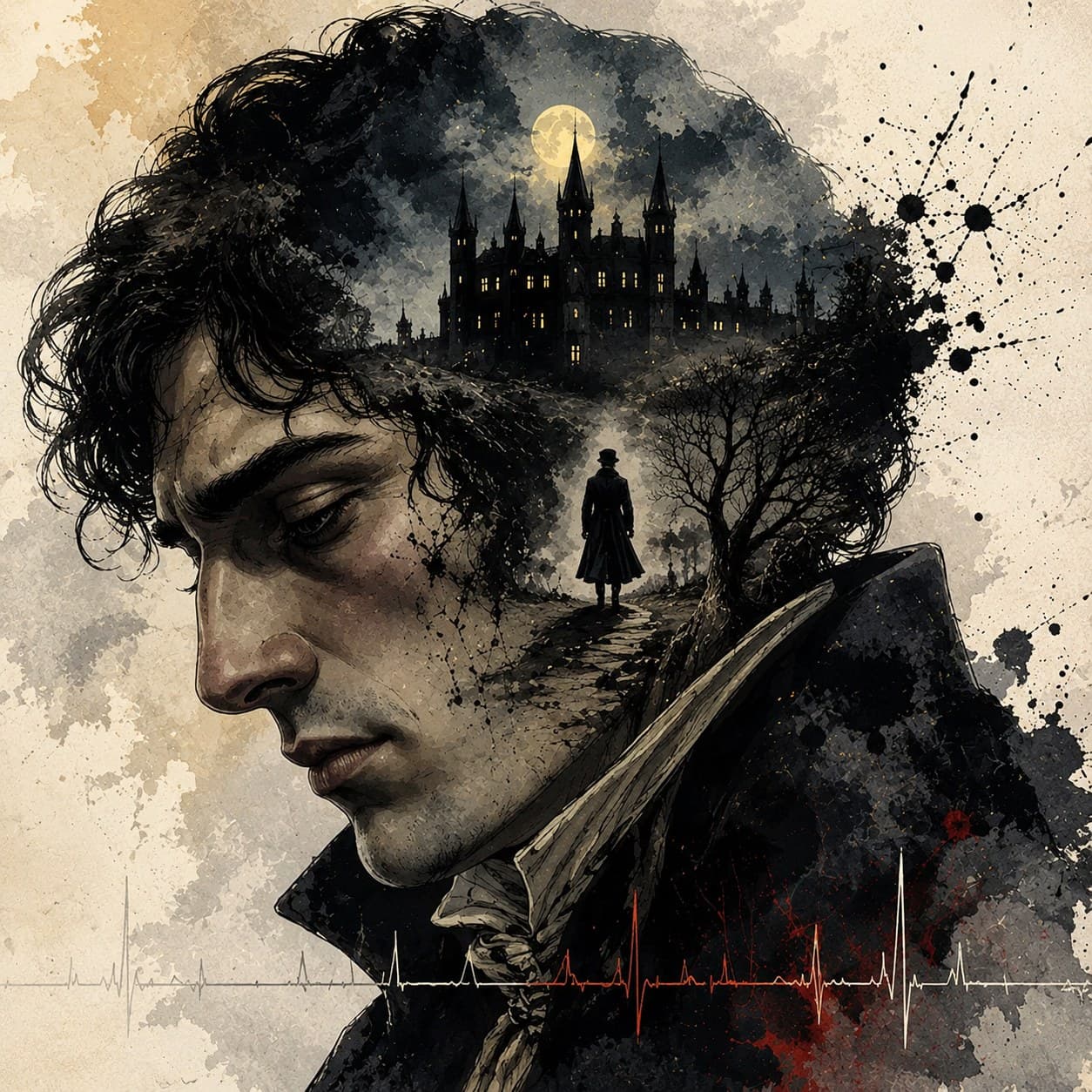
In 2025 and 2026, Frankenstein stopped being a literary reference and became the default metaphor for artificial intelligence. It's the word reporters reach for, the analogy founders can't stop making, the shorthand for “we built something and now we can't put it back.” But the popular version of the metaphor is usually wrong. People invoke Frankenstein as a warning against creating something dangerous. Read the book and you find the warning is about something else entirely: walking away from what you create.
- Victor's sin is abandonment, not creation. He flees the room the night his creature wakes — day one of the most important project of his life.
- The novel is an operating manual, not a warning label. It maps cleanly onto how software and AI actually get shipped and ghosted.
- “Stay in the room” is the one-line rule: creation is the start of responsibility, not the finish line.
- Geoffrey Hinton is the Victor who stayed — the creator who refused to walk out of the room.
🧾 The abandonment receipts, straight from the text
Victor's sin isn't creation — it's abandonment, and the case is sitting in plain sight in the text. On the Saylia podcast, Sharon walks the receipts one at a time. The first lands on day one: two years of work, and the night the creature finally opens its eyes, its maker looks at it once and leaves.
Two years building this thing, and the night it finally works? He looks at it once and just goes to bed.
It gets worse. The creature kills Victor's little brother; an innocent maid, Justine, is framed and tried for the murder. Victor sits through the trial knowing she is innocent and says nothing. They hang her. He could have stood up and said one sentence — the truth — and saved her life. He doesn't. Later he refuses to warn even his own fiancée about the danger closing in on her. The pattern is consistent: Victor wants the achievement, and he does not want to be responsible for what he made.
| Frankenstein as people invoke it | Frankenstein as Shelley wrote it |
|---|---|
| A warning against creating dangerous things | A warning against abandoning what you create |
| Victor the reckless mad scientist | Victor the founder who shipped and ghosted |
| The horror is the monster's deformity | The horror is the creator's neglect |
| Creation is the climax | Creation is the start of a much longer obligation |
📰 Why the news keeps reaching for this book
This isn't a niche literary take — it's the dominant 2025–26 framing in mainstream media. A column by Kelly McKinney was syndicated across at least six U.S. newspapers in December 2025, and its thesis line is the cleanest statement of the whole reading (verbatim from the syndicated column):
Dr. Frankenstein's tragedy is not that he conjures life from death. It's that he abandons it.
Not the monster. The walking away.
The essay world says the same thing in different words. The Savvy Startup frames it for founders: “Victor Frankenstein believes creation is the finish line. Shelley shows us it is only the beginning.” And Vanguard Digest puts it in ten words: “Creating life is not just an act, but a commitment.”
🚪 The rule the book hands you: stay in the room
If Victor's failure is leaving, the inverse is staying. On the podcast, Leo tells the small, recognizable version of the failure — not a sci-fi catastrophe, just a normal launch:
The first problem hit at four that day. I saw it Monday. Six people had been stuck the whole time, waiting on me, and I wasn't there.
He shipped a project on a Friday, closed the laptop, didn't open the on-call channel once, and found the wreckage on Monday. That's the move — the same move scaled down from a founder shipping a model with the safety paper a year late, all the way down to almost everyone we know. Sharon names the cure:
Stay in the room. And that's not the big heroic moment. Anyone can show up for the launch, the applause, the toast. Staying is the slow, boring part after, when nobody's clapping and the thing still needs you.
Someone actually made that move. Geoffrey Hinton left Google in 2023 so he could speak freely about the risks of the technology he helped create. One essay, “Geoffrey Hinton's Frankenstein,” describes him choosing to spend his remaining years “acting as a moral handbrake on the excesses of AI.”
Which is the one move Victor never made. Hinton's the one who actually stayed.
Dickens ran the same experiment with a colder man and a shorter deadline. Scrooge is given one night to answer for the people his ledger keeps him away from, and our essays on A Christmas Carol follow the two starved children the second spirit is carrying under its robe.
🧭 The takeaway you can use on Monday
Strip away the AI framing and you're left with something any maker can act on, whether you're shipping software, launching a product, or raising a kid:
Creation isn't the finish line. It's the start of a much longer conversation.
Victor never figured that out. The good news, as Leo puts it on the show, is that we don't have to make the same mistake.
Sources
- Frankenstein and the responsibility of creators (syndicated column) — Jewish World Review
- AI, the Creation of Fire, and Prometheus — The Savvy Startup
- The Responsibility of a Creator — Vanguard Digest
- Geoffrey Hinton — Wikipedia
- Geoffrey Hinton's Frankenstein — Project Q Sydney
Frequently asked questions
- What is the connection between Frankenstein and AI?
- Frankenstein has become the default metaphor for artificial intelligence because Victor's failure mirrors the modern fear about AI: building something powerful and then refusing responsibility for it. The novel isn't a warning against creation — it's a warning against abdication. As one widely syndicated 2025 column put it, “Dr. Frankenstein's tragedy is not that he conjures life from death. It's that he abandons it.”
- What is Victor Frankenstein's real sin?
- Abandonment, not creation. Victor flees the room the night his creature wakes, never takes responsibility for it, and even lets an innocent maid hang for a murder he could have prevented with one sentence. The book treats creation as the start of an obligation, not the finish line — “Victor Frankenstein believes creation is the finish line. Shelley shows us it is only the beginning.”
- What does “stay in the room” mean?
- It's the one-line rule the novel hands a modern creator: you don't get to leave when the exciting part is over. Anyone can show up for the big reveal and the applause. Staying in the room means being there for the slow, unglamorous work after launch — the part where the thing you made still needs you and nobody is clapping.
- Did Geoffrey Hinton's resignation echo Frankenstein?
- Commentators have framed it that way. Hinton left Google in 2023 to speak freely about AI risk; one essay described him as choosing to spend his remaining years “acting as a moral handbrake on the excesses of AI.” In Frankenstein terms, Hinton is the Victor who stayed — the creator who refused to walk out of the room.
- Is Frankenstein a warning about technology?
- Not about technology itself — about responsibility. Shelley never condemns Victor for creating life; she condemns him for fleeing what he made and refusing to answer for it. Read that way, Frankenstein isn't anti-science or anti-AI — it's an argument for staying accountable to the things you bring into the world.
Enjoyed this one?