Frankenstein is the loneliest book ever assigned in school — here's why (2026)
Strip away the bolts and the lab, and Frankenstein is three lonely people reaching for one friend who never reaches back. The creature wanted connection, not revenge — and that's why the book still lands in 2026.


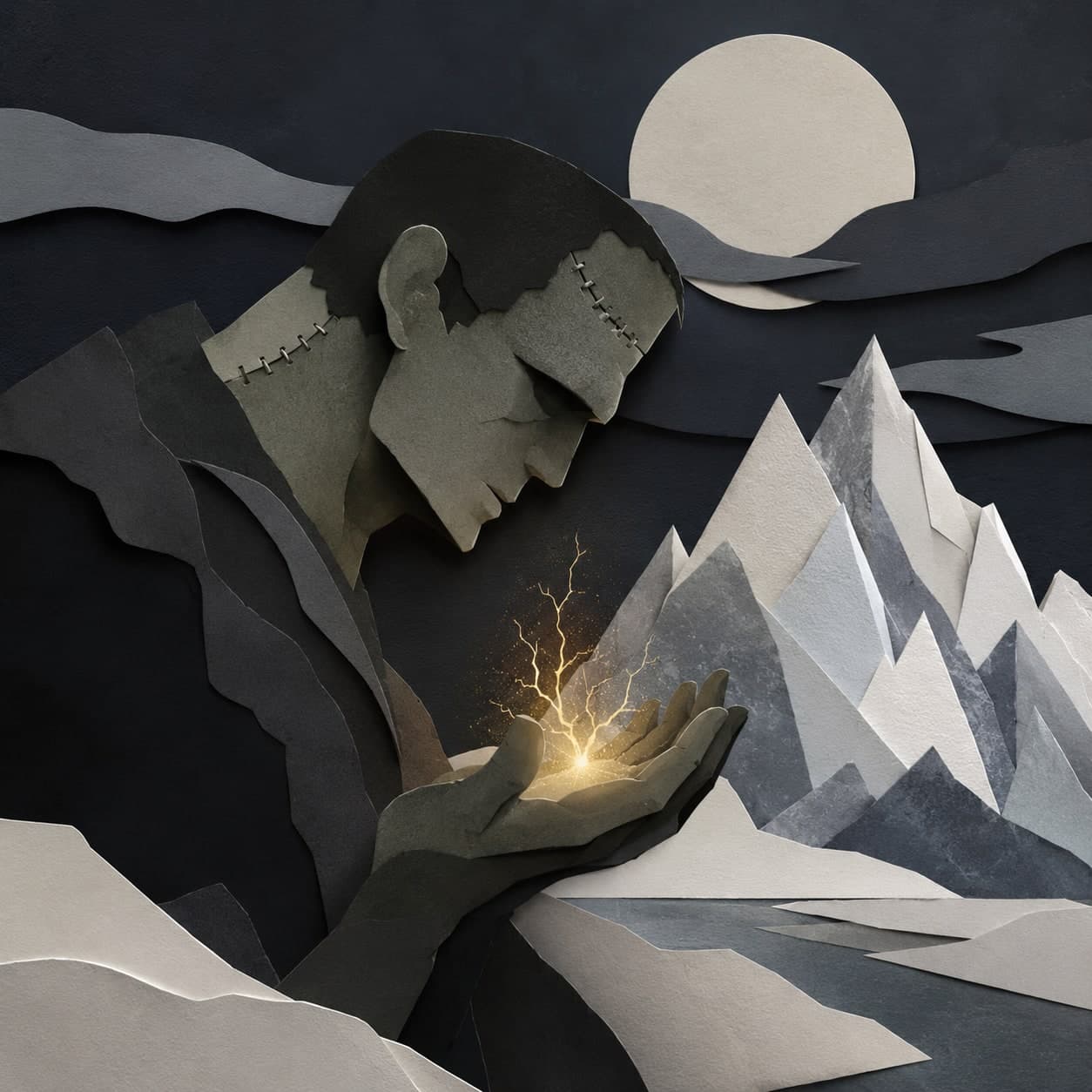
Ask someone what Frankenstein is about and they'll say lightning, a lab, a reanimated corpse. Reread it and you find something quieter and far more modern: it's a book about loneliness. It doesn't even open with the monster. It opens with a sea captain near the North Pole writing home that he is desperately, achingly alone — years before any creature is stitched together. In 2026, with the U.S. Surgeon General having declared an epidemic of loneliness and isolation, that framing hits differently than it did in any English class.
- The book opens on loneliness, not a monster.Captain Walton's very first letters establish the theme before the plot starts.
- Three kinds of lonely. Walton chose it for glory, Victor chose it for work, the creature had it forced on him.
- The creature wanted one friend — not money, not power, not revenge. Just one being who could love him back.
- Modern loneliness hides in plain sight. It often looks like a packed calendar and a great year, not an empty room.
🌊 Why the most famous monster story opens on a homesick sailor
Mary Shelley structures the novel as loneliness wrapped inside loneliness. A polar explorer, Robert Walton, pulls a half-dead Victor off the Arctic ice; the whole book is Victor telling his story to this lonely stranger. And Walton names the theme in his second letter, verified verbatim against the 1818 Project Gutenberg text:
I bitterly feel the want of a friend.
Everyone files Frankenstein under gothic horror, but the real engine is reaching for somebody who isn't there. On the podcast, Leo names that through-line — it runs through all three characters — and Sharon puts it flatly:
That's the real engine. Not the lightning.
| Read as gothic horror | Read as a book about loneliness |
|---|---|
| The lightning and the lab are the point | The lightning is just the cold-open; isolation is the engine |
| The monster is the threat | The monster is the loneliest character in the book |
| Revenge story | A search for one friend that never gets answered |
| A 19th-century ghost story | A mirror for the modern loneliness epidemic |
🤝 What the creature actually asks for
Here is the hinge of the whole novel. When the creature finally corners Victor and could demand anything — wealth, power, vengeance — he asks for one thing.
Make me one companion, somebody like me who can love me back. Just don't leave me the only one of my kind.
That's it. The reason readers find the book heartbreaking rather than scary is that the creature's villainy is downstream of a need everyone recognizes. On Goodreads, a widely upvoted review notes that “so many don't know how human the character is,” and one Letterboxdreaction to the 2025 film sums it up in six words: “All he wanted was a friend :(”. The creature's most-tattooed plea to Victor — the line about being benevolent and good until misery made him a fiend — is so beloved that readers ink it on their skin; Pinterest hosts boards of Frankenstein quote tattoos.
🪞 The loneliness that looks like a good year
The book's sharpest modern insight is that loneliness rarely looks lonely. Picture the friend who just landed the big promotion — senior director, the LinkedIn post, a calendar wall to wall — and nobody knows their dad has been in hospice for six weeks. From the outside, it reads as a winning life. That's the trap: isolation can hide behind productivity. On the podcast, Leo tells the version he lived:
The last real conversation I'd had all week was with the kid making my coffee. Not a friend. Not family. The barista.
That's the creature's whole existence rendered in a modern key — surrounded by people, connected to none, knocking on a door that never opens. The fix the book points at is almost embarrassingly simple: the call back. The one move the creature never got and the one most of us can still make.
💔 The line that lands the whole book
Sharon closes the episode with the sentence that reframes the entire novel — not as a horror story about what Victor built, but as a tragedy about what everyone withheld:
The scariest thing in this book was never that Victor built him. It's that he wanted the exact thing all of us want. And not one person gave it to him.
Two hundred years later, that's less a literary observation than a prompt: who in your life is in all five team photos and still hasn't had a real conversation this week?Wuthering Heights runs the same isolation into obsession instead of monstrosity, on a moor instead of the Alps.
Sources
- Our Epidemic of Loneliness and Isolation (Surgeon General Advisory) — U.S. Department of Health and Human Services
- Frankenstein (1831 text) — Project Gutenberg
- Frankenstein — reader reviews — Goodreads
- Frankenstein (2025) — reactions — Letterboxd
- Frankenstein tattoo ideas — Pinterest
Frequently asked questions
- What is Frankenstein really about?
- Beneath the gothic surface, Frankenstein is about loneliness and the need for connection. The novel opens not with a monster but with a sea captain, Robert Walton, writing home that “I bitterly feel the want of a friend.” Walton chose his isolation for glory, Victor chose his for work, and the creature had his forced on him. All three spend the book reaching for someone who isn't there.
- What did Frankenstein's monster actually want?
- One friend. When the creature finally confronts Victor, he doesn't demand money, power, or revenge — he asks for a single companion who could love him back, so he won't be the only one of his kind. The tragedy of the novel is that he wanted the exact thing everyone wants, and not one person gave it to him.
- Why does Frankenstein feel relevant to loneliness today?
- Modern loneliness often doesn't look like loneliness — it looks like a busy calendar and a great year. Researchers describe an epidemic of isolation even among outwardly successful people. The creature's predicament (surrounded by humans, connected to none) mirrors the experience of feeling unseen in a crowd, which is why the book reads as contemporary rather than gothic.
- Is the creature in Frankenstein sympathetic?
- Strongly so. Readers on Goodreads and Letterboxd repeatedly describe the book as heartbreaking rather than scary — “all he wanted was a friend.” The creature is articulate, self-taught, and desperate for acceptance; his violence is a response to total rejection, which is what makes him one of literature's most sympathetic outsiders.
- Who is Robert Walton in Frankenstein?
- Robert Walton is the Arctic explorer whose letters open and close the novel. He pulls a dying Victor off the ice and writes down his story, which makes the entire book a tale told to a lonely stranger. Walton's own confession — “I bitterly feel the want of a friend” — establishes loneliness as the novel's real subject before the monster ever appears.
Enjoyed this one?