Every Great Gatsby Adaptation, Ranked for Faithfulness: 1926, 1949, 1974, 2013 and Broadway
A century of screen and stage versions, and the first one exists only as a one-minute trailer. Which is closest to the novel, which is the better film, and what happened when two separate teams put Gatsby on a stage ten weeks apart.


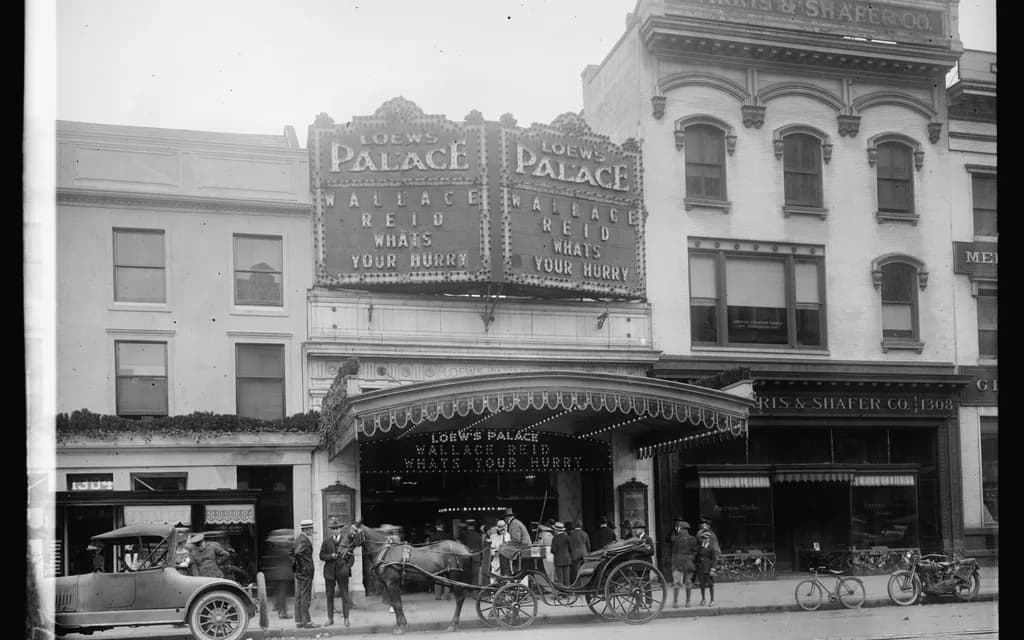
Hollywood and Broadway have been trying to put this novel on a screen or a stage since the year after it was published, and the very first attempt is a film nobody alive has seen. What survives of it is a one-minute trailer. Reviewers at the time thought it was the most faithful version anyone would ever make, which is a frustrating thing to be told about a film that no longer exists.
- 1926: a silent film, now lost. Only a trailer survives.
- 1974: the closest to the book. Coppola wrote the screenplay; it won two Academy Awards.
- 2013: the one everyone has an opinion about. $353.6 million worldwide, and a Jay-Z soundtrack.
- 2024: two rival musicals, six weeks apart. One on Broadway, one in Cambridge, Massachusetts.
If you want a version where the casting is up to you, the playable The Great Gatsby runs the same fourteen scenes with you in one of the parts.
🎬 The short answer: faithfulness and quality are separate questions
Ranking adaptations gets confused because two different scoreboards are in use at once. One asks how much of the novel survives the trip. The other asks whether the result is any good. The 1974 film scores high on the first and low on the second with most critics; the 2013 film does roughly the reverse. Keeping the two apart is most of the work.
| Version | How close it stays, and the catch |
|---|---|
| 1926, silent film (dir. Herbert Brenon) | Reportedly the most faithful ever made. Lost, so unrankable in practice. |
| 1974, film (dir. Jack Clayton, screenplay by Francis Ford Coppola) | Closest of the surviving versions. Widely called inert at the time. |
| 2013, film (dir. Baz Luhrmann) | Accurate about events, entirely its own about tone and music. |
| 1949, film (dir. Elliott Nugent) | Hard to judge: no new prints were struck after release, and it was effectively unavailable for decades. |
| 2024, Broadway musical | Furthest away. Variety's review says it omits Gatsby's backstory altogether. |
🎞️ The first one is gone, and it may have been the best
The stage came first. Owen Davis adapted the novel for the theatre within months of publication, George Cukor directed, and the play opened at the Ambassador Theatre on Broadway on 2 February 1926, ran 112 performances, and then toured. The film followed the same year: Herbert Brenon directed a version of that play for Famous Players-Lasky, released on 21 November 1926, with Warner Baxter as Gatsby, Lois Wilson as Daisy, Neil Hamilton as Nick and William Powell as George Wilson.
Then it disappeared. The published record on the film says the same thing everywhere it is described: no print survives, a trailer of about a minute is the only footage left, and the contemporary reviews are the only account of the rest. Those accounts do not agree on where the trailer is now held, naming either the National Archives or the Library of Congress. What they do agree on is the review consensus at the time, which was that this may have been the closest anyone would come to putting the book on film.
Two people who did see it hated it. Zelda Fitzgerald wrote to an acquaintance that the film was “rotten”, and she and Fitzgerald walked out partway through. Their verdict is the only first-hand account most readers ever encounter, which is a strange way for a century of adaptation history to begin.
📽️ 1949 and 1974: the two that stopped being watched
The 1949 version, directed by Elliott Nugent with Alan Ladd as Gatsby, Betty Field as Daisy and Macdonald Carey as Nick, came and went. Paramount struck no new prints after its theatrical release, existing prints deteriorated or vanished, and for most of the twentieth century you simply could not see it. In 2012 the Film Noir Foundation tracked down a copy in Universal’s archives and had a new print made, which screened in San Francisco and Hollywood that spring. It is still the least seen of the surviving films by a wide margin.
The 1974 film is the one your teacher probably had on a shelf. Jack Clayton directed from a screenplay by Francis Ford Coppola, with Robert Redford as Gatsby, Mia Farrow as Daisy, Sam Waterston as Nick, Bruce Dern as Tom and Karen Black as Myrtle. It took $26.5 million on a $7 million budget and it won two Academy Awards, for costume design and for its score.
It was also disliked on arrival in terms that still get quoted. Vincent Canby wrote in The New York Times that “the movie itself is as lifeless as a body that’s been too long at the bottom of a swimming pool”. That complaint and the faithfulness compliment are the same observation seen from two sides. Coppola’s script declines to invent anything, and a book whose energy lives in its narrator’s voice loses most of that energy when the voice is removed. Whether the narrator can be trusted in the first place is the question in the essay on Nick Carraway, and it is the single hardest thing any adaptation has to solve.
🍾 The 2013 film everyone has an opinion about
Baz Luhrmann’s version premiered on 1 May 2013 and went wide nine days later, with Leonardo DiCaprio as Gatsby, Tobey Maguire as Nick, Carey Mulligan as Daisy, Joel Edgerton as Tom, Isla Fisher as Myrtle and Elizabeth Debicki as Jordan. It cost about $105 million net and took $353.6 million worldwide. It won both of the categories it was nominated in at the Academy Awards, for production design and costume design. The critics were split down the middle and stayed there: 49% on Rotten Tomatoes from 305 reviews, 55 on Metacritic from 45.
The soundtrack is where the argument actually lives. The songs were executive-produced by Jay-Z and The Bullitts, and Lana Del Rey’s “Young and Beautiful” was released as a single. Objecting that a 1922 party should not have hip-hop in it is a reasonable position and misses what the choice is for: Fitzgerald was writing about music that was new, loud and slightly disreputable to the people whose lawns it was being played on. A period-correct band would have reproduced the setting and lost the sensation.
The film is also unusually accurate about plot. Its departures are matters of volume rather than of event, which is why it works as a first encounter for someone who has to write about the book on Monday and why it annoys readers who came for the sentences.
🎭 Two musicals opened in 2024, and they went opposite ways
This is the part most summaries get wrong, because there were two. The one on Broadway is called simply The Great Gatsby: music and lyrics by Jason Howland and Nathan Tysen, book by Kait Kerrigan, directed by Marc Bruni, with Jeremy Jordan and Eva Noblezada. After a tryout at the Paper Mill Playhouse in autumn 2023 it began previews on 29 March 2024 and opened at the Broadway Theatre on 25 April. It won the 2024 Tony Award for Best Costume Design in a Musical, for Linda Cho.
The other one never went to Broadway at all. Gatsby: An American Myth, with music and lyrics by Florence Welch and Thomas Bartlett, a book by Martyna Majok and direction by Rachel Chavkin, played the American Repertory Theater in Cambridge, Massachusetts. It opened on 5 June 2024 and closed on 3 August. Two productions of the same public-domain novel, by two entirely separate creative teams, opening six weeks apart.
The Broadway show’s reviews are worth reading as a group, because the objection is unusually consistent. The New York Times called it “a lot of Jazz Age fun” and added that it “forgot that Fitzgerald’s 1925 novel endures because it is a tragedy”. The Guardian called the production bombastic and misfiring. Entertainment Weekly said it valued spectacle over substance. The Washington Post said the show sheds the book’s themes to become a rom-com that nose-dives into overwrought melodrama.
The show traded “the novel’s soul for flashy visuals”, and “most egregiously the musical completely omits Gatsby’s backstory”.
That last objection is the substantive one. Remove where Gatsby came from and the show has a love story rather than a book about class, which is exactly what several of these reviewers said had happened. Variety also noted that the musical makes Nick and Jordan explicitly heterosexual, closing off an ambiguity the novel leaves open. The productions did at least prove one thing about the 2021 expiry of the novel’s American copyright, which the essay on Gatsby’s modern afterlife covers: anyone can now make one, and two teams immediately did.
Every date, credit, figure and quotation above comes from the published record on each production and from the named outlets quoted by name, and the novel’s own text is the free 1925 edition at Project Gutenberg.
Sources
- The Great Gatsby (1926 film) — Wikipedia
- The Great Gatsby (1949 film) — Wikipedia
- The Great Gatsby (1974 film) — Wikipedia
- The Great Gatsby (2013 film) — Wikipedia
- The Great Gatsby (musical) - reception and awards — Wikipedia
- Gatsby: An American Myth — Wikipedia
Frequently asked questions
- What was the first Great Gatsby movie adaptation?
- A silent film released on 21 November 1926, directed by Herbert Brenon with Warner Baxter as Gatsby, adapted from the Owen Davis play that had opened on Broadway that February. No print survives. What a silent film had to drop is the narration: chapter three's central effect is Nick describing one of those rare smiles with a quality of eternal reassurance in it.
- Is the 2013 or the 1974 Great Gatsby movie more accurate to the book?
- The 1974 film, by a clear margin: Coppola's screenplay tracks the novel scene by scene and invents almost nothing. That fidelity is also the complaint against it. One passage that resists filming altogether is chapter four's guest list, two pages of names Nick writes on a railway timetable dated July 5th, 1922, which exists purely as prose.
- How many Great Gatsby adaptations are there?
- Four cinema films, in 1926, 1949, 1974 and 2013. Three television versions: an NBC episode in 1955, a Playhouse 90 on CBS in 1958, and an A&E film in 2000 with Toby Stephens, Mira Sorvino and Paul Rudd. On stage there was the 1926 Broadway play, a Metropolitan Opera commission by John Harbison that premiered in December 1999, and two separate musicals in 2024.
- Is The Great Gatsby Broadway musical worth seeing?
- Reception split on one line. It won the 2024 Tony Award for Best Costume Design in a Musical for Linda Cho, and the New York Times, Guardian, Entertainment Weekly, Washington Post and Variety all praised the spectacle and all said the tragedy had gone missing. The backstory Variety says it omits is chapter six, at about four thousand words the shortest chapter in the novel.
- Did any Great Gatsby film win an Academy Award?
- Two of them won two each, and all four wins were in design categories. The 1974 film took costume design and its score; the 2013 film took production design and costume design. The novel gives a costume department almost nothing to work with: the only outfit it makes anything of is Gatsby's pink suit, which Nick calls a gorgeous pink rag in chapter eight.
Enjoyed this one?