Why Is The Great Gatsby Taught in Every American School? The Real History of a Flop That Became Required
When Fitzgerald died in 1940 he believed the book had failed, and unsold copies of it were still sitting on the publisher's hands. What put it on every American syllabus was a wartime paperback programme, not a critical verdict.


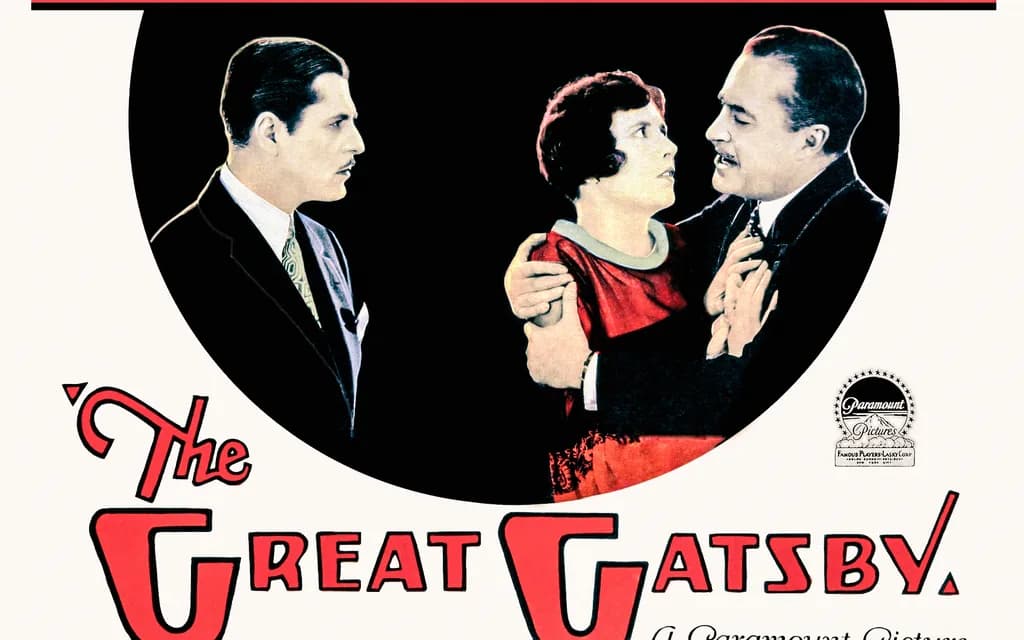
Almost every American adult has been handed this book at sixteen. Very few were told the part of the story that makes the assignment strange: when F. Scott Fitzgerald died in 1940, The Great Gatsby had sold so poorly that he believed his work was forgotten, and unsold copies of it were still sitting on the publisher’s hands. The book on the syllabus is a book that failed, and the thing that rescued it was a war.
- Fewer than 20,000 copies by October 1925. Both initial printings, and many still unsold years later.
- About $2,000 earned from it, by his own ledger. For a novel now assigned in half of American high schools.
- About 155,000 copies went to soldiers. Free, in paperback, through a wartime programme.
- It is short. Nine chapters and about forty-eight thousand words.
If the assignment did not take the first time, the playable The Great Gatsby is the same summer with you inside it rather than a chapter to annotate by Friday.
📚 The short answer: short, teachable, and about something teenagers already know
The practical case is the strongest one and teachers make it openly. A nine-chapter novel of about forty-eight thousand words fits a single unit. It has one plot, one narrator and eight characters worth remembering. Its symbols are legible enough to be taught without condescension and rich enough to argue about. There is no other American novel of comparable stature that a class can finish before interest runs out.
The subject helps more than the length does. Most canonical American novels ask a teenager to care about whaling, or a courtroom, or a war. This one asks them to care about a man who cannot stop looking at something across the water. Fitzgerald calls it “an extraordinary gift for hope” in chapter one, and a sixteen-year-old does not need the phrase explained.
📉 It was a commercial disappointment, and he died believing it had failed
The numbers are unusually well documented, because Fitzgerald kept a ledger. He was paid an advance of $3,939 in 1923 and a further $1,981.25 on publication in April 1925. By October the novel had sold fewer than 20,000 copies. It went through two initial printings and many of those copies were still unsold years later. His own ledger records about $2,000 earned from the novel. The published record gives those two sets of figures without reconciling them, and however they are added up the book did not make him money.
Against his own earlier work this was a collapse. This Side of Paradise in 1920 and The Beautiful and Damned in 1922 had both done better. Fitzgerald spent the rest of his life writing for magazines and for Hollywood, and when he died in 1940 he believed himself a failure and his books forgotten.
This is the single most useful fact to give a class before they open it, and most syllabi leave it out. A book presented as an untouchable masterpiece invites resentment. The same book presented as something that flopped, sat unsold for years and was salvaged almost by accident is a much more interesting object to hold.
🎖️ What actually rescued it: free paperbacks handed to soldiers
Between 1943 and 1947 the Council on Books in Wartime produced the Armed Services Editions, small paperbacks printed to fit a uniform pocket and given free to American service members. The programme distributed some 122 million copies of more than 1,300 titles. The Great Gatsby was one of them, and the figure usually given for this title is about 155,000 copies reaching soldiers overseas within a few years.
That is more copies of the novel put into readers’ hands in a few wartime years than in the whole of Fitzgerald’s life. The men who read it came home, and the critical reassessment followed. Andrew Newman, writing on the novel’s centenary, dates the turn precisely to that decade: a “surprising resurrection” beginning in the 1940s.
The classroom result compounds from there. By the mid-2000s the novel was in the assigned curricula of close to half of American high schools. Newman, working with the historian of English education Jonna Perrillo, put the position more bluntly after a national survey of English teachers: Gatsby is the most frequently assigned novel in American high schools. Nobody has traced the step-by-step route from a wartime paperback to a national syllabus, and the honest version is that the two facts sit at either end of the same twenty years. What is easy to see is why the position holds once it is reached: the teachers assigning the book were assigned it themselves.
One thing this history does not explain is cost. The novel only entered the American public domain on 1 January 2021, decades after it became standard, so cheap editions are a consequence of its status rather than a cause. What that 2021 date actually changed, and what people started making with the book once they could, is covered in the essay on Gatsby’s modern afterlife.
🎒 Is it too hard for a sixteen-year-old?
The sentences are not hard. The judgements are. Nothing in the prose requires a dictionary, and a confident reader will get through a chapter in twenty minutes. What a sixteen-year-old is missing is not vocabulary, it is the experience of having wanted something for five years and got it and found it insufficient, which is the entire mechanism of the book.
Teachers who defend the assignment tend to make a version of the same reply: with guidance, students follow it perfectly well, and the point of teaching a book is not that a class arrives already equipped to understand it. Teachers who object tend to say that the novel is wasted on readers who have not yet lost anything, and that it should be moved later or replaced with something that meets students where they are. Both positions are honest, and the second one is stronger than the curriculum usually admits.
There is a middle answer that the arguing rarely reaches. The book is not wasted on a sixteen-year-old if the sixteen-year-old is told, plainly, that they are meeting it early on purpose and will get the rest of it later. Almost nobody is told this. It is presented instead as a text you have either understood or failed to, at an age when failing to is the normal outcome.
🔁 Is it worth reading again as an adult?
Yes, and the reason is the one above in reverse. Readers who come back to it in their thirties consistently report a different book: Daisy stops being a prize and becomes a person in a trap, Tom stops being a cartoon and becomes recognisable, Nick stops being a window and becomes a character with an agenda. None of that is available at sixteen, because none of it is on the surface.
The re-read also costs almost nothing. Two evenings, at most. If you want a route into the second reading, the argument about whether the narrator is telling you the truth is in the essay on Nick Carraway, and the argument about what the whole thing is finally saying is in the essay on the American Dream.
The other thing worth doing is looking at what the book has become outside the classroom, because that is where most of its current life is. Screen and stage versions have been made of it since 1926, the first of which no longer exists, and the essay ranking the adaptations goes through them.
Sales figures, earnings and the wartime distribution above are from the published record on the novel and its 1943–1947 paperback programme; the survey finding is Andrew Newman and Jonna Perrillo’s. The word and chapter counts were taken from the free 1925 text at Project Gutenberg.
Sources
- The Great Gatsby (1925 text) — Project Gutenberg
- Gatsby @ 100: American Classrooms, American Dreams? — Public Books (Andrew Newman)
- Armed Services Editions — Wikipedia
- The Great Gatsby - publication, sales and revival — Wikipedia
Frequently asked questions
- Why is The Great Gatsby required reading in American high schools?
- It is short enough for one unit, its subject is one teenagers already have, and a wartime paperback programme put it into hundreds of thousands of hands in the 1940s. It also hands a class its thesis on the first page: Nick's father tells him to remember that all the people in this world haven't had the advantages that you've had.
- Did The Great Gatsby sell well when it was published?
- No. Fewer than 20,000 copies by October 1925, against an advance of $3,939 in 1923 and $1,981.25 more on publication. The book supplies its own epitaph for that. At the funeral in chapter nine the last word over the grave goes to the owl-eyed man from the library, and it is: the poor son-of-a-bitch.
- Is The Great Gatsby hard to understand for teenagers?
- The sentences are easy and the judgements are not. Nothing needs a dictionary, and the jokes land at once: in chapter three the owl-eyed man in Gatsby's library is amazed that the books are absolutely real, have pages and everything. What a sixteen-year-old has usually not lived is the part underneath, wanting something for years and finding it insufficient.
- Is The Great Gatsby worth reading as an adult?
- Yes, and it costs two evenings. One passage changes completely on a re-read: chapter four's guest list, two pages of names Nick writes on a timetable dated July 5th, 1922. At sixteen it reads as a joke about a big party. Later it reads as a register of everyone who will not come to the funeral.
- How long is The Great Gatsby?
- Nine chapters and about forty-eight thousand words, short enough to finish in two sittings. The weight is uneven. Chapter seven, the Plaza afternoon and the crash, runs to about 8,800 words on its own, more than twice chapter six at about 4,000, which is the shortest chapter in the book.
Enjoyed this one?