Jaggers’s Rule: “Take Nothing on Its Looks, Take Everything on Evidence”
One line from a criminal lawyer has outlived the novel it sits in, and the scene that produces it is colder than the quotation cards suggest.


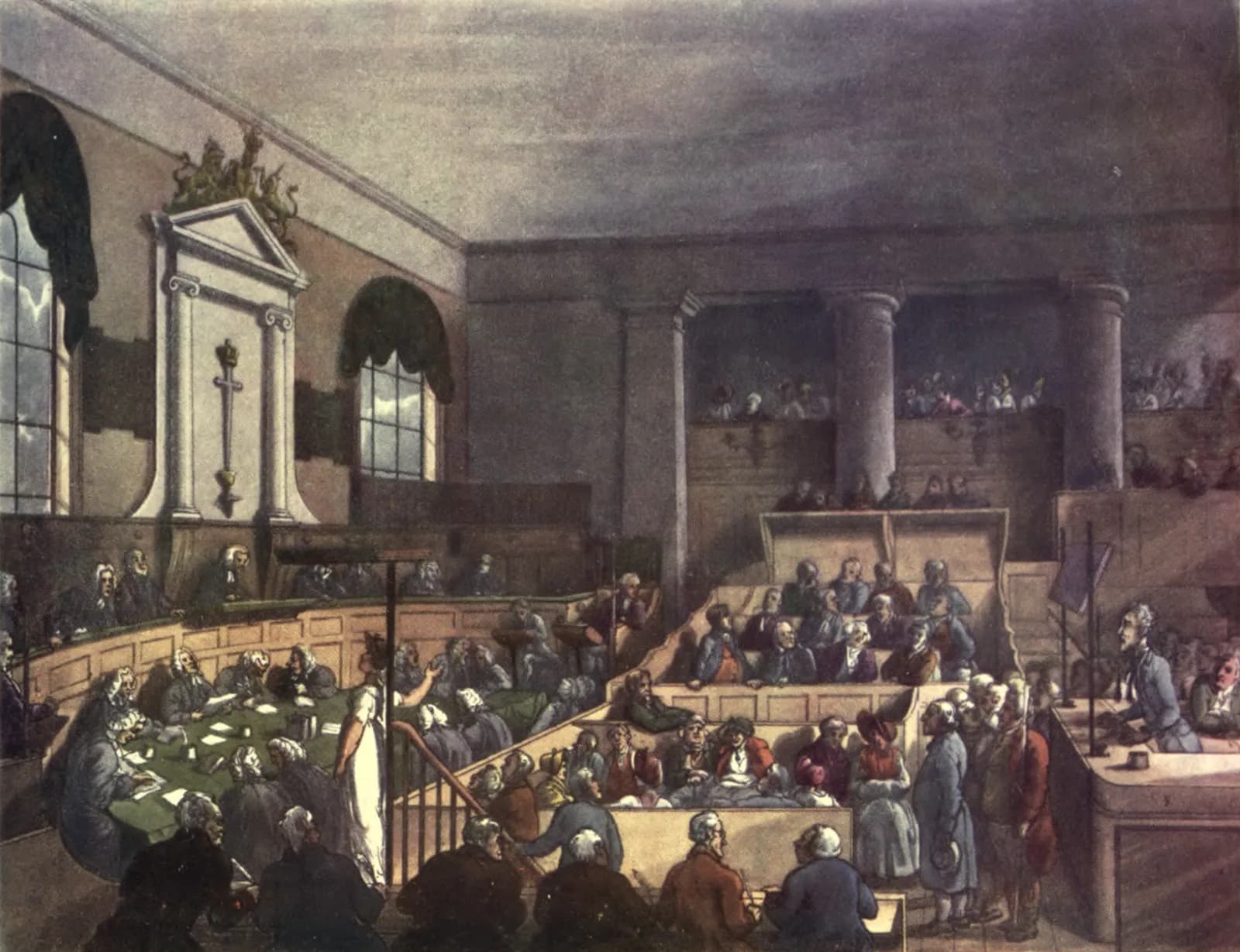
The line belongs to a minor scene in a long novel, and it has quietly outlasted most of the plot around it. It is spoken by the criminal lawyer who runs the London half of the playable Great Expectations, in a room Pip has learned to dread, and it is now cited by people who have never read a page of Dickens. Here is where it actually sits, who says it, and why it travelled.
⚖️ Where the line actually falls
Chapter XL, in Jaggers’s office. Pip has come to him with a belief he has been carrying for most of the book, one of those beliefs that a person assembles out of atmosphere and coincidence and then stops examining. Jaggers has just taken it apart, and Pip tries to defend himself on the grounds that the thing had seemed obvious to anyone standing where he stood.
“Not a particle of evidence, Pip,” said Mr. Jaggers, shaking his head and gathering up his skirts. “Take nothing on its looks; take everything on evidence. There’s no better rule.”
Notice what the rule is aimed at. Pip has not lied and he has not been careless; he has done the ordinary human thing of letting a plausible arrangement of facts stand in for a checked one, and the novel has spent two hundred pages letting him. Who exactly Pip had guessed wrong about is the subject of its own essay, and this one deliberately leaves it there, because the rule works without the answer attached to it.
🧼 Why it is a lawyer who says it
Dickens does not hand this line to his narrator or to one of his warm characters. He hands it to a man built entirely out of professional caution, and every physical detail attached to Jaggers is an image of withholding judgement rather than of kindness.
- He bites his forefinger at people. The gesture arrives before the name does, at the village pub in Chapter XVIII, where a stranger tells a room full of locals to stop evading the question (l.5618).
- He works out of Little Britain. Pip is given the address in Chapter XX (l.6781), a smoke-blackened street beside Smithfield and the Old Bailey, so the office sits inside the machinery of the criminal courts rather than at a polite distance from it.
- He washes the day off.After a client leaves, Jaggers scrubs with scented soap, then goes further, laving his face and gargling his throat, and his towel smells like a perfumer’s shop by the end of it (Chapter XXVI, l.8801-8818).
A man who washes his hands of each case as a ritual is a man who has decided in advance not to be persuaded by anybody’s appearance, including his own clients’. The rule he gives Pip is the sentence version of the soap, which is why it lands harder coming from him than it would from a narrator delivering a moral.
A Lesson in Law is a doorway in the playable Great Expectations: you are in the Little Britain office watching Jaggers handle the people who come to him, and you can press him for a straight answer, hold your tongue, or try his own rule on him. Role-play Great Expectations →
🔍 Where the line lives now
Most famous Dickens lines survive as decoration, reproduced on quote cards by people who want the cadence. This one survives as a working instruction, and the two clearest places to see that are both outside literature entirely.
The trial lawyer and forensic-technology specialist Craig Ball opened a post on his blog with this exact sentence in August 2024, then used it to argue that practitioners should measure what modern email attachments actually contain instead of repeating received wisdom about them. His own restatement of Jaggers is one line long: we should never guess at what we can readily measure.
The Consortium for the Advancement of Undergraduate Statistics Education keeps the same sentence in its teaching library, catalogued as a classroom resource under the title “Quote: Dickens on Evidence” for instructors who want a literary way into the difference between what a dataset looks like and what it supports. Between a litigator and a statistics classroom you have the whole reach of the line, and neither use needs the novel explained first.
💔 The line people quote instead
Search for a famous sentence from this book and you are more likely to be handed Pip’s confession about Estella, from Chapter XXIX, which runs through five refusals in a single breath and is the more beautiful piece of writing by some distance.
“I loved her against reason, against promise, against peace, against hope, against happiness, against all discouragement that could be.”
That line has a much bigger footprint and a much thinner one at the same time. Its search results are dominated by quote-card sites, image captions and one page of a language forum parsing the grammar, because there is nothing to do with the sentence except feel it. The Jaggers rule invites you to go and use it on something, and that is a difference in kind rather than in fame.
It is a fair summary of how Dickens works. The plot belongs to Pip and the sentences everybody remembers often belong to the people standing at the edge of it, doing their jobs, saying the one thing they have learned from a life spent watching other people get it wrong.
Sources
- Great Expectations (Project Gutenberg eBook #1400, 1867 text) — Project Gutenberg
- There's No Better Rule — Craig Ball, Ball in Your Court
- Quote: Dickens on Evidence (resource r2079) — CAUSEweb
- Great Expectations — Wikipedia
- Charles Dickens — Wikipedia
Frequently asked questions
- What is the famous line from Great Expectations?
- Outside the classroom it is usually this one: "Take nothing on its looks; take everything on evidence. There's no better rule," spoken by the lawyer Mr. Jaggers in Chapter XL. The novel that carries it ran as a weekly serial in Dickens's own magazine All the Year Round from 1 December 1860 to 3 August 1861, and the sentence has outlived that magazine by more than a century and a half.
- What is the most important message in Great Expectations?
- That what a person looks like is not evidence of what they are. Dickens built the book to test it: fifty-nine chapters divided into three numbered stages of Pip's expectations, the first two of them closing on a line printed in capitals that says the stage has ended. Every stage costs Pip another assumption he had made from appearances, and the lawyer's rule states the same idea in a single sentence.
- What is Charles Dickens most famous quote?
- "It was the best of times, it was the worst of times," the opening of A Tale of Two Cities, published in 1859. Nothing in Great Expectations is quoted that widely. The Jaggers rule is the one line from this novel that turns up in working life rather than on posters, because it is usable advice rather than a flourish.
- Who is Mr Jaggers in Great Expectations?
- A criminal lawyer with an office in Little Britain, near Smithfield, and a practice built on the Old Bailey — Chapter XLVIII has Pip's friend explaining that part of his reputation rests on having got a client acquitted of murder there. Dickens knew the world he was drawing: he was a junior clerk at the law firm Ellis and Blackmore from May 1827 to November 1828, then spent nearly four years reporting legal proceedings in shorthand at Doctors' Commons.
- What chapter is “take nothing on its looks” in?
- Chapter XL, which is the first chapter of the novel's third and last stage — the line "THIS IS THE END OF THE SECOND STAGE OF PIP'S EXPECTATIONS" sits five lines above the chapter heading in the 1867 text. Pip already knows the answer by then — Magwitch told him the chapter before — and has come to Jaggers only to verify it. The rule is Jaggers's reply to Pip admitting he had always supposed Miss Havisham was his benefactor: "Not a particle of evidence, Pip."
Enjoyed this one?