Pip’s Benefactor Isn’t Who He Assumes — the Magwitch Twist Explained
The wrong guess is the one the whole novel encourages, and correcting it costs Pip everything he thought he had earned.


Spoilers follow for the central reveal of Great Expectations and for Estella’s parentage on both sides.
The reveal is the hinge of the book and it is also the hinge of the playable Great Expectations, where the doorway that carries it will only tell you that the truth of your benefactor threatens everything you have built. Here is what Pip believed, what he is told instead, and the second secret that arrives forty pages behind the first.
🕯️ What Pip assumes, and why it holds up
The case for Miss Havisham is genuinely good, which is the point. She sent for him as a child, paid for his apprenticeship, employs the same lawyer who now handles his allowance, and keeps a beautiful ward in front of him whom everyone treats as a prize he might one day be considered for. Pip assembles a story out of that and never once tests it, because the story is flattering and testing it would be rude.
What she never does is confirm it. She lets him believe it in silence for years, and she lets her relatives believe it too, because a room full of people competing for a legacy is exactly the entertainment she has arranged her house around. Whether that silence makes her cruel or merely broken is an argument with evidence on both sides, and this post leaves it there.
⛓️ The man who actually paid
Chapter XXXIX, the last chapter of the novel’s second stage. A heavy man of sixty climbs Pip’s staircase in a storm, and Pip takes several pages to recognise the convict he brought a file and a pork pie to on the marshes twenty-odd years earlier. Then the visitor explains what he has been doing with his life.
“Look’ee here, Pip. I’m your second father. You’re my son,—more to me than any son.”
Jaggers confirms it in the next chapter with the flatness of a man reading out a file, placing the client “in New South Wales” (l.14062) and noting that Magwitch has “at last disclosed himself” (l.14085). Pip has been living on sheep-farming and stock-breeding money earned by a transported felon, and the elegance he bought with it was the whole purpose of the exercise.
- What he was convicted of.Putting stolen banknotes into circulation, with his partner Compeyson, who dressed and spoke like a gentleman at the trial. Magwitch got fourteen years to Compeyson’s seven for the same offence, which he attributes entirely to the difference in their clothes (Chapter XLII, l.14692, l.14731).
- What he was sentenced to afterwards. Transportation for life, after attacking Compeyson aboard the prison ship and escaping onto the marshes where the novel opens (l.14768).
- What coming home costs him. A convict sent out for life who returns is committing a capital offence, which the novel states twice: Magwitch’s own “It’s death to come back” (l.13586) and Jaggers’s “the extreme penalty of the law” (l.14101).
The Benefactor's Arrival is a doorway in the playable Great Expectations: a soaked stranger is on your staircase claiming the life you are standing in, and you can recoil from him, hear him out, or start working out how fast he needs to leave the country. Role-play Great Expectations →
👐 The second secret, forty pages later
Estella’s parents are withheld even harder than the benefactor, and they are both revealed by accident rather than by confession. Pip works out the mother first, watching Jaggers’s housekeeper Molly at dinner and recognising the hands and the eyes he has seen across a card table for years.
“So convinced I was of that woman’s being her mother, that I wanted no evidence to establish the fact in my own mind.”
The father arrives by a different route. Herbert relays what Magwitch has told him about a wife and a lost child, Pip puts the two halves together, and in Chapter LI he says it straight to Jaggers: he knows Estella’s mother, and he knows her father too (l.17243, l.17256). Jaggers’s reaction is the confirmation, because the lawyer who placed the child and defended the mother had never linked her to the convict in New South Wales, and says plainly that his client has no knowledge or belief that his daughter is alive at all (l.17286).
🧵 Why Dickens ties both secrets to one man
Pip spends the novel trying to get away from the forge, the marshes and the class he was born into, and the two things he wants most turn out to have been manufactured by the very bottom of that world. His fortune comes from a transported felon. The woman raised to be unattainable is that felon’s daughter, placed as a small child by the lawyer who handles his money, and brought up by a woman who wanted a weapon.
That is the reason the reveal keeps its force after a hundred and sixty years, and the reason the standard reference on the character treats him as the structural centre of the novel rather than as its villain. The gentleman and the lady of the book are both the work of the criminal underclass the book’s respectable characters spend their pages despising, and every one of them is worse company than the convict who paid for it.
Sources
- Great Expectations (Project Gutenberg eBook #1400, 1867 text) — Project Gutenberg
- Abel Magwitch — Wikipedia
- Penal transportation — Wikipedia
- Prison ship — Wikipedia
- Great Expectations — Wikipedia
Frequently asked questions
- Who is the real benefactor of Pip in Great Expectations?
- Abel Magwitch, the convict Pip fed on the marshes in Chapter I. He never uses that name in London: he tells Pip in Chapter XL that he has taken the name of Provis, is introduced to the landlord as Pip's uncle, and is referred to in Herbert's letters from abroad as Mr. Campbell, so that a returned transport could be discussed on paper without being identified.
- What crime did Magwitch commit?
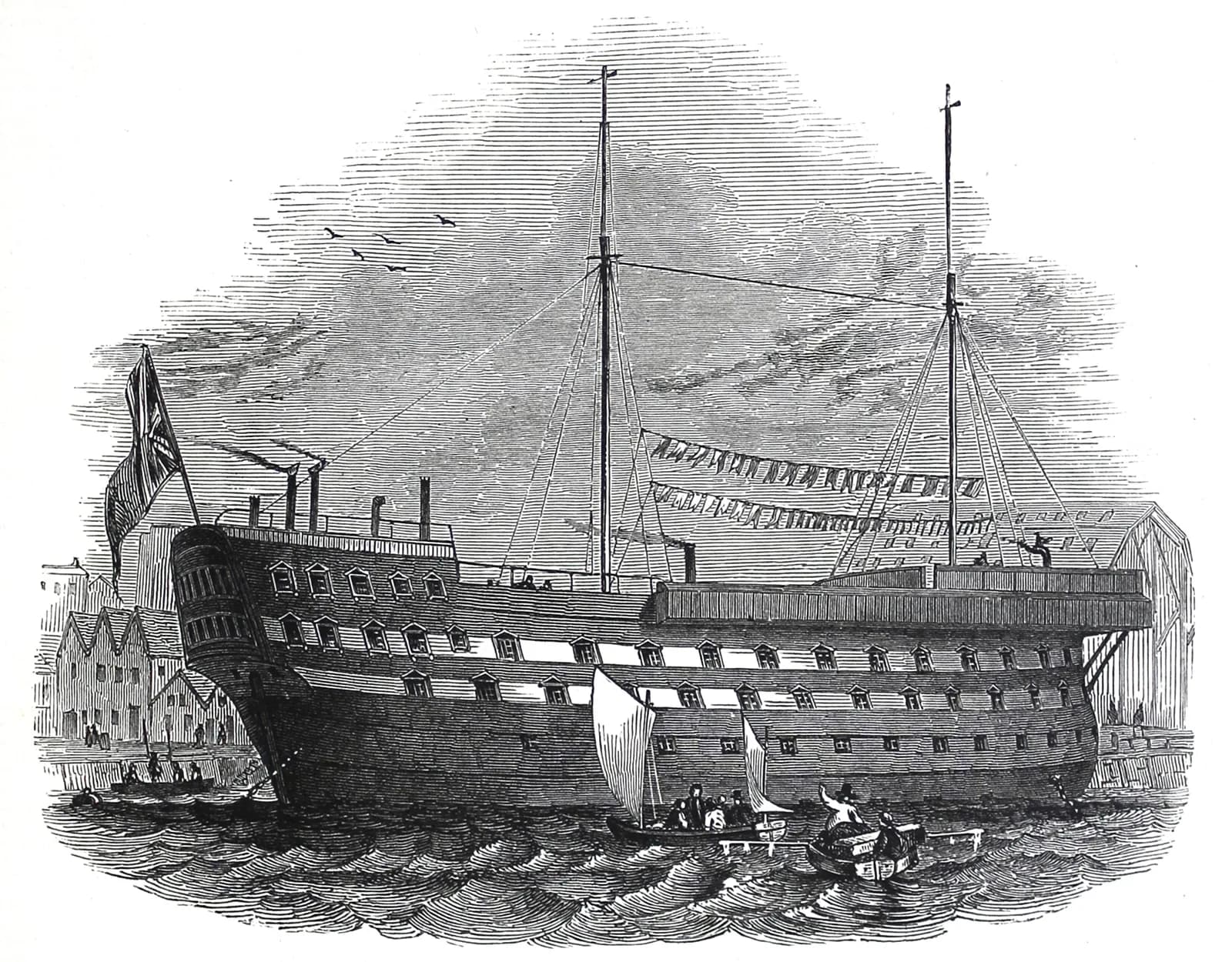
- Putting stolen banknotes into circulation, with a partner who dressed better and got half the sentence; then, after attacking that partner aboard a prison ship, escaping, which turned fourteen years into transportation for life. The hulks he escapes from were real: decommissioned warships moored in the Thames and Medway estuaries, still in service as floating prisons when Dickens was a young man.
- What is the twist in Great Expectations?
- That the money making Pip a gentleman comes from the convict he pitied as a child, not from the rich woman he assumed. Dickens places it exactly at the hinge: the reveal fills Chapter XXXIX, the last chapter of the novel's second stage, and the printed line "THIS IS THE END OF THE SECOND STAGE OF PIP'S EXPECTATIONS" closes that chapter a few lines after he learns it.
- Did Miss Havisham know Pip thought she was his benefactor?
- Yes, and she refuses to apologise for it. When Pip finally asks her outright, in Chapter XLIV, she tells him her greedy relatives wanted to believe it and so did he: "You made your own snares. I never made them." She admits leading them all on and offers no defence beyond the fact that nobody ever asked her to stop.
- Does Pip keep the fortune in the end?
- No, and he works out why before anyone tells him. Chapter LIV has him thinking it through at his benefactor's side: "I foresaw that, being convicted, his possessions would be forfeited to the Crown." A convicted felon's property went to the state, so the money that made Pip a gentleman is gone before the case is even decided, and he never touches another pound of it.
Enjoyed this one?